
How to Reduce Dust in Your House: 12 Tips That Actually Work

Quick answer
To reduce dust in your house: keep it out (doormats, shoes off, closed windows on windy or high-pollen days), trap it instead of moving it (damp microfiber cloths and a sealed HEPA vacuum, not feather dusters or brooms), wash bedding weekly in hot water, upgrade your HVAC filter to MERV 11 or higher and change it on time, and keep humidity at 30–50%. Less clutter and fewer soft surfaces mean fewer places for dust to collect.
Household dust is a mix of soil tracked in from outside, fabric fibers, skin flakes, pet dander, pollen, insect debris and fine particles from cooking and outdoor air. You can’t stop it completely, but the right routine can cut it dramatically. Here are 12 tips that make a real difference.
Keep dust out
- Use two doormats, one outside and one inside each entry, and shake them out weekly.
- Take shoes off at the door. Shoes carry in a large share of household dirt.
- Close windows on windy, dry or high-pollen days, and during wildfire smoke.
- Groom pets outdoors and wash their bedding weekly.
Trap dust instead of spreading it
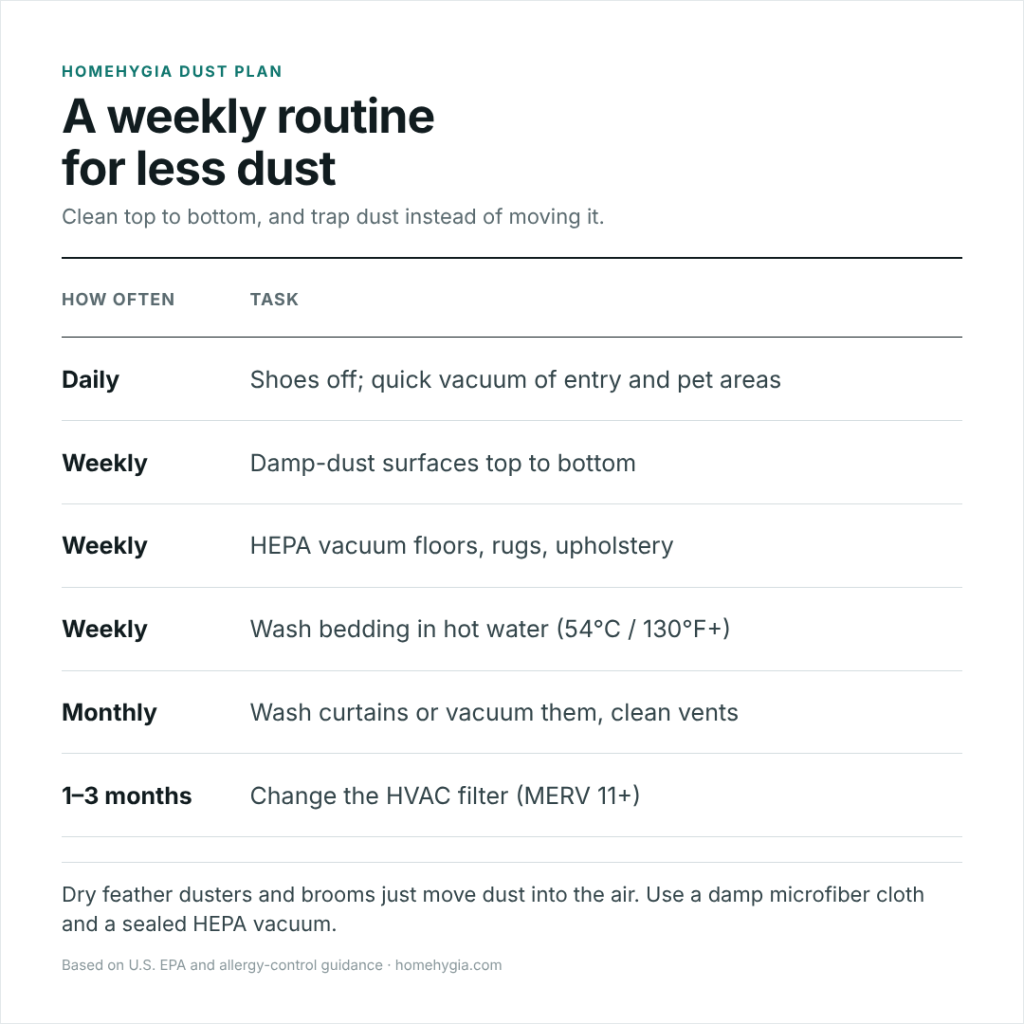
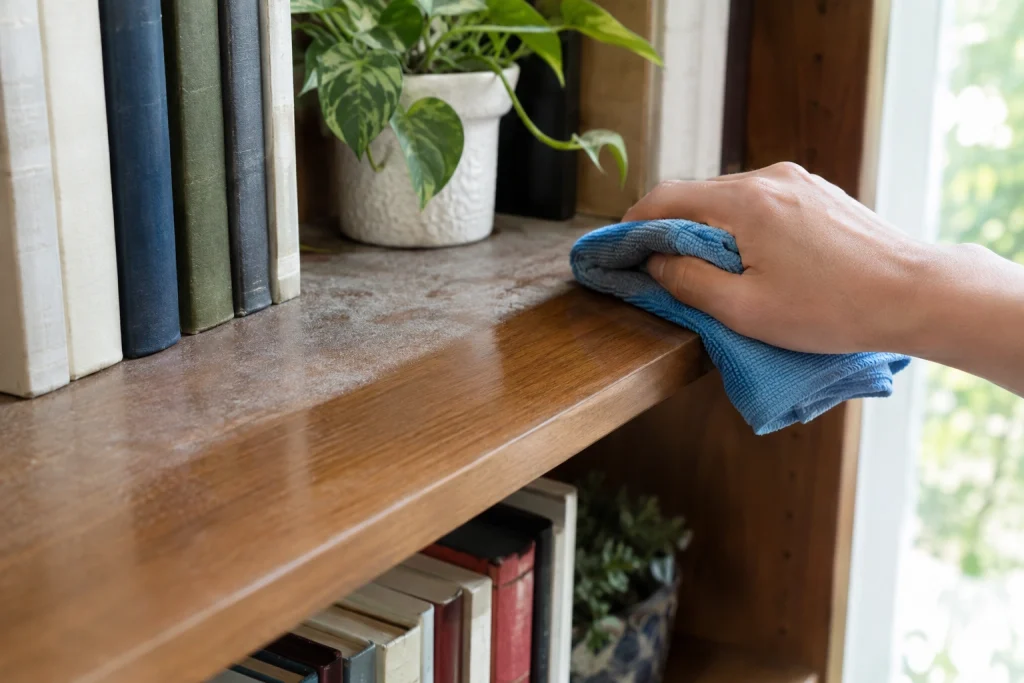
- Dust with a damp microfiber cloth. Dry dusters and feather dusters push fine dust into the air, where it settles again later. Work from top to bottom: ceiling fans, shelves, then furniture, then floors.
- Vacuum with a sealed HEPA vacuum once or twice a week, and more in pet areas and entries. Empty it outdoors. A leaky or full vacuum blows fine dust back out; see can a dirty vacuum spread dust and why your vacuum blows dust back out.
- Damp-mop hard floors after vacuuming instead of sweeping with a broom.
Tackle the dust factories
- Wash bedding weekly in hot water, at least 54°C (130°F) if the fabric allows, to kill dust mites. Use zippered allergen covers on mattresses and pillows.
- Cut clutter and soft surfaces. Open shelves, piles of paper, throw pillows, heavy drapes and wall-to-wall carpet all collect dust. Use closed storage and washable curtains or blinds.
- Vacuum upholstery and mattresses regularly with the upholstery tool. See how often allergy sufferers should vacuum.
Clean the air itself
- Upgrade and change your HVAC filter. A MERV 11 to 13 pleated filter catches far more fine dust than a basic fiberglass one. Change it every 1 to 3 months and run the system fan more often to filter more air. See what MERV rating to use and how often to change your HVAC filter. Seal leaky ducts in attics or crawlspaces, which pull in insulation dust.
- Keep humidity at 30–50%. Very dry air makes dust float and builds static that makes it cling; humid air feeds dust mites. See the ideal indoor humidity level.
A HEPA air purifier in the bedroom or living room helps too, especially for allergies; see does an air purifier reduce dust.
Why is my house so dusty?
- A dirty, cheap or badly fitting HVAC filter, or gaps around it.
- Leaky return ducts pulling air from the attic, garage or crawlspace.
- Renovation dust, which can circulate for weeks; see how to vacuum drywall dust.
- Dry winter air and lots of fabric surfaces.
- Pets, a nearby construction site, unpaved roads or living near a busy street.
If dust actually blows out of the vents, the duct system may need attention; read is air duct cleaning worth it.
Frequently asked questions
How often should I dust my house?
Once a week for most homes; twice a week if you have pets, allergies or live near a dusty road.
Does an air purifier reduce dust?
Yes, a HEPA purifier removes airborne dust in the room it serves. It doesn’t remove dust that has already settled, so keep cleaning too.
Why does dust come back so fast after cleaning?
Usually because dry dusting and sweeping put it back into the air, or because a poor HVAC filter keeps circulating it.
Does closing windows reduce dust?
It helps on windy, dry or high-pollen days. Ventilate when outdoor air is clean, and rely on the HVAC filter when it isn’t.
Sources
- U.S. EPA: Improving Indoor Air Quality
- U.S. EPA: Indoor Particulate Matter
- U.S. EPA: Biological Contaminants and Indoor Air Quality