
What Is the Ideal Indoor Humidity Level? (Summer, Winter and Bedroom)

Quick answer
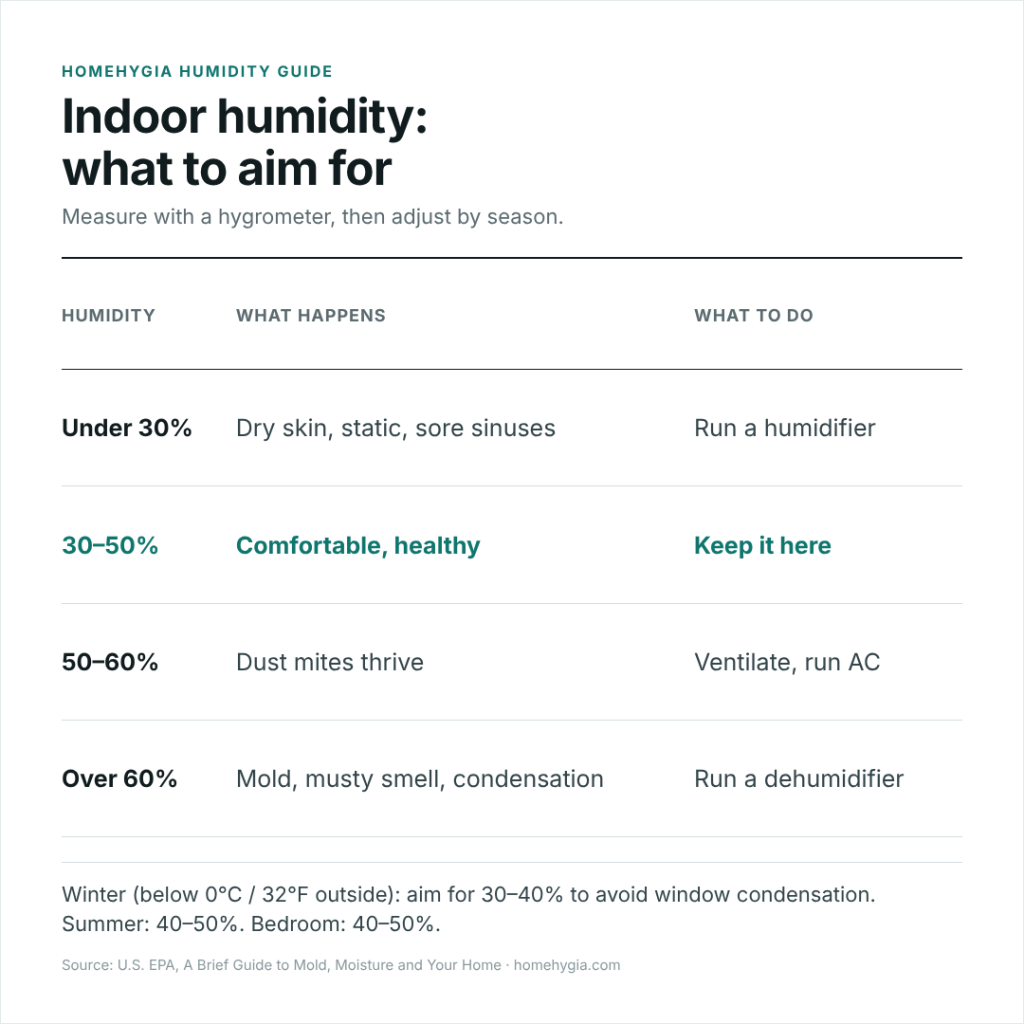
The ideal indoor humidity level is 30% to 50% relative humidity. The U.S. EPA recommends keeping it below 60%, ideally between 30% and 50%, to prevent mold. Aim for 40–50% in summer and 30–40% in cold winters, when higher levels cause condensation on windows. For a bedroom, 40–50% is comfortable for most people.
Humidity affects how comfortable your home feels, how well you sleep, and whether mold, dust mites and musty smells take hold. The good news is that it is easy to measure and to fix. This guide covers the healthy range, how it changes with the seasons, and what to do when your home is too dry or too damp.
What is relative humidity?
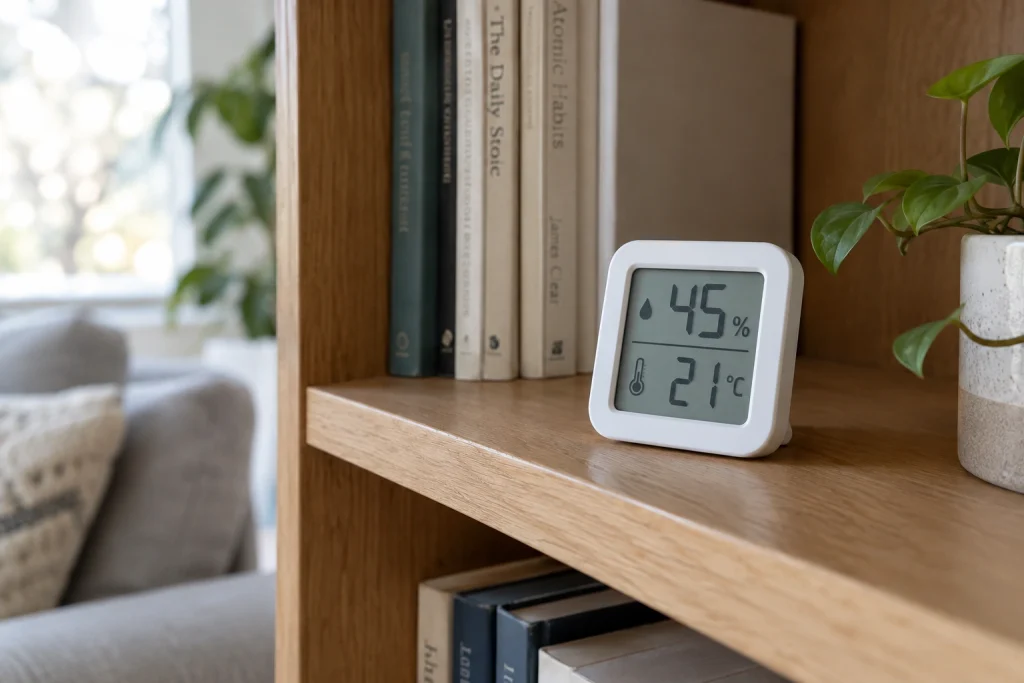
Relative humidity (RH) is how much water vapor the air holds compared with the most it could hold at that temperature. Warm air can hold more moisture than cold air, which is why the same amount of water feels “dry” in a heated winter room and “muggy” on a summer day. A small digital hygrometer, often under $15, shows your home’s RH. Put it in the main living area, away from the kitchen, bathroom and windows.
The ideal humidity range and why it matters
The EPA’s guidance is to keep indoor humidity below 60%, and ideally between 30% and 50% (EPA: A Brief Guide to Mold, Moisture and Your Home). Within that band:
- Mold and mildew have a hard time growing on surfaces.
- Dust mites, which need humid air, struggle to multiply.
- Your skin, eyes and sinuses stay comfortable instead of dry and irritated.
- Wood floors, furniture and instruments are less likely to crack or swell.
Ideal humidity by season
Summer: 40–50%
Outdoor air is warm and humid, and it leaks indoors. Air conditioning removes some moisture as it cools; in very humid climates or basements you may also need a dehumidifier. Above 50%, rooms feel sticky and dust mites thrive.
Winter: 30–40%
Cold outdoor air holds little moisture, and heating dries indoor air further, so RH can fall below 20%. A humidifier helps, but don’t push it too high: when it is freezing outside, humidity above about 40% condenses on cold windows and inside exterior walls, which can lead to mold. If you see water on the glass, lower the humidity.
Bedroom: 40–50%
Many people sleep better when the air isn’t dry, especially with a stuffy nose or snoring. Keep the bedroom within the same healthy band and clean any humidifier you use there regularly.
Basement: below 50%
Basements are cool and close to damp soil, so humidity often sits above 60%. A dehumidifier set to 45–50% is usually the fix. See what size dehumidifier you need.
Signs your home is too dry (below 30%)
- Dry skin, cracked lips, itchy eyes and nosebleeds.
- Frequent static shocks.
- Gaps in wood floors, cracking paint or furniture joints.
- Scratchy throat when you wake up.
Fix: run a humidifier with a humidistat, use distilled water to avoid white dust, and keep it clean. Our humidifier vs air purifier guide explains what each device does.
Signs your home is too humid (above 60%)
- Musty smell, especially in closets and basements.
- Condensation on windows, pipes or toilet tanks.
- Mold or mildew spots on walls, ceilings or grout.
- Clammy air, peeling wallpaper, warped wood.
Fix: run bathroom and kitchen exhaust fans, vent the clothes dryer outdoors, fix leaks, and use air conditioning or a dehumidifier. An air purifier won’t lower humidity; read do air purifiers increase or decrease humidity and does a dehumidifier purify the air.
How to keep humidity in the ideal range
- Measure first. Check a hygrometer morning and evening for a few days before buying anything.
- Use the right device. Humidifier when below 30%, dehumidifier when above 50–60%. Not sure which one? Our air purifier vs dehumidifier vs humidifier guide compares all three.
- Set a target, not “max”. Use the humidistat on the device: 40–45% is a good default.
- Ventilate moisture at the source. Run the bathroom fan during and after showers, and the range hood while cooking.
- Watch your windows in winter. Condensation means humidity is too high for the outdoor temperature.
Frequently asked questions
Is 55% humidity too high indoors?
It is slightly above the ideal range. It won’t cause problems for a day or two, but if it stays there, dust mites and mildew become more likely. Bring it down toward 50%.
Is 25% humidity too low?
Yes. Most people notice dry skin, static and irritated sinuses below 30%. A humidifier set to 35–40% helps.
What humidity should I set my dehumidifier to?
45–50% is a good setting for basements and humid rooms. Going lower uses more energy without much extra benefit.
Does humidity affect allergies?
Yes. High humidity feeds dust mites and mold, two major indoor allergens; very low humidity dries and irritates the airways. Staying between 30% and 50% helps on both counts.