
How to Improve Indoor Air Quality Without an Air Purifier (12 Free or Cheap Ways)

Quick answer
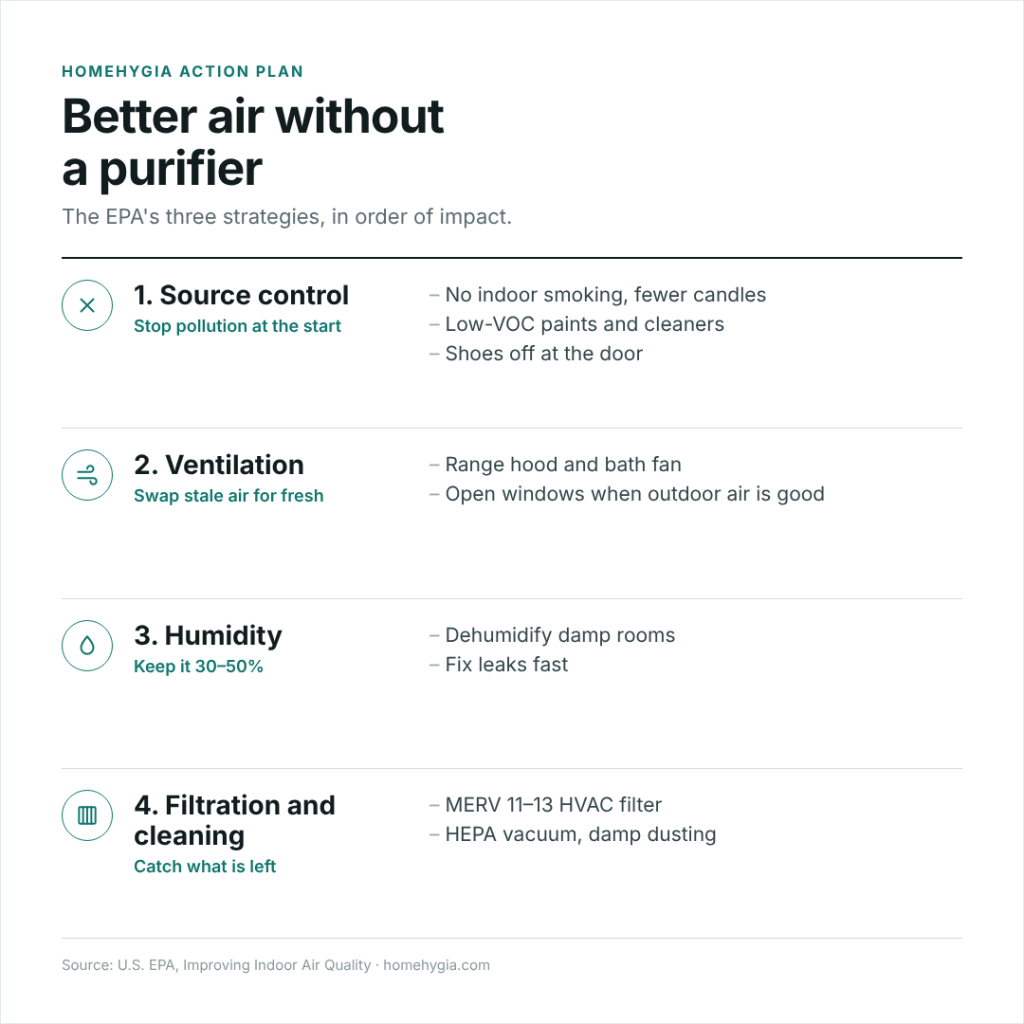
Yes, you can make a big difference without an air purifier. The EPA’s three strategies are source control (stop pollutants getting into the air), ventilation (bring in fresh outdoor air) and filtration. Source control is usually the most effective. In practice: don’t smoke or burn candles indoors, use exhaust fans, open windows when outdoor air is clean, keep humidity at 30–50%, upgrade your HVAC filter, and clean with a HEPA vacuum and damp cloths.
Indoor air is often more polluted than outdoor air, because pollutants from cooking, cleaning products, furniture, pets and dust build up in a closed home. An air purifier helps, but it treats only one part of the problem. Here are 12 free or low-cost ways to clean your air.
Strategy 1: Source control
The EPA calls eliminating or reducing pollution sources usually the most effective approach, and often the cheapest (EPA: Improving Indoor Air Quality).
- No smoking indoors. Tobacco and cannabis smoke are among the worst indoor pollutants.
- Burn less. Candles, incense and wood fires release fine particles. Use them rarely and with ventilation.
- Choose low-VOC products. Pick fragrance-free cleaners, avoid plug-in air fresheners, and use low-VOC paint. Store paints and solvents in a garage or shed, not inside.
- Take shoes off at the door and use a doormat to keep out soil, pollen and pesticides.
- Let new furniture and flooring air out in a ventilated space before bringing it into bedrooms.
Strategy 2: Ventilation
- Use the range hood every time you cook, ideally one vented outside. See do range hoods need to vent outside.
- Run the bathroom fan during showers and at least 20 minutes after (how long to run a bathroom exhaust fan).
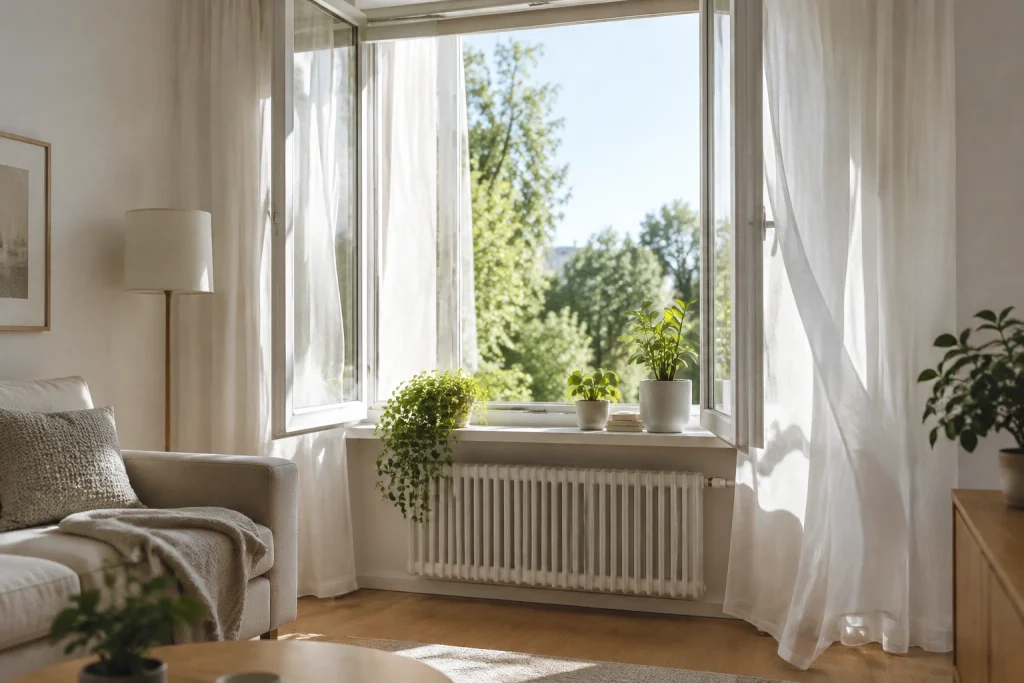
- Open windows when outdoor air is good. Even 10 to 15 minutes, with windows open on opposite sides for a cross-breeze, flushes out stale air. Check your local air quality index first and keep windows closed during wildfire smoke or high pollen.
A CO2 monitor is a cheap way to tell when a room needs fresh air; readings above about 1,000 ppm mean it’s stuffy. See how to read an air quality monitor.
Strategy 3: Moisture control
- Keep humidity at 30–50%. This limits mold and dust mites. Use a dehumidifier in damp basements and fix leaks fast. Read the ideal indoor humidity level.
Strategy 4: Filtration and cleaning
- Upgrade your HVAC filter to MERV 11 to 13 if your system can handle it, change it on time, and run the fan more often. Your central system becomes a whole-house air cleaner. See what MERV rating to use.
- Vacuum with a HEPA vacuum once or twice a week, and empty it outdoors. A leaky vacuum blows fine dust back out; see can a dirty vacuum spread dust.
- Dust with a damp microfiber cloth and wash bedding weekly in hot water. More tips in how to reduce dust in your house.
What doesn’t work
- Houseplants look nice, but research shows you’d need far too many to measurably clean the air.
- Air fresheners and scented sprays add VOCs rather than removing anything.
- Salt lamps don’t measurably clean the air.
- Ozone generators sold as air cleaners can irritate the lungs. The EPA advises against them.
When an air purifier is still worth it
If someone in the home has asthma or allergies, if you live near heavy traffic, or during wildfire smoke, a HEPA purifier sized for the room adds real protection, especially in the bedroom. Our MERV vs HEPA guide explains how it compares with your HVAC filter.
Frequently asked questions
What is the fastest way to improve indoor air quality?
Open windows for a cross-breeze when outdoor air is good, and stop the main source, such as smoking, burning candles or frying without the hood on.
Does opening windows really help?
Yes. Fresh air dilutes indoor pollutants and lowers CO2. Avoid it when outdoor air quality is poor.
Can a box fan with a filter replace an air purifier?
A box fan with a MERV 13 filter taped on (a DIY air cleaner) can remove particles well; the EPA has published guidance on building one. It’s louder and less tidy than a purifier.
How do I know if my indoor air is bad?
Signs include stuffiness, lingering odors, condensation, dust building up quickly, and symptoms that ease when you leave home. An air quality monitor gives numbers.
Sources
- U.S. EPA: Improving Indoor Air Quality
- U.S. EPA: Introduction to Indoor Air Quality
- U.S. EPA: Air Cleaners, HVAC Filters and DIY air cleaners