
How to Get Rid of Mold in the Bathroom (Shower, Grout and Ceiling)

Quick answer
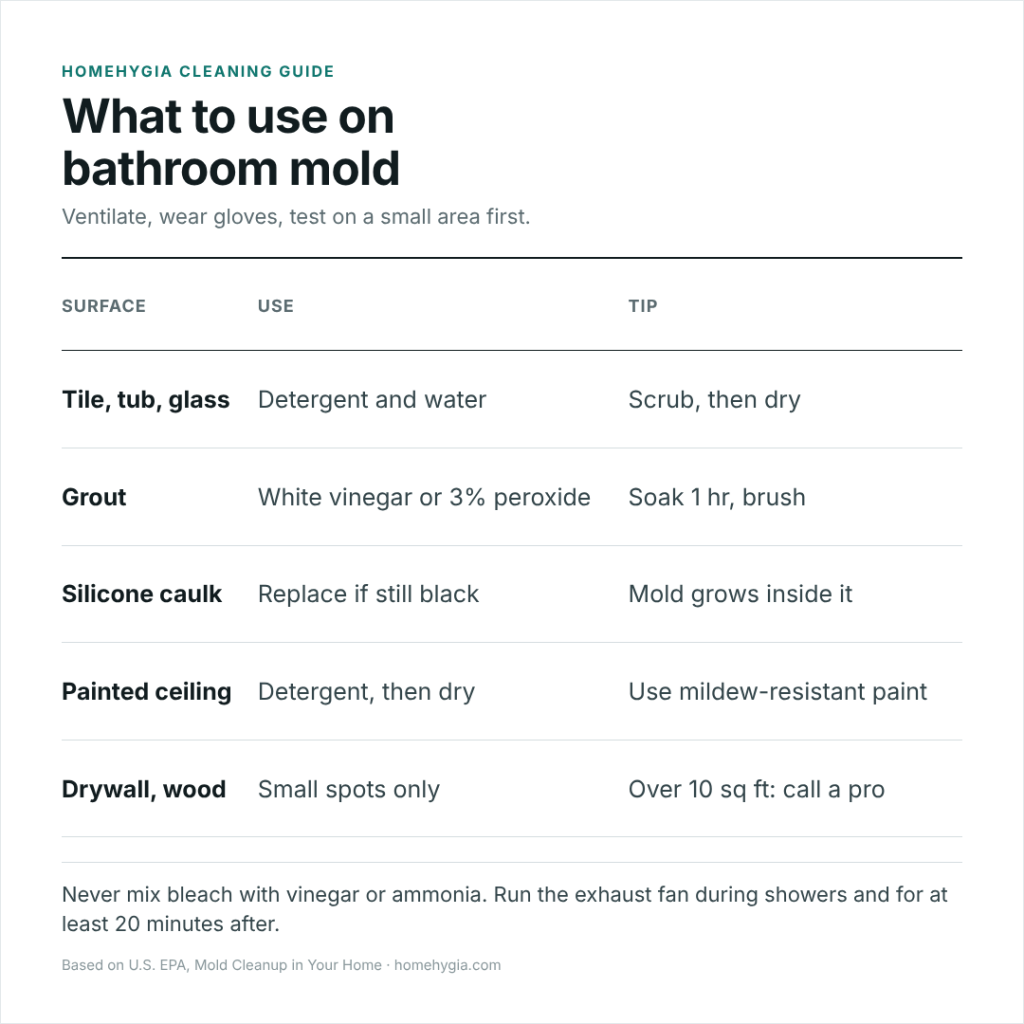
For mold on tile, tubs, glass and painted surfaces, scrub with detergent and water and dry the area completely, as the EPA recommends. For stained grout, spray undiluted white vinegar or 3% hydrogen peroxide, wait up to an hour, and scrub. Silicone caulk that stays black needs replacing, because mold grows inside it. Then stop it returning: run the exhaust fan during and at least 20 minutes after showers and squeegee the walls. Mold over about 10 square feet needs a professional.
Bathrooms are the easiest place in the home for mold to grow: hot showers fill the air with moisture, and water sits on tile, grout and caulk for hours. Cleaning it off is simple. Keeping it off means dealing with the moisture.
Before you start
- Open a window and turn on the exhaust fan.
- Wear rubber gloves and eye protection; add an N95 mask for larger patches.
- Test any cleaner on a small hidden spot first, especially on natural stone, which acids like vinegar can etch.
- Never mix bleach with vinegar, ammonia or other cleaners. The fumes are toxic.
How to remove mold in the shower and on tile
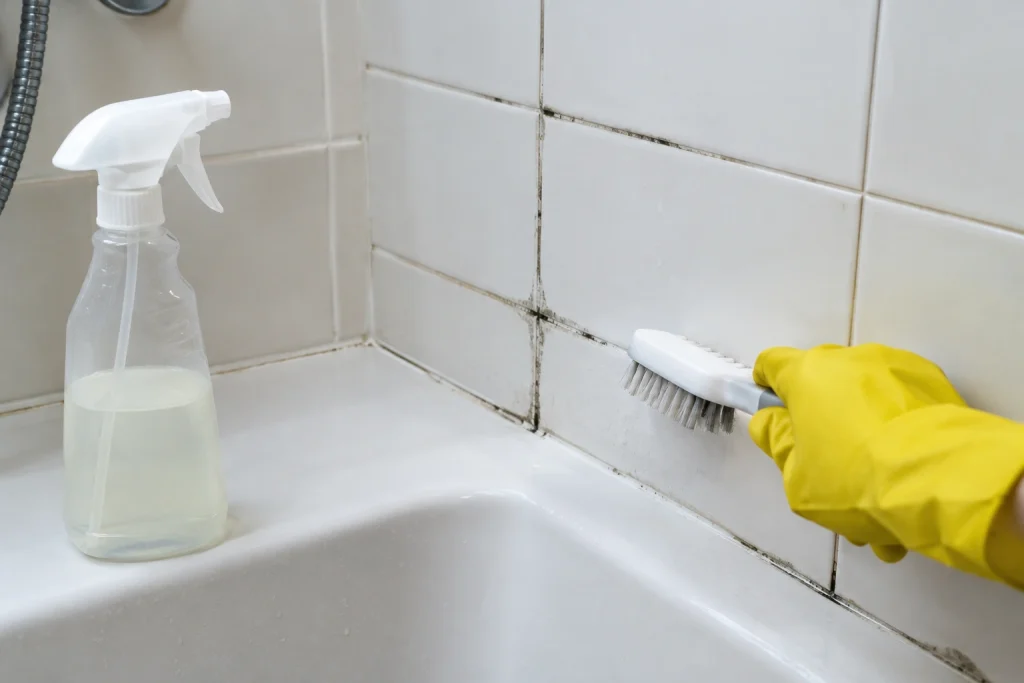
- Spray the area with warm water and a little dish detergent or an all-purpose bathroom cleaner.
- Scrub with a non-scratch sponge or a stiff brush for textured tile.
- Rinse with clean water.
- Dry completely with a towel or squeegee. The EPA’s guidance for hard surfaces is to scrub mold off with detergent and water and dry completely (EPA: Mold Cleanup in Your Home).
How to clean mold from grout
- Spray undiluted white vinegar or 3% hydrogen peroxide on the grout lines (not both together).
- Leave it 30 to 60 minutes.
- Scrub with a grout brush or old toothbrush.
- Rinse and dry. For deep stains, make a paste of baking soda and water, scrub it in, then rinse.
- Once dry, apply a grout sealer to help keep water out.
A steam cleaner also works on grout; see can a steam cleaner kill mold.
Moldy caulk: clean or replace?
If black spots on silicone caulk come back after cleaning, the mold is growing inside it. Cut out the old caulk with a utility knife, clean and dry the joint fully, then apply a new bead of mildew-resistant silicone and let it cure for the full time on the tube before showering.
Mold on the bathroom ceiling or walls
Wipe painted surfaces with detergent and water, rinse lightly and dry. If mold returns quickly, the room needs more ventilation. After cleaning, repaint with a mildew-resistant bathroom paint. Mold on bare drywall or wood that is soft, stained through or larger than a small patch may need the material removed. If the moldy area is more than about 10 square feet, the EPA recommends following its remediation guide or hiring an experienced contractor.
Should you use bleach?
Bleach can lighten stains on non-porous surfaces, but it is not required: detergent and scrubbing remove mold, and drying prevents regrowth. If you do use bleach, dilute it as the label directs, ventilate well, rinse afterward and never combine it with other products. For more, read bleach safety for cleaning.
How to keep mold out of your bathroom
- Run the exhaust fan during every shower and for at least 20 minutes after. See how long to run a bathroom exhaust fan.
- Squeegee walls and glass after showering.
- Hang towels and bath mats to dry; wash them weekly.
- Fix leaks around faucets, toilets and under the sink quickly.
- Keep humidity at 30–50% (ideal indoor humidity level).
- Clean weekly before mold gets a foothold.
If the whole house smells damp, start with how to get rid of a musty smell in your house.
Frequently asked questions
Is black mold in the shower dangerous?
Most shower mold is common mildew. Any mold can trigger allergy and asthma symptoms, so clean it promptly and fix the moisture.
What kills mold in the shower naturally?
White vinegar and 3% hydrogen peroxide both work on grout and tile. Scrubbing and drying matter as much as the cleaner.
Why does mold keep coming back in my bathroom?
The room stays wet too long. Use the fan longer, squeegee after showers and replace old caulk.
Can I paint over bathroom mold?
No. Clean it and let the surface dry first, then use a mildew-resistant paint. Paint over mold will peel and the mold will grow through.