
How to Stop Condensation on Windows in Winter (Causes and Fixes)

Quick answer
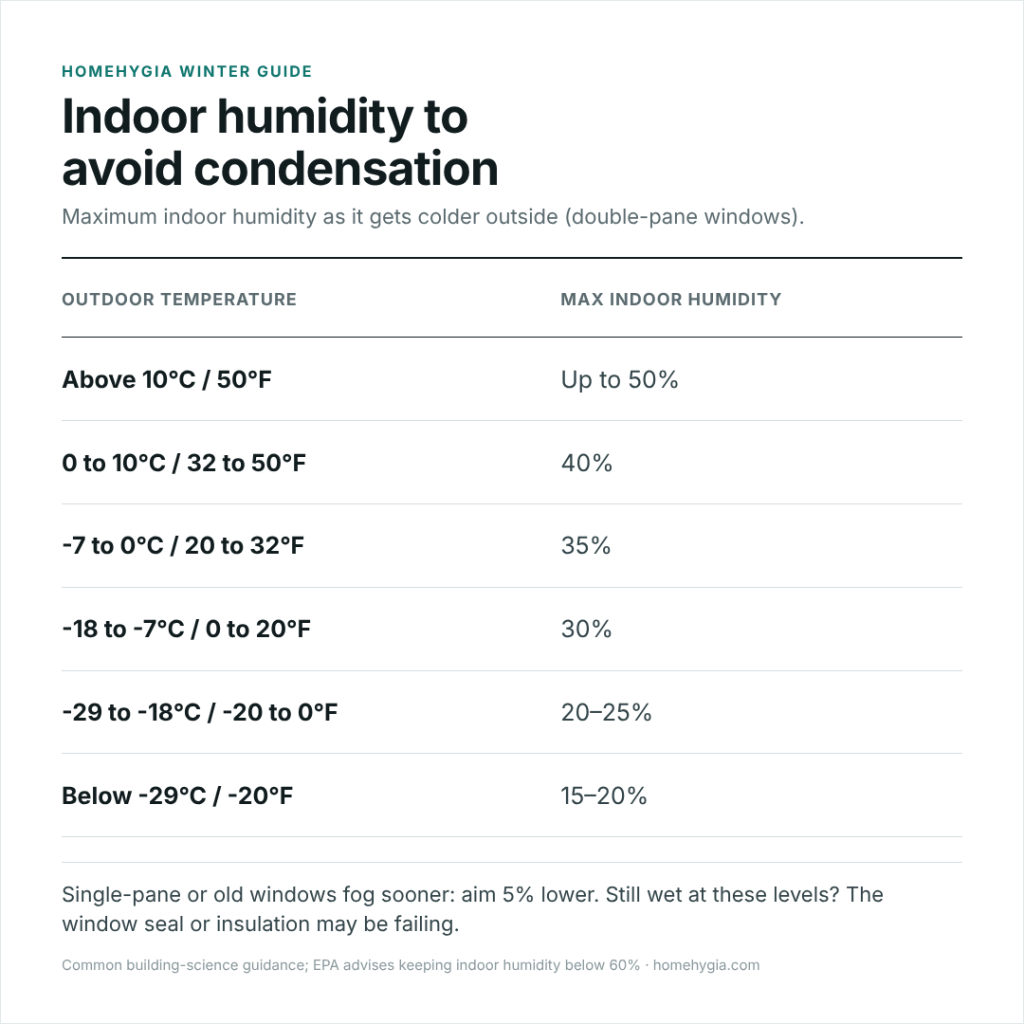
Condensation on the inside of windows means indoor air is too humid for how cold the glass is. To stop it, lower indoor humidity as the weather gets colder (around 30–35% when it is below freezing), vent moisture at the source with bathroom and kitchen fans, keep air moving over the glass by opening curtains and blinds, and turn down or switch off humidifiers. If windows still drip at low humidity, the window seals or insulation may need attention.
Foggy, dripping windows on winter mornings are more than a nuisance. Water that runs down the glass soaks sills and frames, peels paint and feeds mold. The good news: condensation is a humidity problem, and humidity is easy to control.
Why condensation forms on windows
Warm indoor air holds moisture. When it touches a surface colder than its “dew point”, it cools and drops that moisture as water, the same way a cold drink glass sweats in summer. In winter the window glass is the coldest surface in most rooms, so it gets wet first. The colder it is outside, the colder the glass, and the lower the indoor humidity has to be to keep it dry.
Everyday activities add a lot of moisture: showers, cooking, drying laundry indoors, aquariums, plants, unvented gas heaters, and simply breathing while you sleep. That is why bedrooms and kitchens often have the worst condensation.
How to stop window condensation: 8 fixes
1. Lower indoor humidity as it gets colder
Use a hygrometer and follow the chart above. In general, keep it around 30–40% when temperatures are near or below freezing. The EPA advises keeping indoor humidity below 60%, ideally 30–50%, to prevent mold (EPA: A Brief Guide to Mold, Moisture and Your Home). See our full guide to the ideal indoor humidity level.
2. Turn down humidifiers
A humidifier set to 50% is fine in autumn but too high on a freezing night. Lower the setting or turn it off when windows start to fog.
3. Run exhaust fans
Use the bathroom fan during and at least 20 minutes after every shower (see how long to run a bathroom exhaust fan) and the range hood whenever you cook, ideally one that vents outdoors.
4. Open curtains and blinds
Heavy curtains trap a layer of cold air against the glass. Open them during the day, and leave a gap at night, so warm room air can reach the window.
5. Keep air moving
Make sure heating vents under windows aren’t blocked by furniture. A ceiling fan on low, or the HVAC fan on “circulate”, helps.
6. Ventilate briefly
Opening a window for 5 to 10 minutes after a shower or cooking swaps humid air for drier outdoor air without losing much heat.
7. Cut moisture sources
Dry laundry in a vented dryer, cover pots while cooking, and move lots of houseplants away from cold windows.
8. Run a dehumidifier in problem rooms
If humidity stays high in a basement or bedroom, a dehumidifier set to around 40–45% helps. See what size dehumidifier you need.
When condensation points to a window problem
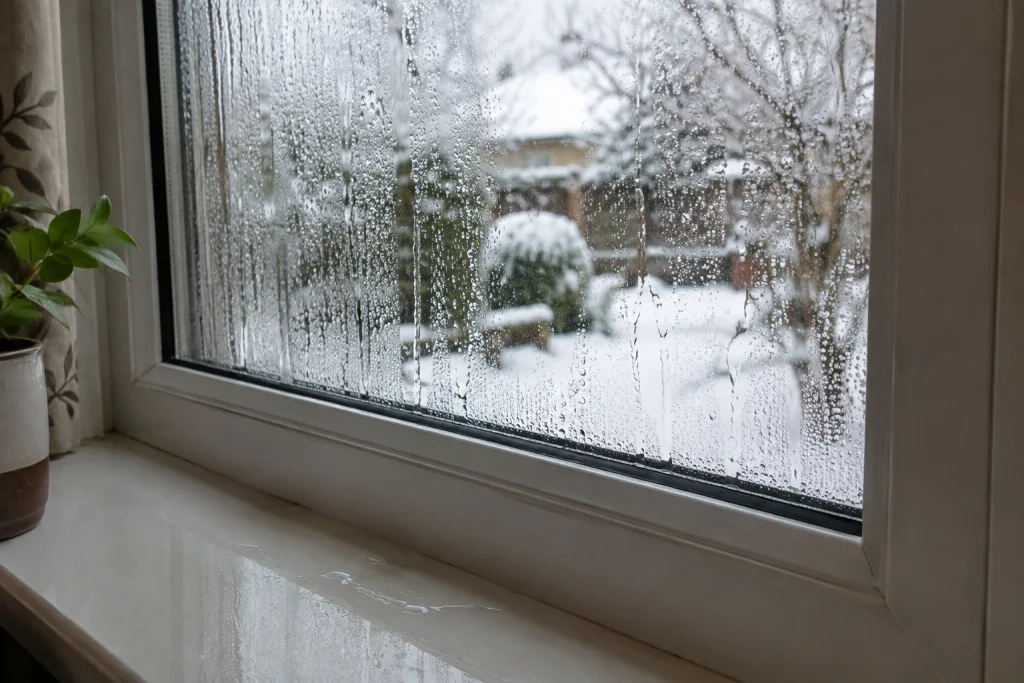
- Fog between the panes of a double-glazed window means the seal has failed. Only replacing the glass unit fixes it.
- Single-pane or old aluminum frames get very cold and fog even at low humidity. Interior storm windows, insulating film or replacement windows help.
- Condensation on the outside of the glass on cool mornings is normal and a sign of efficient windows.
Clean up and prevent mold
Wipe water off sills and frames each morning with an absorbent cloth. If black spots appear on the frame, sill or silicone, clean them with detergent and water and dry the area. Persistent dampness also creates musty smells; see how to get rid of a musty smell in your house. An air purifier won’t stop condensation, as explained in does an air purifier help with condensation.
Frequently asked questions
Is condensation on windows bad?
Occasional light fog isn’t harmful, but daily dripping water damages frames and sills and encourages mold. Treat it as a sign to lower humidity.
Why are my windows wet only in the morning?
Outdoor temperatures are lowest overnight, so the glass is coldest. Breathing in a closed bedroom also raises humidity overnight.
Does a dehumidifier stop condensation on windows?
Yes, if humidity is the cause. Bring the room down to the level in the chart for the outdoor temperature.
Should I keep a window open to stop condensation?
A short airing after showers and cooking helps. Leaving windows open all day in winter wastes heat; fans and humidity control work better.