
Why Does My Vacuum Keep Clogging? Causes, Fixes, and Prevention

Quick Answer
Your vacuum usually keeps clogging because debris is entering faster than the machine can move it through the airflow path. Common causes include hair-packed hoses, an overfilled bin or bag, dirty filters, blocked floorheads, and debris that is too large for the vacuum; this vacuum maintenance guidance from Consumer Reports also recommends checking bins, filters, brush rolls, and hoses regularly.
Most likely causes
- Full bin or bag: Packed dirt can restrict airflow and make new debris collect in narrow passages.
- Dirty filter: A dust-loaded filter reduces airflow through the machine.
- Hair buildup: Pet hair and long human hair can combine with dust into dense plugs.
- Large debris: Paper, small toys, stones, leaves, and similar objects can lodge in bends or openings.
- Blocked floorhead: Debris often catches where the cleaning head narrows into the hose or wand.
What to do first
- Turn the vacuum off, disconnect its power, empty the collection system, and inspect the complete airflow path before using it again.
I’ve found repeated clogs are more frustrating than one obvious blockage. You clear the hose, start cleaning again, and suction disappears five minutes later.
The trick is to stop treating the visible clog as the whole problem. This guide shows you how to find what keeps causing it and prevent the next blockage.
In This Guide
- Why does my vacuum keep clogging?
- Where is the clog actually forming?
- How do you safely clear a vacuum clog?
- Why do dirty filters and full bins make clogs return?
- Which vacuum types are most likely to have clog problems?
- How can you prevent your vacuum from clogging again?
- Frequently asked questions about vacuum clogs
Why Does My Vacuum Keep Clogging?
A vacuum keeps clogging when debris repeatedly gets trapped somewhere between the cleaning head and collection system. Reduced airflow can make the problem worse because debris moves more slowly through the machine.
A vacuum clog is a physical blockage in the machine’s airflow path that restricts the movement of air and collected debris.
I usually start by thinking about what went into the vacuum just before the problem appeared. Hair, paper, fabric fibers, and oversized debris behave differently from ordinary household dust.
What causes repeated vacuum clogs?
The same few problems show up again and again in household machines.
- Pet and human hair: Hair catches on rough edges and combines with dust into thick clumps.
- String and thread: Long fibers can wrap around rollers before collecting more debris.
- Paper and tissue: Lightweight pieces may enter easily but unfold or compact inside a bend.
- Large crumbs and objects: Stones, coins, toy pieces, leaves, and similar debris can become wedged sideways.
- Fine powder: Large amounts of fine dust can load filters quickly and reduce airflow.
- Overfilled containers: Packed bins and bags leave less room for normal debris movement.
A partial obstruction is easy to miss. The vacuum may still pick up light dust while larger pieces collect around the restriction.
That is why clearing one visible hair ball may not solve a recurring clog. Another restriction can remain farther along the airflow path.
Where Is the Clog Actually Forming?
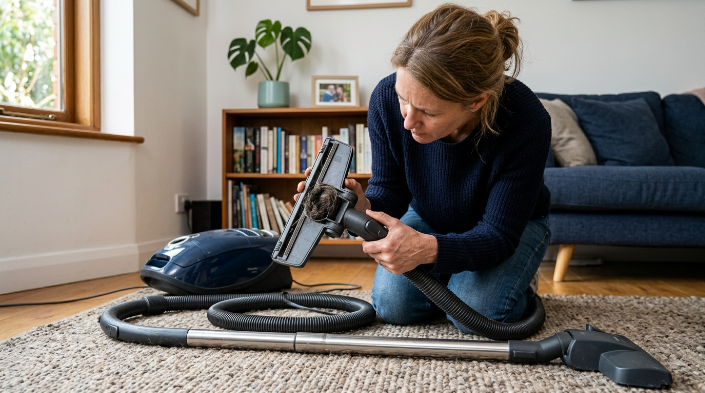
Vacuum clogs commonly form where the airflow path becomes narrower or changes direction. Checking those areas in order is faster than taking the machine apart randomly.
Start where debris enters
Turn the vacuum off and disconnect its power before inspecting the floorhead. Cordless models should have the battery removed when the manufacturer allows it.
- Floorhead intake: Look behind and around the brush roll for packed hair or paper.
- Floorhead neck: Check the narrow passage where debris leaves the cleaning head.
- Wand: Remove detachable sections and look through them toward a light.
- Flexible hose: Inspect both ends and bends for hidden plugs.
- Bin inlet: Look where debris enters the dust container or cyclone chamber.
- Bag opening: On bagged vacuums, make sure debris has not collected around the bag connection.
One of the more annoying clogs I’ve dealt with looked like a hose problem. The real blockage was a compact wad of hair lodged where the floorhead narrowed into the wand.
The hose itself was clear. That small bend was enough to keep catching new debris.
Listen for airflow changes
A sudden change in motor sound can appear when airflow becomes restricted. Weak pickup at the floorhead is another useful clue.
Do not rely on sound alone, though. A damaged seal, filter problem, or mechanical fault can create similar symptoms.
How Do You Safely Clear a Vacuum Clog?
Clear a clog by disconnecting power, opening only user-serviceable parts, and working through the airflow path from one end to the other. Avoid sharp tools that could puncture a hose or damage internal surfaces.
- Turn the vacuum off. Unplug a corded model and remove a removable battery when appropriate.
- Empty the bin or check the bag. Remove collected debris before looking for another restriction.
- Inspect the floorhead. Remove hair, thread, paper, and other material from accessible openings.
- Remove the hose and wand. Check detachable sections individually when your model permits it.
- Look through each section. A bright light can help reveal a blockage in a straight wand or hose.
- Dislodge debris gently. Use only a blunt tool that cannot puncture the hose, and follow the manufacturer’s instructions.
- Check the filters. Clean or replace them only as the owner’s manual directs.
- Reassemble everything correctly. Make sure filters, bins, bags, hoses, and covers are fully seated before testing.
Should you wash a clogged hose?
Do not put water through a hose unless your vacuum manufacturer specifically says the detached hose can be washed. Some hoses contain electrical connections or materials that should remain dry.
Water can also turn trapped fine dust into sticky material. Remove the physical blockage first.
What should you never use to clear a clog?
- Knives or other sharp objects
- Screwdrivers pushed forcefully through flexible hoses
- Boiling water
- Harsh chemicals
- Compressed air directed into parts that the manufacturer does not approve for it
Expert Alert: Stop troubleshooting if you find damaged wiring, smoke, sparks, melted plastic, battery swelling, or a strong electrical-burning smell. A qualified appliance technician should handle electrical, motor, or battery faults.
Why Do Dirty Filters and Full Bins Make Clogs Return?
A filter does not have to contain the physical clog to contribute to repeated blockages. When a filter becomes heavily loaded, airflow through the vacuum can fall.
Slower airflow makes it harder to move debris through hoses and narrow passages. Larger pieces can then settle around bends and existing buildup.
Check the collection system early
Do not wait until a bag or dustbin is packed solid. Empty the bin at its marked fill line and follow your manufacturer’s guidance for replacing bags.
The same rule applies to filters. A washable filter should only be washed if the manual identifies it as washable.
- Pre-motor filters: Help stop debris before it reaches internal components.
- Exhaust filters: Help control particles leaving the vacuum with exhaust air.
- HEPA filters: High-efficiency particulate air filters require model-specific cleaning or replacement instructions.
The EPA’s indoor particulate matter guidance notes that vacuuming can stir settled dust and suggests considering a vacuum with HEPA filtration to help keep some captured dust from escaping back into the room.
For households managing allergies, the Asthma and Allergy Foundation of America also recommends regular vacuuming as part of a broader allergen-control routine.
Filtration is not a reason to remove or bypass a dirty filter. Operating a vacuum without required filtration can expose internal parts to debris and may allow more dust to escape.
Which Vacuum Types Are Most Likely to Have Clog Problems?
Any vacuum can clog, but the common trouble spots vary by design. Small bins, narrow airways, long hoses, and hair-wrapped rollers can all affect how often you need to inspect a machine.
Consumer Reports’ 2026 reliability survey provides useful real-world context. The percentages below represent owners reporting dirt, dust, or hair clogging parts of their vacuums.
| Vacuum type | Reported clog problem | Area I would check first |
|---|---|---|
| Cordless stick | 16% | Small bin, floorhead, wand, filter |
| Robot vacuum | 15% | Rollers, receptacle, intake passages |
| Upright | 13% | Floorhead throat, hose, brush roll |
| Corded stick | 11% | Roller area, airway, filter |
| Canister | 8% | Long hose, wand, powerhead |
These numbers come from Consumer Reports’ vacuum reliability survey. They describe reported problems across vacuum categories, not the probability that every individual model will clog.
Design matters, but so does what you vacuum. A machine used around long-haired pets, craft fibers, or heavy debris may need more frequent checks.
How Can You Prevent Your Vacuum From Clogging Again?
The easiest way to prevent clogs is to protect airflow and keep oversized debris out of the machine. Small maintenance habits usually work better than repeatedly clearing major blockages.
Use a quick pre-vacuum check
Pick up objects that are too large, rigid, or awkward for your vacuum before you start. This takes less time than dismantling a clogged hose later.
- Coins and small toys
- Paper scraps and tissues
- Hair ties and rubber bands
- Large food pieces
- Long string or ribbon
- Small stones and hardware
Empty the vacuum before it is packed
A small cordless bin may need attention during a large cleaning session. Bagged machines should have their bags changed according to the manufacturer’s guidance and any full-bag indicator.
Do not compress debris into the bin to create extra room. That can place dirt where it restricts an inlet or cyclone passage.
Remove hair before it becomes a plug
Homes with long hair or pets need more brush-roll attention. I prefer a quick visual inspection after hair-heavy cleaning instead of waiting for the roller to become wrapped solid.
Disconnect power before touching a powered brush. Cut hair only where the manufacturer’s design allows safe access.
Use the right machine for the material
Ordinary household vacuums are not designed for every cleanup. Large quantities of construction dust, wet debris, fireplace ash, or hazardous material may require equipment built and approved for that job.
Expert Alert: Do not use a standard household vacuum for hazardous remediation work unless the machine and procedure are specifically approved for that material. Lead, asbestos, significant mold contamination, and similar hazards require appropriate professional guidance.
As of 2026, my simplest prevention rule remains the same: keep the collection system from becoming packed, maintain filters exactly as directed, and check the intake whenever the vacuum starts behaving differently.
Frequently Asked Questions About Vacuum Clogs
Why does my vacuum hose keep clogging?
A hose often keeps clogging because hair, lint, paper, or large debris catches at a bend or narrow connection. Reduced airflow from a dirty filter or full collection system can make recurring hose blockages more likely.
Can a dirty vacuum filter cause clogging?
A dirty filter can contribute indirectly by restricting airflow. When air moves less effectively, debris may travel more slowly and settle inside the hose, floorhead, wand, or inlet instead of reaching the collection container.
Why does my vacuum clog with pet hair?
Pet hair forms flexible clumps that readily catch on brush rolls, bends, and rough edges. Once hair becomes lodged, dust and fibers collect around it, creating a larger plug that can quickly reduce airflow.
Why does my vacuum clog even after I empty the bin?
The bin may not be the only restriction. Inspect the filters, floorhead, wand, hose, bin inlet, and other accessible airflow passages because a partial blockage can remain hidden after the collection container is emptied.
Can I push a broom handle through a vacuum hose?
A blunt object may help with some detachable hoses, but follow your vacuum manufacturer’s instructions first. Never force a tool through a hose, and avoid anything sharp enough to puncture the wall or damage internal wiring.
Can vacuuming fine powder clog a vacuum?
Large amounts of fine powder can load some household vacuum filters quickly and restrict airflow. Construction dust and other specialized materials may also require a vacuum specifically designed and rated for that type of cleanup.
Should I replace a vacuum that keeps clogging?
Not necessarily. First rule out an overfilled bin or bag, dirty filters, tangled rollers, and accessible airflow blockages. If the machine keeps clogging despite correct maintenance, damaged hoses, internal restrictions, or another fault may require professional diagnosis.
The takeaway: A vacuum that keeps clogging is usually telling you to inspect the whole airflow path, not just the latest blockage. Start with the bin or bag, then check filters, the floorhead, wand, hose, and brush roll in a consistent order.
If the same clog keeps returning after those areas are clean, stop forcing the machine to work through it. Finding the underlying airflow or mechanical problem will save more time than clearing the same blockage again.
“`
