
Why Is My Vacuum Making a Whistling Noise?

Quick Answer
A vacuum usually makes a whistling noise when air is being forced through a partial blockage or leaking through a small gap. Check the hose, wand, filters, dustbin or bag, floorhead, and seals before assuming the motor is failing. Vacuum filter maintenance guidance also reinforces the importance of following your model’s instructions for filter care.
Check These First
- Partial hose clog: Hair, paper, fluff, or a small object can leave just enough space for air to whistle past.
- Dirty filter: Heavy dust buildup can restrict airflow and change the sound of the vacuum.
- Loose connection: A hose, wand, bin, filter cover, or attachment may not be seated correctly.
- Damaged seal: A cracked gasket or worn connection can let air enter through a narrow gap.
- Blocked floorhead: Hair and compacted debris can restrict the airway near the brush roll.
- Full bag or bin: An overloaded dirt container can interfere with normal airflow.
Before You Inspect It
- Turn the vacuum off and unplug it, or disconnect the removable battery when your model allows it.
A high-pitched whistle can make a healthy vacuum sound as if something expensive has failed. In many cases, the cause is much simpler.
When I troubleshoot this sound, I follow the airflow path before worrying about the motor. That approach works for upright, canister, stick, and many handheld vacuums.
In This Guide
Why Does a Vacuum Make a Whistling Noise?
A vacuum usually whistles because fast-moving air is passing through an opening that has become narrower than normal. That narrowing may come from a clog, dirty filter, loose part, or air leak.
A vacuum whistle is a high-pitched airflow sound created when air moves through a small restriction or unintended gap in the vacuum’s air path.
A partial blockage can create the classic whistle
A hose doesn’t need to be completely blocked to cause trouble. A small opening around trapped debris can behave almost like the mouthpiece of a whistle.
- Pet hair: Dense clumps can become wedged inside bends.
- Paper: Tissue, wrappers, and scraps can flatten against an airway.
- Small objects: Coins, toy pieces, and other debris can restrict a narrow connection.
- Compacted dust: Fine debris can build up around already narrow passages.
If suction has also become weaker, a restriction moves even higher on my checklist. The two symptoms often point toward the same airflow path.
A leak can whistle even when suction feels normal
Not every whistle comes from a blockage. Air entering through a small crack or poorly seated connection can create a similar sound.
- Check where the hose meets the vacuum body.
- Inspect removable wand connections.
- Make sure the dustbin clicks fully into place.
- Check that filter covers close evenly.
- Look for obvious cracks in flexible hoses.
- Inspect accessible rubber seals for visible damage.
Don’t dismantle sealed motor housings to search for hidden leaks. User-serviceable connections are the safest place to start.
Section Takeaway: Whistling is usually an airflow clue. A partial blockage and a small air leak are the two problems I would rule out first.
How Do I Find Where the Whistling Is Coming From?
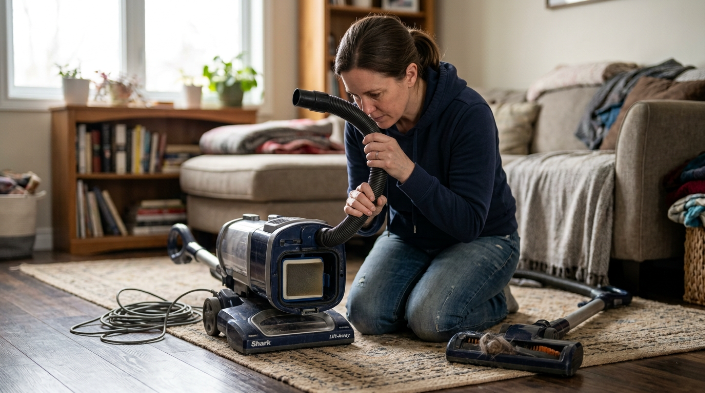
Start at the cleaning head and trace the route air takes through the vacuum. Checking components in order is faster than randomly removing parts.
Use the sound and suction together
Pay attention to when the whistle appeared and whether cleaning performance changed at the same time. Those details help narrow the search.
| What You Notice | Check First | Likely Explanation | First Action |
|---|---|---|---|
| Whistle plus weak suction | Hose, filter, wand, floorhead | Airflow restriction | Inspect for clogs and dirty filters |
| Whistle after emptying the bin | Bin and seals | Poor seating or loose seal | Remove and reinstall correctly |
| Whistle after filter cleaning | Filter and cover | Incorrect installation or restricted filter | Check the manual and reseat it |
| Whistle near a flexible hose | Hose bends and connections | Partial clog or crack | Disconnect power and inspect the hose |
| Whistle near the floorhead | Intake and brush area | Restricted lower airway | Remove accessible debris |
| Whistle with normal suction | Connections and seals | Small air leak | Inspect removable joints and seals |
Normal vacuum sound varies widely between designs. What matters most is whether your own vacuum suddenly developed a sound it didn’t make before.
As of 2026, independent vacuum testing still treats noise as a model-specific performance characteristic rather than one universal sound level. That makes a new change more useful diagnostically than comparing two different machines.
How Do You Fix a Whistling Vacuum?
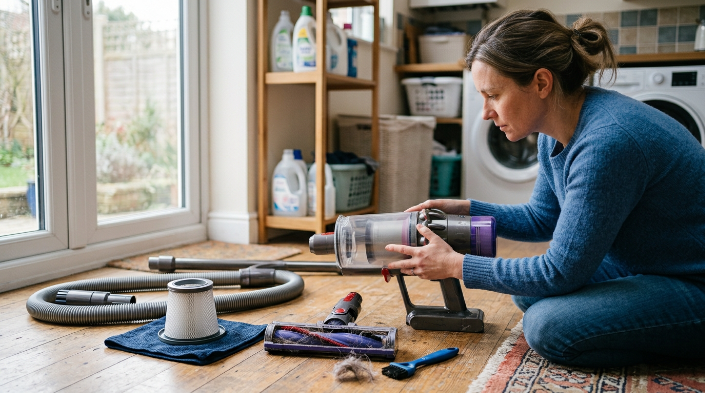
Fix the simple airflow problems first. You usually don’t need to open the motor housing or perform electrical repairs.
- Disconnect the power. Unplug a corded vacuum or remove the battery when your model permits it.
- Empty the dirt container. Empty a bagless bin or replace a disposable bag when required.
- Inspect the filters. Clean or replace them only as directed by the manufacturer.
- Check the hose. Disconnect removable sections and look through them for trapped debris.
- Inspect the wand. Pay close attention to narrow joints and bends.
- Check the floorhead. Remove accessible hair, paper, thread, and compacted debris.
- Reseat removable parts. Reinstall the bin, filter, covers, hose, and attachments securely.
- Inspect visible seals. Look for cracks, deformation, or seals that have slipped out of position.
- Test cautiously. Reassemble the machine completely before briefly checking whether the whistle has disappeared.
Don’t automatically wash a dirty filter
Some vacuum filters can be washed, while others should remain dry or be replaced. Water can damage a filter that wasn’t designed for washing.
Follow the owner’s manual for your exact vacuum. A washed filter should also be completely dry before it goes back into the machine.
Don’t force a clog deeper into the vacuum
If you find debris in a removable hose, work from the nearest accessible end. Avoid sharp tools that could puncture flexible tubing.
A stubborn blockage inside a non-removable or powered assembly may need professional service. Forcing it can turn a simple clog into a damaged part.
Is the Whistle Coming From the Filter, Hose, or Seal?
The pattern of the noise can help separate these three common causes. Look for changes that happened just before the whistle started.
Filter problems
A dust-loaded filter restricts the route air needs to follow. A filter installed incorrectly can also leave a narrow gap around its edge.
- Whistle started after heavy cleaning.
- Suction has gradually weakened.
- The filter looks heavily coated with dust.
- The sound started after the filter was removed and reinstalled.
Consumer guidance consistently recommends following model-specific filter instructions. Filter materials and replacement schedules aren’t universal.
Hose problems
Hoses are especially good at hiding partial clogs. Flexible bends can trap hair, paper, and larger debris where you can’t see them from one end.
- Look through detachable straight sections.
- Check both ends of the hose.
- Inspect bends for bulges or trapped objects.
- Look for splits around heavily flexed areas.
- Check connection collars for damage.
Seal and connection problems
A small leak often appears after routine maintenance because a part didn’t go back exactly as intended. The vacuum may still clean while making a new whistle.
I always recheck anything I touched immediately before the noise began. That simple rule often prevents unnecessary disassembly.
When Is a Vacuum Whistling Noise Serious?
A whistle by itself often points to airflow, but some accompanying symptoms change the situation. Stop using the vacuum when the sound comes with signs of electrical or mechanical trouble.
- Burning odor: Stop immediately if you notice a sharp electrical or melting smell.
- Smoke: Disconnect the machine safely and don’t restart it.
- Sparks: Stop using the appliance and arrange qualified service.
- Grinding: A grinding or scraping sound may indicate a moving component is damaged or obstructed.
- Severe overheating: Let the machine cool and investigate the cause before using it again.
- Damaged cord: Don’t continue using a corded vacuum with exposed or damaged wiring.
- Abnormal battery condition: Stop using a cordless vacuum if its battery is swollen, leaking, damaged, or unusually hot.
Expert Alert: If the whistle remains after the accessible airflow path, filters, bin, hose, floorhead, and seals are checked, don’t open the motor or electrical housing. Have the manufacturer or a qualified appliance technician diagnose the internal problem.
A whistle that changes into grinding, knocking, or harsh mechanical squealing deserves more caution. Those sounds may come from a brush assembly, bearing, drive system, fan, or motor component.
How Can I Stop the Whistling From Coming Back?
Most preventable whistles come back when airflow gradually becomes restricted again. Routine vacuum care helps you catch those restrictions earlier.
- Empty the bin: Don’t let debris become tightly packed beyond the manufacturer’s fill guidance.
- Check disposable bags: Replace them according to the vacuum’s indicator or instructions.
- Inspect filters: Clean or replace them according to the manual.
- Clear the brush roll: Remove hair, thread, and fibers before they accumulate heavily.
- Inspect the hose: Check it when suction or sound changes unexpectedly.
- Reseat parts carefully: Make sure bins, covers, attachments, and filter housings close correctly after maintenance.
- Watch seals: Replace damaged user-serviceable seals with the correct part for your model.
Good vacuum maintenance also matters for household dust control. The U.S. Environmental Protection Agency’s indoor dust guidance notes that vacuuming and cleaning can disturb settled particles, so filtration and correct machine maintenance matter.
For people managing asthma triggers, the CDC’s asthma-control guidance includes regular vacuuming with a HEPA-equipped vacuum among its dust-mite control recommendations. The filter still needs to be installed and maintained as its manufacturer directs.
HEPA means high-efficiency particulate air. It describes a specific type of fine-particle filtration, but a HEPA filter won’t fix a clogged hose, cracked seal, or incorrectly assembled vacuum.
If you’re comparing how noisy different vacuums are by design, Consumer Reports’ vacuum testing methodology explains that it measures vacuum noise with a sound meter under controlled test conditions.
Section Takeaway: Preventing a repeat whistle mostly comes down to protecting airflow. Keep the dirt path clear, maintain the filters correctly, and pay attention whenever your vacuum’s normal sound changes.
Vacuum Whistling Noise FAQ
Why is my vacuum making a high-pitched whistling sound?
A high-pitched whistle usually comes from air moving through a restricted opening or small leak. Check the hose, filters, wand, floorhead, dust container, removable covers, and visible seals before assuming the motor is damaged.
Can a clogged vacuum filter cause whistling?
Yes, a heavily restricted filter can change normal airflow and may create an unusual high-pitched sound. Clean only filters identified as washable, and follow your vacuum’s manual for cleaning and replacement instructions.
Why does my vacuum whistle after I empty the bin?
The bin or one of its seals may not have been seated correctly after emptying. Remove it with the vacuum switched off, inspect the connection, and reinstall it exactly as the manufacturer directs.
Can a vacuum hose leak make a whistling noise?
Yes. A crack, loose connection, or damaged hose collar can allow air to enter through a narrow opening and produce a whistle. Inspect the hose and its removable connection points for visible damage.
Why is my vacuum whistling but still picking up dirt?
A small air leak or partial blockage may change the sound before suction becomes obviously weak. Don’t ignore the change; inspect the airflow path and connections before the restriction becomes worse.
Should I keep using a vacuum that whistles?
A mild whistle without other symptoms usually warrants an airflow inspection rather than panic. Stop using the machine if the sound comes with grinding, smoke, sparks, burning odors, severe overheating, damaged wiring, or abnormal battery behavior.
Does a whistling vacuum mean the motor is dying?
Not necessarily. Clogged hoses, dirty filters, loose connections, blocked floorheads, and damaged seals are simpler causes to rule out first. Internal motor diagnosis becomes more reasonable after accessible maintenance areas have been checked.
If your vacuum suddenly starts whistling, follow the air. Start with the bin or bag, filter, hose, wand, floorhead, and visible seals.
Most importantly, don’t turn routine troubleshooting into electrical repair. If the whistle survives the safe checks or appears with serious warning signs, let a qualified technician take over.
