
Why Does My Vacuum Belt Keep Breaking?

Quick Answer
If your vacuum belt keeps breaking, the belt usually isn’t the only problem. A jammed brush roll, debris around the roller ends, the wrong replacement belt, poor alignment, or excess resistance can destroy a new belt quickly. Before installing another one, check why your vacuum brush stops spinning and make sure the roller can move normally.
Most common causes
- Jammed brush roll: Hair, thread, carpet fibers, or small objects can stop the roller while the belt remains under load.
- Stiff roller ends: Hair packed around end caps or bearings can make the brush difficult to turn.
- Wrong belt: A belt that is too short, too long, too narrow, or otherwise incorrect may fail early.
- Bad alignment: A twisted belt or incorrectly seated brush roll can make the belt rub against the housing.
- Heavy resistance: Thick carpet, rug fringe, cords, or swallowed debris can suddenly overload the brush system.
Before replacing it again
- Disconnect the vacuum from power, remove the old belt, and inspect the entire brush area before fitting another replacement.
I know how frustrating this problem gets. You install a fresh belt, vacuum half a room, and suddenly the brush stops again.
When that happens, I stop blaming the belt. In most cases, something else in the brush-drive system is creating enough friction or strain to damage it.
In This Guide
- Why Does a Vacuum Belt Keep Breaking?
- How Can I Find the Cause Before Installing Another Belt?
- What Does the Damage on a Broken Belt Tell You?
- How Do You Install a Vacuum Belt Without Damaging It?
- Can Carpet Height, Floor Type, or Debris Break a Vacuum Belt?
- How Do You Stop Vacuum Belts From Breaking Again?
- Vacuum Belt FAQ
Why Does a Vacuum Belt Keep Breaking?
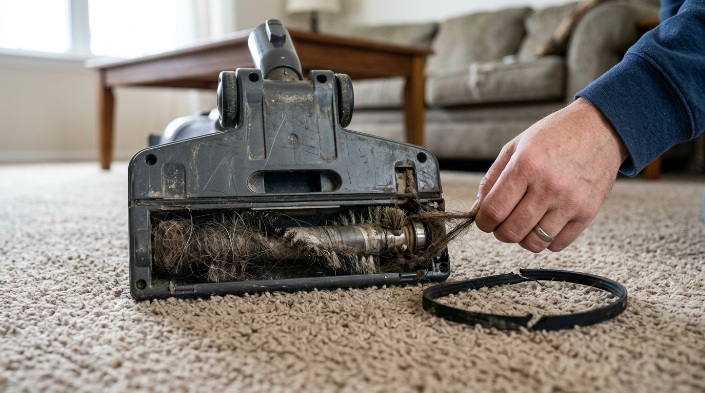
A vacuum belt repeatedly breaks when it faces more heat, friction, stretching, or resistance than it was designed to handle. The most important step is finding what creates that extra load.
Definition: A vacuum drive belt is a flexible loop that transfers rotation from a motor shaft or pulley to the brush roll on belt-driven vacuum cleaners.
A jammed brush roll is one of the first things to check
Hair and string can wind around the roller until it becomes hard to turn. The problem often hides near the roller’s ends rather than across the visible bristles.
I’ve found that cleaning only the center of the brush can be misleading. A roller may look clean while hair remains packed tightly behind an end cap.
- Long hair: It can wrap around both the brush and its axle.
- Pet fur: Dense fur can combine with thread and lint into tight bundles.
- Carpet fibers: Loose strands can work their way toward the roller ends.
- Foreign objects: Rubber bands, cords, socks, and rug fringe can stop the brush suddenly.
If you see heavy buildup, follow a proper vacuum brush roll cleaning routine before installing another belt.
The replacement belt may be wrong
A belt can look close enough and still be incorrect. Small differences in length, width, profile, or material can change its operating tension.
Use the part number recommended for your exact vacuum model. Don’t assume two similar-looking vacuums use interchangeable belts.
The brush roll may be worn or damaged
A cleaned roller should not remain severely stiff, crooked, or rough. Damaged end caps, worn bearings, or a bent brush roll can keep creating resistance.
Consumer Reports’ vacuum cleaner resources also highlight brush-roll hair tangles as a common vacuum problem. That makes the brush area a sensible starting point before replacing more parts.
Section Takeaway: Repeated belt failure is usually a symptom. Check the roller, belt fit, alignment, and resistance before sacrificing another new belt.
How Can I Find the Cause Before Installing Another Belt?
Start with the vacuum disconnected from power. Remove the failed belt and test the parts it normally drives before you install anything new.
1. Inspect the old belt
Don’t throw it away immediately. Its damage pattern can give you useful clues.
- Look for one melted or deeply worn spot.
- Check whether one edge is badly frayed.
- Look for glazing or a shiny surface.
- Check for stretching, cracks, or missing chunks.
2. Turn the brush roll by hand
With the belt removed and the vacuum safely disconnected, check the roller as your owner’s manual allows. It should not feel locked, gritty, or severely restricted.
If it barely moves, don’t install another belt yet. Remove tangled material and inspect both ends of the roller.
3. Check how the brush roll sits in the housing
The roller may have specific left and right end positions. Some end caps also fit into the base in only one orientation.
A brush installed crooked can rub against the housing. That resistance transfers directly to the belt.
4. Inspect the drive area
Look at accessible pulleys or motor shafts for old rubber, debris, sharp damage, or obvious misalignment. Follow your model’s manual before removing covers beyond normal maintenance access.
If your vacuum also makes new squealing, grinding, or rattling sounds, compare those symptoms with this guide to vacuum cleaner noise problems.
Expert Alert: Stop DIY troubleshooting if inspection requires opening the motor, rewiring components, bypassing safety devices, or working on sealed electrical parts. Use a qualified appliance technician.
What Does the Damage on a Broken Belt Tell You?
The way a belt fails can narrow your search. It cannot prove the cause by itself, but it tells you where to look first.
| Belt condition | Likely problem area | What to check first | Best next step |
|---|---|---|---|
| Melted or worn deeply in one spot | Brush roll stopped while drive continued | Roller movement and end caps | Remove the jam before replacing the belt |
| Frayed along one edge | Belt running out of alignment | Brush seating and pulley alignment | Correct the belt path |
| Shiny or glazed surface | Slipping and heat | Correct belt fit and roller resistance | Fix the cause of slipping |
| Snaps soon after installation | Wrong belt, jam, twist, or severe resistance | Part number and brush movement | Do not install another belt until diagnosed |
| Loose, stretched, or repeatedly slips off | Wear, wrong size, or alignment problem | Replacement specification and roller seating | Fit the exact replacement part |
A strong burning-rubber odor is another useful clue. Stop the vacuum instead of running it to see whether the smell disappears.
If you’re dealing with heat or odor too, see the guide to why a vacuum makes a burning smell.
How Do You Install a Vacuum Belt Without Damaging It?
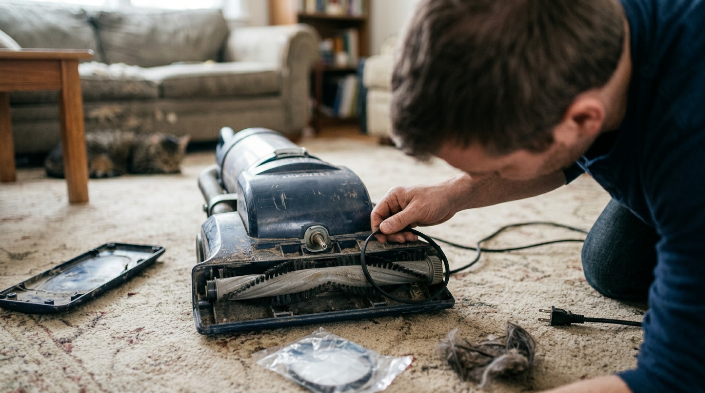
Correct installation matters because a twisted or misplaced belt can fail even when the brush roll is healthy. Follow the instructions for your exact model rather than relying on a universal belt-replacement method.
- Disconnect power. Unplug the vacuum or follow the manufacturer’s battery-removal procedure.
- Confirm the part number. Compare the new belt with the replacement specified for your exact model.
- Clean the brush area. Remove hair, thread, debris, and pieces of the old belt.
- Inspect the roller ends. Make sure hidden tangles are not stopping normal movement.
- Route the belt correctly. Keep it flat unless your model specifically uses another routing method.
- Seat the brush roll fully. Check that both ends sit in their proper slots.
- Turn the roller manually. When your manual permits this check, confirm that the belt tracks properly before closing the base.
New elastic belts can feel tight during installation. Tight does not automatically mean wrong, but excessive stretching is a reason to recheck the part number.
I also avoid forcing a belt with screwdrivers or other sharp tools. One small nick can create a weak point that grows under repeated flexing.
Can Carpet Height, Floor Type, or Debris Break a Vacuum Belt?
Yes. Anything that sharply increases resistance at the brush roll can place extra load on a belt-driven vacuum.
Thick carpet can increase brush resistance
Some upright vacuums include adjustable carpet-height settings. Setting the cleaner head too low on thick carpet can make the brush harder to rotate.
If your model has height adjustment, use the setting recommended for that floor. Don’t assume the lowest position gives the deepest clean.
Rug fringe can stop a roller suddenly
Loose tassels and fringe can wrap around a brush almost instantly. That sudden stop can damage the belt or pull it off its normal path.
- Avoid running a powered brush directly over fringe.
- Move electrical cords before vacuuming.
- Pick up socks, string, ribbons, and small toys.
- Watch for loose carpet threads around damaged flooring.
One swallowed object may explain a sudden failure
If the vacuum worked normally and the belt broke at one specific moment, inspect the floorhead carefully. A coin, clip, small toy, or similar object may have briefly locked the roller.
Remove the obstruction before fitting another belt. Otherwise, you may repeat the same failure immediately.
How Do You Stop Vacuum Belts From Breaking Again?
The best prevention is reducing resistance before it becomes severe. A few short checks can protect the belt, brush roll, and other moving parts.
- Check the brush regularly: Remove hair before it forms dense bands around the roller.
- Inspect the ends: Look behind accessible end caps when your vacuum’s design allows it.
- Use the exact belt: Match the replacement to the model and manufacturer specification.
- Respect floor settings: Use the appropriate brush or height setting for carpet and hard floors.
- Remove hazards first: Pick up cords, fringe, ribbons, socks, and larger debris.
- React to new symptoms: Stop when you hear squealing or smell burning rubber.
I like to include the brush area in my normal vacuum maintenance routine. It takes less effort to cut away early hair buildup than to replace another damaged belt.
Regular vacuuming is also part of household dust control. The EPA’s indoor particulate matter guidance recommends routine cleaning and notes that household dust can include pollen, mold spores, pet dander, and dust-mite material.
For households managing allergies or asthma, the Asthma and Allergy Foundation of America and CDC asthma guidance also discuss regular vacuuming and HEPA filtration as parts of broader allergen-control routines.
That makes keeping the vacuum itself functional worthwhile. A brush that is jammed or a belt that continually fails cannot do its normal floor-cleaning job.
Expert Alert: Stop using the vacuum if you notice smoke, sparks, melting plastic, a strong electrical odor, damaged wiring, or abnormal battery heat. Those problems require qualified inspection rather than repeated DIY testing.
Section Takeaway: Keep the roller clear, use the correct belt, avoid brush-roll hazards, and investigate new noise or heat early. Those habits prevent many repeat belt failures.
Vacuum Belt FAQ
Why does my new vacuum belt break immediately?
A new belt that breaks almost immediately usually points to another problem. Check for a locked brush roll, debris around the roller ends, incorrect belt size, a twisted installation, poor alignment, or something rubbing inside the floorhead before installing another belt.
Can hair cause a vacuum belt to break?
Yes. Hair can wrap around the brush roll and collect near its ends. That extra resistance makes the roller harder to turn, which can increase belt friction and heat. Remove the hair completely before replacing a damaged belt.
Why does my vacuum belt smell like burning rubber?
A rubbery burning smell often means the belt is slipping or rubbing while the motor continues turning. Shut the vacuum off and disconnect power. Check the belt, brush roll, roller ends, and belt path before testing the machine again.
Can the wrong vacuum belt still fit?
Yes. A replacement belt may physically go onto the vacuum but still have the wrong dimensions or profile. That can create incorrect tension or poor tracking. Match the belt’s specified part number to your exact vacuum model whenever possible.
Why does my vacuum belt keep slipping off?
A belt may repeatedly come off because it is stretched, incorrectly routed, or the wrong size. A brush roll that is not seated correctly can also throw the belt sideways. Inspect the belt path and roller position before replacing more parts.
Should I keep using my vacuum if the belt keeps breaking?
No. Repeatedly fitting belts without finding the cause can create more heat and wear. Disconnect the vacuum and diagnose the brush roll, belt fit, alignment, and accessible drive parts first. Seek professional repair if an internal mechanical or electrical fault is suspected.
Final Takeaway: If your vacuum belt keeps breaking, don’t treat every broken belt as an isolated failure. Find what is making the brush difficult to drive, correct that problem, and then install the proper replacement belt.
A five-minute brush-roll inspection can save several replacement belts. It can also tell you when the problem has moved beyond routine maintenance and needs professional repair.