
Vacuum Maintenance Tips for Beginners: A Complete 2026 Guide

Quick Answer
The best vacuum maintenance tips for beginners are simple: empty the bin or check the bag regularly, remove hair from the brush roll, inspect filters, clear blockages, and keep washable parts completely dry before reinstalling them. Your vacuum’s manual should always override a generic schedule because filter and component designs vary; Consumer Reports’ filter-care guidance makes the same important point about following model-specific instructions.
Beginner Vacuum Maintenance Checklist
- Empty collected dirt: Don’t allow a dustbin or disposable bag to become tightly packed.
- Inspect the filter: Clean or replace it only according to your model’s instructions.
- Clear the brush roll: Remove wrapped hair, string, thread, and fibers before they restrict movement.
- Check the airflow path: Inspect the floorhead, hose, wand, and openings when suction drops.
- Look for damage: Watch for cracked hoses, worn belts, damaged cords, or abnormal battery behavior.
- Dry washed parts: Never rush a damp washable filter or bin back into a dry vacuum.
One Rule to Remember
- Protect airflow first, then follow your owner’s manual for exact cleaning and replacement intervals.
Vacuum maintenance can look complicated when you’re staring at filters, hoses, rollers, bins, belts, and attachments for the first time. In practice, most routine care comes down to keeping dirt out of places where it restricts airflow or movement.
I’ve found that a quick inspection during normal cleaning is easier than waiting for weak suction or strange noises. This beginner guide covers the habits I use to keep household vacuums clean, safe, and ready to work.
In This Guide
- Why Does Vacuum Maintenance Matter for Beginners?
- How Often Should You Maintain a Vacuum Cleaner?
- What Vacuum Maintenance Should You Do After Every Use?
- How Do You Clean Filters, Brush Rolls, and Airflow Paths Safely?
- Does Vacuum Maintenance Change by Vacuum Type?
- What Warning Signs Mean Your Vacuum Needs Attention?
- Vacuum Maintenance FAQ
Why Does Vacuum Maintenance Matter for Beginners?
Vacuum maintenance matters because dirt affects more than the dustbin. Hair can restrict a brush roll, fine dust can load a filter, and larger debris can block the airflow path.
Definition: Vacuum maintenance is the routine inspection, cleaning, and care of a vacuum’s dirt collection system, filters, airflow path, brush system, attachments, and accessible wear parts.
A vacuum works by moving air through the cleaning head and machine. Anything that unnecessarily restricts that path can affect how the vacuum behaves.
Airflow should be your first priority
For beginners, airflow is the easiest maintenance concept to understand. Start where dirt enters the machine and follow its route toward the exhaust.
- Floorhead: Check the intake for packed debris.
- Brush roll: Remove hair and string that limit rotation.
- Hose and wand: Look for clogs when suction changes suddenly.
- Bin or bag: Don’t let collected dirt become tightly packed.
- Filters: Maintain them according to the owner’s manual.
I like doing this inspection in that order because it prevents random troubleshooting. You can often spot the problem before taking apart anything complicated.
Maintenance also helps control escaped dust
A poorly seated filter, damaged seal, overfilled bin, or incorrectly installed bag can allow more dust to escape the machine. Correct assembly matters as much as cleaning.
For homes concerned about allergens, the CDC’s asthma-control guidance includes regular vacuuming with a HEPA-equipped vacuum among its dust-mite exposure recommendations.
The Asthma and Allergy Foundation of America also discusses vacuuming as part of a wider indoor-allergen control strategy. Vacuum maintenance should support that cleaning routine, not replace other dust-control measures.
How Often Should You Maintain a Vacuum Cleaner?
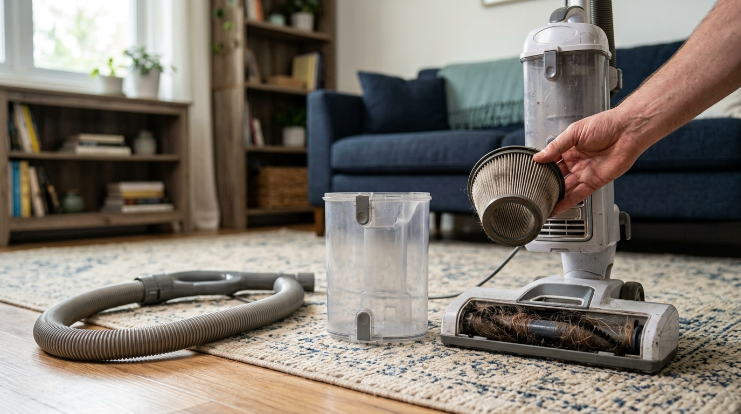
There is no single maintenance schedule that fits every vacuum. Usage, pet hair, floor type, filter design, and manufacturer instructions all change how often a component needs attention.
As of 2026, I treat the schedule below as an inspection guide, not a fixed replacement calendar. Your manual should decide exact filter washing, filter replacement, belt, and battery requirements.
| Vacuum Part | Beginner Check Interval | Check Earlier When |
|---|---|---|
| Dustbin | During or after normal use | Debris reaches the fill line or airflow weakens |
| Disposable bag | Check during regular use | Bag indicator activates or suction changes |
| Brush roll | About weekly in hair-heavy homes | Hair or thread becomes visible |
| Hose and wand | About monthly | Suction drops suddenly or debris rattles inside |
| Filters | Inspect about monthly | Fine dust, heavy use, odor, or a maintenance alert appears |
| Cord or battery | During routine use | You notice damage, swelling, abnormal heat, or charging trouble |
Pet hair changes the schedule
Long hair and pet fur can wrap around rollers quickly. I check the brush roll more often in these homes instead of waiting for a monthly cleaning day.
Fine debris can also load filters faster. Renovation debris and specialized hazardous dust require equipment approved for that material rather than an ordinary household vacuum.
Don’t confuse inspection with replacement
A monthly filter check doesn’t mean every filter needs monthly replacement. Some filters are washable, some are dry-clean only, and others are disposable.
That’s why the manual matters. Generic internet schedules can’t account for every filter material or vacuum design.
What Vacuum Maintenance Should You Do After Every Use?
You don’t need to dismantle your vacuum after every cleaning session. A simple visual check catches many common problems.
- Turn the vacuum off: Disconnect mains power before touching moving parts, or remove the battery when your model allows it.
- Check the dirt level: Empty the bin when needed or inspect the disposable bag.
- Look at the floorhead: Remove obvious hair, thread, paper, or debris around the intake.
- Inspect attachments: Clear visible debris before returning tools to storage.
- Check for unusual heat or odor: Don’t ignore a new burning smell or unusually hot housing.
- Store it dry: Keep the vacuum and attachments in a stable, dry indoor location.
How should you empty a bagless vacuum?
Remove the bin according to the manufacturer’s instructions and keep it close to the trash container while emptying. This can reduce the amount of loose dust you stir up.
Don’t automatically wash the bin after every use. Wash removable components only when the manufacturer permits it, and keep powered contacts or electronics dry.
What about a bagged vacuum?
Check the bag before it becomes packed. Replace disposable bags instead of attempting to wash or reuse them unless the manufacturer specifically designed them for reuse.
Make sure the replacement bag sits correctly. A poorly fitted bag can interfere with the machine’s intended dirt path.
How Do You Clean Filters, Brush Rolls, and Airflow Paths Safely?
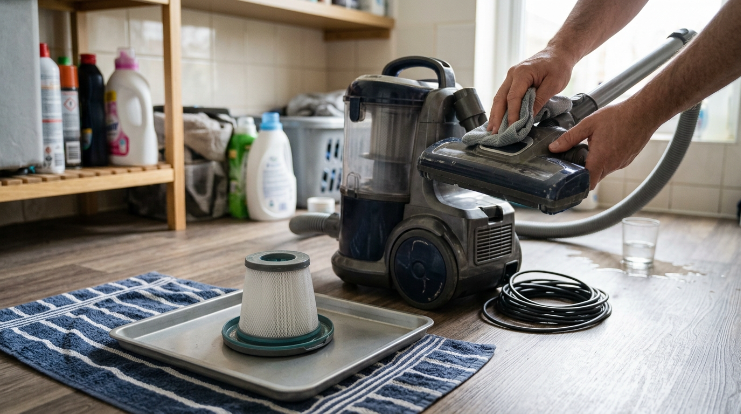
Start by disconnecting power. Then clean only the components the manufacturer identifies as user-serviceable.
How should beginners clean vacuum filters?
Remove the filter and identify its type before introducing water. Never assume that a dirty filter is washable.
- Washable filter: Rinse or wash it only as the manual directs.
- Non-washable filter: Remove loose debris using the approved dry-cleaning method or replace it when required.
- Pre-motor filter: Install it correctly because it helps protect internal components from debris.
- Exhaust filter: Make sure it sits properly before closing the housing.
HEPA means high efficiency particulate air. The EPA’s HEPA filter explanation provides the technical definition, but remember that a HEPA-labeled filter is only one part of a complete vacuum system.
Let washable filters dry completely before reinstalling them. Never rush this step because moisture and a dry vacuum’s airflow system are a poor combination.
How do you clean a vacuum brush roll?
Turn the floorhead over with power disconnected. Look for hair, thread, string, and fibers wrapped around the roller.
- Remove the brush roll if your model provides user-accessible removal.
- Cut wrapped fibers carefully without damaging bristles or nearby parts.
- Pull loosened hair away from the roller and its ends.
- Check that the roller can move as intended before reassembly.
- Reinstall covers, latches, or removable pieces correctly.
A roller can look mostly clean while hair remains packed near its ends. Those areas deserve a closer look in homes with long-haired people or pets.
How do you check a hose for blockages?
A sudden suction loss often makes the hose and wand worth inspecting. Disconnect removable sections and look through accessible openings.
- Check the hose entrance and exit.
- Inspect detachable wands and extension tubes.
- Look inside the floorhead inlet.
- Check bends where larger debris can become trapped.
- Avoid sharp tools that could puncture a flexible hose.
I prefer checking the airflow path before assuming the motor has failed. A small toy, compacted hair, or piece of paper can create surprisingly frustrating symptoms.
Should you disinfect vacuum parts?
Routine cleaning is usually more important than routine chemical disinfection. If disinfection is necessary, first remove visible dirt and use products only on compatible surfaces.
Keep disinfectant away from motors, charging contacts, switches, circuit areas, and filters unless the manufacturer specifically approves its use there.
Section Takeaway: Clean accessible vacuum parts according to their material and manufacturer instructions. Never assume a filter, hose, brush assembly, or powered component can safely be washed.
Does Vacuum Maintenance Change by Vacuum Type?
Yes. The same basic rules apply, but different vacuum designs place dirt, filters, brushes, batteries, and sensors in different locations.
| Vacuum Type | Main Maintenance Focus | Common Beginner Oversight |
|---|---|---|
| Upright | Brush roll, belt area, filters, hose, bag or bin | Ignoring hair around the roller |
| Canister | Bag or bin, long hose, wand, powerhead | Missing partial hose blockages |
| Cordless stick | Small bin, filters, roller, battery contacts | Letting a small bin become packed |
| Robot | Main brush, side brush, wheels, sensors, bin, filter | Forgetting sensors and wheel areas |
Upright and canister vacuums
These machines often give you more airflow components to inspect. Pay close attention to removable hoses, powered heads, bags or bins, and accessible filters.
Bagged models also need the correct replacement bag. Don’t substitute something that doesn’t fit or seal as the manufacturer intended.
Cordless stick vacuums
Stick vacuums often have smaller dustbins, so dirt can reach the fill line quickly. Their compact filters may also need regular inspection during heavy use.
Watch the battery as well. Charging problems, swelling, leakage, or abnormal heat are not routine cleaning issues.
Robot vacuums
Robot vacuums add wheels, side brushes, sensors, charging contacts, and navigation components to your maintenance list. Hair can collect around wheel axles as well as the main brush.
- Empty or inspect the dustbin.
- Clean the main and side brushes.
- Remove hair from accessible wheel areas.
- Wipe sensors as the manual directs.
- Keep charging contacts clean and dry.
- Maintain filters according to the manufacturer’s schedule.
What Warning Signs Mean Your Vacuum Needs Attention?
Weak suction is only one sign of a maintenance problem. Noise, heat, odor, brush behavior, and dust leakage can also tell you where to start looking.
| What You Notice | Check First |
|---|---|
| Gradually weaker suction | Bin, bag, filter, and airflow path |
| Sudden suction loss | Hose, wand, floorhead, or major blockage |
| Brush makes a new noise | Hair, string, roller ends, or accessible belt area |
| Dust escaping | Filter seating, seals, bag, bin, and connections |
| Vacuum becomes unusually hot | Airflow restrictions, filter, bin, bag, brush, or blockage |
When should you stop troubleshooting yourself?
Routine maintenance ends when the problem moves into electrical, motor, battery, or internal repair work. Don’t open powered components unless the manufacturer specifically describes that procedure as user service.
Expert Alert: Stop using the vacuum if you see smoke, sparks, exposed wiring, melted plastic, battery swelling, leaking battery material, or a strong electrical-burning smell. Disconnect it safely and have a qualified appliance technician inspect the machine.
A vacuum that repeatedly overheats after accessible filters, bins, bags, brushes, and airflow paths have been checked may also need professional diagnosis.
Don’t keep restarting an overheating vacuum
Allow the machine to cool and identify the cause first. Repeatedly restarting it doesn’t remove a blockage or correct a damaged component.
This is one place where beginners often save time by stopping early. Maintenance should solve straightforward dirt and debris problems, not become electrical repair.
Vacuum Maintenance FAQ
What is the most important vacuum maintenance task?
Keeping the airflow path clear is the best starting point. Check the dustbin or bag, filters, hose, wand, floorhead, and other accessible openings whenever performance changes. Then inspect the brush roll for hair or fibers that restrict movement.
How often should a beginner clean a vacuum filter?
There is no universal filter-cleaning interval. Inspect it regularly, such as during a monthly maintenance check, but follow your vacuum’s manual for actual cleaning and replacement instructions because filter materials differ between models.
Can I wash every vacuum filter with water?
No. Some vacuum filters are washable while others must remain dry or be replaced. Identify the filter type in your owner’s manual before rinsing it, and let every approved washable filter dry completely before reinstalling it.
Why does my vacuum lose suction even after I empty the bin?
The restriction may be somewhere else. Check the filter, hose, wand, floorhead, attachment openings, and seals. A partial blockage can reduce airflow even when the dirt container looks empty.
How often should I remove hair from the brush roll?
Inspect the roller whenever you see visible tangles. Homes with pets or long hair may benefit from a weekly check, while lighter-use homes may need less frequent attention.
Should I use compressed air to clean my vacuum?
Don’t blow compressed air into motors, electronics, filters, sensors, or internal housings unless the manufacturer specifically recommends it. It can push debris deeper into the machine or damage delicate components.
When should I replace my vacuum instead of maintaining it?
Routine maintenance makes sense when the problem is dirt, hair, a clogged filter, or an accessible blockage. Consider professional repair or replacement when serious motor, electrical, structural, or battery problems make continued use unsafe or uneconomical.
Start small. Empty collected dirt, inspect the brush roll, keep airflow paths open, and learn which filters your vacuum uses.
Once those habits become automatic, vacuum maintenance stops feeling like appliance repair. It becomes a few simple checks that fit naturally into your normal home-cleaning routine.