
What’s the Best Way to Vacuum Tile Floors? A Practical Cleaning Guide

Quick Answer
The best way to vacuum tile floors is to use a suitable hard-floor attachment or gentle soft roller, move in slow overlapping passes, and pay extra attention to grout lines, edges, and corners. Turn off an aggressive rotating brush when appropriate, check that the floor and vacuum head are free of abrasive grit, and vacuum before mopping. Always follow the care instructions for your specific tile.
Tile floors are relatively straightforward to maintain, but dust, sand, crumbs, and pet hair can collect in grout lines and along the edges of cabinets and walls. Using the wrong vacuum setting can also scatter lightweight debris instead of collecting it efficiently.
A good cleaning routine combines the right floor attachment with controlled passes and targeted cleaning of areas the main vacuum head may miss. The aim is to remove dry debris without unnecessarily abrading the finish or pushing dirt into the grout.
1. Prepare the Floor Before You Start Vacuuming
Before switching on the vacuum, clear the area and check for anything that could obstruct the floor head or scratch the tile.
- Move loose objects: Pick up rugs, toys, charging cables, and small items that could become trapped in the vacuum.
- Check for wet spills: Wipe up liquids separately unless your machine is specifically designed for wet pickup.
- Inspect the floor head: Remove trapped hair, visible grit, and debris that could drag across the surface.
- Empty the dustbin or check the bag: Follow the vacuum manufacturer’s guidance to maintain effective airflow.
- Check the wheels and brush: Look for embedded particles or damage, especially if the tile has a polished finish.
These checks are particularly useful in kitchens and entryways, where sand and gritty dirt can accumulate. Hard particles trapped beneath a vacuum head or wheel may scratch a surface even when the tile itself is durable.
2. Choose the Right Vacuum Setting and Floor Attachment
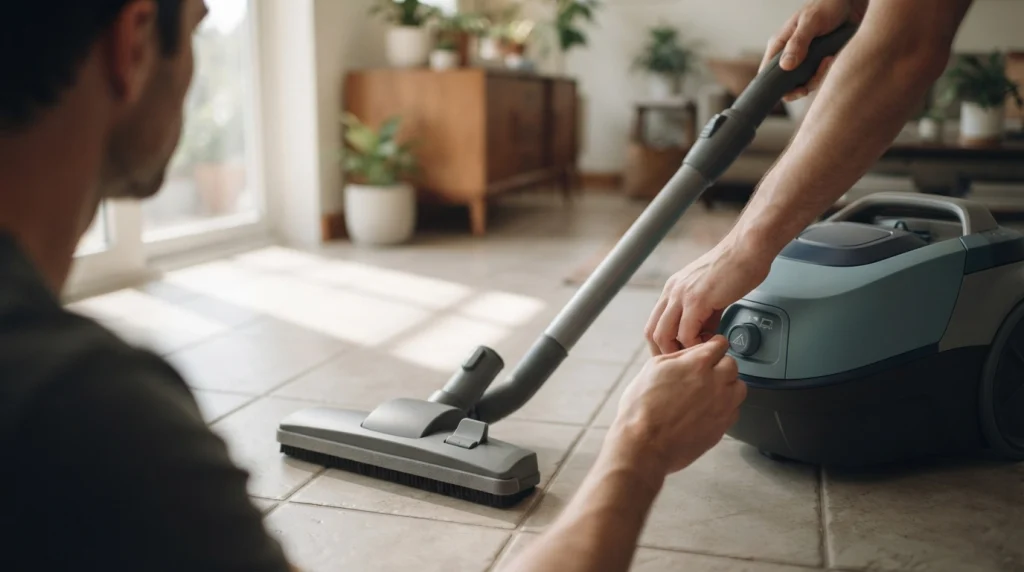
A dedicated hard-floor head, a suitable soft roller, or a suction-only setting is generally a good starting point for tile. The best option depends on the tile finish, the debris you need to remove, and the vacuum manufacturer’s instructions.
For example, Miele’s guidance on vacuum brushes describes soft-bristled floor tools for hard surfaces and specialized brush designs for delicate finishes.
| Vacuum setting or tool | Best use | What to consider |
|---|---|---|
| Hard-floor attachment | Routine cleaning across the room | Check that the head suits your particular surface. |
| Soft roller | Fine dust, crumbs, and hair | Remove wrapped hair and trapped grit regularly. |
| Brush roll switched off | Loose debris on suitable hard floors | Useful when a rotating brush scatters debris; not available on every vacuum. |
| Crevice tool | Edges, corners, and narrow gaps | Use for targeted cleaning rather than the whole floor. |
For many smooth tile floors, switching off a stiff carpet brush helps prevent debris from being flicked away from the suction inlet. However, not every brush roll is unsuitable for tile. A floor head specifically designed for hard surfaces may work well with its roller running.
If you have glossy, polished, or otherwise delicate tile, start with the gentlest manufacturer-approved attachment and check for visible marks. Do not assume that stronger suction or a more aggressive brush will produce a better result.
3. Vacuum Tile Floors in Slow, Overlapping Passes
Work methodically from the far side of the room toward the exit. Slow, slightly overlapping passes help prevent missed strips and give the suction inlet time to collect debris.
- Start at the far end: Choose a clear path that lets you work toward the doorway without repeatedly crossing cleaned areas.
- Move in straight lines: Guide the floor head steadily rather than sweeping it rapidly from side to side.
- Overlap each pass: Move the next path slightly over the previous one so narrow strips of dust are less likely to remain.
- Repeat where necessary: Make another pass over visible crumbs or grit, approaching from a different direction if debris remains.
- Inspect the result: Look across the floor in good light to spot particles left near tile edges or textured areas.
Textured tile may need more attention than smooth tile because its surface contains small recesses where debris can settle. If the floor head is struggling to pick up particles, check the attachment, airflow, and setting before repeatedly passing over the same area.
Tip
If crumbs keep moving ahead of the vacuum, slow down and check whether the brush roll should be switched off or a different hard-floor attachment should be used.
4. Pay Special Attention to Grout Lines and Edges
Vacuuming the open tile surface is only part of the job. Recessed grout lines, baseboards, cabinet edges, and corners can retain dirt after the main floor head has passed.
Clean recessed grout lines
Guide the floor head across the grout lines slowly. If visible dust remains in deeper joints, switch to a compatible narrow attachment and move it along the affected lines. Use a brush or attachment that will not damage the tile, grout, or surrounding finish.
Vacuuming removes loose particles, but it does not necessarily remove stains, greasy residue, or grime that has bonded to the grout. Those problems require a separate cleaning method appropriate for the grout and tile materials.
Finish along walls and furniture
Use a crevice tool to collect dust along baseboards, beside appliances, around toilet bases, and in narrow spaces the main floor head cannot reach. Move furniture only when it is safe and practical to do so.
If you repeatedly find dirt in the same place, check whether the floor head can reach the area properly. A narrow attachment may be more effective than making several passes with a wide head that cannot fit into the gap.
5. Vacuum Before Mopping, Not After
For routine floor care, remove loose dust, grit, crumbs, and hair before wet cleaning. Otherwise, the mop can spread debris across the floor or push it into grout joints.
The Home Depot’s tile-cleaning guide also recommends vacuuming as part of regular maintenance and before mopping.
After vacuuming, assess what remains:
- Loose dust or grit: Make another targeted vacuum pass.
- Sticky food residue: Use a suitable tile cleaner and follow its directions.
- Visible grout staining: Choose a cleaning method compatible with the grout and tile.
- Wet spills: Use an appropriate cloth or wet-cleaning appliance rather than a dry-only vacuum.
Do not assume every tile can be cleaned with the same liquid or treatment. Natural stone, including marble and limestone, can be sensitive to acidic cleaners. Check the flooring manufacturer’s care guidance before choosing a solution.
6. Adjust Your Routine for Different Tile Floors
The basic vacuuming method stays similar across many tiled floors, but the surface finish and surrounding conditions affect which attachment and cleaning routine make sense.
- Glossy ceramic or porcelain: Use a clean, compatible hard-floor head and inspect it for trapped grit that could leave visible marks.
- Textured tile: Move slowly and pay extra attention to surface recesses and grout joints.
- Natural stone: Follow the stone supplier’s maintenance instructions and avoid attachments that could abrade the finish.
- Homes with pets: Vacuum hair before it gathers along edges and grout lines. Clean hair from the roller when needed.
- High-traffic entryways: Remove gritty debris regularly before it gets carried farther into the home.
There is no single vacuum setting that suits every tile and machine. If your vacuum’s instructions warn against a particular floor surface or brush type, follow that guidance instead of relying on a general cleaning tip.
7. Avoid Common Tile-Vacuuming Mistakes
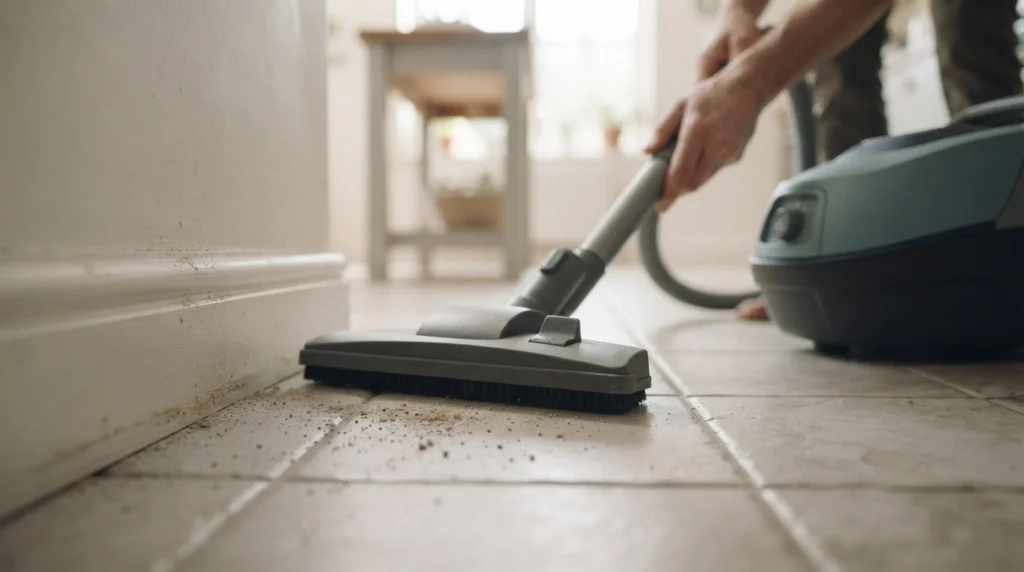
Small mistakes can make vacuuming less effective or increase the chance of leaving marks. Watch for these common problems.
- Using a stiff carpet brush without checking suitability: Choose a floor head approved for the tile, especially on delicate or polished surfaces.
- Moving too quickly: Fast passes may scatter light debris or miss particles in textured areas.
- Ignoring trapped grit: Check the head, wheels, and brush when marks appear or the vacuum starts dragging.
- Skipping edges and corners: Finish with a crevice attachment where the main head cannot reach.
- Vacuuming liquids with a dry-only machine: This can damage equipment and create an electrical hazard. Check the manual first.
- Expecting vacuuming to remove stains: A vacuum collects loose debris; sticky films and embedded discoloration need suitable wet cleaning.
- Neglecting maintenance: A clogged filter, full bin, or tangled roller can reduce cleaning performance.
If the floor still looks dusty after vacuuming, inspect the attachment and dustbin first. Then check whether the remaining material is loose debris or residue that requires a different cleaning approach.
8. How Often Should You Vacuum Tile Floors?
Vacuum according to how quickly dirt accumulates rather than following one rigid schedule. Entryways, kitchens, and rooms used by pets may need more frequent attention than lightly used spaces.
- Busy areas: Vacuum as needed to keep grit, crumbs, and hair from accumulating.
- Ordinary living areas: Set a regular routine based on visible dust and foot traffic.
- Pet areas: Remove hair regularly before it gathers around furniture and grout lines.
- Before mopping: Vacuum whenever loose debris is present so wet cleaning starts with a clear surface.
Consistent light cleaning is often easier than waiting until visible dirt has built up. The right frequency depends on household activity, outdoor dirt, pets, and the texture of the tile.
Key Insight
A clean tile floor depends on more than suction power. A compatible floor head, debris-free wheels, deliberate passes, and attention to grout and edges are all part of an effective routine.
A Useful Accessory for Hard-Floor Cleaning
If your current vacuum lacks a suitable floor head, compare compatible hard-floor attachments with soft bristles or a design intended for tile. Check the connection type and the vacuum manufacturer’s compatibility guidance before buying.
Check Compatible Attachments on Amazon
As an Amazon Associate, we earn from qualifying purchases.
Frequently Asked Questions
Can you vacuum tile floors every day?
Yes. Daily vacuuming can be appropriate in busy areas or homes with pets, provided you use a suitable attachment and follow the floor and vacuum manufacturer’s instructions. Less-used rooms may need cleaning less often.
Should you turn off the brush roll when vacuuming tile?
Turn it off if the vacuum scatters debris or its instructions recommend suction-only cleaning on your type of tile. A soft roller or hard-floor brush designed for the surface may be suitable with the brush running.
Can vacuuming scratch ceramic or porcelain tile?
It is possible for abrasive grit trapped beneath the floor head or wheels to mark a surface. A compatible attachment, clean wheels, and regular inspection help reduce this risk, particularly on polished finishes.
How do you remove dust from deep grout lines?
Move the floor head slowly across the joints, then use a compatible crevice attachment for remaining loose debris. If the grout is stained or has bonded grime, vacuuming alone will not restore its appearance.
Is sweeping or vacuuming better for tile floors?
Both can remove loose debris, but a suitable vacuum can collect fine dust, hair, and particles from accessible grout recesses without pushing them around with a broom. A soft-bristled broom remains useful for debris that is too large for the vacuum head.
Should you mop immediately after vacuuming tile?
You can mop after vacuuming when the floor needs wet cleaning. Use a cleaner suitable for the tile and grout, follow its instructions, and avoid wet cleaning methods that the flooring manufacturer advises against.
Conclusion
The best way to vacuum tile floors is to match the floor head to the surface, remove trapped grit, and work in slow, overlapping passes. Finish with the grout lines, edges, and corners instead of assuming the main floor head has collected every particle.
Vacuum before mopping, use wet-cleaning products suited to your tile, and adjust your routine to the amount of dirt your household brings inside. These straightforward steps help keep tile floors free of loose debris while reducing avoidable wear from unsuitable attachments or trapped abrasive particles.