
Should You Vacuum Before Mopping? The Right Order for Cleaner Floors

Quick Answer
Yes, you should generally vacuum or sweep before mopping. Removing loose dust, crumbs, pet hair, and grit first helps prevent muddy residue, streaks, and debris from spreading across the floor. You can skip separate vacuuming if your floor-cleaning machine is designed to collect dry debris and wet-clean in the same pass.
For most homes, the simplest floor-cleaning order is to remove dry debris first and mop afterward. A vacuum collects loose particles, while a mop deals with remaining dirt, sticky residue, and surface grime that requires wet cleaning.
Reversing these steps can make the job harder. Water can turn loose dust into a film, trap hair against the floor, or drag grit across the surface as you mop. The best routine depends on your flooring, the type of mess, and whether you use separate tools or a combined cleaning machine.
Why Should You Vacuum Before Mopping?
Vacuuming first removes loose dirt before water and a mop pad can spread it around. This usually produces a cleaner finish with less residue and reduces the need to mop the same area repeatedly.
Each method serves a different purpose:
- Vacuuming: Collects dry dust, crumbs, grit, loose hair, and other particles that suction can safely remove.
- Mopping: Lifts suitable surface grime and removes residue that dry cleaning cannot fully address.
When you mop over an unvacuumed floor, loose particles mix with the cleaning solution or collect on the mop pad. Instead of removing the dirt efficiently, you may push it into corners, grout lines, or previously cleaned areas.
Fine grit is another concern. Particles dragged under a mop or cleaning pad can contribute to scratches on susceptible finishes, particularly if the floor head or pad also contains trapped debris.
For hardwood floors, Shaw’s hardwood maintenance guidance recommends vacuuming or dust-mopping before routine cleaning and warns against excessive moisture. The same general principle applies to many other hard floors, although the appropriate wet-cleaning method varies by material.
What Is the Correct Order for Vacuuming and Mopping?
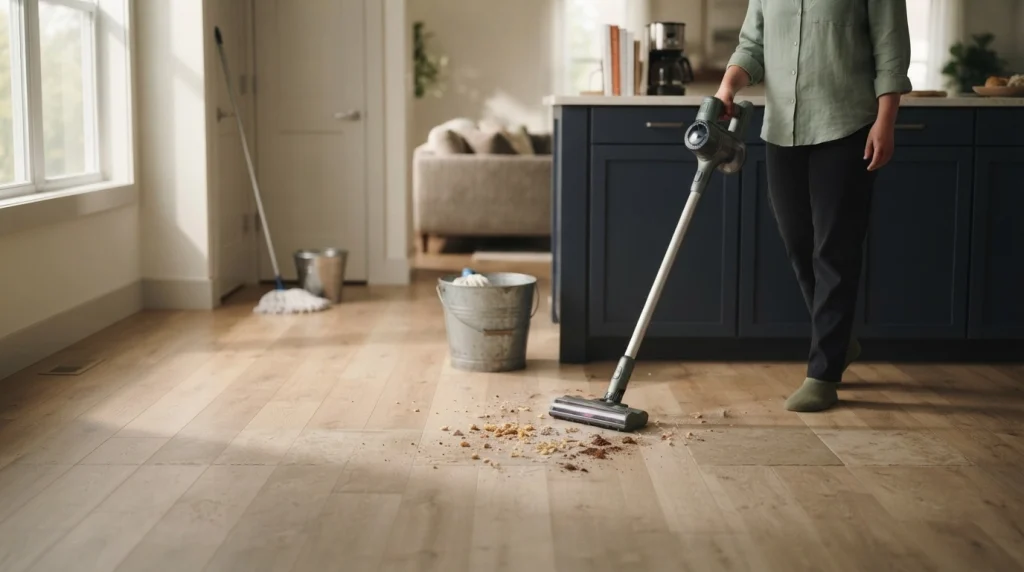
For a typical hard floor, follow this sequence to avoid repeating work and spreading dirt.
- Remove obstacles. Pick up toys, cables, loose objects, and small items that could block the vacuum or become trapped beneath the cleaning head.
- Dust higher surfaces first. If you are cleaning the whole room, wipe shelves, tables, and other surfaces before vacuuming so fallen dust can be collected afterward.
- Vacuum or sweep the floor. Work across the room systematically, paying attention to edges, furniture legs, corners, and areas where crumbs or hair accumulate.
- Check for remaining debris. Remove any visible grit or loose dirt before introducing water. Deal with wet spills separately rather than using a dry-only vacuum on them.
- Prepare the mop. Use a cleaner approved for the flooring and follow its dilution instructions. Wring out the mop appropriately for the material.
- Mop in manageable sections. Start at the farthest part of the room and work toward the exit so you do not have to walk over freshly cleaned areas.
- Allow the floor to dry. Keep foot traffic off the surface until it is safe to walk on, and do not leave standing water on moisture-sensitive flooring.
The main efficiency gain comes from completing the dry-cleaning stage before the wet-cleaning stage. If you notice loose debris while mopping, remove it rather than repeatedly dragging the mop over it.
Can You Mop Without Vacuuming First?
Yes, in some situations, but it is usually better to remove loose debris first. If the floor is already free of visible dust and grit, a quick damp-mopping session may be enough for light maintenance cleaning.
Consider these common situations:
- Light dust on a clean floor: A dry microfiber dust mop may be sufficient before any wet cleaning is needed.
- A few visible crumbs: Pick them up with a suitable vacuum, dustpan, or hand brush rather than spreading them with a wet mop.
- A sticky food spill: Remove the spill using a method appropriate for the material, then clean the affected area with a compatible floor cleaner.
- A combined vacuum-mop machine: You may not need a separate vacuum pass if the manufacturer’s instructions confirm that the machine collects dry debris during wet cleaning.
The important distinction is between skipping a separate vacuuming step and ignoring loose dirt altogether. You still want to remove debris before it becomes mixed with moisture or gets dragged across the floor.
Tip
If you only need to freshen a lightly soiled floor, use a clean dry microfiber pad to collect surface dust first. Reserve wet mopping for areas that actually need it.
Does the Right Cleaning Order Change by Floor Type?
The basic sequence stays the same for most hard floors, but the vacuum setting, cleaning solution, and amount of moisture must suit the surface. Some materials tolerate damp cleaning better than others.
Tile and ceramic floors
Vacuum or sweep tile before mopping, especially around grout lines and kitchen cabinets where crumbs, dust, and grit tend to collect. Use a floor head that does not scatter debris, and choose a cleaner suitable for the tile and grout.
Textured tile can retain loose dirt in recessed areas. A vacuum may remove dry particles, but stained grout or stuck-on grime can require a separate, compatible cleaning method. Natural stone tiles also need care because some stones can be damaged by acidic cleaners.
For more surface-specific guidance, see how to vacuum tile floors.
Hardwood floors
Remove grit before cleaning because abrasive particles can scratch the finish when moved across the surface. Use a hard-floor-compatible vacuum attachment and avoid aggressive rotating brushes if the flooring or vacuum manufacturer advises against them.
Use only the cleaning method approved for your particular finish. Many hardwood floors should not be wet-mopped with a dripping mop or flooded with water. A lightly damp microfiber pad and an appropriate wood-floor cleaner may be more suitable, depending on the manufacturer’s directions.
For additional guidance, read how to vacuum hardwood floors safely.
Laminate and other moisture-sensitive floors
Vacuum or dry-mop first, then use only the amount of moisture permitted by the flooring instructions. Excess water can seep into joints and contribute to swelling or other damage in susceptible products.
A damp microfiber pad is often more appropriate than a soaking-wet string mop, but the correct method depends on the flooring construction and manufacturer’s care instructions. Do not assume that every product marketed as laminate, vinyl, or engineered flooring has identical moisture tolerances.
Carpet and rugs
Carpet generally requires vacuuming rather than routine wet mopping. If you need to remove a stain, use a carpet-compatible spot-cleaning method instead of treating the surface like tile.
Before using a carpet-washing machine, vacuum loose dirt first unless the appliance’s instructions specify a different process. Follow the machine’s directions for pretreatment, water use, and drying.
Why Do Floors Still Look Dirty After Mopping?
If a floor looks streaky, cloudy, or gritty after cleaning, the problem may be the cleaning sequence, the mop itself, or the amount of solution used. Vacuuming first helps, but it cannot correct every mopping problem.
- Streaks or a cloudy film: Too much cleaning solution, residue from previous products, or a dirty mop pad may be responsible. Follow the cleaner’s directions and use a fresh pad.
- Gritty patches: Loose dirt may have been missed during vacuuming. Check the edges and corners and remove remaining particles before mopping again.
- Hair stuck to the floor: Wet cleaning can make loose hair harder to collect. Remove the hair with a suitable dry-cleaning tool before continuing.
- Sticky areas: The residue may need a compatible cleaner and targeted treatment rather than more passes with dirty mop water.
- Water marks or damage: The floor may be sensitive to excess moisture or the cleaning product may be unsuitable. Stop adding water and check the flooring care instructions.
Keep the mop pad clean and change the cleaning water when it becomes visibly dirty. Reusing heavily soiled water can redistribute grime instead of removing it.
Also avoid assuming that more detergent produces a cleaner result. Excess product can leave residue, and using the wrong chemical can damage some flooring finishes.
What Mistakes Should You Avoid?
A good cleaning routine depends as much on avoiding common mistakes as it does on following the right order.
- Mopping over visible grit: Remove loose particles first to reduce smearing and unnecessary abrasion.
- Using an unsuitable vacuum head: Choose a setting and attachment appropriate for the surface, particularly on delicate finished wood.
- Using too much water: Avoid flooding wood, laminate, or other moisture-sensitive floors.
- Reusing a dirty mop pad: Rinse or replace the pad when it becomes soiled.
- Mixing cleaning chemicals: Never combine products unless their labels explicitly direct you to do so. Certain combinations can release dangerous fumes.
- Walking over a wet floor too soon: Allow the surface to dry as directed to reduce slipping risk and prevent dirt from being tracked back onto it.
Warning
Never use a dry-only vacuum to collect wet spills unless the appliance is specifically designed for wet pickup. Follow the manufacturer’s instructions for liquid spills, electrical safety, and floor compatibility.
Can a Vacuum and Mop Combo Replace Separate Cleaning Steps?
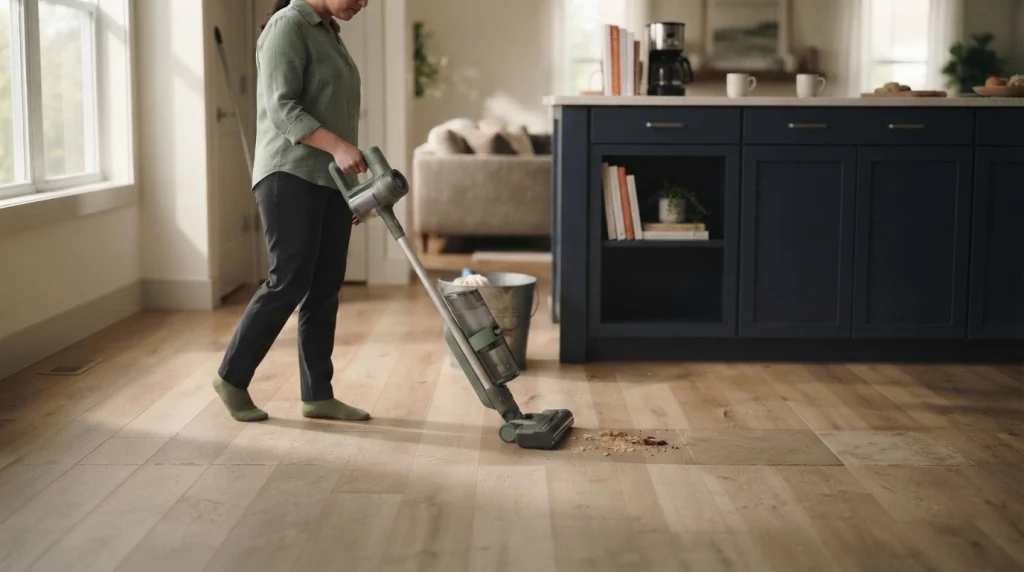
Yes, a suitable wet-and-dry floor cleaner can reduce the need for separate vacuuming and mopping by collecting debris while washing the floor. However, this depends on the appliance design and the type of dirt it is intended to handle.
Some machines are designed to vacuum and wet-clean hard floors in one pass. Others are intended mainly for washing floors and may require you to remove larger debris or perform a dry-vacuuming pass first. Robot vacuum-mop combinations can also have limitations in corners, along edges, and when dealing with heavy or sticky messes.
Before relying on a combined machine, check whether it supports your flooring, whether it can pick up the debris you commonly encounter, and how the manufacturer instructs you to handle dry dirt, wet spills, and maintenance.
A combination appliance is a convenience, not permission to ignore floor-care requirements. Sensitive wood, certain uncoated surfaces, and carpets may need a different cleaning method or a separate dry-only mode.
Related Product
Wet-and-Dry Vacuum Mop
A compatible wet-and-dry floor cleaner may combine debris pickup and mopping in one routine, reducing the need to switch between separate tools.
As an Amazon Associate, we earn from qualifying purchases.
Frequently Asked Questions
Should you vacuum before mopping every time?
Usually, yes, if loose dust, hair, crumbs, or grit are present. For a nearly clean floor, a quick dry dust-mop may be enough, and a suitable vacuum-mop appliance may collect debris during wet cleaning.
Is sweeping enough before mopping?
Sweeping is a useful alternative when it removes the loose debris effectively. A suitable vacuum can be more convenient for collecting fine dust, pet hair, and dirt near edges, while a broom works well for larger crumbs and quick cleanups.
Should you dust or vacuum first?
When cleaning an entire room, dust higher surfaces before vacuuming the floor. That way, particles that fall from shelves and furniture can be collected during the final dry-cleaning pass.
Can you mop first and vacuum afterward?
You can vacuum afterward if the floor has dried completely and the appliance is suitable for the surface, but this is usually less efficient. Wet cleaning may cause hair and dust to stick to the floor, so removing dry debris first is generally easier.
Should you vacuum before using a steam mop?
Generally, yes. Remove loose dirt and grit before using a steam mop, and verify that both the flooring and appliance manufacturer permit steam cleaning. Steam is unsuitable for some floors, including certain wood and laminate products.
How often should you vacuum and mop hard floors?
Vacuum or dry-clean as often as needed to control dust, grit, and hair, with more frequent attention to busy areas. Mop when the floor needs wet cleaning rather than following a rigid schedule, and use a method appropriate for the flooring.
Conclusion
Vacuuming before mopping is usually the easiest way to get cleaner hard floors with less streaking, smearing, and repeated effort. Remove loose dirt first, then use a clean mop and a flooring-compatible cleaning solution to tackle the remaining grime.
Adjust the process for your surface: tile, hardwood, laminate, and carpet do not all tolerate the same tools or moisture levels. If you use a combined vacuum-mop machine, follow its instructions to determine whether a separate dry-cleaning pass is necessary. The goal is simple: remove dry debris before wet cleaning, protect the floor’s finish, and avoid leaving residue or excess water behind.