
How to Vacuum Without Spreading Dust: A Practical Guide

Quick Answer
To vacuum without spreading dust, use a vacuum with effective filtration and well-sealed airflow, check its filter and dust container, and move slowly with controlled, overlapping passes. Clean higher surfaces before floors, avoid stirring up loose dust, and empty the vacuum carefully. For fine dust or allergy concerns, a properly designed HEPA vacuum can help reduce particles escaping back into the room.
Vacuuming can make a room look cleaner while sending some settled dust back into the air. This can happen when the floor head disturbs loose particles, the vacuum releases dust through its exhaust, or collected debris escapes during emptying.
The solution is to control both the cleaning technique and the vacuum’s ability to contain particles. A powerful motor alone does not guarantee clean exhaust air, and even a well-filtered vacuum can create a mess if its bin is emptied carelessly.
Why Does Vacuuming Sometimes Spread Dust?
Dust can spread in two main ways: particles become airborne before the nozzle captures them, or particles that enter the machine escape through its filtration system, seals, or collection compartment.
Fine household dust may include soil, pollen, pet dander, fibers, and other small particles. The U.S. Environmental Protection Agency explains that cleaning and vacuuming can stir up settled indoor particulate matter, making some of it airborne.
Common causes of dust spreading during vacuuming include:
- Dirty or clogged filters: Restricted airflow can reduce cleaning performance and may indicate that maintenance is overdue.
- Poorly fitted components: A loose dustbin, damaged seal, incorrectly installed bag, or leaking hose connection can allow dust to escape.
- Overfilled collection containers: A full bag or bin can interfere with normal airflow and make disposal messier.
- Fast, aggressive passes: Moving the nozzle rapidly can disturb loose particles before they are collected.
- Incorrect attachments: A brush roll or floor head unsuitable for a surface may scatter debris rather than capture it efficiently.
- Careless emptying: Shaking or pouring collected dust into an open indoor bin can create a visible cloud.
The important distinction is whether dust is being disturbed on the floor or escaping from the vacuum itself. Watching where the dust appears can help you identify the right fix.
What Vacuum Setup Helps Keep Dust Contained?
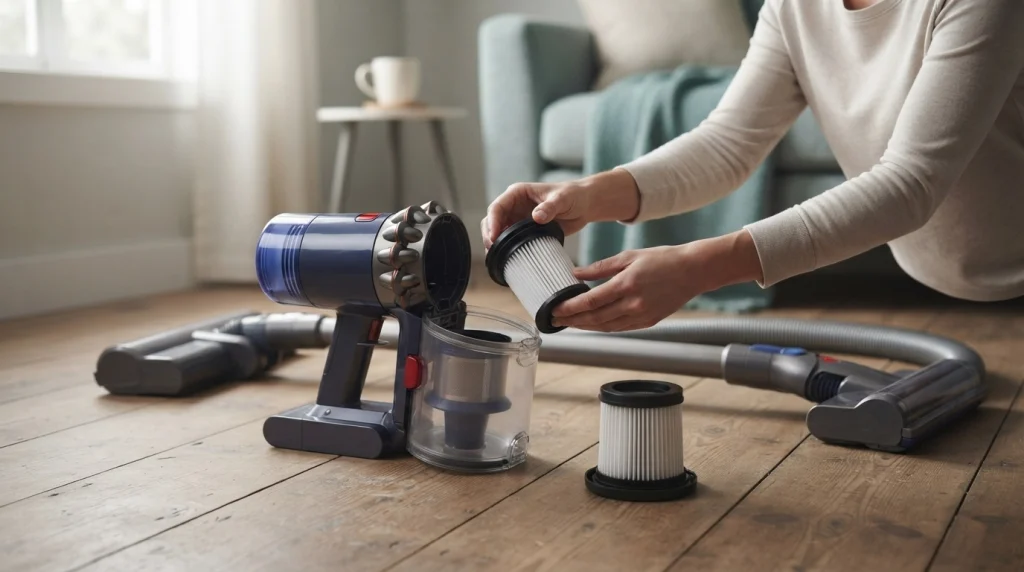
Choose a vacuum that combines effective filtration with an airflow path designed to prevent unfiltered air from escaping. For homes where fine dust, pollen, or other allergens are a concern, a properly designed HEPA vacuum is a useful option.
Look beyond the HEPA filter label
A HEPA filter is designed to capture at least 99.97% of particles measuring 0.3 micrometers under the specified test conditions. That rating describes the filter’s performance, not necessarily the performance of the entire vacuum.
If air bypasses the filter through a poor seal or another opening, particles can still escape. The U.S. EPA’s guidance for lead-dust cleanup specifically distinguishes purpose-designed HEPA vacuums from ordinary machines that have simply been fitted with a HEPA filter.
For routine household cleaning, check whether the vacuum has:
- A suitable filtration system for the dust you need to collect.
- A secure bag or dustbin that fits correctly.
- Intact seals and properly connected hoses.
- Filters that can be maintained or replaced as directed by the manufacturer.
- An appropriate floor head and attachments for your surfaces.
Is a bagged vacuum better than a bagless one?
Either type can control dust effectively when its filtration and seals are well designed. The main practical difference is how collected debris is handled.
A disposable bag can keep dust enclosed during removal when it is fitted and sealed correctly. A bagless vacuum avoids replacement bags but requires extra care when its bin is emptied. Neither design automatically guarantees better filtration.
How Do You Vacuum Without Spreading Dust Step by Step?
The most reliable approach is to prepare the room, check the vacuum, clean from high to low, and finish without releasing collected dust back into the air.
- Prepare the room. Pick up loose items, remove obstacles, and keep unnecessary foot traffic out of the area. Avoid directing a fan across dusty surfaces.
- Check the vacuum. Inspect the bag or bin, filters, hose, nozzle, and accessible seals. Empty or replace an overly full collection container and maintain filters according to the manual.
- Dust higher surfaces first. Use a suitable microfiber cloth or vacuum attachment on shelves, furniture, and accessible ledges. This lets fallen dust be collected during floor cleaning.
- Choose the correct floor head. Use a hard-floor attachment for suitable hard surfaces and a compatible brush or powered head for carpets. Follow the flooring and vacuum manufacturers’ instructions.
- Start at the far side of the room. Work toward the exit so you do not repeatedly walk across cleaned areas.
- Move slowly and overlap passes. Give the nozzle time to collect debris. Cover the edge of the previous pass slightly instead of leaving narrow strips of dust behind.
- Clean corners and edges. Use a crevice tool around baseboards, furniture legs, and tight spaces where dust often accumulates.
- Stop if dust escapes. If you see a plume coming from the vacuum body, exhaust, or connections, switch it off and inspect the machine before continuing.
- Finish with appropriate surface cleaning. After vacuuming, use a lightly damp microfiber cloth on suitable hard surfaces to collect remaining residue.
- Dispose of collected dust carefully. Handle bags and bins gently, preferably away from occupied living areas, and wash your hands afterward.
Tip
If dust repeatedly returns to a freshly vacuumed floor, check the machine’s exhaust and seals before repeating the entire cleaning process. If the vacuum is working correctly, look for dust falling from furniture, vents, or nearby surfaces.
How Should You Vacuum Different Surfaces?
The correct attachment matters because different surfaces respond differently to suction and brush movement.
Hard floors
Use a hard-floor head or a suitable setting that does not scratch or damage the finish. Move steadily along edges and beneath accessible furniture, where fine particles often collect. Avoid using a rotating brush on surfaces for which the manufacturer advises against it.
After vacuuming, damp-mop if the floor material permits it. Use minimal moisture on wood, laminate, and other water-sensitive surfaces, following the flooring manufacturer’s care instructions.
Carpets and rugs
Carpets can hold dust and debris below the visible surface. Make slow, controlled passes and use the appropriate brush setting. On suitable carpets, a second pass at a different angle may help collect remaining debris.
Do not vigorously shake dusty rugs indoors before vacuuming. That can release particles into the room instead of containing them.
Upholstery and fabric furniture
Use an upholstery attachment on cushions, seams, fabric-covered chairs, and other compatible surfaces. A crevice tool can reach between cushions. Avoid pressing too hard or using a powered brush on delicate fabric unless the manufacturer permits it.
Vacuuming can remove some dust and allergens from fabrics, but it does not guarantee the removal of every particle or dust mite from deep within a material.
Baseboards, corners, and elevated surfaces
A soft brush attachment can help remove dust from accessible shelves, trim, and ledges. A crevice tool is useful along baseboards and narrow gaps. Clean these areas before the floor so loosened particles can be collected afterward.
What Should You Do If the Vacuum Blows Dust Back Into the Room?
If dust visibly escapes from the machine, stop vacuuming and investigate the source instead of continuing to spread the particles.
- Dust coming from the exhaust: Check the filters, their installation, and the manufacturer’s maintenance instructions. A damaged filter or an airflow path that bypasses filtration may require repair.
- Dust around the bin or bag compartment: Check that the container is seated correctly, the bag is compatible, and seals are intact.
- Dust near the hose or nozzle: Inspect connections and look for damage or blockages. Switch off and unplug a corded vacuum before checking or clearing accessible obstructions.
- Dust spreading ahead of the floor head: Slow down, select the appropriate attachment, and check whether the brush roll is scattering loose material.
- Weak suction with more dust left behind: Check the collection container, filters, nozzle, and hose for restrictions, following the manual.
A dusty smell alone does not prove that the vacuum is leaking particles. However, a persistent unusual smell, visible dust plume, or recurring loss of suction is a reason to stop and inspect the machine.
For more detailed guidance on managing very fine particles, see our guide on how to vacuum fine dust without spreading it around.
Can You Reduce Airborne Dust While Vacuuming?
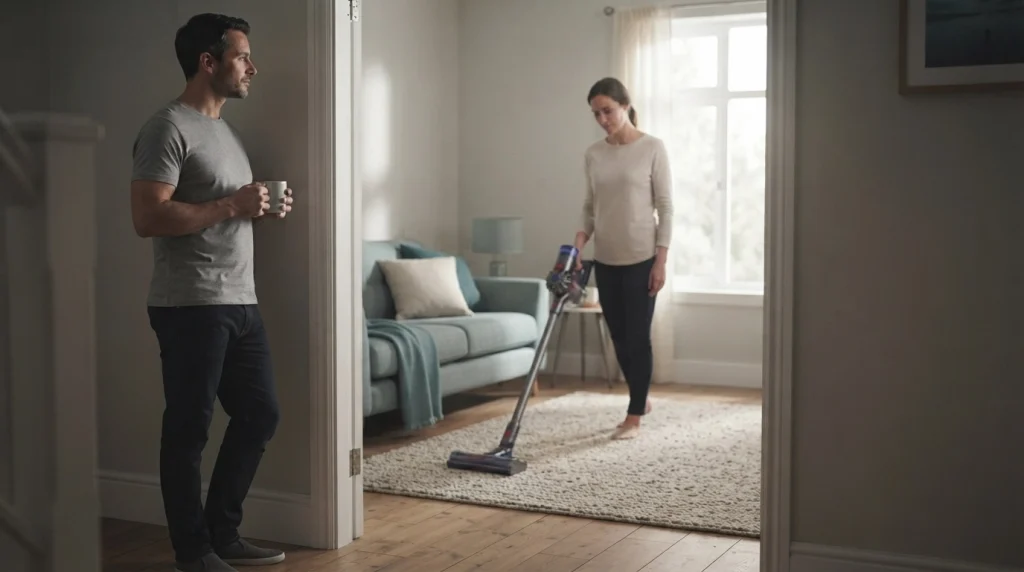
Yes. Good cleaning technique and suitable filtration can reduce how much dust is stirred up or released back into the room, although no ordinary household method can guarantee that every airborne particle will be captured.
The U.S. EPA recommends frequent cleaning, damp dusting, and considering a HEPA-filtered vacuum as ways to help control indoor particulate matter. Its guidance also notes that people with asthma or allergies should stay away from the area being vacuumed to avoid breathing in stirred-up dust.
Use these additional precautions:
- Keep sensitive occupants away. If someone has asthma or significant dust allergies, have them leave the room while you clean and allow disturbed particles to settle before they return.
- Ventilate thoughtfully. Fresh air may help when outdoor air quality is good. Keep windows closed when outdoor pollution or pollen is high, and avoid fans that blow dust around the room.
- Consider an air cleaner. A correctly sized portable air cleaner with HEPA filtration may help reduce airborne particles. It supplements cleaning rather than replacing it.
- Maintain the vacuum regularly. Replace or clean filters and inspect the collection system on the manufacturer’s schedule.
Ordinary household dust is different from hazardous dust produced by renovation, sanding, or disturbing old paint. If you suspect lead, asbestos, or another hazardous material, do not assume a standard household vacuum is safe. Follow the relevant official guidance and use appropriate specialized equipment or qualified help.
Frequently Asked Questions
Should you dust or vacuum first?
Dust higher surfaces before vacuuming the floor. Use a damp microfiber cloth or a suitable vacuum attachment to limit how much settled dust becomes airborne, then collect the fallen debris from the floor.
Does a HEPA filter stop all dust from escaping?
No. A HEPA filter can capture very small particles, but the complete vacuum system must also be designed to prevent air from bypassing the filter. Correct installation and maintenance are essential.
Why does dust settle on the floor again after vacuuming?
Dust may have fallen from shelves, furniture, vents, or fabrics after the floor was cleaned. A vacuum that releases particles through its exhaust or seals can also contribute. Check the machine and clean higher surfaces first next time.
Is it better to vacuum with the windows open?
Not always. Opening a window may help ventilate a room when outdoor air is clean, but it can introduce pollen, road dust, or smoke when outdoor conditions are poor. Base the decision on local air quality.
How often should vacuum filters be cleaned?
Follow the vacuum manufacturer’s schedule because filters differ by model and type. Some are washable, while others must be replaced. Never reinstall a washable filter before it is completely dry if the instructions require washing and drying.
Should you vacuum when someone with allergies is in the room?
It is better for someone with asthma or significant dust allergies to leave the area while vacuuming. Use effective filtration, maintain the machine, and let disturbed particles settle before the person returns.
Conclusion
Vacuuming without spreading dust comes down to effective filtration, a properly maintained machine, and a careful cleaning sequence. Clean elevated surfaces first, move slowly across floors, use attachments suited to each material, and stop if dust visibly escapes from the vacuum.
Pay equal attention to what happens after cleaning. Empty bags and bins carefully, and use damp cleaning on compatible hard surfaces to pick up remaining residue. If dust keeps returning, identify whether it is falling from other surfaces, being disturbed by the floor head, or escaping from the vacuum. Addressing the actual source is more effective than repeatedly vacuuming the same area.