
Does an Air Purifier Help With Condensation? Proven Solution

Yes, an air purifier can indirectly help with condensation by improving air circulation and reducing indoor humidity, but it’s not a direct solution. It works best when combined with other humidity control methods.
Does an Air Purifier Help With Condensation? Proven Solutions for a Drier Home
Condensation on windows, walls, or even furniture can be a persistent and frustrating problem for homeowners. It’s not just unsightly; it can lead to mold growth, damage to your home, and even health issues. Many people wonder if their air purifier, a device designed to clean the air, can tackle this moisture problem. While an air purifier isn’t a magic bullet for condensation, it can play a supporting role in creating a drier indoor environment. Let’s explore how.
Understanding the Roots of Condensation
Condensation occurs when warm, moist air comes into contact with a colder surface. Think of a cold glass of water on a hot day – moisture from the air gathers on the glass. In your home, this often happens on windows, exterior walls, or in poorly ventilated areas like bathrooms and kitchens. The primary culprits are elevated indoor humidity levels and insufficient air circulation.
How Air Purifiers Work: Beyond Just Clean Air
Air purifiers primarily function by drawing in indoor air, filtering out pollutants like dust, pollen, pet dander, and volatile organic compounds (VOCs), and then releasing cleaner air back into the room. Many modern air purifiers also incorporate activated carbon filters, which can absorb odors and some gaseous pollutants. Their fan mechanism also contributes to moving air around the room.
The Indirect Link: Air Circulation and Humidity
While air purifiers don’t directly remove moisture from the air, their internal fan circulates air. This constant movement helps to prevent stagnant, humid air from settling on cold surfaces, which is a key factor in condensation formation. By keeping the air moving, it can also help to equalize temperature and humidity levels throughout a room.
Can an Air Purifier Reduce Indoor Humidity?
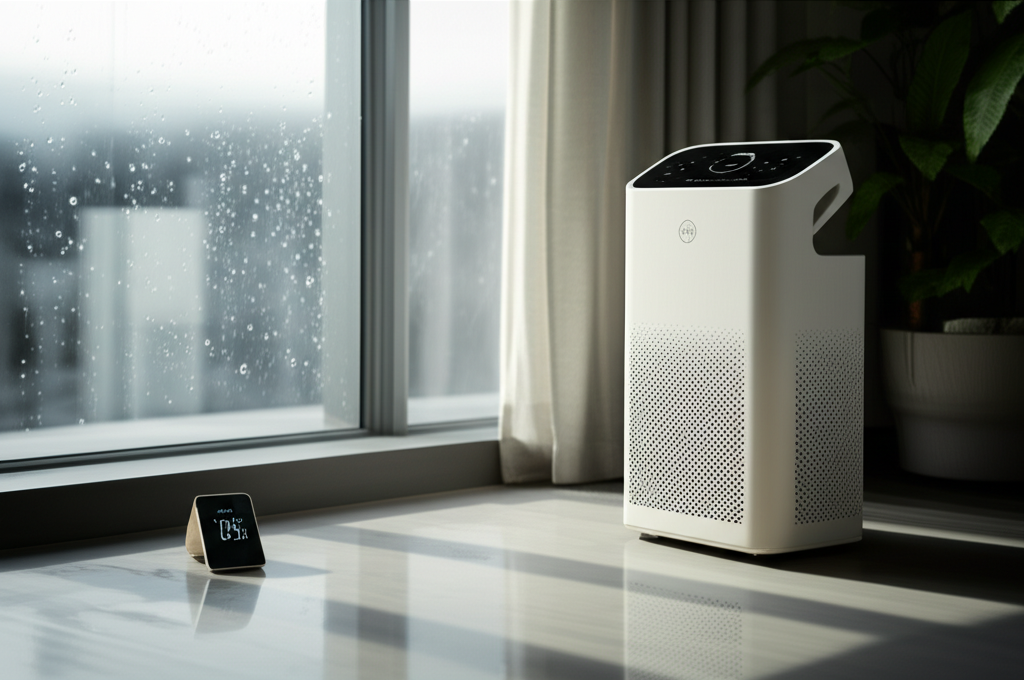
An air purifier does not have a dehumidifying function. It cannot directly remove water vapor from the air like a dedicated dehumidifier. Its primary focus is on particulate matter and airborne contaminants, not moisture.
When Air Purifiers Can Make a Difference
In situations where condensation is mild and primarily caused by poor air circulation, an air purifier can offer some benefit. By increasing airflow, it can help warm moist air reach colder surfaces less frequently or allow that moisture to evaporate more quickly. This is especially true in smaller, enclosed spaces that tend to trap humidity.
Limitations of Air Purifiers for Condensation Control
It’s crucial to understand that an air purifier’s impact on condensation is indirect and often limited. If your home has high levels of indoor humidity due to sources like cooking, showering, drying clothes indoors, or a lack of proper ventilation, an air purifier alone will not solve the problem. The amount of moisture it can help manage through circulation is minimal compared to the amount of water vapor present.
Combining Air Purifiers with Dehumidifiers: The Dynamic Duo
For effective condensation control, the most proven solution involves combining an air purifier with a dehumidifier. A dehumidifier is specifically designed to remove excess moisture from the air, directly addressing the root cause of condensation. An air purifier then complements this by improving air circulation and filtering out any mold spores or other allergens that might arise from lingering dampness.
How a Dehumidifier Works
Dehumidifiers work by drawing in humid air, cooling it to condense the moisture into a collection tank or drain hose, and then releasing drier air back into the room. This process significantly lowers the relative humidity, making condensation less likely to form on cold surfaces.
Other Essential Strategies for Tackling Condensation
Beyond using an air purifier and dehumidifier, several other strategies are vital for managing condensation effectively. These focus on reducing moisture sources and improving ventilation.
Ventilation is Key
Ensuring adequate ventilation is paramount. Use exhaust fans in bathrooms during and after showers, and in kitchens while cooking. Opening windows for short periods, even in cooler weather, can help exchange moist indoor air for drier outdoor air.
Source Control of Moisture
Identify and address sources of excess moisture. Avoid drying clothes indoors on radiators or racks if possible. Ensure your clothes dryer is properly vented to the outside. Fix any leaks from plumbing or roofs promptly.
Improving Insulation and Heating
Cold surfaces are a major contributor to condensation. Improving the insulation in your home, especially around windows and exterior walls, can raise surface temperatures and reduce the likelihood of condensation forming. Maintaining consistent, moderate heating can also help keep surfaces warmer.
Choosing the Right Air Purifier for Your Needs
When selecting an air purifier, even for its indirect benefits in managing condensation, consider models with good airflow (measured in CADR – Clean Air Delivery Rate) and a robust fan. Look for units with HEPA filters to capture any mold spores that may have already developed. Some advanced air purifiers also have smart features that can monitor air quality and adjust settings accordingly.
When to Call in the Experts
If you’ve tried various methods and condensation remains a persistent problem, or if you suspect mold growth, it’s time to consult professionals. Building inspectors, HVAC specialists, or mold remediation experts can identify underlying issues such as poor insulation, ventilation system problems, or structural dampness that may require more significant intervention.
Frequently Asked Questions (FAQ)
Will an air purifier stop condensation on my windows?
No, an air purifier will not directly stop condensation on windows. It can help by circulating air, but it doesn’t remove moisture from the air.
Can I use an air purifier instead of a dehumidifier?
No, an air purifier cannot replace a dehumidifier. A dehumidifier is essential for directly reducing indoor humidity levels.
How much does an air purifier help with condensation?
An air purifier offers indirect help by improving air circulation, which can slightly reduce the chances of condensation forming in mild cases. Its effectiveness is limited compared to a dehumidifier.
What is the best way to deal with condensation?
The best way is a multi-pronged approach: use a dehumidifier, ensure good ventilation, control moisture sources, and improve insulation. An air purifier can be a supplementary tool.
Can air purifiers cause condensation?
No, air purifiers do not cause condensation. They do not add moisture to the air.
Should I run my air purifier and dehumidifier at the same time?
Yes, running both an air purifier and a dehumidifier simultaneously is often recommended for optimal air quality and moisture control. The air purifier cleans the air while the dehumidifier removes excess moisture.
Conclusion: A Supportive Role, Not a Standalone Solution
In conclusion, does an air purifier help with condensation? The answer is nuanced. While an air purifier can indirectly contribute to a drier environment by improving air circulation and preventing stagnant air, it is not a primary solution for condensation. Its fan can help move air, which is a small piece of the puzzle. For proven and effective condensation control, you need to address the root cause: excess indoor humidity. This means prioritizing a dehumidifier, ensuring proper ventilation, and managing moisture sources. When used in conjunction with these essential steps, an air purifier can be a valuable component of a healthy, dry home.
