
Can You Mop With Bleach? Safe Ratio, Floors to Avoid and Steps

Quick answer
Yes, you can mop hard, nonporous floors such as sealed ceramic or porcelain tile and vinyl with diluted bleach to disinfect them. Clorox’s directions are 1/3 cup of Clorox bleach per gallon of cool water (1/2 cup for No-Splash bleach): pre-clean the floor, keep it wet for 6 minutes, rinse with clean water and let it air dry. Open windows and wear gloves. Don’t use bleach on hardwood, unsealed wood, marble, granite or other natural stone, or carpet, and never mix it with ammonia, vinegar or other cleaners.
Bleach is a strong disinfectant, which makes it useful after illness, pet accidents or raw-meat spills on the kitchen floor. It’s not a general-purpose floor cleaner, though, and the wrong mix or the wrong floor can cause damage or dangerous fumes. Here’s how to do it safely.
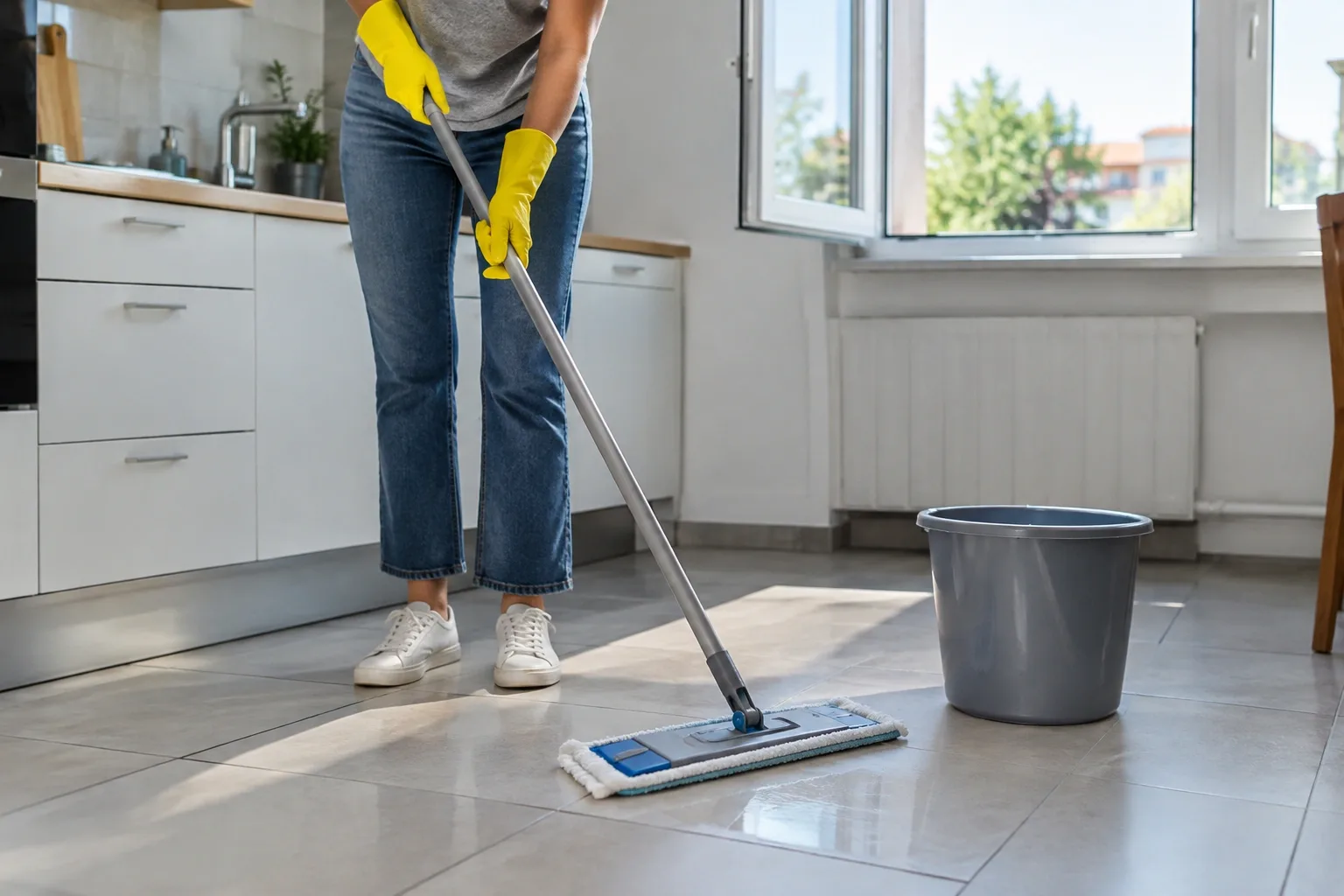
Is it safe to mop with bleach?
It is when diluted correctly, used on the right floors, and used with ventilation. Clorox describes mopping hard, nonporous floors with a bleach-and-water solution, rinsing it off and letting the floor air dry, and lists surfaces to avoid, including unsealed wood, marble and granite (Clorox: How to Clean Floors by Mopping).
The main danger is mixing. Poison Control warns never to mix household cleaning products: bleach with acids such as some toilet cleaners releases chlorine gas, and bleach with ammonia releases chloramine gas, both of which can cause serious breathing problems (Poison Control). That includes adding bleach to a bucket that already has floor cleaner in it.
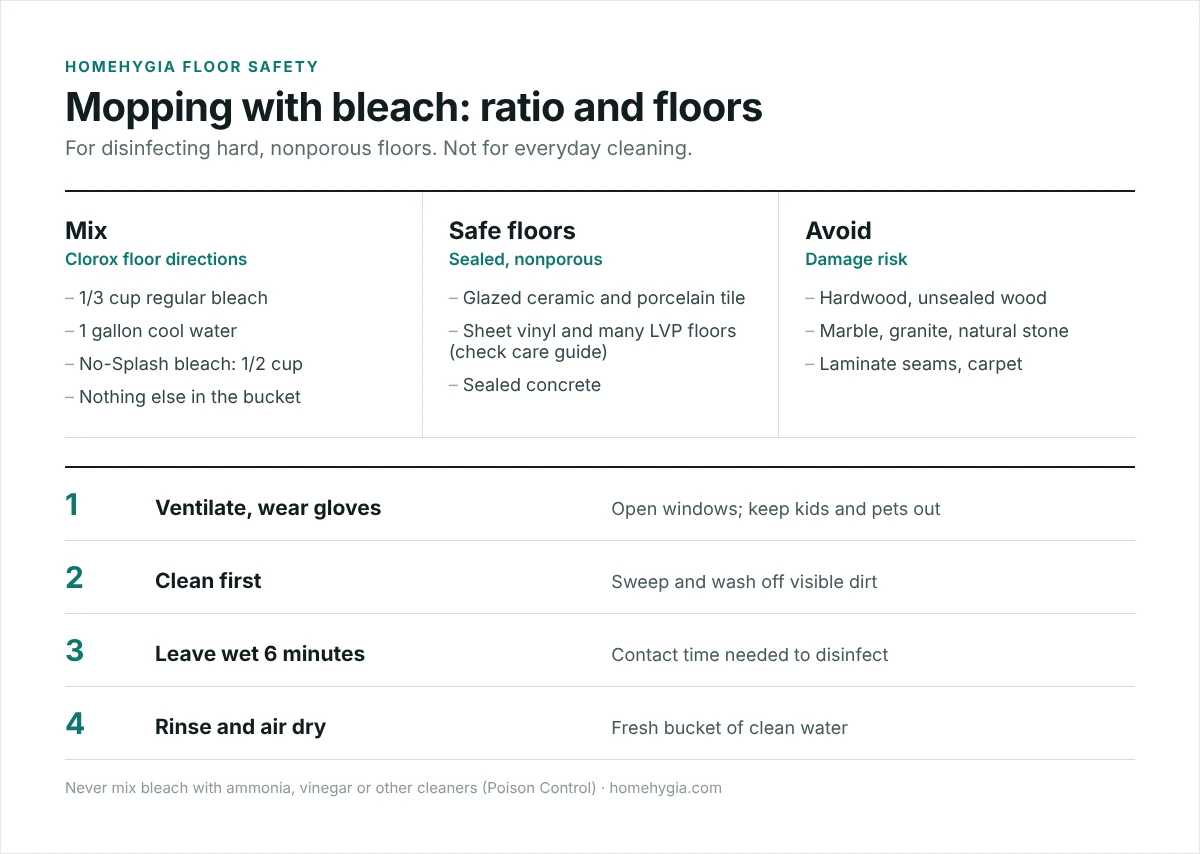
Bleach-to-water ratio for mopping
| Product | Amount per gallon of cool water | Contact time |
|---|---|---|
| Clorox regular disinfecting bleach | 1/3 cup | 6 minutes, then rinse |
| Clorox No-Splash bleach | 1/2 cup | 6 minutes, then rinse |
Use cool water, not hot, and make a fresh batch each time. If you use another brand, follow the disinfecting directions on that label, since concentrations differ. More bleach doesn’t clean better; it just adds fumes and residue.
Which floors can you mop with bleach?
- Yes: glazed ceramic and porcelain tile, sheet vinyl, sealed concrete. For vinyl plank, check your floor’s care guide first.
- Grout: generally fine on sealed grout, but bleach can lighten colored grout. Test a corner.
- No: hardwood and engineered wood (Clorox says bleach generally isn’t recommended for hardwood; use a product made for sealed wood instead, Clorox: hardwood floors), unsealed wood, marble, granite, travertine and other natural stone, and laminate, where liquid can get into the seams.
- Carpet: bleach can remove color permanently. Don’t put it in a carpet cleaner either; see ammonia and other carpet cleaning chemicals for safer spot-cleaning options.
How to mop with bleach, step by step
- Ventilate. Open windows and turn on fans. Keep children and pets out of the room until the floor is dry.
- Protect yourself. Wear rubber gloves and clothes you don’t mind spotting.
- Sweep or vacuum, then clean. Bleach doesn’t disinfect well through dirt. Wash off visible soil with water and a little dish soap, then rinse.
- Mix the solution in a plastic bucket: 1 gallon of cool water plus 1/3 cup bleach. Add bleach to water, not the other way round.
- Mop and leave it wet for 6 minutes. Re-wet areas that dry too fast.
- Rinse. Empty and rinse the bucket, refill with clean water, and mop again to remove bleach residue.
- Air dry, then rinse the mop head well. Dispose of leftover solution down the drain with running water.
When to use something else
- Everyday cleaning: warm water and a little pH-neutral floor cleaner is enough; bleach isn’t needed daily.
- Vinyl plank and laminate: follow the manufacturer’s care guide. See steam mops on vinyl and steam mops on laminate.
- Disinfecting without bleach: use an EPA-registered floor disinfectant and follow its contact time.
Frequently asked questions
How much bleach do I put in mop water?
Clorox recommends 1/3 cup of its regular bleach per gallon of cool water for floors, or 1/2 cup of No-Splash bleach.
Can I mix bleach with floor cleaner or vinegar?
No. Never mix bleach with other cleaners. Bleach with ammonia makes chloramine gas, and bleach with acids such as vinegar can release chlorine gas.
Do I need to rinse after mopping with bleach?
Yes. Rinse with clean water after the 6-minute contact time and let the floor air dry.
Is it safe to breathe bleach while mopping?
Diluted bleach in a ventilated room is generally fine for most people, but fumes can irritate the eyes and lungs. Open windows, take breaks, and avoid it if you have asthma.
Can I use bleach on hardwood floors?
Generally no. Use a cleaner made for sealed wood and keep moisture low.
Sources
- Clorox: How to Clean Floors by Mopping with Bleach
- Clorox: How to Clean Hardwood Floors
- Poison Control: Cleaning products safety
Related guides
- Can You Use Bleach to Mop Floors: Genius Safety Tips
- Can You Put Essential Oils in a Steam Mop? Genius Safety
- Can You Mix Bleach and Vinegar for Mopping? Genius Safety!
- Can I Mop With Vinegar: Genius, Essential Guide