
How Good Are IKEA Air Purifiers: Essential Guide

IKEA air purifiers offer a budget-friendly entry into cleaner air, but their effectiveness varies. This guide helps you understand their performance, features, and whether they’re the right choice for your home’s air quality needs.
We all want to breathe easier at home, but the world of air purifiers can feel overwhelming. You might be looking at IKEA’s range, drawn by their accessible price points and sleek designs. But the big question on your mind is likely: how good are IKEA air purifiers really? I’ve spent time researching and analyzing these units to give you a clear, honest picture.
Understanding Air Purifier Basics
An air purifier is designed to remove pollutants from the air in a room. These tiny particles, like dust, pollen, pet dander, and even smoke, can impact your health and comfort. Air purifiers typically use filters, often HEPA filters, to trap these contaminants. They then circulate cleaner air back into your space.
This process is crucial for anyone with allergies, asthma, or simply a desire for a healthier living environment. Understanding how they work is the first step to evaluating their effectiveness.
IKEA’s Air Purifier Lineup: An Overview
IKEA offers a focused selection of air purifiers, often integrated into their broader home furnishing ecosystem. Their models, such as the FÖRNUFTIG and STARKVIND series, are designed with simplicity and affordability in mind. They often feature minimalist aesthetics that blend seamlessly into modern homes.
These units aim to provide a basic level of air purification without a hefty price tag. Their designs are generally compact and easy to operate, making them appealing for everyday use.
Key Features to Consider
When evaluating any air purifier, including those from IKEA, several features stand out. These include the type of filter used, the unit’s CADR (Clean Air Delivery Rate), noise levels, and energy efficiency. IKEA’s purifiers often highlight their HEPA filters, which are essential for capturing fine particles.
It’s also worth noting any smart features, like app control or air quality sensors, which are becoming more common. These elements directly impact how well and how conveniently an air purifier performs its job.
Filter Technology: HEPA and Beyond
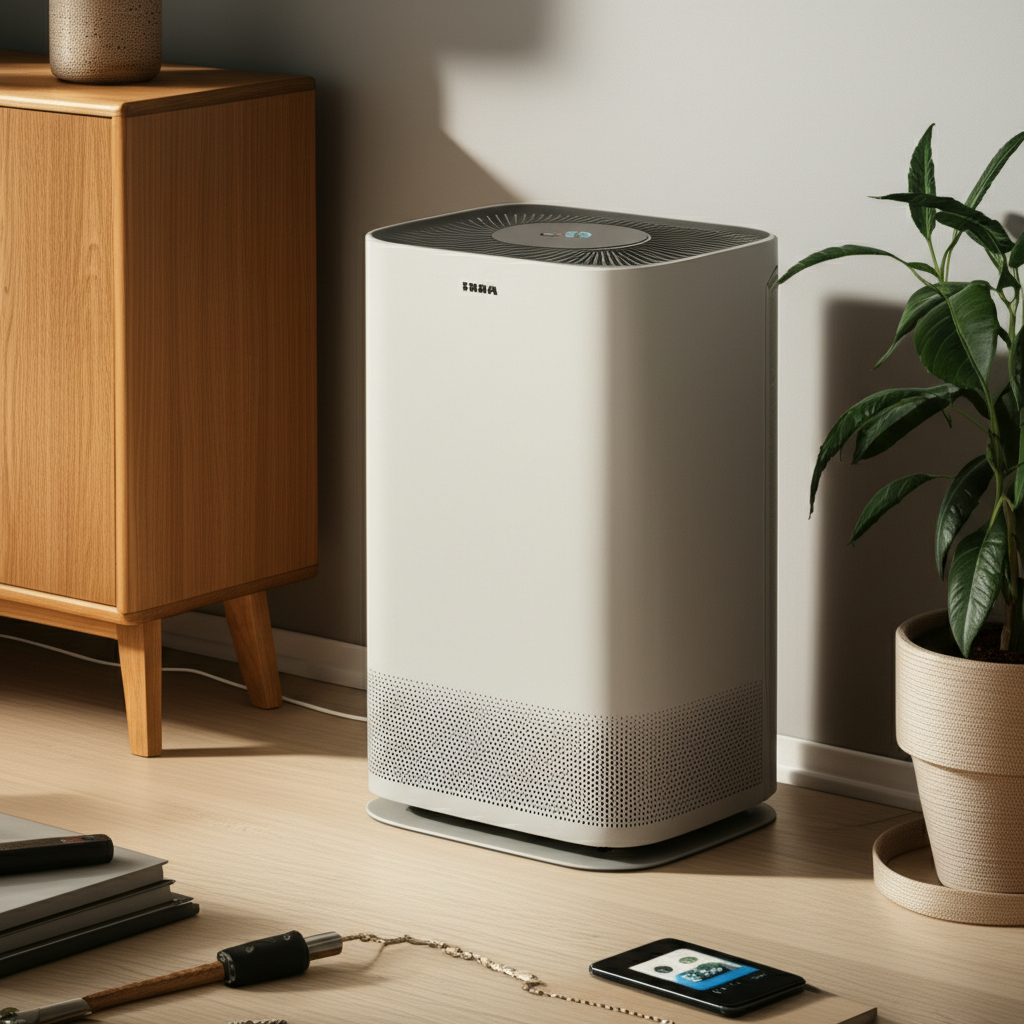
The heart of any air purifier is its filtration system. IKEA’s purifiers predominantly utilize HEPA (High-Efficiency Particulate Air) filters. A true HEPA filter is certified to remove at least 99.97% of airborne particles 0.3 microns in size. This includes common allergens and irritants like dust mites, pollen, and mold spores.
Some IKEA models may also incorporate activated carbon filters. These are excellent at absorbing odors from cooking, pets, or smoke, further enhancing the air quality.
CADR: Measuring Performance
CADR, or Clean Air Delivery Rate, is a standardized measure of how quickly an air purifier can clean a room. It’s measured for three different pollutants: smoke, dust, and pollen. A higher CADR indicates a more powerful and efficient unit.
IKEA’s CADR ratings are generally modest compared to high-end models, reflecting their price point. This means they are best suited for smaller to medium-sized rooms. For larger spaces, you might need multiple units or a more powerful alternative.
How Good Are IKEA Air Purifiers? Performance Insights
So, how good are IKEA air purifiers in real-world scenarios? Generally, they perform adequately for their intended purpose: basic air cleaning in smaller spaces. For everyday dust, pollen, and minor odor reduction, they can make a noticeable difference.
However, if you’re dealing with severe allergies, significant smoke pollution, or require rapid air cleaning in a large room, you might find their performance limited. Their effectiveness is directly tied to room size and the severity of air quality issues.
User Experiences and Reviews
Customer feedback on IKEA air purifiers is often mixed, leaning towards positive for their value proposition. Many users appreciate their quiet operation and simple design, finding them effective for bedrooms or home offices. Some reviews mention a noticeable reduction in dust and improved air freshness.
However, some users have expressed that they are not powerful enough for larger areas or for tackling strong odors. This highlights the importance of matching the purifier’s capacity to your specific needs.
Independent Testing and Expert Opinions
Independent testing of IKEA air purifiers is less common than for major brands, but available data suggests they meet basic standards. For instance, the FÖRNUFTIG purifier, a popular model, has been reviewed for its basic functionality. It’s often cited as a good entry-level option.
Experts generally agree that while IKEA purifiers are not top-tier in terms of raw power or advanced features, they offer good value. They are a solid choice for those on a budget seeking basic air improvement.
IKEA Air Purifier Models: A Closer Look
IKEA offers a few key air purifier models, each with its own set of features and capabilities. Understanding these specific units will help you decide which, if any, best suits your home.
The FÖRNUFTIG Series
The FÖRNUFTIG is arguably IKEA’s most recognized air purifier. It’s designed to be compact and unobtrusive, often featuring a fabric cover that can be customized. It typically includes a multi-filter system, combining a pre-filter, a HEPA filter, and an activated carbon filter.
This model is ideal for smaller rooms, such as bedrooms or small living areas. Its noise level is generally low, making it suitable for overnight use.
The STARKVIND Series
The STARKVIND series takes a slightly different approach, often integrating air purification into other furniture pieces, like side tables. This allows for a more seamless integration into your home decor. It also features a multi-filter system for comprehensive purification.
The STARKVIND models are designed for medium-sized rooms and can be controlled via the IKEA Home smart app. This offers convenience and the ability to monitor air quality remotely.
Comparing IKEA Air Purifiers: A Data Table
To give you a clearer picture, here’s a comparison of two popular IKEA air purifier models:
| Feature | FÖRNUFTIG (Small Room) | STARKVIND (Side Table) |
| :—————— | :——————— | :——————— |
| Room Size | Small (up to 20 m²) | Medium (up to 20 m²) |
| Filter Type | HEPA + Activated Carbon | HEPA + Activated Carbon |
| CADR (Smoke) | Approx. 100 m³/h | Approx. 100 m³/h |
| Noise Level | 24-53 dB | 24-53 dB |
| Smart Features | No | Yes (via IKEA Home app) |
| Design Integration | Standalone | Furniture integration |
| Price Point | Lower | Mid-range |
Note: Specific CADR and dB levels can vary slightly by model version and region. Always check the product specifications.
This table shows that while both offer HEPA filtration, the STARKVIND adds smart capabilities and a unique furniture integration. Their cleaning power (CADR) is comparable for their targeted room sizes.
Pros and Cons of IKEA Air Purifiers
Like any product, IKEA air purifiers come with their own set of advantages and disadvantages. Understanding these will help you make an informed decision.
Pros:
Affordability: IKEA’s air purifiers are significantly cheaper than many competitors.
Simple Design: They boast a minimalist aesthetic that fits well into most home decor.
Ease of Use: Operation is straightforward, with intuitive controls.
Multi-Filter System: Most models include HEPA and activated carbon filters for broad pollutant capture.
Compact Size: Ideal for smaller rooms or for those with limited space.
Cons:
Limited Power: CADR ratings are generally lower, making them less effective in larger rooms or for severe air quality issues.
Fewer Advanced Features: Lacking some of the sophisticated sensors or fan speeds found in premium models.
Filter Replacement Costs: While the initial purchase is cheap, ongoing filter costs can add up.
Availability: Specific models and features can vary by region and availability.
When Are IKEA Air Purifiers a Good Choice?
IKEA air purifiers are an excellent choice for individuals and families looking for a budget-friendly way to improve their indoor air quality in smaller spaces. They are particularly well-suited for:
First-time air purifier buyers: If you’re new to air purifiers and want to test the waters without a significant investment.
Bedroom use: Their quiet operation and compact size make them perfect for enhancing sleep quality.
Small apartments or rooms: For studios, dorm rooms, or small home offices where space is limited.
Mild allergy sufferers: For those experiencing minor seasonal allergies or sensitivity to dust.
Odor reduction: The activated carbon filter helps neutralize everyday household smells.
If you’re looking for robust performance in a large open-plan living area or need to tackle significant air pollution from sources like heavy traffic or industrial emissions, you might need to consider more powerful alternatives.
When to Look Elsewhere
While IKEA air purifiers are good for many, they aren’t the perfect fit for everyone. If your needs are more demanding, it’s wise to explore other options.
For instance, if you have severe asthma or respiratory conditions, you’ll likely benefit from units with higher CADR ratings and more advanced filtration capabilities. Similarly, if you need to purify a large open-plan living space, a single IKEA unit might not suffice. Consider brands known for high-performance air purifiers in such cases.
Maintaining Your IKEA Air Purifier
To ensure your IKEA air purifier continues to work effectively, regular maintenance is key. This primarily involves cleaning and replacing the filters. The pre-filter can often be vacuumed or gently wiped clean.
HEPA and activated carbon filters typically need replacement every 6 to 12 months, depending on usage and air quality. IKEA provides replacement filters for their models, so be sure to factor this ongoing cost into your budget. Always follow the manufacturer’s instructions for filter maintenance and replacement.
Frequently Asked Questions (FAQ)
How often should I replace the filters in my IKEA air purifier?
You should typically replace the HEPA and activated carbon filters in your IKEA air purifier every 6 to 12 months. This depends on how often you use it and the level of air pollution in your home.
Can IKEA air purifiers effectively remove pet dander and allergens?
Yes, IKEA air purifiers with HEPA filters are effective at capturing pet dander, pollen, dust mites, and other common allergens. Their effectiveness will be greatest in smaller rooms.
Are IKEA air purifiers noisy?
IKEA air purifiers are generally designed to be quiet, especially on their lower fan settings. They are suitable for bedrooms and other quiet spaces, with noise levels typically ranging from 24-53 dB.
Do IKEA air purifiers help with smoke from cooking or wildfires?
The activated carbon filter in IKEA air purifiers can help reduce cooking odors and some smoke particles. For significant smoke events like wildfires, a more powerful unit with a higher CADR and a robust carbon filter would be more effective.
What is the difference between the FÖRNUFTIG and STARKVIND?
The FÖRNUFTIG is a standalone, compact unit for smaller rooms, while the STARKVIND series integrates air purification into furniture like side tables, often with smart app control, for medium-sized rooms.
Where can I buy replacement filters for IKEA air purifiers?
Replacement filters can be purchased directly from IKEA stores or their official website. It’s important to use genuine IKEA filters to ensure optimal performance.
Conclusion: How Good Are IKEA Air Purifiers?
In conclusion, how good are IKEA air purifiers? They are a solid, budget-friendly option for individuals seeking to improve air quality in smaller rooms. They offer essential HEPA filtration and often activated carbon for odor control in a simple, aesthetically pleasing package. While they may not match the power or advanced features of premium brands, they provide a valuable entry point into cleaner breathing for many.
If your needs are basic and your budget is a priority, an IKEA air purifier is a worthwhile consideration. For more demanding air purification challenges or larger spaces, you might explore other options. I hope this guide has helped you make a more informed decision about bringing cleaner air into your home with IKEA.
