
Can You Use a Vacuum With a Damaged Filter? Safety Guide

Quick Answer
No, you should not use a vacuum with a damaged filter. Tears, holes, broken seals, or warped filter frames can let dust bypass filtration and may expose the motor to debris. Turn off the vacuum, inspect the filter, and replace it with a compatible part before cleaning again. A dirty but intact filter may only need approved cleaning.
A vacuum can still sound normal when its filter is damaged. It may even pick up dirt from the floor. That does not mean the machine is filtering the air correctly.
The problem is what happens to fine dust after it enters the vacuum. A damaged filter may allow some of that dust to travel where it should not.
The safest solution depends on the location and type of damage. Here is how to identify the problem, understand the risks, and decide whether your filter needs replacing.
Why Is Using a Vacuum With a Damaged Filter Risky?
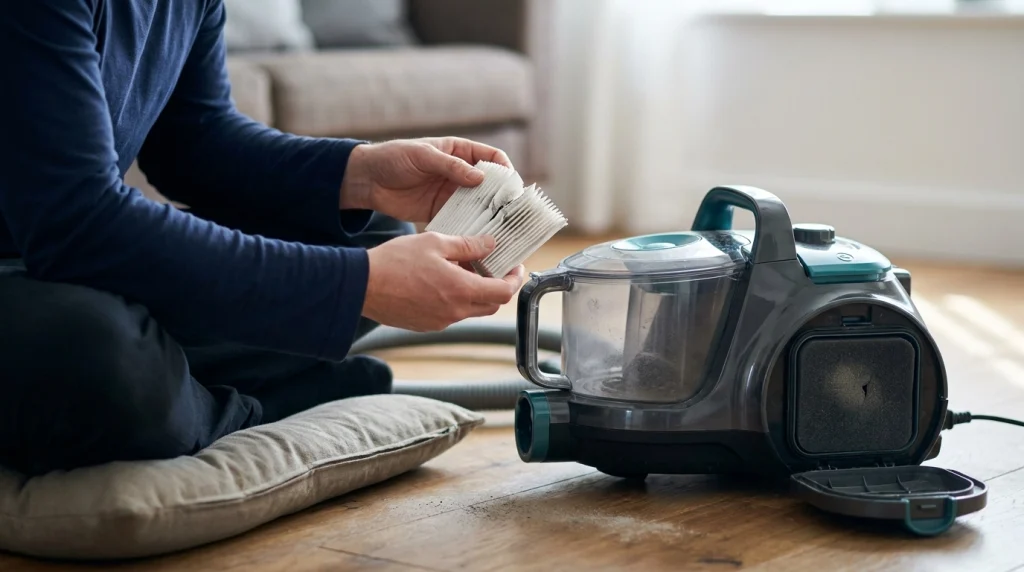
A damaged filter can compromise the vacuum’s designed airflow and filtration system. The consequences depend on whether the affected filter protects the motor or cleans the outgoing air.
Three problems matter most.
1. Fine Dust May Escape Back Into the Room
An exhaust filter captures particles before air leaves the vacuum. If its material is torn or its sealing edge is damaged, some air may bypass the filter.
This can allow fine dust to return to the room while the vacuum appears to be cleaning normally.
That matters particularly when cleaning areas containing pet dander, pollen, and other common household allergens.
A visible dust cloud is a clear warning sign. However, the absence of visible dust does not prove filtration is working correctly.
2. Dust May Reach the Motor
A pre-motor filter helps protect internal components from fine dirt.
When that filter has a hole, torn edge, or damaged seal, particles may pass through the compromised area.
The actual damage depends on the vacuum’s internal design and the amount of debris involved. One brief use does not automatically mean the motor is ruined, but continued operation creates an avoidable risk.
3. The Vacuum May Lose Its Intended Filtration Performance
Some vacuums use multiple filtration stages, including a HEPA filter.
HEPA describes a level of particle filtration performance. A torn HEPA filter cannot be assumed to maintain that performance.
There is also a difference between having a HEPA filter and having a properly sealed filtration system. Both the filter material and the surrounding seals matter.
For related guidance, see our article on using a vacuum without its required filter.
How Can You Tell if a Vacuum Filter Is Damaged?
The most reliable starting point is a visual inspection with the vacuum switched off and disconnected from power.
Look for changes to the filter material, supporting frame, and sealing surfaces.
Common signs include:
- Tears or holes: Openings in foam, fabric, or pleated material.
- Cracked frames: Broken plastic that prevents the filter from sitting correctly.
- Damaged seals: Torn, missing, or distorted rubber or foam gaskets.
- Loose material: Filter layers separating from their frame or adhesive.
- Crumbling foam: Pieces breaking away when the filter is handled gently.
- Permanent distortion: Warping or shrinking that prevents a proper fit.
Do not stretch, pull apart, or aggressively scrub the filter to inspect it. Rough handling can create additional damage.
A filter may also be damaged without an obvious hole. For example, washing a non-washable filter may affect its material or filtration properties.
What About Dust Blowing Out of the Vacuum?
Dust escaping from the exhaust may indicate damaged filtration, an incorrectly installed filter, or another leak.
However, dusty exhaust alone does not identify which component has failed.
Check the filter and its seal first. If everything appears intact, inspect the dust container, bag connection, covers, and other accessible seals.
Do not continue ordinary cleaning while visible dust is escaping.
Damaged Filter vs. Dirty Filter: What Is the Difference?
A dirty filter may still be structurally sound. A damaged filter has a problem with its material, frame, or seal that cleaning cannot reliably restore.
This difference determines what to do next.
| Filter Condition | Likely Issue | Recommended Action |
|---|---|---|
| Dusty but intact | Normal dirt accumulation | Clean as the manual permits |
| Torn or punctured | Compromised filter material | Replace |
| Warped or cracked | Poor fit or possible air bypass | Replace the affected component |
| Clogged but undamaged | Restricted airflow | Clean or replace as directed |
| Wet after cleaning | Incomplete drying | Allow complete drying if washable |
The key distinction is simple: dirt can sometimes be removed, but torn filter media cannot be restored to its original filtration performance through ordinary cleaning.
If your filter is merely clogged, follow our guide on cleaning a blocked vacuum filter safely instead of replacing it automatically.
What Should You Do if Your Vacuum Filter Is Damaged?
Stop using the vacuum and inspect the affected components before deciding whether to replace only the filter or request additional service.
Follow this sequence.
- Turn off the vacuum. Unplug a corded model. For a cordless vacuum, switch it off and remove the battery if the manufacturer’s maintenance instructions permit.
- Locate the filter. Check the owner’s manual for the correct compartment and removal method.
- Remove it carefully. Avoid shaking loose dust into the room. Inspect it over a trash bin, preferably outdoors.
- Check the filter and seals. Look for tears, gaps, deformation, loose material, and damaged edges.
- Identify the exact replacement. Match the vacuum model and filter part number with manufacturer information.
- Install the replacement correctly. Make sure it sits securely and all covers close as designed.
- Check normal operation. After reassembly, watch for unusual noise, weak suction, or visible dust leakage during ordinary use.
If the vacuum continues releasing dust or making unusual noises after the correct filter has been fitted, stop and seek model-specific support.
The filter may not be the only problem.
Warning
Do not cover a filter tear with tape, glue, cloth, or paper. These materials are not verified replacement filter media and may interfere with filtration, fit, or airflow. Use the correct replacement part.
Does the Type of Damaged Filter Change the Risk?
Yes. Different filters protect different parts of the vacuum, so the likely consequences are not identical.
Damaged Pre-Motor Filter
A pre-motor filter is designed to reduce debris reaching the motor area.
Damage here may allow fine particles to pass into internal components that are not intended to handle that material.
Replace the damaged filter before operating the vacuum again.
Damaged Exhaust or HEPA Filter
An exhaust filter captures particles from air leaving the vacuum.
Damage can compromise the filtration provided by that stage, even if suction appears normal.
The manufacturer BISSELL specifically instructs replacement of torn filters in its DigiPro canister vacuum troubleshooting guidance.
For additional background, our guide explains how to maintain vacuum exhaust filters without damaging them.
Damaged Foam Filter
Foam filters may be washable and reusable, depending on the vacuum model.
However, washable does not mean permanently reusable. Foam that splits, crumbles, or loses its shape should be replaced.
Do not assume that a torn foam filter is harmless because another filtration stage exists.
Can You Repair a Damaged Vacuum Filter Instead of Replacing It?
For torn, punctured, or structurally damaged filter media, replacement is the appropriate solution.
Glue and tape cannot be assumed to restore the original filtration rating. They may also interfere with the way the filter fits inside its housing.
There is an important exception: sometimes the problem is not damaged filter material at all.
A filter may simply be installed incorrectly, or its removable cover may not be properly secured.
If inspection shows that the filter itself is intact, correcting the installation according to the manual may solve the issue.
Never force a filter into position or modify its housing to make it fit.
What if You Already Used the Vacuum With a Damaged Filter?
Using a damaged filter once does not prove that permanent damage has occurred.
The consequences depend on the size of the defect, where the filter sits, the debris collected, and how long the vacuum operated.
Start by replacing the damaged filter. Then inspect the accessible dust collection components and check for obvious debris or leakage.
After installing the replacement, pay attention to:
- Persistent dust coming from the exhaust.
- Unusual motor noises.
- Repeated overheating or automatic shutdown.
- Unexpected loss of suction.
- Burning odors or smoke.
A burning smell, smoke, or repeated abnormal shutdown warrants stopping immediately and arranging appropriate service.
Do not open the motor housing or attempt electrical repairs unless you are qualified to perform that work.
If performance remains poor, the problem could involve a blockage or another component rather than the new filter.
How Can You Prevent Vacuum Filter Damage?
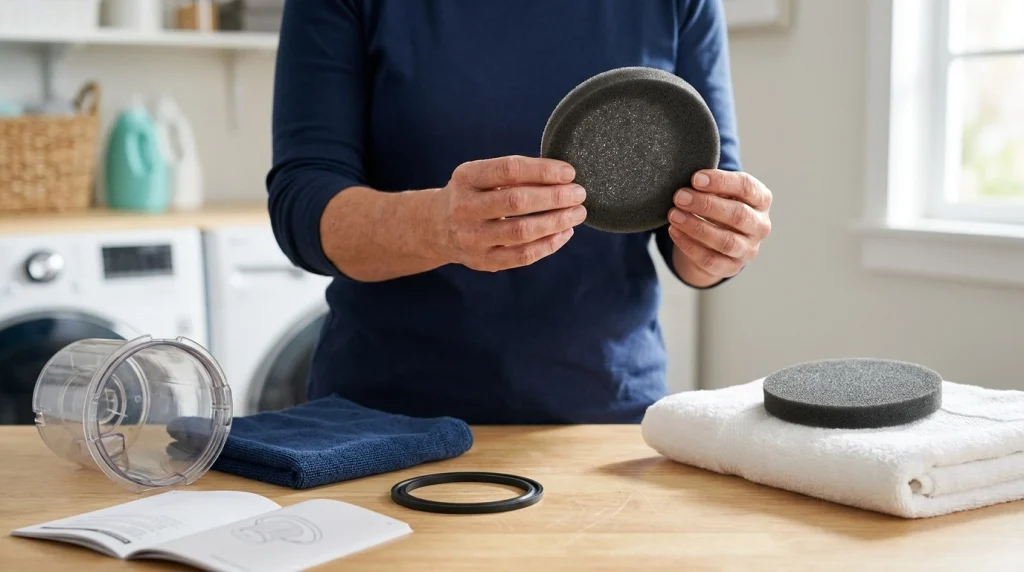
Good filter maintenance reduces avoidable wear, although it cannot prevent every failure.
The most useful habits are straightforward.
- Follow the manual: Use the correct cleaning and replacement instructions for your model.
- Wash only approved filters: Some HEPA and exhaust filters are not washable.
- Dry washable filters fully: Never reinstall them while damp.
- Avoid rough cleaning: Aggressive scrubbing can damage delicate filter fibers.
- Empty the dust container: Prevent excessive debris buildup and airflow restriction.
- Inspect seals: Check the seating surfaces whenever you remove a filter.
- Use compatible replacements: Match the correct model and filter specifications.
The BISSELL vacuum filter maintenance guide also explains why washability and drying instructions vary between filters.
For replacement timing, see our guide on how often to replace a vacuum filter.
One practical rule is worth remembering: inspect the filter whenever you clean it. Catching a damaged seal or small tear early is better than discovering a dust leak after several cleaning sessions.
Frequently Asked Questions
Can a tiny hole in a vacuum filter cause problems?
Yes. Even a small hole can create a path for particles to bypass the filter material. Replace a filter with a confirmed hole rather than assuming the damage is too small to matter.
Can a damaged filter make a vacuum smell dusty?
Yes, it may contribute to dusty exhaust, but odors can also come from trapped debris, damp components, or other problems. Check the filter and dust container. A burning smell requires immediate shutdown.
Can you use a vacuum while waiting for a replacement filter?
Not if the vacuum requires the damaged filter for normal operation. Leave the machine unused until a suitable replacement is installed, unless the manufacturer specifically permits another operating configuration.
Will a damaged HEPA filter still capture some dust?
It may still capture particles passing through intact material. However, damage can allow air to bypass the filtering media, so its original filtration performance cannot be assumed.
Does a damaged vacuum filter always reduce suction?
No. A tear may allow air to pass through more easily while reducing filtration. Weak suction is more commonly associated with restrictions, although multiple faults can occur together.
Can a vacuum warranty cover a damaged filter?
Coverage depends on the brand, warranty terms, cause of damage, and whether the filter is considered a consumable part. Check your warranty documents or contact the manufacturer before purchasing a replacement if coverage is uncertain.
Conclusion
Using a vacuum with a damaged filter is not worth the risk of reduced filtration or possible internal contamination.
If the filter is torn, punctured, crumbling, or no longer fits properly, replace it with a compatible part. If it is only dirty, follow the manufacturer’s approved cleaning instructions.
A correctly fitted, undamaged filter helps your vacuum clean effectively without compromising the filtration system it was designed to provide.
