
How Much Does Vacuum Repair Cost? 2026 Price Guide

Quick Answer
How much does vacuum repair cost? In the US, many common vacuum cleaner repairs cost about $30 to $200. Simple cleaning or belt work often costs less, while motor, battery, or electronic repairs may reach $200 to $500 or more. Your final bill depends on the vacuum type, failed part, labor charges, and whether the repair is worth more than replacing the machine.
A vacuum that suddenly stops working can leave you facing a frustrating choice. Should you pay to fix it or put that money toward a new cleaner?
The answer is not always obvious. A vacuum that sounds broken may only need a clogged hose cleared. Another machine may require an expensive motor that costs almost as much as a replacement vacuum.
Before agreeing to any repair, it helps to understand typical charges, which problems cost the most, and how to compare an estimate with the value of your existing machine.
Average Vacuum Repair Costs by Problem
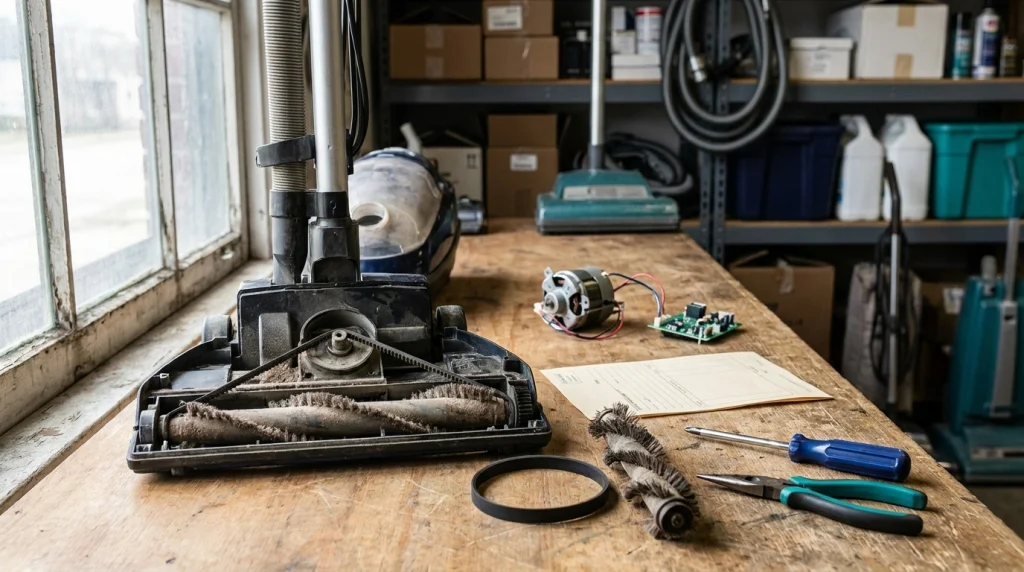
Vacuum cleaner repair prices vary considerably. Independent repair shops may charge a fixed fee for common jobs or bill by the hour for complicated work.
The following table gives approximate US cost-planning ranges based on published repair-shop rates and current repair-price guides. These are not fixed prices, and some repairs may fall outside the ranges.
| Repair or Service | Estimated Cost | What Affects the Price |
|---|---|---|
| Basic cleaning or clog removal | $30–$60 | Access to blocked passages and time needed |
| Belt replacement | $40–$80 | Belt price and installation labor |
| Hose replacement | $40–$100 | Hose design and parts availability |
| Power cord or switch repair | $60–$120 | Electrical diagnosis and replacement parts |
| Brush-roll or power-head repair | $60–$180 | Whether individual parts or a full assembly are needed |
| Cordless battery replacement | $50–$180 | Battery model, brand, and installation |
| Motor repair or replacement | $80–$250+ | Motor assembly, diagnosis, and labor |
| Major electronic repair | $150–$500+ | Control board, proprietary parts, and complexity |
A basic belt replacement and a complete motor repair are very different jobs. This is why one general average cannot predict every vacuum repair bill.
For a real-world benchmark, A-1 Vacuum Cleaner Company’s published 2026 labor rates list a $29.95 minimum bench charge, $39.95 for a typical minor belt change before parts, and $59.95 for a typical minor cord or switch change before parts.
How Much Does Vacuum Repair Cost by Vacuum Type?
The type of vacuum matters because different machines use different parts and repair methods.
Upright and Canister Vacuums
Traditional upright and canister vacuums are often reasonable to repair when the problem involves a belt, clog, hose, switch, or brush roll.
Many routine repairs fit within the $30 to $200 range. Older premium models may also be worth repairing when replacement parts remain available.
However, an inexpensive upright with a failed motor may not justify a large repair bill.
Cordless Stick Vacuums
Cordless vacuum repair costs often depend on the battery, charging system, or motorized cleaner head.
A replaceable battery can make repair straightforward. But some machines require a complete assembly rather than a small component, increasing the cost.
Check the exact model number before buying a battery. Similar-looking packs are not necessarily interchangeable.
Robot Vacuums
Robot vacuum repairs may involve wheels, sensors, batteries, charging contacts, or cleaning modules.
Small replaceable modules can be economical to fix. A damaged control board, navigation system, or unavailable proprietary part may make professional repair much more expensive.
Robot owners should check manufacturer support and replacement-part availability before paying a diagnostic fee.
Central Vacuum Systems
Central vacuum systems belong in a separate cost category because repairs may involve fixed piping, electrical connections, wall inlets, and a stationary power unit.
According to Angi’s 2026 central vacuum repair cost guide, repairs commonly range from $129 to $560, with an average around $321.
Motor problems and inaccessible wiring or piping can produce considerably higher estimates. These figures should not be used as averages for ordinary portable vacuum cleaners.
What Makes a Vacuum Repair More Expensive?
The replacement part is only one part of the bill. Several other details can change the final price.
- Labor time: A technician may need to dismantle several components before identifying the fault.
- Brand and model: Proprietary assemblies can cost more than standard consumable parts.
- Parts availability: Discontinued models may require special ordering or may no longer be repairable economically.
- Multiple problems: A damaged brush roll, clogged airflow path, and worn belt may need attention together.
- Service location: Shop drop-off service and in-home visits can have very different charges.
- Repair coverage: An eligible warranty repair may cost much less than an out-of-warranty repair.
Before accepting a quote, ask whether the estimate includes diagnosis, parts, labor, taxes, and testing. Also ask whether the diagnostic charge is credited toward the completed repair.
Is It Cheaper to Repair or Replace a Vacuum?
Repairing is generally the better financial choice when the vacuum is otherwise in good condition and the repair costs substantially less than buying a comparable replacement.
A useful starting guideline is to compare the total repair estimate with 50% of the price of a comparable new vacuum. This is a decision aid, not an absolute rule.
Consider two hypothetical examples:
- Example 1: A vacuum worth $150 needs a $110 motor repair. The repair costs about 73% of replacement, making a new machine worth considering.
- Example 2: A premium vacuum with a comparable replacement price of $600 needs an $85 repair. That is about 14% of replacement, so repairing may offer excellent value.
Age and condition also matter. If the vacuum needs several parts, has repeated failures, or lacks parts support, a seemingly affordable repair could be a temporary solution.
Key Insight
Compare the repair bill with the cost of a genuinely comparable new vacuum, not simply the price you paid years ago. A durable machine with strong parts support may justify a repair that would make little sense for a basic budget model.
What Can You Check Before Paying for Repairs?
Some vacuum problems result from routine maintenance issues rather than failed electrical components.
For a corded vacuum, unplug it before inspecting accessible parts. For a cordless model, switch it off and follow the manufacturer’s instructions for removing the battery, if applicable.
- Empty the dust container or replace the bag. An overfilled container or bag can restrict airflow.
- Inspect accessible hoses. Look for hair, paper, or other debris blocking the passage.
- Check the filters. Clean washable filters only as directed. Replace non-washable filters when necessary.
- Inspect the brush roll. Remove tangled hair or threads using the method recommended for your model.
- Check the floor setting. An unsuitable setting can reduce pickup or overload the brush mechanism.
- Check the warranty. Confirm whether repair, replacement, or manufacturer support is available.
These checks may prevent an unnecessary service visit. However, they cannot reliably diagnose an internal motor or electrical failure.
Warning
Stop using a vacuum that has a damaged power cord, visible sparks, smoke, or a persistent electrical burning smell. Do not open motor housings, handle exposed wiring, or attempt lithium-ion battery cell repairs without appropriate professional training.
How Can You Avoid Overpaying for Vacuum Repair?
The best way to control repair costs is to ask for a complete estimate before authorizing work.
Start by recording the vacuum’s brand, model number, age, and exact symptoms. Tell the technician whether the problem started suddenly or developed gradually.
Then ask these questions:
- Is there a diagnostic or inspection fee?
- Will that fee count toward the final repair?
- Does the estimate include both replacement parts and labor?
- Are original manufacturer parts available?
- Will the shop contact me before exceeding the estimate?
- Is the completed repair covered by a service warranty?
For an expensive repair, comparing two quotes can be worthwhile. An authorized repair center may also be preferable if the machine is under warranty or requires specialized electronic components.
Be careful with unusually cheap quotations that do not identify the actual fault. A price is only meaningful when you know what the technician intends to repair.
When Should You Replace the Vacuum Instead?
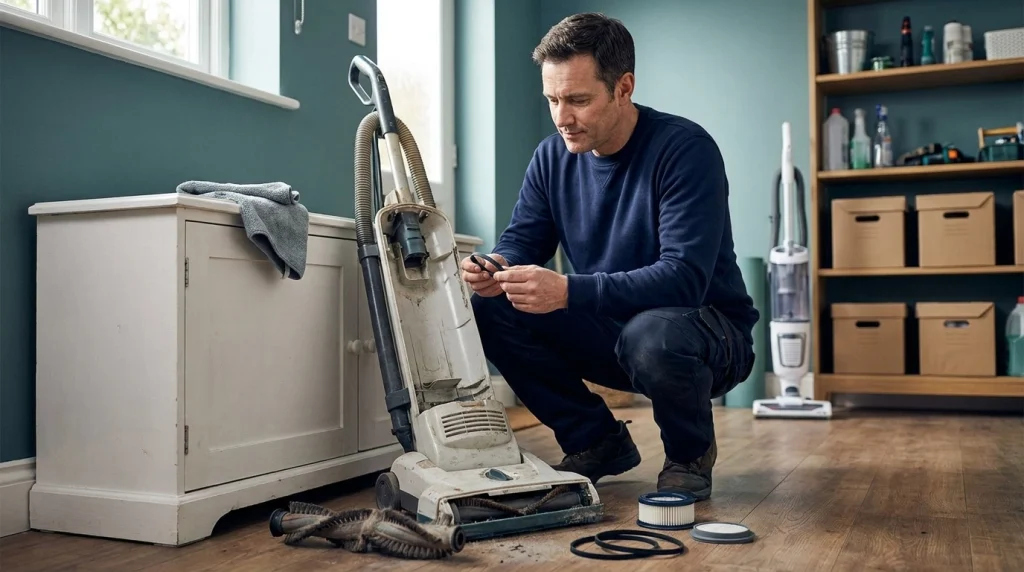
Replacement becomes more attractive when the machine has major damage, needs several expensive components, or cannot be supported with suitable parts.
Consider replacing it when:
- The repair estimate approaches the cost of a comparable new vacuum.
- The machine has experienced repeated breakdowns.
- Both the motor and other expensive assemblies need replacement.
- The manufacturer no longer supplies necessary parts.
- Battery deterioration is accompanied by other serious faults.
- The vacuum no longer meets your cleaning needs even when operating correctly.
On the other hand, an otherwise reliable vacuum with a simple airflow blockage or worn belt usually deserves a closer inspection before disposal.
The sensible choice is based on total cost, expected reliability, and remaining useful life—not the machine’s age alone.
Frequently Asked Questions
1. Do vacuum repair shops charge for estimates?
Some shops provide free basic estimates, while others charge a diagnostic fee. The fee may be deducted from your repair bill if you approve the work. Ask about this before leaving your vacuum for inspection.
2. How much does it cost to fix a vacuum that will not turn on?
The cost depends on the cause. A faulty switch or cord may involve a modest repair, while motor or electronic-control failure can cost much more. The symptom alone is not enough to provide an accurate quote.
3. Is vacuum repair covered under a warranty?
It may be covered if the failure qualifies under the manufacturer’s warranty terms. Normal wear, accidental damage, and improper maintenance may be excluded. Check your model’s warranty before paying for third-party repairs.
4. How long does professional vacuum repair take?
Simple repairs may be completed during a short shop visit, but complex diagnosis or special-order parts can extend the process. Ask the shop for an estimated completion date and whether the required part is in stock.
5. Can a vacuum motor be repaired instead of replaced?
Sometimes. Certain motor-related faults involve replaceable components, but many modern vacuums use complete motor assemblies. A technician must identify the failure and determine whether component-level repair is practical and safe.
6. Does regular vacuum maintenance reduce repair costs?
Regular filter care, bin emptying, blockage removal, and brush-roll cleaning can prevent some avoidable problems. Maintenance cannot prevent every electrical or mechanical failure, but it can help keep the vacuum operating within its intended conditions.
Final Thoughts
Most routine vacuum cleaner repairs fall within a manageable price range, but expensive motors and electronic assemblies can change the calculation quickly.
Check simple maintenance problems first, obtain an itemized repair estimate, and compare the total with the price of a similar replacement. A small, well-priced repair can extend your vacuum’s useful life, while a major repair on an already unreliable machine may not be worth the expense.
