
How Long Do Vacuum Motors Last? Signs & Lifespan

Quick Answer
How long do vacuum motors last? There is no single lifespan for every vacuum motor. As a practical guide, complete corded vacuums are often expected to last around 8 years, while cordless vacuums have an estimated lifespan of about 5 years. The motor itself may last longer or fail sooner depending on usage, design, dust exposure, airflow, and maintenance.
A vacuum that has worked well for years may suddenly sound louder, lose suction, or switch off during cleaning. It is natural to wonder whether the motor is wearing out.
But a weak vacuum does not always have a failing motor. A clogged filter, blocked hose, worn brush roll, or cordless battery problem can cause similar symptoms.
Understanding the difference can save you from replacing a motor that still works. The most useful approach is to consider the vacuum’s age, its operating conditions, and whether simple maintenance restores normal performance.
What Is the Average Lifespan of a Vacuum Motor?
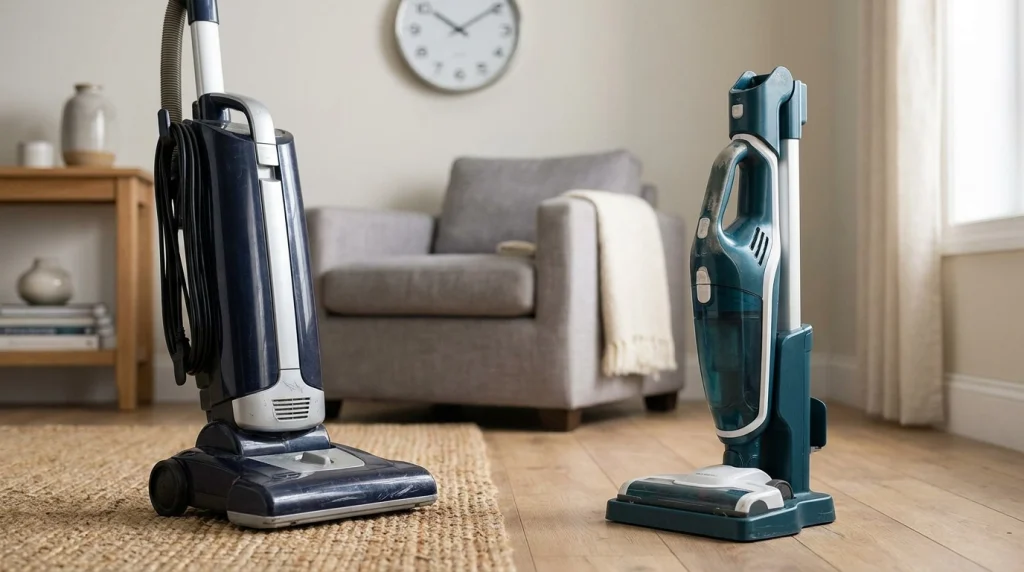
The average lifespan of a vacuum motor cannot be expressed reliably as one number across all models. Some motors operate for many years under normal household conditions, while others fail prematurely because of heat, contamination, mechanical wear, or electrical faults.
Consumer NZ estimates that a typical corded upright or canister vacuum should last about 8 years. For cordless stick and handheld vacuums, its estimate is approximately 5 years.
These figures refer to the complete appliance, not specifically to the motor. They are useful planning benchmarks, but they do not establish when an individual motor will fail.
Motor life is sometimes described in operating hours rather than calendar years. A vacuum running for one hour every week receives far less use than one operating for several hours each day.
Older European vacuum cleaner design requirements also used an operational motor lifetime threshold of at least 500 hours. However, that historical requirement should not be treated as a prediction for every current vacuum motor.
Key Insight
Vacuum age and motor age are not the same as motor wear. A five-year-old motor used occasionally may have fewer operating hours than a much newer motor used heavily every day.
Does Motor Lifespan Change With Vacuum Type?
Yes. Motor design, cooling, cleaning workload, and maintenance conditions all influence service life. However, vacuum category alone cannot tell you how long the motor will survive.
| Vacuum type | Whole-appliance life guidance | Important motor consideration |
|---|---|---|
| Corded upright | Around 8 years | Airflow restrictions and mechanical wear |
| Corded canister | Around 8 years | Filter maintenance and dust exposure |
| Cordless stick | Around 5 years | Battery faults can resemble motor failure |
| Robot vacuum | No single supported estimate here | Multiple motors and separate drive components |
The eight- and five-year figures come from Consumer NZ’s appliance life expectancy guidance. They should not be interpreted as motor warranties or measured motor-specific averages.
Brushed Versus Brushless Motors
Motor construction also makes a difference. Traditional brushed motors have carbon brushes that make electrical contact with rotating components. These brushes wear during operation.
Brushless motors eliminate that particular wear component and use electronic switching instead. This can reduce brush-related maintenance, although bearings, electronics, and other components can still fail.
A brushless design does not automatically guarantee a longer service life in every vacuum. Manufacturing quality, cooling, and operating conditions remain important.
What Causes a Vacuum Motor to Wear Out Early?
Early motor failure often results from conditions that increase heat, introduce unwanted debris, or strain mechanical and electrical components.
1. Restricted Airflow
Many vacuum motors depend on moving air for cooling. A blocked hose, overloaded dust container, or clogged filter can restrict that airflow.
The resulting temperature rise may activate thermal protection. If severe overheating continues or happens repeatedly, components can deteriorate.
2. Fine Dust Entering the Wrong Areas
Fine construction dust can place unusual demands on household vacuum filtration. Some materials can clog filters rapidly, while inadequate filtration may allow abrasive particles to reach components that should remain protected.
Ordinary household vacuums should not be used for hazardous or construction debris unless the manufacturer explicitly approves that application.
3. Bearing and Brush Wear
Rotating motor shafts rely on bearings for smooth operation. Over time, bearing wear may produce vibration, whining, grinding, or unusual friction.
On brushed motors, carbon brushes can also wear down. Whether either component can be serviced depends on the motor design and replacement-part availability.
4. Heavy or Improper Use
Frequent long cleaning sessions increase operating hours. They are not necessarily harmful when the vacuum is designed for that workload, but a household model may be unsuitable for continuous commercial cleaning.
Water entering a dry-only vacuum, operating with missing filters, and using unsuitable electrical supplies can also damage internal components.
What Are the Signs of a Failing Vacuum Motor?
A failing vacuum motor may produce unusual noises, a burning electrical smell, repeated shutdowns, or complete failure to start. None of these symptoms alone proves that the motor is defective.
The pattern of symptoms is more useful than any single warning sign.
| Symptom | Possible explanation | Next action |
|---|---|---|
| Reduced suction | Clogged filter or airway | Inspect airflow path |
| Grinding or harsh whining | Possible bearing or rotating-part problem | Stop and seek assessment |
| Repeated shutdown | Overheating or protection system | Cool and check for blockage |
| Runs briefly then stops | Filter, battery, or electrical fault | Follow model-specific checks |
| Electrical burning smell | Possible overheating or electrical damage | Stop using immediately |
For example, a vacuum that shuts off after its filter becomes blocked may recover once it cools and the restriction is removed. A machine that produces persistent grinding or an electrical burning smell requires more caution.
Manufacturer troubleshooting also confirms that motor pulsing or automatic shutdown may be protective responses rather than proof of motor failure. See Dyson’s official troubleshooting guidance for model-specific examples.
Warning
Stop using a vacuum that produces smoke, sparks, a persistent electrical burning smell, or abnormal heat. Disconnect a corded model from power when safe. Do not repeatedly restart it to see whether the problem disappears. Arrange qualified service or replacement.
How Can You Tell if the Motor Is Bad or the Vacuum Is Just Clogged?
Begin with external checks that do not require opening the motor housing. A blockage is often easier and less expensive to correct than an internal motor fault.
- Switch off the vacuum. Unplug a corded model or disable a cordless model as directed by its manual.
- Inspect the dust container or bag. Empty or replace it when necessary.
- Check accessible airways. Look for debris in the nozzle, hose, wand, and other removable passages.
- Inspect the filters. Clean or replace them according to the manufacturer’s instructions. Wash only filters explicitly identified as washable.
- Check the brush roll. Remove accessible hair or string after making sure the machine cannot start.
- Allow appropriate cooling time. Follow the manufacturer’s procedure before testing a vacuum that stopped because of heat.
- Test only after proper reassembly. If the problem remains, seek service rather than dismantling electrical motor components.
Never run the vacuum without required filters or protective components. Washed filters must be completely dry before being installed.
If maintenance restores normal suction and operation, motor replacement was probably unnecessary. If unusual motor noise or shutdown continues, the vacuum may need professional evaluation.
How Can You Make a Vacuum Motor Last Longer?
The best way to protect a vacuum motor is to keep the appliance operating within its intended limits. Good maintenance focuses on airflow, cleanliness, and appropriate use.
- Maintain filters: Follow the actual cleaning and replacement schedule in the manual rather than assuming every filter can be washed.
- Empty the collection chamber: Avoid allowing dust to accumulate past the indicated fill level.
- Clear blocked passages: Investigate sudden suction changes before continuing to vacuum.
- Protect the motor from moisture: Never collect liquids with a dry-only vacuum.
- Use suitable equipment: Choose an appropriate dust extractor for construction debris or specialized cleaning work.
- Address unusual sounds early: Grinding, scraping, and unexpected vibration deserve inspection.
- Follow operating limits: Use the correct power supply, attachments, and manufacturer-approved cleaning procedures.
A simple maintenance routine can protect the appliance from preventable problems. It cannot eliminate normal bearing wear, electronic faults, or manufacturing defects, but it can reduce avoidable stress.
Should You Replace the Vacuum Motor or Buy a New Vacuum?
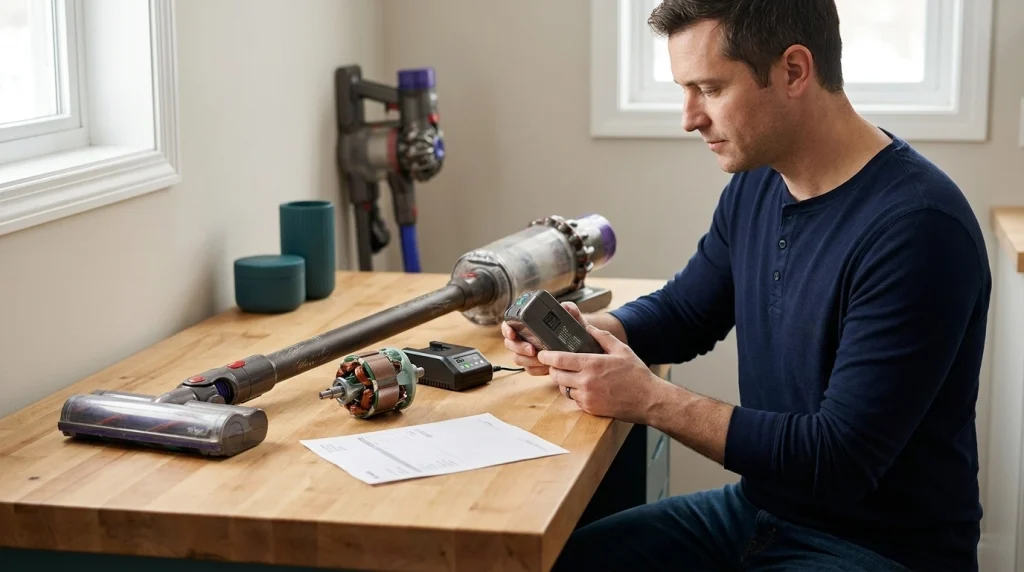
Motor replacement makes sense when the vacuum is otherwise in good condition, a compatible replacement is available, and the total repair cost is reasonable.
Replacing the entire vacuum may make more sense when several parts are failing, the motor assembly is unavailable, or professional labor makes the repair uneconomical.
Before deciding, compare these factors:
- Vacuum condition: Are the hose, wheels, switches, housing, and brush assembly still functional?
- Repair cost: Include replacement parts, labor, and any diagnostic charge.
- Parts availability: Confirm the correct motor assembly is supported for the model.
- Remaining usefulness: Does the vacuum still suit your cleaning needs?
- Warranty coverage: Check whether a manufacturer warranty or applicable consumer protection covers the fault.
For a hypothetical example, a motor repair costing almost as much as a comparable replacement vacuum may offer poor value. But a repairable, well-maintained premium appliance may justify a higher repair bill.
Age alone is not enough to make the decision. A working eight-year-old vacuum does not need replacement simply because it has reached a published lifespan estimate.
For an older cordless model, confirm that the battery or charger is not responsible before paying for motor work. A failed power component can prevent an otherwise functional motor from operating.
Frequently Asked Questions
Can a vacuum motor last 10 years?
Yes. A vacuum motor can remain functional for 10 years or longer, particularly with moderate use and proper maintenance. However, this is possible rather than guaranteed, and individual operating hours matter more than calendar age alone.
How many hours can a vacuum motor run?
It depends on the specific motor design and operating conditions. Historical European vacuum requirements used a minimum operational motor lifetime of 500 hours, but that number should not be treated as the lifespan of every modern motor.
Does losing suction mean the vacuum motor is dying?
No. Loss of suction commonly results from blocked hoses, dirty filters, or a full collection chamber. Check those components before concluding that the motor needs replacing.
Can a vacuum motor burn out from overheating?
Yes. Excessive heat can damage motor insulation and other internal parts. Some vacuums have protective shutoff systems, but repeated overheating should be investigated rather than ignored.
Can you repair a vacuum motor instead of replacing it?
Sometimes. Certain motors have serviceable components, while others are replaced as complete assemblies. The appropriate option depends on the design, available parts, and repair cost.
Do cordless vacuum motors fail before their batteries?
Not necessarily. Battery and charger problems are common reasons cordless vacuums become unusable. Diagnose the power system before assuming the motor has failed.
Conclusion
So, how long do vacuum motors last? There is no universal expiration date. A well-maintained motor can work for years, while heavy use, restricted airflow, contamination, or component wear can shorten its life.
The smartest approach is to monitor performance rather than age alone. Keep filters and airways clear, investigate unusual sounds, and rule out simpler faults before replacing the motor. If a serious electrical problem appears, stop using the vacuum and have it assessed safely.
