How to Vacuum Faster Without Sacrificing a Clean Floor

Quick Answer
To vacuum faster, clear obstacles before starting, use the correct floor setting, work in straight sections, and spend extra time only where dirt collects. The goal is fewer stops and repeat passes, not pushing the vacuum faster across the floor. For a broader system, see this guide to vacuuming efficiently.
Fast vacuuming routine
- Clear first: Pick up cords, toys, clothing, and small objects before turning the vacuum on.
- Check airflow: Make sure the bin, bag, filter, floor head, and brush roll are ready for the job.
- Use a route: Start at the far side of the room and work toward the exit.
- Clean in strips: Use straight, slightly overlapping passes instead of random movements.
- Target dirty zones: Give doorways, eating areas, pet zones, and busy walkways extra attention.
- Use attachments: Switch to a crevice or upholstery tool instead of repeatedly forcing the main head into tight spaces.
One rule that matters
- Slow down when you reach visibly dirty carpet, fine dust, delicate flooring, or allergy-sensitive areas. Fast cleaning still needs proper pickup.
I used to think faster vacuuming meant moving the floor head faster. That usually created the opposite result because I had to return for crumbs, hair, and missed edges.
The bigger time saver is removing unnecessary movement. This guide shows how I organize vacuum cleaning so a normal household floor gets finished with fewer interruptions and less backtracking.
In This Guide
What Does It Mean to Vacuum Faster?
Vacuuming faster means completing useful floor coverage with fewer wasted movements, stops, and repeat passes. It does not mean racing the floor head over every surface.
Fast vacuuming is a planned cleaning method that reduces unnecessary handling while preserving enough contact time to pick up visible debris.
Speed and efficiency are different
Imagine covering a carpet in five minutes but leaving hair near the sofa and crumbs around the dining table. Returning to those areas turns one cleaning session into two.
A controlled pattern is usually faster overall because you know what has already been cleaned. You also notice problem areas before putting the vacuum away.
- Speed: How quickly you physically move.
- Efficiency: How much useful cleaning you complete with each movement.
- Coverage: How consistently you reach the floor areas that matter.
- Repeat work: Any section you must clean again because it was missed or poorly handled.
Focus on the dirt that is actually present
Not every square foot needs the same attention. An unused corner may need one pass, while the carpet around a sofa may need more.
This is where I save a surprising amount of time. I stop treating a nearly clean guest-room floor like the busy entryway beside the front door.
The U.S. Environmental Protection Agency explains that household dust can include soil, pollen, mold spores, pet dander, dust mites, hair, and other particles. Its indoor particulate matter guidance also notes that cleaning and vacuuming can stir settled dust into the air.
That is another reason not to confuse aggressive movement with efficient cleaning. A faster routine should stay controlled.
Section Takeaway: The fastest useful vacuuming method reduces repeat work. Move with a plan instead of simply moving faster.
What Should You Do Before Vacuuming to Save Time?
Prepare the room and vacuum before switching the machine on. A short setup prevents repeated stops for cords, toys, full bins, missing attachments, and tangled brush rolls.
Do one clearing lap
I like to walk through the area once before plugging in or starting a cordless vacuum. I carry a basket so loose objects disappear from the floor in one trip.
- Pick up charging cables and extension cords.
- Remove socks, clothing, towels, and blankets.
- Collect toys and pet items.
- Pick up coins, clips, paper, and larger debris.
- Move lightweight chairs together instead of one at a time.
- Lift floor mats or small rugs if they will be cleaned separately.
Do not vacuum objects that could block the hose, damage the brush, or create a safety problem. Pick questionable debris up by hand using suitable protection.
Dust higher surfaces first
If the room needs dusting, do it before the floor. Dust from shelves, tables, window sills, and furniture can fall downward.
Vacuuming last lets you collect that fallen material once. The EPA also recommends decluttering, damp dusting, and vacuuming as parts of a broader indoor-environment cleaning approach.
Give the vacuum a quick check
Poor pickup creates repeat passes. Before a larger cleaning session, check the parts that directly affect normal airflow and floor contact.
- Bin or bag: Make sure there is enough capacity for the cleaning session.
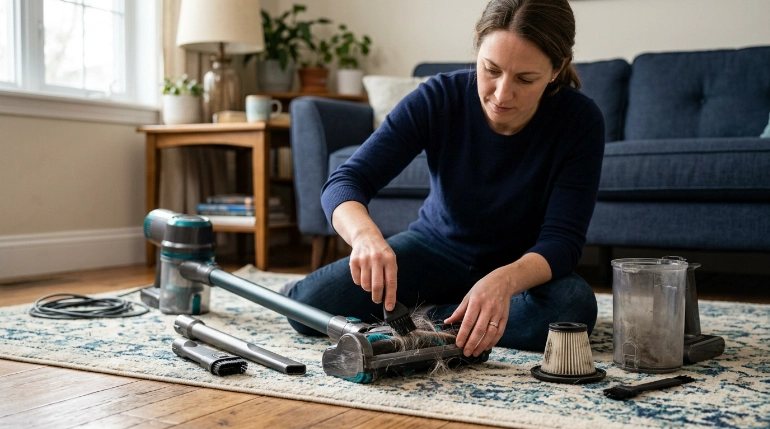
- Brush roll: Look for wrapped hair, string, or thread.
- Filter: Maintain it according to the manufacturer’s instructions.
- Floor inlet: Check for visible trapped debris.
- Hose: Investigate sudden loss of pickup before continuing.
- Attachments: Bring the tools you expect to use before starting.
Switch the vacuum off and disconnect it from power before reaching near a powered brush or clearing a blockage. Follow the manufacturer’s instructions for removable parts.
Put your tools where you will need them
I avoid carrying the full attachment collection through every room. I take only the floor head plus the one or two tools the area needs.
A crevice tool beside the baseboard is useful. A pet-hair tool in a room with no upholstery is just extra equipment to move around.
Section Takeaway: Preparation is where fast vacuuming starts. Clear the route, prepare the machine, and gather the right tools before the motor turns on.
What Is the Fastest Way to Vacuum a Room?
Start at the far side of the room and work toward the doorway in straight, slightly overlapping sections. Clean open flooring first, then handle edges and reachable furniture areas without retracing the whole room.
Step 1: Start at the farthest point
Beginning near the exit encourages random backtracking. Walk to the far corner first and work your way out.
Step 2: Mentally divide the floor into strips
You do not need to mark the floor. Use furniture, floorboards, rug edges, or visual lines as simple guides.
- Vacuum one straight section forward.
- Pull the vacuum back over the same general path.
- Shift sideways enough to cover the next section.
- Continue toward the doorway.
Step 3: Change pace based on dirt
Use a normal controlled pace across clean-looking open flooring. Slow down where you see crumbs, grit, hair, or heavier soil.
This targeted approach saves more time than giving every part of the room several identical passes.
Step 4: Do edges as a separate job
Do not repeatedly angle a large floor head into a narrow wall gap. A crevice tool can make one deliberate edge pass more practical.
You also do not need to detail every baseboard during every quick clean. Match the level of cleaning to what the room needs that day.
Step 5: Use zones in large or complicated homes
For a compact layout, a room-to-room route can reduce unnecessary walking. My guide to vacuuming a small apartment covers that approach in more detail.
Larger homes benefit from zones instead. You can finish one floor, wing, or group of rooms before moving equipment elsewhere; see the large-house vacuuming system for a dedicated routine.
| Situation | Faster Approach | What Usually Wastes Time | Best Tool or Pattern |
|---|---|---|---|
| Open hard floor | Long straight passes | Constant direction changes | Suitable hard-floor head |
| Carpeted room | Controlled overlapping sections | Several rushed whole-room passes | Correct carpet setting |
| Baseboards and corners | One dedicated edge pass | Turning the main vacuum repeatedly | Crevice tool |
| Sofa or fabric chair | Top-to-bottom sections | Using an oversized floor head | Upholstery tool |
| Busy entryway | Extra attention only to visible grit | Repeating the entire adjoining room | Targeted second pass |
Section Takeaway: Use a predictable route and change effort based on the dirt in front of you. Straight coverage beats random movement.
Which Vacuum Settings and Attachments Save Time?
The correct floor setting and attachment reduce the number of passes you need. A powerful vacuum can still waste time when its head is poorly matched to the surface.
Match the floor head to the surface
Different machines handle brush rolls differently. Some let you stop the rotating brush on hard floors, while others provide a dedicated hard-floor or soft-roller head.
- Carpet: Use the carpet setting recommended for your vacuum and flooring.
- Hard floors: Use a compatible hard-floor setting or attachment that does not scatter debris or damage the surface.
- Area rugs: Reduce suction or change settings if the manufacturer recommends it.
- Upholstery: Use an upholstery or suitable mini tool instead of the full floor head.
- Narrow edges: Switch to a crevice tool rather than repeatedly repositioning the vacuum body.
Check the manual when you are unsure about brush-roll use, suction levels, or delicate flooring. Flooring manufacturers may also give cleaning instructions that override general advice.
Do not use maximum suction automatically
More suction is not always faster. A head that seals too tightly to a rug can become difficult to push and slow the entire job.
Use adjustable suction when your vacuum provides it and the surface requires a change. The right setting should let the head move normally while maintaining useful pickup.
Consider machine type when speed matters
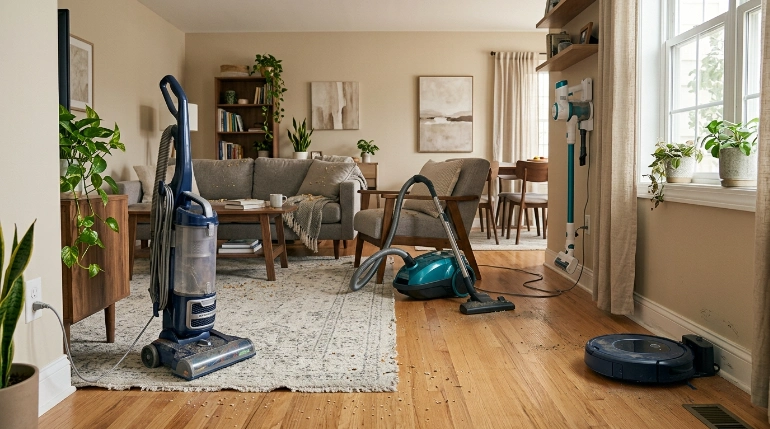
A lightweight stick vacuum can be convenient for quick everyday debris, while an upright or canister may suit different flooring and deeper cleaning needs. Robot vacuums can handle routine open-floor maintenance but cannot reach every stair, edge, sofa, or obstructed area.
If you are choosing equipment, the Consumer Reports vacuum section compares vacuum categories and tested models rather than treating every design as interchangeable.
Keep frequently used tools accessible
A useful attachment hidden in a storage closet does not save much time. Store commonly used tools close to the vacuum when practical.
- Crevice tool for walls and corners
- Upholstery tool for sofas and fabric chairs
- Small powered tool for compatible pet-hair jobs
- Dusting brush for surfaces approved for vacuum cleaning
I also try to finish one tool’s jobs together. If the crevice tool is already attached, I clean the nearby edges before switching again.
Section Takeaway: The fastest attachment is the one designed for the surface in front of you. Good tool selection prevents wrestling with the vacuum and repeating missed areas.
When Should You Slow Down Instead of Vacuuming Faster?
Slow down when the debris, flooring, air-quality concern, or safety risk requires more control. Saving a few minutes is not worth spreading dust, damaging a surface, or using the wrong vacuum for hazardous material.
Slow down around fine household dust
Fine dust can become airborne during cleaning. The EPA notes that vacuuming itself can stir settled indoor dust.
For normal household dust, use controlled movements and maintain the vacuum’s filtration system. My guide to vacuuming without spreading dust covers that problem specifically.
Take extra care when allergies are a concern
The Asthma and Allergy Foundation of America recommends regular vacuuming as one part of controlling indoor allergens. It also notes that cleaning can stir dust and that vacuum quality and filtration matter.
See AAFA’s broader indoor allergen control guidance if allergies or asthma influence your cleaning routine.
If someone in your household is sensitive to dust, you may also want a more cautious allergy-aware vacuuming routine rather than prioritizing maximum speed.
Do not rush delicate flooring and rugs
Loose rug fringe can catch in a rotating brush. Some hardwood, laminate, stone, and specialty floors also have specific manufacturer cleaning requirements.
Use the recommended attachment and setting first. Speed comes after protecting the surface.
Do not treat hazardous dust like ordinary crumbs
Renovation debris, heavy mold contamination, suspected lead dust, asbestos-containing material, hot fireplace ash, wet electrical debris, or unknown fine powders require different precautions. A normal household vacuum may be inappropriate.
Expert Alert: If you suspect asbestos, significant lead contamination, extensive mold, hazardous construction dust, or another dangerous material, stop normal vacuuming and get qualified professional guidance before disturbing it further.
Even ordinary post-construction dust deserves more control than a quick maintenance clean. If that is your situation, use a dedicated post-renovation vacuuming process instead.
Section Takeaway: Fast vacuuming is for routine household cleaning. Fine dust, allergy concerns, delicate surfaces, and hazardous debris deserve a slower or specialized approach.
Frequently Asked Questions
How can I vacuum my house faster?
Clear the floor before starting, prepare the vacuum, and follow one room-to-room route. Work in straight sections, use the correct attachment, and spend extra time only on visibly dirty or high-traffic areas instead of repeating every floor section.
Should you push a vacuum fast or slow?
Use a controlled pace rather than pushing as quickly as possible. Move normally on lightly soiled open floors, then slow down on carpet, visible debris, pet-hair areas, and other places that need more pickup time.
Is it faster to vacuum in straight lines?
Straight, slightly overlapping lines make completed areas easier to track. They reduce random turning and make missed sections more obvious, which can help prevent unnecessary repeat passes.
Should I move furniture before vacuuming?
Move lightweight furniture that blocks useful floor space, but do not dismantle the entire room for every routine clean. Group tasks together so each chair, basket, or small table only needs to be moved once.
Should I dust before or after vacuuming?
Dust higher surfaces first when you are cleaning the whole room. Some debris can fall onto the floor, so vacuuming afterward lets you collect that material during the same floor-cleaning pass.
Does a stronger vacuum help you clean faster?
Not automatically. Useful cleaning speed also depends on the floor head, airflow, filtration, brush condition, settings, maneuverability, and how well the machine matches your floors.
Can a robot vacuum save vacuuming time?
A robot vacuum can reduce routine open-floor work, especially between manual cleaning sessions. It still cannot completely replace cleaning stairs, upholstery, tight edges, blocked areas, and other places the robot cannot physically reach.
Final Takeaway
If you want to know how to vacuum faster, stop focusing on raw movement speed. The biggest gains come from removing interruptions and repeat work.
Clear the floor first. Check the vacuum before starting.
Then work from the far side toward the exit using straight sections. Match the attachment to the surface and give extra attention only where dirt actually collects.
Most importantly, know when speed is the wrong priority. Fine dust, allergies, delicate surfaces, and hazardous debris all deserve more careful handling.
Once the route becomes a habit, the process feels much simpler. You spend less time wandering around with the vacuum and more time finishing the floor once.