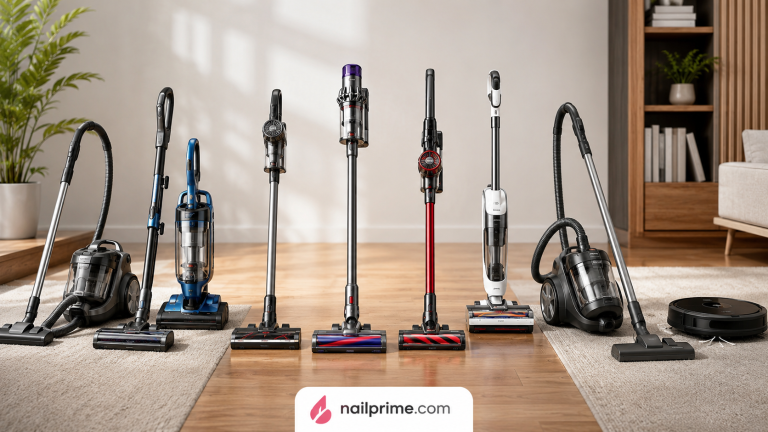
How to Vacuum a Small Apartment: A Simple, Complete Cleaning Guide

Quick Answer
To vacuum a small apartment, clear loose clutter first, then work from the farthest room toward the exit. Vacuum edges and tight spaces before the open floor, use the right attachment for each surface, and empty or check the vacuum when airflow drops. For homes where dust is a concern, the EPA also recommends regular cleaning and HEPA-filtered vacuuming as useful ways to reduce indoor dust buildup.
Vacuum a small apartment in this order
- Clear the floor: Pick up cords, shoes, toys, and anything the vacuum could catch.
- Start at the edges: Clean baseboards, corners, and spaces beside furniture first.
- Vacuum soft surfaces: Clean rugs, carpets, sofas, and fabric chairs as needed.
- Clean open floors: Use slow, overlapping passes instead of rushing across the room.
- Work toward the door: Finish near the apartment entrance so you don’t walk over cleaned floors.
- Check the vacuum: Empty the bin or replace the bag and inspect the filter when required.
Learning how to vacuum a small apartment sounds simple until furniture, tight corners, cords, rugs, and limited storage get in the way. I’ve found that the cleaning order matters almost as much as the vacuum itself.
A good routine lets me cover the apartment without repeatedly moving furniture or walking over areas I just cleaned. This guide explains that routine from preparation to the final pass.
In This Guide
What Is the Best Way to Vacuum a Small Apartment?
The best method is to clean in a planned route instead of moving randomly between rooms. Start high where needed, clean edges next, and finish with the main floor.
Definition: A small-apartment vacuuming routine is a planned cleaning path that removes loose debris, settled dust, hair, and crumbs while minimizing repeated work.
Work from the farthest room toward the exit
I like to start in the room farthest from my apartment door. This keeps me from walking back through areas I’ve already finished.
A simple route might look like this:
- Bedroom
- Living area
- Hallway
- Kitchen or dining area
- Entryway
Your layout may be different. The important point is to create one continuous path.
Clean from higher areas to lower areas
Dust can fall when you clean shelves, window ledges, blinds, or furniture. Handle those areas before finishing the floor.
I usually wipe dusty hard surfaces with a damp microfiber cloth before vacuuming. That helps collect settled dust instead of simply pushing it around.
Do the edges before the center
Small apartments often collect debris around walls and furniture because those areas don’t get much foot traffic. A crevice tool makes these spots easier to reach.
- Along baseboards
- Behind doors
- Under cabinet edges
- Between furniture and walls
- Around table and sofa legs
Once those areas are done, cleaning the open floor becomes much faster.
What Should You Do Before Vacuuming?
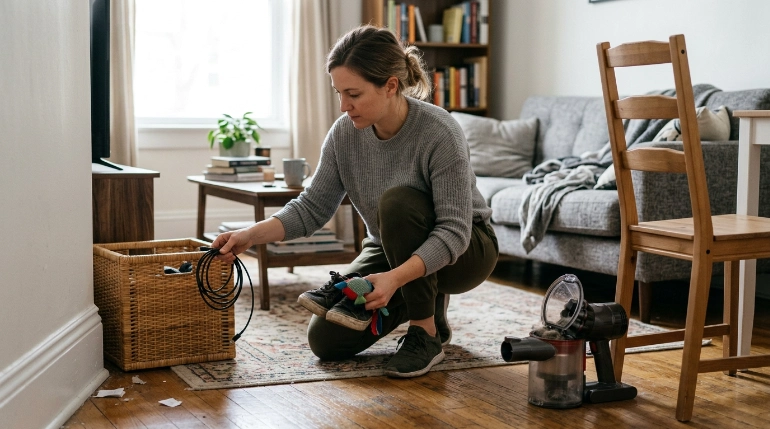
Spend a few minutes preparing the apartment before switching on the vacuum. It can save more time than trying to clean around clutter.
Pick up loose objects
Charging cables are one of the first things I move. They can wrap around a brush roll or get dragged across the floor.
I also remove these common obstacles:
- Socks and small clothing items
- Pet toys
- Coins
- Hair ties
- Paper scraps
- Lightweight floor decorations
- Shoes and slippers
Move only lightweight furniture
You don’t need to empty the room. Moving a dining chair, small stool, or light side table is usually enough to expose hidden debris.
I avoid dragging heavy furniture just to vacuum underneath it. A flat floor head or extension tool is safer and easier when it can reach the space.
Check the vacuum before starting
Poor airflow can make a simple apartment take much longer. I check the bin, bag, filter, brush roll, and floor head if suction seems weaker than normal.
Follow the manufacturer’s instructions when cleaning or replacing filters. Not every filter is washable.
- Empty an overly full dust bin.
- Replace a full bag when required.
- Remove hair wrapped around the brush roll.
- Check the hose and floor head for blockages.
- Make sure washable filters are fully dry before reinstalling them.
How Do You Vacuum a Small Apartment Step by Step?
The fastest routine I’ve used breaks the apartment into small zones. I finish each zone before moving to the next one.
1. Clean ceiling edges and high dust traps when needed
You don’t need to do this every time. When cobwebs or visible dust appear, use an extension wand with a soft brush.
Look around ceiling corners, vents, curtain tops, and tall shelving. Do this before cleaning anything below them.
2. Vacuum baseboards and room edges
Attach the crevice tool or soft brush. Follow the wall around the room instead of jumping between individual dirty spots.
This simple pattern helps me avoid missing corners.
3. Vacuum sofas and fabric chairs
Remove loose cushions if the furniture allows it. Crumbs and hair often collect along seams and beneath the cushions.
- Use an upholstery attachment on fabric.
- Use a crevice tool along seams.
- Check the furniture maker’s care instructions first.
- Use gentler suction on delicate materials.
4. Clean under furniture you can reach
A low-profile floor head can often slide under beds, sofas, and cabinets. I make one deliberate pass instead of repeatedly pushing the head into the same gap.
For areas that cannot be reached safely, don’t strain yourself or force the vacuum underneath heavy furniture.
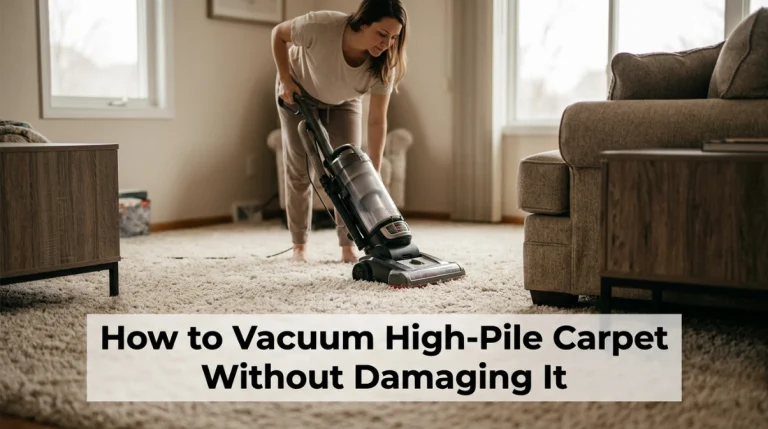
5. Vacuum rugs and carpets
Use a floor setting suitable for the rug or carpet. If your vacuum has an adjustable brush roll or suction control, follow its instructions for the surface.
Work in overlapping lines. Slower passes give the floor head more time to collect hair and embedded debris.
6. Vacuum hard floors
Switch to the correct hard-floor setting or attachment. A spinning brush that isn’t designed for hard flooring can scatter larger crumbs instead of collecting them.
| Surface or Area | Useful Attachment | Cleaning Method | Main Caution |
|---|---|---|---|
| Hard floor | Hard-floor head | Slow, overlapping passes | Use a floor-safe setting |
| Area rug | Compatible floor head | Work in straight overlapping lines | Avoid excessive suction on delicate rugs |
| Sofa or chair | Upholstery tool | Clean surface, cushions, then seams | Check fabric care instructions |
| Baseboards | Soft brush | Follow each wall continuously | Avoid scratching painted surfaces |
| Tight corners | Crevice tool | One controlled pass into the gap | Don’t force the tool |
7. Finish at the apartment entrance
The entrance usually collects grit carried in on shoes. I save it for last because I naturally end my cleaning route there.
Check corners around the door and the edges of any entrance mat before finishing.
Section Takeaway: A fixed route prevents repeated work. Clean high areas first, edges second, soft surfaces next, and open floors last.
Which Vacuum and Attachments Work Best?
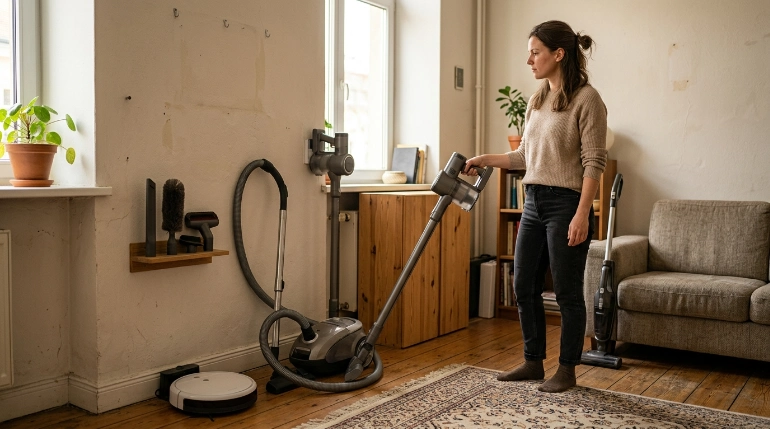
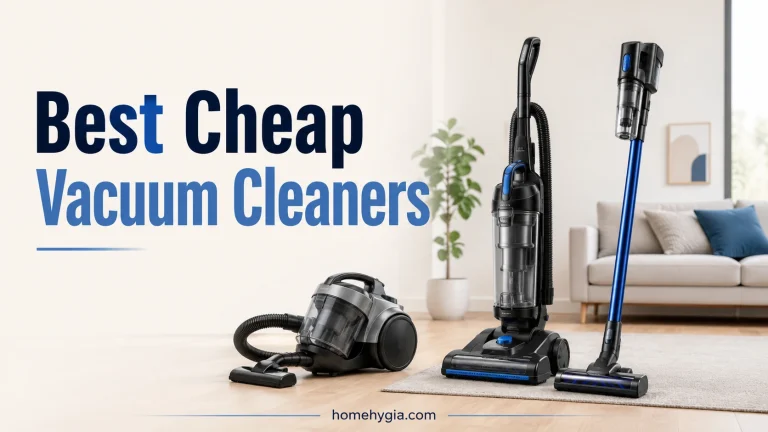
There isn’t one vacuum type that suits every small apartment. Floor type, pets, storage space, noise, and furniture layout all affect the choice.
Cordless stick vacuum
A compact cordless stick is convenient when storage space is limited. It’s also easy to grab for crumbs and small daily messes.
Battery runtime and dust-bin size vary widely by model. Check the manufacturer’s specifications instead of assuming every cordless vacuum can clean the whole apartment on one charge.
Canister vacuum
A canister model can be useful when you need a hose and several attachments. The flexible wand also helps around furniture and tight edges.
The downside is storage. The canister, hose, and wand usually need more separate floor or closet space than a slim stick vacuum.
Compact upright vacuum
An upright may suit an apartment with substantial carpeting. Check whether its floor settings match both your carpet and any hard flooring.
Before buying one, I would measure the actual closet or storage spot. Small homes make awkward vacuum dimensions noticeable fast.
Robot vacuum
A robot can help collect routine surface debris between deeper cleaning sessions. It still doesn’t replace attachments for upholstery, baseboards, stairs, or narrow furniture gaps.
Cables, low furniture, thresholds, and crowded floors can also affect how easily a robot moves through a small apartment.
When does a HEPA filter matter?
HEPA stands for high-efficiency particulate air. According to the EPA’s HEPA filter guidance, a HEPA filter is designed to capture at least 99.97% of airborne particles measuring 0.3 microns under its defined test conditions.
A vacuum’s overall construction matters too. Filtration is less useful if dusty air can leak around poor seals instead of passing through the filter.
Section Takeaway: Choose a vacuum for your actual floors and storage space. For dust control, consider filtration, sealing, maintenance, and the complete vacuum design rather than the filter label alone.
How Often Should You Vacuum a Small Apartment?
A once-a-week whole-apartment vacuum is a practical baseline for many homes. High-traffic areas may need attention more often.
The EPA recommends vacuuming carpets and furniture weekly, or more often when needed, as part of reducing indoor particulate buildup.
A simple apartment schedule
- Daily or as needed: Pick up visible crumbs, tracked dirt, or pet hair.
- Several times a week: Spot-vacuum busy areas when they become visibly dirty.
- Weekly: Vacuum the main floors, rugs, carpet, and regularly used upholstered furniture.
- Periodically: Clean under furniture, along baseboards, and other low-traffic dust traps.
Homes with pets, carpeting, outdoor dirt, or several occupants may need more frequent cleaning. The floor’s condition is often a better guide than a rigid calendar.
What if someone has dust-mite allergies?
The Asthma and Allergy Foundation of America recommends weekly HEPA-filtered vacuuming as one part of dust-mite control. It also notes that vacuuming alone cannot remove all mites and their waste.
Vacuuming can temporarily stir up settled particles. A person who reacts strongly to dust may prefer to stay away from the area while someone else vacuums.
What Vacuuming Mistakes Should You Avoid?
Most vacuuming problems I see in small spaces come from rushing or using the wrong tool. A few changes can make the job noticeably easier.
Vacuuming around clutter
Trying to weave around shoes, cords, and bags wastes time. Clear the route first.
Moving the vacuum too fast
A fast pass may leave visible debris behind. Slow down on carpet, rugs, and areas with hair or crumbs.
Ignoring edges
The open middle of a room often looks clean first. Dust can still remain around baseboards, furniture legs, and corners.
Using one attachment everywhere
A floor head isn’t ideal for every surface. Crevice, dusting, and upholstery tools exist for different jobs.
Letting the bin or bag get too full
Don’t wait until the vacuum stops working well. Follow the manufacturer’s fill-line, bag replacement, and maintenance instructions.
Installing a damp filter
If your vacuum has a washable filter, let it dry exactly as directed before reinstalling it. Never assume a filter can be washed unless the manual says so.
Vacuuming a wet floor with a dry vacuum
A standard dry vacuum isn’t a substitute for a wet/dry machine. Keep it away from standing water and wet spills unless the appliance is specifically designed for them.
Trying to vacuum away a serious mold problem
Routine vacuuming is not mold remediation. Visible mold means you also need to identify and correct the source of moisture.
Expert Alert: If mold covers more than about 10 square feet, follows major water damage, keeps returning, or involves complex contamination, consider a qualified remediation professional. The EPA’s residential mold cleanup guidance explains when a small area may be suitable for homeowner cleanup and when more help may be appropriate.
Frequently Asked Questions
How long should it take to vacuum a small apartment?
There isn’t one correct time because layouts and floor types differ. A clutter-free studio with hard floors may be much faster than an apartment with carpet, pets, rugs, and upholstered furniture. A consistent cleaning route usually saves more time than trying to vacuum faster.
Should I dust or vacuum first?
Dust higher surfaces first, then vacuum the floor. A damp microfiber cloth can help capture settled dust from hard surfaces so less of it becomes airborne or falls onto a floor you’ve already cleaned.
Should I vacuum every day in a small apartment?
Most apartments don’t need a complete vacuum every day. Spot-clean visible crumbs, hair, and tracked dirt when needed, then use a more complete weekly routine as a starting point and adjust it to your household.
Is a cordless vacuum enough for a small apartment?
It can be, especially when the model suits your floor types and has enough runtime for your cleaning routine. Check battery, floor-head, filtration, bin, and attachment specifications for the specific model rather than judging it only by size.
Is a robot vacuum good for a small apartment?
A robot vacuum can help maintain open floors between deeper cleans. It works best when cables and small objects are cleared, but you’ll still need another tool for furniture, baseboards, corners, and spaces the robot cannot reach.
Should I vacuum under my bed and sofa?
Yes, when you can reach those areas safely. Dust, hair, and debris can collect in low-traffic spaces, so clean them periodically with a low-profile floor head or extension rather than moving heavy furniture unnecessarily.
Should I open the windows while vacuuming?
That depends on outdoor conditions. Ventilation can help dilute some indoor pollutants, but opening windows may bring in smoke, pollen, dust, or polluted outdoor air. Consider local outdoor conditions before ventilating.
The simplest small-apartment routine is also the easiest to remember: declutter, clean from high to low, do the edges, vacuum each room in one route, and finish at the door.
You don’t need to move everything or turn cleaning into an all-day job. A consistent route, suitable attachments, and basic vacuum maintenance can keep a compact home much easier to manage.
“`