
Can You Vacuum Cat Litter? Safe Cleaning Tips

Quick Answer
Yes, you can vacuum small amounts of loose, dry cat litter if your vacuum’s manufacturer permits it. Scoop up wet or soiled litter and avoid vacuuming large piles. Fine litter dust can clog filters, and some machines are not designed to handle litter, so check your model’s instructions first.
When Is It Safe to Vacuum Cat Litter?
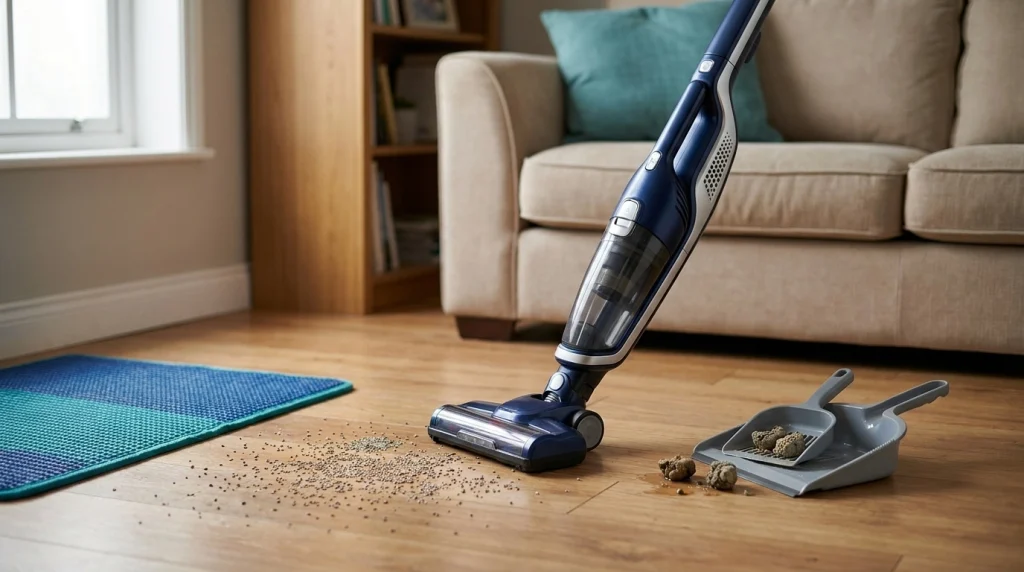
Vacuuming is a convenient way to remove scattered cat litter from hard floors and carpets, but it is not suitable for every type of litter or every vacuum cleaner. The safest situation is a small amount of loose, dry litter on a surface your machine is designed to clean.
Before switching on your vacuum, check three things: whether the litter is dry, whether it contains clumps or contamination, and whether your vacuum manual permits this type of debris.
- Loose, dry litter: Small scattered granules may be suitable for a compatible vacuum.
- Wet or urine-soiled litter: Remove it manually rather than sending it through an ordinary household vacuum.
- Large piles: Sweep or scoop up the bulk first to reduce the risk of blockages.
- Unknown litter or vacuum compatibility: Use a dustpan and brush until you have checked the manufacturer’s guidance.
The distinction matters because a vacuum that handles ordinary dust and crumbs may not be approved for every granular material. For example, the official Mijia Vacuum Cleaner 4 guidance lists cat litter granules among supported debris but separately warns against certain fine powders and liquids. That guidance applies to the specified model, not every vacuum on the market.
Which Types of Cat Litter Can You Vacuum?
The litter material, particle size, dust level, and moisture content all affect how suitable vacuuming is. The product packaging and your vacuum’s manual should take priority over general advice.
| Litter type or condition | Recommended approach |
|---|---|
| Loose, dry non-clumping litter | Vacuum small amounts only if the machine permits it. |
| Clumping clay litter | Prefer sweeping or scooping, especially when particles are dusty or clumped. |
| Wet or used clumps | Remove manually; do not vacuum with an ordinary dry vacuum. |
| Silica crystal litter | Vacuum small, dry, loose pieces only if approved for your machine. |
| Pine, paper, corn, or other plant-based litter | Check particle size, dust, moisture, and manufacturer restrictions before vacuuming. |
These are cautious general guidelines, not universal compatibility guarantees. Even litter that looks dry may contain damp material, and a product’s description as natural or low-dust does not automatically make it safe for every vacuum.
Why clumping litter needs extra caution
Clumping litter is designed to bind together when it absorbs moisture. If a clump or damp granules enter a vacuum, they may stick inside the hose, dust container, or other parts and become difficult to remove. Fine particles can also accumulate in filters.
For that reason, scoop up clumping litter whenever possible. If loose, dry granules remain afterward, vacuum them only if your machine’s instructions allow it.
Can Cat Litter Damage Your Vacuum Cleaner?
Yes, it can under certain conditions, although damage is not inevitable every time a few dry granules are vacuumed. The main concerns are restricted airflow, abrasive debris, blockages, contamination, and maintenance problems.
- Clogged filters: Fine litter dust can accumulate in the filtration system and reduce airflow.
- Blocked hoses or inlets: Large quantities, compacted material, or clumps may obstruct the air path.
- Brush-roll problems: Granules can be pushed around by a rotating brush or collect in the floor head, depending on the design.
- Odors and contamination: Used litter may leave unpleasant smells or contaminate the bin, filter, or cleaning attachments.
- Excess strain: A restricted air path or debris beyond the machine’s intended capacity can affect performance.
Do not assume that a pet vacuum can safely collect every pet-related mess. Pet-hair pickup, dry granular debris, wet waste, and contaminated litter are different cleaning tasks.
If your vacuum starts making an unusual noise, loses suction, overheats, or produces a burning smell, switch it off and disconnect it from power before inspecting it. Follow the manufacturer’s troubleshooting instructions rather than continuing to run it.
How to Vacuum Cat Litter Without Making a Bigger Mess
If your vacuum is approved for the litter and the scattered material is dry, use a controlled cleaning process. The goal is to collect the granules without spreading them farther or loading the machine with unnecessary debris.
- Inspect the spill. Look for damp patches, used clumps, feces, urine, or other contamination. Pick up unsuitable material manually and dispose of it appropriately.
- Remove large piles first. Use a dedicated dustpan and brush to collect concentrated heaps rather than sucking them all into the vacuum at once.
- Choose the correct attachment. On hard flooring, a suitable hard-floor head or compatible hose attachment may help control scattered granules. Use a carpet-appropriate attachment for carpet and follow the machine’s instructions.
- Work slowly. Make short, controlled passes over the remaining litter. If the floor head pushes granules away, change the approach or use a dustpan instead.
- Check the cleaned area. Inspect corners, floor joints, rug edges, and the space behind the litter box. Remove any remaining pieces without forcing the vacuum to collect a large pile.
- Inspect the machine afterward. Check the dustbin or bag, intake, brush roll, and accessible filter areas as directed by the manufacturer. Empty the bin if needed.
Tip
Keep a small dustpan and brush near the litter box for large spills and wet clumps. Reserve the vacuum for compatible, dry debris that remains after manual cleanup.
Is Vacuuming Cat Litter Safe on Carpet and Hard Floors?
The surface changes how easily litter can be removed, but it does not override the vacuum’s restrictions. Always remove wet or contaminated material first.
Hard floors: tile, laminate, vinyl, and wood
Loose granules are usually easier to see and collect on a smooth floor. However, a rotating brush or robot vacuum’s side brush may scatter particles instead of lifting them directly into the intake. Use a suitable attachment and slow passes, or sweep the litter into a dustpan if it keeps spreading.
On wood and other scratch-sensitive surfaces, avoid dragging coarse granules under a hard floor head. Pick up larger pieces first, especially if grit has become trapped beneath the attachment.
Carpet and rugs
Litter can become lodged between carpet fibers, so use an attachment suitable for the surface and make slow passes if the vacuum is approved for the debris. A crevice tool may help with narrow edges, but do not press it aggressively into the pile.
For a large spill, collect the bulk manually before vacuuming the remaining loose granules. If damp litter has adhered to carpet, remove it without spreading it through the fibers, then follow the carpet manufacturer’s cleaning guidance for any residue.
Robot vacuums
A robot vacuum may collect scattered dry litter if its manufacturer permits that use. However, its side brushes may throw granules across the floor, and litter can accumulate around the brush, wheels, or intake.
Before scheduling a robot to clean around a litter box, check the model’s restrictions and supervise a small test area. Do not let it run over wet litter, feces, urine, or other pet waste.
What Should You Do After Vacuuming Cat Litter?
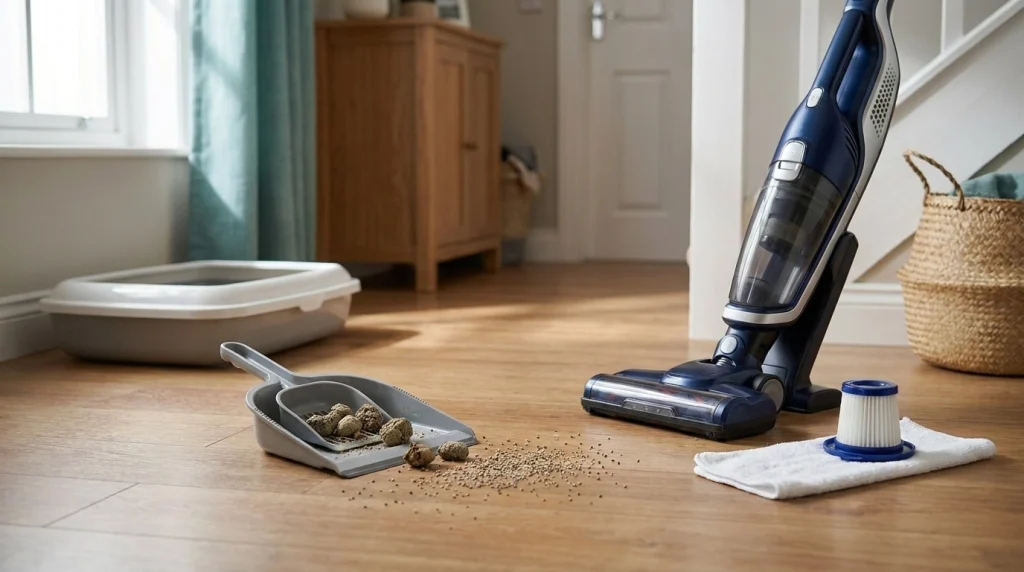
Routine maintenance helps prevent litter dust from accumulating inside the machine. The amount of cleaning needed depends on how much debris was collected and the vacuum’s design.
- Empty the dustbin or check the bag: Dispose of the contents carefully to avoid releasing dust into the room.
- Inspect the filter: Clean or replace it only as the manufacturer directs. Do not wash a filter unless it is specifically identified as washable.
- Check the intake and brush roll: Remove trapped granules and hair with the machine disconnected from power.
- Clean reusable attachments: If a tool has picked up contaminated material, clean it according to its care instructions before using it elsewhere.
- Allow washed parts to dry fully: Never reinstall a damp filter or component in a vacuum that is not designed for wet pickup.
For a more detailed maintenance routine, see our guide to how to deep clean a vacuum cleaner. If litter dust has accumulated around the filter, bin, or brush, our article on vacuum parts that need regular cleaning explains which areas deserve attention.
Do not spray disinfectant, fragrance, or cleaning liquid into the vacuum’s airflow path to remove litter odors. Use only cleaning methods approved for the specific components.
When Is Sweeping Better Than Vacuuming?
Sweeping or scooping is the safer choice when you are unsure whether the machine can handle the debris. It is also preferable for wet litter, used clumps, concentrated piles, and material that may contaminate the vacuum.
A dedicated dustpan and brush works well for litter immediately around the tray. A vacuum is more convenient for a small amount of compatible dry litter scattered across a wider area, especially after the bulk has been removed.
If litter tracking is a frequent problem, place a litter-catching mat at the box entrance, empty the tray area regularly, and consider whether the litter granule size or box design contributes to scattering. These measures can reduce the amount of cleanup needed without relying on the vacuum for every spill.
The SharkNinja cat litter cleaning guidance likewise advises vacuuming dry litter only, avoiding wet clumps, and checking the vacuum manufacturer’s instructions.
Frequently Asked Questions
Can you vacuum cat litter with a regular vacuum?
Sometimes. A regular vacuum may handle small amounts of loose, dry litter if its manufacturer permits it. Check the manual first, and use a dustpan for wet clumps, large piles, or debris the machine is not designed to collect.
Can you vacuum clumping cat litter?
It is safer to scoop clumping litter rather than vacuum it, particularly if the material is damp or compacted. Loose, dry remnants should only be vacuumed if the specific machine allows that type of litter.
Can you vacuum cat litter out of a rug?
Yes, if the litter is dry and the vacuum is suitable for it. Remove larger piles by hand first, then use slow passes with an appropriate carpet attachment. Pick up damp or contaminated litter separately.
Will cat litter clog a vacuum filter?
It can. Fine litter dust may accumulate in the filter and restrict airflow, especially when a large amount is collected. Inspect and maintain the filter according to the manufacturer’s instructions.
Can a robot vacuum pick up cat litter?
Some models can collect small amounts of loose, dry litter, but compatibility varies. Check the manual and watch for granules being scattered by the side brushes. Keep robots away from wet litter and pet waste.
What is the safest way to clean up wet cat litter?
Pick it up with a suitable scoop or disposable cleaning tool, place it in an appropriate waste container, and clean any residue using a method suitable for the floor. Do not use an ordinary dry vacuum on wet material.
Conclusion
You can vacuum cat litter in some circumstances, but the safest approach is to collect only small amounts of loose, dry litter with a vacuum approved for that debris. Scoop up wet clumps, used litter, and large piles before cleaning the surrounding area.
Pay attention to how your vacuum performs, and check its filter, dustbin, intake, and brush roll after collecting litter. If the machine’s instructions prohibit litter or you cannot confirm compatibility, use a dedicated dustpan and brush instead. A simple cleanup routine and a litter-catching mat can also help reduce scattered granules and unnecessary wear on your vacuum.