
Can You Vacuum Too Much? Carpet Care Tips

Quick Answer
Yes, you can vacuum too much in certain circumstances, but frequent vacuuming does not automatically damage carpet. The main risks are an overly aggressive brush roll, incorrect height settings, unsuitable equipment, and repeatedly cleaning areas that do not need it. Match your routine and vacuum settings to the flooring, household traffic, and manufacturer’s care instructions.
Vacuuming is a basic part of keeping carpets and floors clean, but more cleaning is not always better. The goal is to remove dirt before it accumulates without unnecessarily wearing the carpet fibers or wasting time on already-clean areas.
For most homes, a regular schedule combined with extra cleaning where dirt collects is more effective than vacuuming every room repeatedly. Understanding the difference between frequent cleaning and damaging cleaning helps you protect your flooring while maintaining a tidy home.
When Can Frequent Vacuuming Damage Carpet?
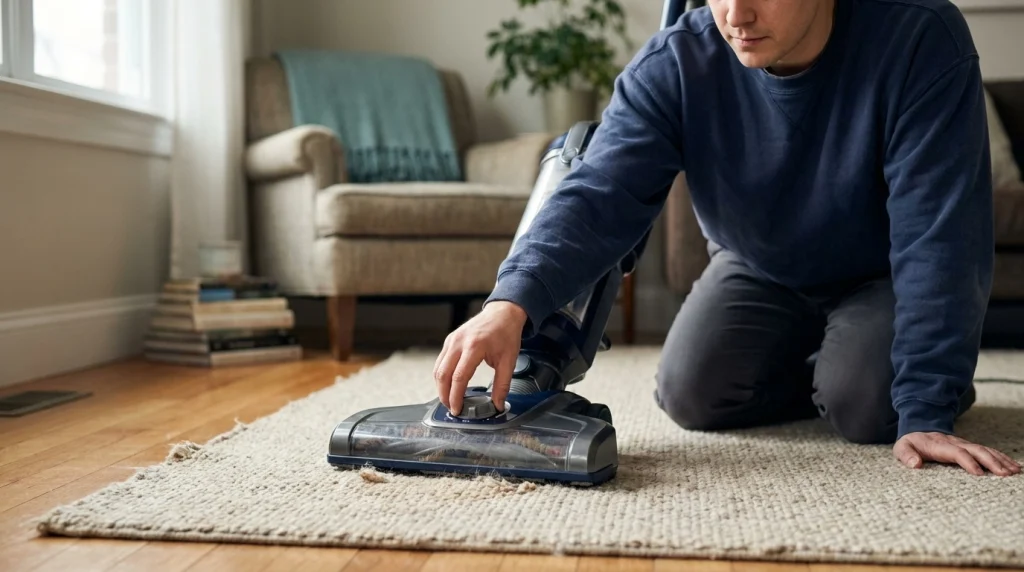
Frequent vacuuming can damage carpet when the machine’s brush action is too aggressive, the floor head is set incorrectly, or the equipment is unsuitable for the carpet’s construction. The number of times you vacuum is less important than how the machine interacts with the fibers.
According to Shaw’s carpet care guidance, some vacuum cleaners have overly aggressive action that can damage carpet surfaces. Plush carpets can also be difficult to clean with machines that do not move smoothly across the pile.
Watch for these warning signs:
- Loose or pulled fibers: The brush roll may be catching fibers or loops, particularly on delicate or loop-pile carpet.
- Fraying or fuzziness: Repeated aggressive brushing may roughen the surface rather than simply lift dirt.
- Difficulty pushing the vacuum: The floor head may be too low or the machine may not suit the carpet’s pile.
- Unusual marks or wear: Repeated passes with an unsuitable setting may affect the surface appearance.
- Overheating or unusual noise: A blocked machine, tangled brush roll, or restricted airflow may require maintenance.
Stop if the vacuum appears to pull at the carpet or causes new damage. Check the floor-head height, brush-roll setting, and carpet care instructions before using it again.
Does Vacuuming More Often Actually Wear Out Carpet Faster?
Not necessarily. Regular vacuuming helps remove grit and dirt that can abrade carpet fibers when people walk over them. Leaving this material in the pile can contribute to gradual wear, so avoiding the vacuum altogether may be more harmful than maintaining a sensible routine.
The important distinction is between removing dirt and mechanically stressing the carpet. A suitable vacuum used correctly can help preserve carpet appearance, while an overly aggressive machine may cause damage even during an otherwise reasonable cleaning schedule.
For example, a busy hallway that collects outdoor grit may benefit from daily vacuuming. A rarely used guest room may need only its normal weekly session. Repeatedly vacuuming the guest room several times a day offers little additional benefit if it remains clean.
The Carpet and Rug Institute’s carpet maintenance guidance recommends routine vacuuming, more frequent attention to high-traffic areas, and appropriate equipment to help maintain carpet appearance.
How Often Should You Vacuum Without Overdoing It?
Use foot traffic, visible debris, pets, and the flooring manufacturer’s instructions to determine your schedule. The following frequencies are practical starting points for ordinary residential carpet, not strict limits.
| Area | Starting frequency | When to adjust |
|---|---|---|
| Busy entrances and hallways | Daily when heavily used | Increase attention when outdoor grit accumulates. |
| Living rooms and family areas | One to three times weekly | Consider pets, children, and frequent visitors. |
| Bedrooms with ordinary use | Weekly | Adjust for shedding pets or noticeable dust. |
| Pet resting areas | Daily if needed | Focus on hair and frequently used spots. |
| Quiet rooms | Weekly as a baseline | Reduce unnecessary extra sessions if the floor stays clean. |
These ranges reflect general carpet-care guidance and should be adapted to your home. The Carpet and Rug Institute suggests daily vacuuming for high-traffic or pet areas, twice-weekly cleaning for medium-traffic areas, and weekly cleaning for lightly used spaces.
For a room-by-room routine, see HomeHygia’s guide on how often to vacuum carpet. If you are deciding how to divide cleaning time across different floor types, the guide to how often to vacuum your house provides broader household guidance.
Which Carpet Types Need a Gentler Vacuuming Approach?
Not every carpet responds to the same brush action. Before increasing vacuuming frequency, make sure the machine is appropriate for the material and construction.
- Loop-pile carpet: A rotating brush can catch exposed loops. Follow the carpet manufacturer’s instructions and use a suction-only setting or suitable attachment when recommended.
- Plush or high-pile carpet: A floor head set too low may be difficult to push and can interfere with the pile. Use an appropriate height or suction adjustment.
- Wool and specialty carpet: Check the care label for specific equipment and cleaning restrictions. Do not assume a standard brush-roll setting is suitable.
- Fringed or delicate rugs: Use gentle suction and avoid drawing fringe into a rotating brush. Valuable or antique rugs may need specialist care.
- Hard floors: Use a floor head designed for the surface. A carpet brush setting may be unnecessary, and unsuitable hard bristles can scratch vulnerable finishes.
When a vacuum becomes difficult to push, do not force it across the surface. Check the height adjustment and attachment first. If the machine remains difficult to maneuver, consult the manual or choose equipment recommended for that flooring.
How Can You Vacuum Efficiently Without Repeating the Same Work?
Effective vacuuming depends on coverage and technique, not on making as many passes as possible. A slow, organized approach helps remove debris while avoiding unnecessary repetition.
- Remove loose objects. Pick up toys, cords, coins, and other items that could obstruct the floor head or damage the machine.
- Check the vacuum. Empty the bin or replace a full bag as directed. Inspect filters and remove tangled hair from the brush roll according to the manual.
- Set the correct height. Adjust the floor head and brush action for the carpet or flooring type.
- Move in overlapping rows. Work slowly enough to collect debris and avoid leaving narrow strips untouched.
- Concentrate on dirty areas. Give entrances, traffic lanes, edges, and pet resting spots extra attention when needed.
- Change direction occasionally. Vacuuming from a different direction can help reach debris within the pile.
One quick pass may not remove embedded loose soil, but repeating the same path indefinitely is not necessary. For light debris, a few controlled passes may be enough; heavier soil may require additional work.
Tip
Use entrance mats and clean them regularly to reduce the grit tracked onto carpet. Preventing dirt from entering is often more efficient than repeatedly vacuuming the same area.
What Should You Do If Your Vacuum Seems to Damage the Floor?
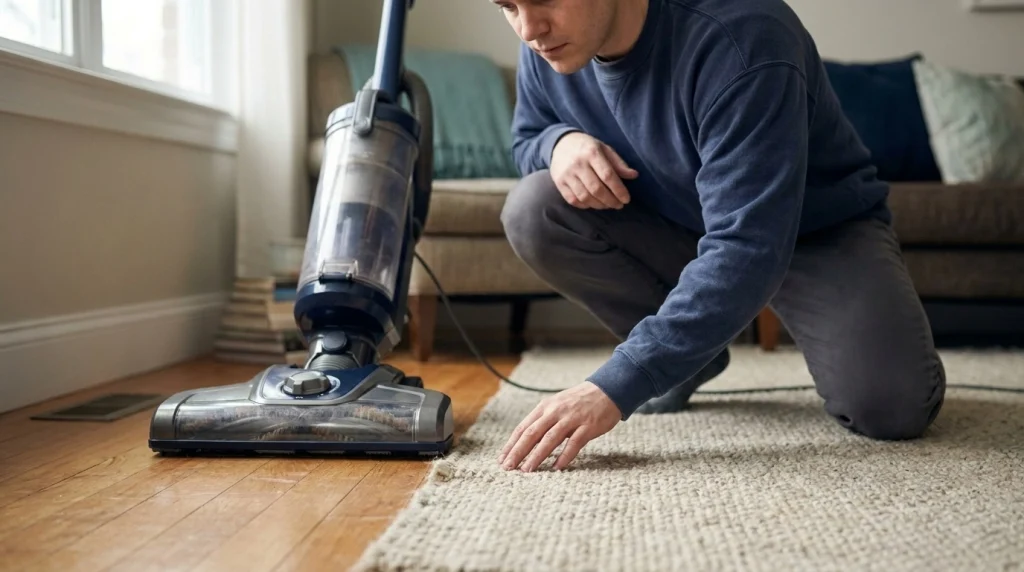
If carpet fibers are being pulled, the machine is leaving unusual marks, or the brush roll catches on the surface, stop rather than continuing to test the same setting.
- Switch off and unplug the vacuum, or remove its battery, before inspecting the floor head.
- Check for hair, threads, or debris wrapped around the brush roll.
- Review the carpet manufacturer’s instructions and the vacuum manual for the correct floor-head setting.
- Raise the brush height or reduce brush action if the equipment allows it and the instructions support that adjustment.
- Test the revised setting in a discreet area before cleaning the whole room.
- If pulling, fraying, or other damage continues, stop using that attachment and seek advice from the carpet manufacturer or a qualified flooring specialist.
Do not assume every change in carpet appearance is damage. Some cut-pile carpets naturally show shading, footprints, or changes in the direction of the fibers. However, actual pulled loops, broken fibers, and progressive fraying deserve attention.
Does Frequent Vacuuming Replace Deep Carpet Cleaning?
No. Routine vacuuming removes loose dry debris, but it does not remove every oily residue, embedded contaminant, or set-in stain. Deep cleaning addresses different types of buildup and should follow the carpet manufacturer’s instructions.
The Carpet and Rug Institute recommends professional deep cleaning approximately every 12 to 18 months as a general guide. Household traffic, soil levels, carpet warranties, and the manufacturer’s maintenance requirements can change the appropriate interval.
Deal with spills promptly using a carpet-safe method, and never use an ordinary dry vacuum to collect wet spills or saturated carpet. Wet pickup should be performed only with equipment specifically designed for that purpose and used according to its instructions.
Routine vacuuming, prompt spot treatment, and periodic deep cleaning serve different purposes. One should not be treated as a substitute for the others.
Frequently Asked Questions
Can vacuuming every day ruin carpet?
Not necessarily. Daily vacuuming can be appropriate in busy areas when the equipment suits the carpet. Damage is more likely when the brush action is too aggressive, the settings are wrong, or the machine catches the fibers.
Is it bad to vacuum the same spot several times?
Not automatically. Additional passes can help remove debris from a heavily soiled area, but repeatedly vacuuming an already-clean spot offers little benefit and may create unnecessary wear with unsuitable equipment.
Can vacuuming too much damage hardwood floors?
It can if the floor head or brush is unsuitable for the finish. Use a hard-floor setting or a compatible attachment, and follow the flooring manufacturer’s instructions to avoid scratches.
Should I vacuum before or after dusting?
Dust higher surfaces first and vacuum afterward. This collects dust and debris that fall onto the floor during cleaning and reduces the need to repeat the work.
Why is my vacuum hard to push across carpet?
The floor head may be too low, the suction may be excessive for the carpet, or the machine may not suit the pile. Check the manual and adjust only as recommended; do not force the vacuum across the surface.
How often should I deep-clean carpet?
The Carpet and Rug Institute gives approximately 12 to 18 months as a general professional deep-cleaning interval. Follow your carpet manufacturer’s instructions and adjust for household traffic and soil buildup.
Conclusion
You can vacuum too aggressively, but frequent vacuuming alone does not mean your carpet will wear out prematurely. The better approach is to remove dirt regularly, clean busy areas more often, and use equipment suited to your flooring.
Watch for pulled fibers, fraying, unusual resistance, or other signs that the vacuum settings are wrong. Follow the manufacturer’s instructions, maintain the machine, and avoid repeated sessions in rooms that remain clean. A practical, flexible routine protects your carpet while keeping cleaning time under control.