How to Vacuum Efficiently: A Faster, Smarter Cleaning Method

Quick Answer
To vacuum efficiently, clear the floor first, start with high surfaces, use the correct floor setting, and work in slow, overlapping passes. Keep the filter, bin, brush roll, and air path clean so the vacuum can move air freely. Good vacuuming also supports a cleaner indoor environment alongside broader indoor air quality practices.
Quick vacuuming routine
- Clear the floor: Pick up cords, toys, clothing, and small objects before switching on the vacuum.
- Dust first: Clean higher surfaces before the floor so fallen debris gets vacuumed once.
- Choose the setting: Match the brush roll, suction, and height setting to the floor.
- Work systematically: Start at the far side of the room and move toward the exit.
- Slow down: Use controlled, overlapping passes instead of racing across the floor.
- Finish the edges: Use a crevice tool where the main floor head cannot reach.
One habit that saves time
- Empty the bin or check the bag before a large cleaning session instead of waiting for airflow to become restricted.
Vacuuming seems simple until a 15-minute job turns into 40 minutes. You keep changing direction, moving furniture twice, and going back for spots you missed.
I prefer a fixed routine instead. It makes the job easier to track and helps me spend more time removing dirt instead of simply moving the vacuum around.
In This Guide
What Does It Mean to Vacuum Efficiently?
Efficient vacuuming means removing as much reachable dirt as practical without wasting passes, time, or effort. Speed alone does not make a vacuuming routine efficient.
Definition: Efficient vacuuming is a planned cleaning method that combines preparation, correct vacuum settings, systematic movement, and regular machine maintenance.
Efficiency is about coverage, not rushing
A fast pass can leave grit, hair, crumbs, and fine dust behind. This happens most often on carpet, along walls, and beneath furniture edges.
Moving at a controlled pace gives the floor head more opportunity to collect debris. I would rather make one careful pass than three rushed ones.
- Open flooring: Use long, straight passes.
- High-traffic areas: Give visibly dirty sections an extra pass.
- Edges: Use the crevice tool instead of repeatedly pushing the main head against the wall.
- Furniture: Move only lightweight items that block useful cleaning areas.
Airflow matters as much as technique
A vacuum depends on airflow through its floor head, hose, filters, bin or bag, and exhaust path. Restrictions anywhere in that path can make cleaning less effective.
That is why I check the machine before blaming my technique. A packed bin, wrapped brush roll, dirty filter, or blocked hose can change how the vacuum behaves.
Efficient vacuuming is also about cleaning in the right order
The floor should usually come near the end of a room-cleaning routine. Dusting shelves after vacuuming can send particles back onto the clean floor.
- Declutter.
- Dust higher surfaces.
- Clean furniture or upholstery if needed.
- Vacuum edges and floors.
- Mop suitable hard floors afterward if needed.
Section Takeaway: Efficient vacuuming combines good coverage with fewer wasted movements. A clean machine and a consistent cleaning order matter more than rushing.
What Should You Do Before You Start Vacuuming?
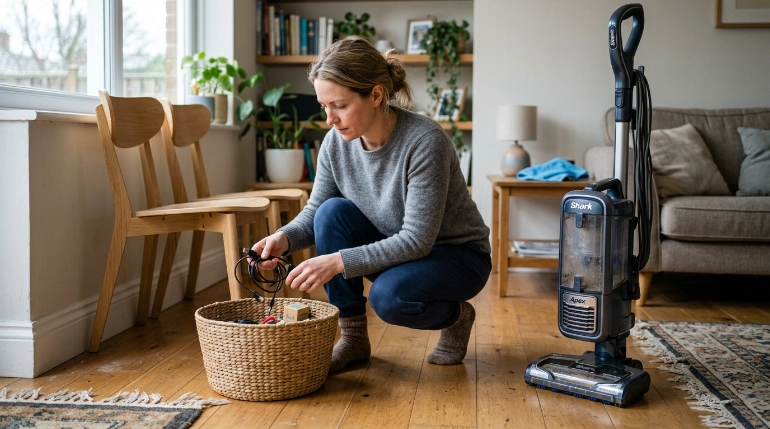
Prepare the room before turning the vacuum on. Two minutes of preparation can prevent repeated stops for cords, toys, socks, and furniture.
Clear objects from the floor
Walk through the room once with an empty basket or container. Collect anything that does not belong on the floor.
- Charging cables
- Small toys
- Socks and clothing
- Coins and hard objects
- Pet toys
- Paper scraps
- Loose curtain cords
Small hard items may jam a floor head or hose. Loose fabric and cords can also wrap around a rotating brush.
Move only the furniture that matters
You do not need to dismantle the room every time you vacuum. Focus on chairs, small tables, baskets, and other objects that block useful floor space.
I like to move dining chairs as a group before starting. Moving each chair while the vacuum is running creates unnecessary stops.
Check the vacuum before starting
A quick inspection prevents a common problem: finishing half the room before noticing the vacuum is not picking up well.
- Bin or bag: Make sure it has enough capacity for the job.
- Brush roll: Remove visible wrapped hair or thread when the vacuum is unplugged.
- Filter: Check it according to the manufacturer’s maintenance instructions.
- Floor head: Look for trapped debris around the inlet.
- Attachments: Bring the tools you expect to need.
Never reach into a powered brush roll. Unplug a corded vacuum or fully switch off a cordless model before clearing a blockage.
Dust before you vacuum
Start above floor level when the room needs a full clean. Dust shelves, tables, window sills, and other surfaces first.
This order lets fallen debris become part of the same floor-cleaning pass. It also reduces the chance that you will need to vacuum twice.
What Is the Most Efficient Way to Vacuum a Room?
Start at the far side and work toward the door. Use straight, overlapping passes so you always know what has already been cleaned.
Step 1: Start at the room edge
Begin in the corner farthest from your exit. This prevents you from wandering through cleaned and uncleaned areas.
For a rectangular room, I mentally divide the floor into strips. Each new pass slightly overlaps the previous one.
Step 2: Use a simple forward-and-back pattern
Push the floor head forward at a comfortable pace. Pull it back over the same path before shifting sideways for the next strip.
Do not swing the vacuum randomly from side to side. Random movement makes missed sections harder to notice.
- Vacuum one straight strip.
- Return along that strip.
- Shift the floor head slightly sideways.
- Repeat until the open floor is covered.
Step 3: Slow down where dirt collects
Doorways, hallways, sofa areas, and dining spaces often need more attention than low-traffic corners. Spend extra time where you can see debris or where dirt regularly collects.
You do not need the same number of passes everywhere. That wastes time on already clean areas.
Step 4: Clean edges deliberately
A full-size floor head may not reach tightly against every baseboard. Use a crevice attachment when debris remains along edges.
One deliberate edge pass is usually more organized than repeatedly turning the entire vacuum toward the wall.
Step 5: Work around furniture once
Vacuum exposed floor first, then handle reachable spaces under furniture. Use a wand or low-profile head when the vacuum supports it.
Avoid moving the same furniture several times. Clean the exposed area while each item is already out of position.
Step 6: Finish near the exit
Continue your strips until you reach the doorway. Check the floor visually before putting tools away.
- Look for hair along edges.
- Check beneath chair legs.
- Inspect visible crumbs on hard floors.
- Check high-traffic carpet from another angle.
Section Takeaway: The most efficient room pattern is simple and repeatable. Work from the far side toward the exit with controlled, overlapping passes.
How Should You Vacuum Different Floor Types?
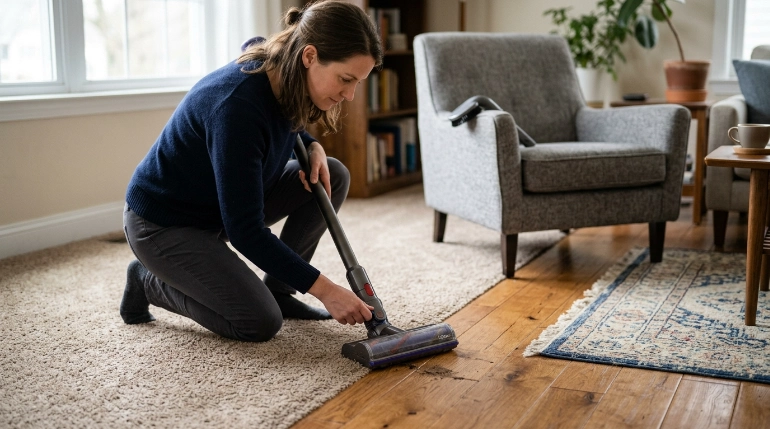
The best technique changes with the surface. Carpet, hard flooring, rugs, upholstery, and stairs do not respond to the same floor-head setting.
Always follow your vacuum and flooring manufacturer’s instructions where they differ from general guidance.
| Surface | Useful Starting Setting | Best Technique | Tool to Consider |
|---|---|---|---|
| Low- or medium-pile carpet | Carpet mode; brush roll on when suitable | Slow, overlapping forward-and-back passes | Powered floor head |
| Hard flooring | Hard-floor mode; brush roll off or soft roller when required | Long passes with attention to edges | Hard-floor head or soft roller |
| Area rug | Setting recommended for that rug; reduce suction if needed | Start gently and keep loose edges controlled | Suitable floor or upholstery head |
| Upholstery | Hose or handheld mode | Work from the top downward and clean seams separately | Upholstery tool |
| Stairs | Handheld or hose configuration | Clean one tread at a time without balancing a heavy vacuum unsafely | Mini motorized or upholstery tool |
Vacuuming carpet efficiently
Carpet can hold debris below the visible surface. Use the carpet setting recommended for your machine and flooring.
If your vacuum has an adjustable head height, an incorrect position can make the machine hard to push or reduce useful contact. Check the manual rather than assuming the lowest setting is best.
Vacuuming hard floors efficiently
Hard floors make crumbs and hair easy to see. They can also scatter lightweight debris when an unsuitable rotating brush is used.
Use hard-floor mode when available. Some machines stop the brush roll, while others use a dedicated soft roller or floor head.
Vacuuming rugs efficiently
Light rugs can lift into a high-suction floor head. Use adjustable suction or the manufacturer’s recommended rug setting when available.
Take extra care with fringe. A rotating brush can catch loose fibers.
Vacuuming for household allergens
Vacuuming can be one part of reducing indoor allergens, but it cannot remove every source. The Asthma and Allergy Foundation of America provides broader information about common allergens such as dust mites, mold, pollen, and pet allergens.
If someone in the household is sensitive to dust, consider a vacuum with good particle containment and maintain its filters exactly as directed. Avoid assuming that the word “HEPA” alone tells you how well the entire vacuum contains leaks.
Which Tools and Habits Make Vacuuming More Effective?
The right attachment can save more time than repeated passes with the wrong floor head. Maintenance matters too, because a vacuum cannot work efficiently when its airflow path is neglected.
Use attachments for the job they do best
- Crevice tool: Baseboards, corners, seat gaps, and narrow edges.
- Upholstery tool: Sofas, cushions, fabric chairs, and mattresses when permitted.
- Dusting brush: Suitable shelves, vents, blinds, and delicate surfaces.
- Mini motorized tool: Pet hair on compatible upholstery and carpeted stairs.
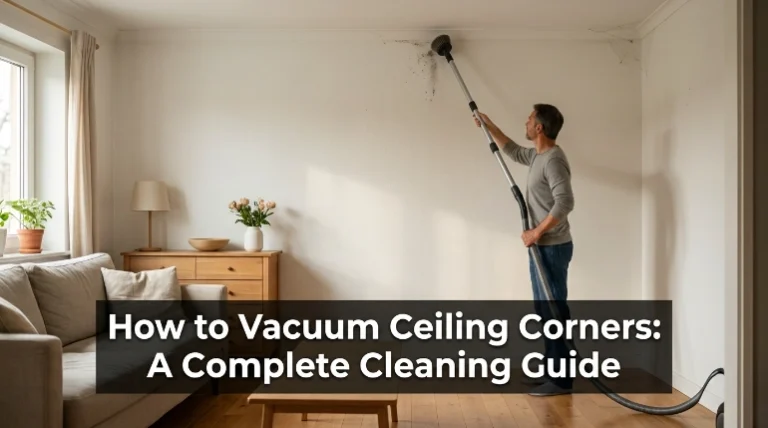
- Extension wand: High corners and difficult spaces when safe to reach.
Switch tools when the floor head is clearly too large for the area. Trying to force one attachment to do everything usually creates extra passes.
Keep the brush roll clear
Hair and thread can wrap tightly around a rotating brush. Check it regularly, especially in homes with long hair or shedding pets.
Turn the vacuum off completely before working near the brush. Follow the manual if the brush roll must be removed for cleaning.
Maintain filters, bags, and bins
Use the manufacturer’s cleaning and replacement schedule. Some filters are washable, while others should never be rinsed.
- Do not wash a filter unless the manufacturer says it is washable.
- Allow washable filters to dry fully before reinstalling them.
- Replace disposable bags and filters when required.
- Check the hose when pickup suddenly drops.
For households managing asthma, cleaning is only one part of controlling triggers. The CDC’s asthma guidance also stresses identifying and avoiding triggers alongside appropriate medical care.
Avoid the vacuuming mistakes that waste the most time
- Vacuuming before decluttering: You stop every few feet to pick something up.
- Moving too quickly: You cover the floor but leave visible debris behind.
- Using random directions: It becomes difficult to track completed areas.
- Ignoring edges: Dust remains where the main floor head cannot reach.
- Using the wrong setting: The head may scatter debris or become difficult to push.
- Overfilling the bin or bag: You may reduce useful airflow.
- Ignoring the brush roll: Wrapped fibers can interfere with normal operation.
- Dusting afterward: You send new debris onto a floor you just cleaned.
How often should you vacuum?
There is no single schedule that fits every home. Traffic, pets, flooring, outdoor conditions, and household sensitivities all change how quickly debris builds up.
Instead of following an arbitrary number, use visible buildup and household conditions to set your routine.
- Busy entryways: Check them more often because outdoor grit enters here.
- Pet areas: Vacuum when hair and tracked debris begin accumulating.
- Bedrooms: Keep a regular schedule based on dust and flooring.
- Low-use rooms: They may need less frequent floor cleaning.
As of 2026, smart sensors and automated vacuums can help with routine floor coverage. They still do not replace basic maintenance, edge cleaning, or the correct attachment for every surface.
Section Takeaway: Use the smallest effective tool for detail work and maintain the vacuum’s airflow path. Good tools reduce repeat passes, while poor maintenance creates unnecessary work.
Frequently Asked Questions
Should you vacuum fast or slow?
Use a controlled pace rather than rushing. A slower, deliberate pass gives you more time to collect visible debris and helps prevent missed strips. Spend extra time on high-traffic or visibly dirty areas instead of moving slowly over every inch.
Is it better to vacuum in straight lines?
Yes, straight overlapping lines make coverage easier to track. Start at the far side of the room and work toward the exit. This method helps you see which areas are finished and reduces random repeat passes.
Should you dust or vacuum first?
Dust higher surfaces before vacuuming when doing a full room clean. Some dust and debris can fall to the floor, so vacuuming afterward lets you remove it in the same cleaning session.
Do you need to vacuum in two directions?
Not every floor needs two complete directional passes. Start with a careful forward-and-back pattern. Give high-traffic carpet or visibly dirty sections extra attention rather than automatically repeating the entire room.
Why does my vacuum leave dirt behind?
Check the bin or bag, floor-head setting, brush roll, filter, hose, and airway for problems. The floor head may also be unsuitable for the surface. Turn the machine off before inspecting or clearing moving parts.
Does a HEPA filter make vacuuming more efficient?
A HEPA filter relates to particle filtration rather than how quickly you clean a room. Overall performance also depends on airflow, floor-head design, maintenance, and how well the vacuum contains air around its filtration system.
Can a robot vacuum replace normal vacuuming?
A robot vacuum can handle routine open-floor cleaning, but it may miss stairs, upholstery, tight edges, and areas blocked by furniture. Many homes still need periodic manual vacuuming with suitable attachments.
Final Takeaway
Learning how to vacuum efficiently is mostly about creating a repeatable system. Clear the room, clean from high to low, choose the correct setting, and work from the far side toward the exit.
Use slow, overlapping passes where they matter. Switch to attachments for edges, furniture, and narrow spaces instead of forcing the main floor head into every job.
Finally, keep the vacuum itself clean. A clear brush roll, properly maintained filter, open hose, and correctly managed bin or bag help the machine do the job it was designed to do.
Once that routine becomes automatic, vacuuming feels less scattered. You spend less time retracing your path and more time cleaning the areas that need attention.