
Why Is My Robot Vacuum Brush Getting Tangled?

Quick Answer
Your robot vacuum brush usually gets tangled because long hair, pet fur, carpet fibers, thread, or small debris wraps around the rotating roller and its end caps. The problem gets worse when the brush is already dirty or the robot repeatedly cleans high-shedding areas. Regular robot vacuum brush cleaning can prevent most serious jams.
Most Common Causes
- Long hair: Strands wind tightly around the roller as it rotates.
- Pet fur: Heavy shedding can overwhelm the brush faster than the vacuum removes it.
- Loose fibers: Threads, tassels, and carpet fibers can wrap around the roller or side brush.
- Dirty end caps: Hair can pack around the brush bearings and restrict rotation.
- Worn parts: A damaged brush, bearing, or cover can make repeated tangling more likely.
Quick Check
- Remove the main brush and check both ends, not just the visible center section.
A tangled robot vacuum brush is one of those problems that looks minor until the machine starts clicking, leaving hair behind, or stopping mid-clean. I usually check the roller first whenever a robot suddenly sounds rougher than normal.
This guide explains why tangles happen, how to remove them safely, and how to reduce them during everyday cleaning in 2026.
In This Guide
Why Does My Robot Vacuum Brush Keep Getting Tangled?
Your robot vacuum brush keeps getting tangled because the roller rotates while contacting hair, fibers, and loose debris. Some of those materials wind around the roller instead of entering the suction path.
Brush tangling is the buildup of flexible material around a vacuum’s rotating main brush, side brushes, end caps, or bearings. The buildup can eventually restrict normal brush movement.
Long hair wraps around the roller
Long human hair is one of the easiest materials for a rotating brush to catch. One end may stick to the roller while the remaining strand winds around it several times.
A few strands may not cause trouble. Dozens of tightly wound strands can create a dense band around the brush.
- Long straight hair can wrap across a large section of the roller.
- Fine hair can slip underneath removable end caps.
- Wet or sticky hair may combine with dust and create a tougher buildup.
Pet shedding increases the workload
Homes with cats and dogs can feed hair into a robot vacuum every day. Heavy seasonal shedding makes the problem more noticeable.
Short pet fur may enter the dustbin easily, but longer fur can twist around brushes. Mixed human and pet hair can form especially stubborn tangles.
Hair collects where you cannot immediately see it
The center of the roller gets most of the attention. I find the ends deserve just as much inspection.
Hair can migrate toward the roller’s end caps, spindle, or bearing area. A brush may look clean across the middle while still turning poorly.
That hidden buildup can explain why a recently cleaned brush becomes noisy again after only a few runs.
- Check both roller ends.
- Inspect removable caps.
- Look underneath bearings where your model allows access.
- Check the brush housing for packed debris.
Section Takeaway: Visible hair is only part of the problem. Check the roller ends and surrounding brush housing whenever tangling keeps returning.
What Usually Gets Wrapped Around a Robot Vacuum Brush?
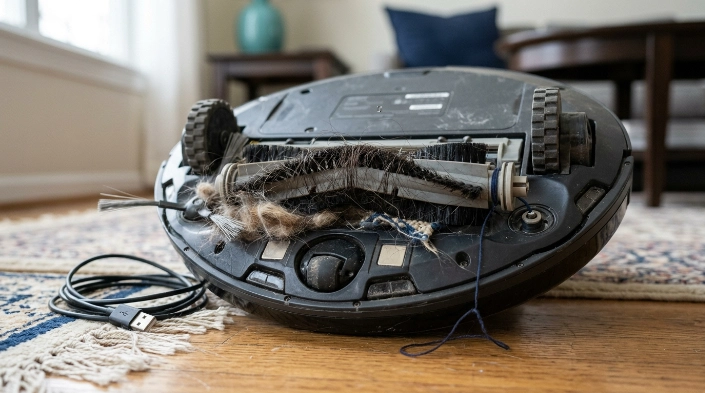
Hair causes many tangles, but it is not the only culprit. Thread, carpet fibers, string, and small household debris can produce the same problem.
| Material | Typical Problem | Where to Check |
|---|---|---|
| Long human hair | Tight wrapping around roller | Main brush and end caps |
| Pet fur | Dense hair buildup | Main brush, side brush, inlet |
| Thread and string | Strong winding that can restrict rotation | Roller center and axle |
| Carpet fibers | Gradual fiber wrapping | Bristles and roller grooves |
| Rug tassels | Sudden brush jam | Main and side brushes |
| Charging cables | Major obstruction | Entire cleaning head |
Rugs and carpets can contribute
Loose carpet fibers are easy to overlook. Older rugs, fluffy mats, and damaged carpet edges may release fibers that wrap around the roller.
Tassels present a bigger risk. A robot may grab a tassel and continue turning the brush until the material becomes tightly wound.
Small household items create sudden jams
Robots work unattended, so floor preparation matters. A thin charging cable can become a serious obstruction within seconds.
- Shoelaces
- Ribbon
- Dental floss
- Yarn
- Elastic bands
- Thin charging cables
- Loose fabric threads
I like to do a quick floor scan before starting an unattended cleaning cycle. That simple habit prevents many avoidable brush jams.
How Do I Remove Tangled Hair From a Robot Vacuum Brush?
Turn the robot off, remove the main brush according to its manual, and cut or pull away wrapped material carefully. Clean the end caps before reinstalling the brush.
Manufacturers use different covers and brush assemblies, so your model’s instructions should take priority. The general process is still similar.
- Power the robot off. Do not work around a brush that could unexpectedly start rotating.
- Flip the robot over. Place it on a stable surface that will not scratch the top sensors.
- Open the brush cover. Release the clips, tabs, or fasteners specified for your model.
- Lift out the roller. Notice its orientation before removal.
- Cut wrapped hair. Use the supplied cleaning tool or another suitable small cutting tool with care.
- Pull away loosened debris. Work across the roller instead of forcing one large bundle off at once.
- Clean both ends. Remove hair from accessible end caps and bearing areas.
- Check the brush housing. Clear loose debris from the surrounding cavity and suction opening.
- Reinstall the roller. Confirm the brush and cover sit correctly before running the robot.
Do not forget the side brush
The side brush can tangle too. Hair often winds around the small central shaft underneath it.
If your side brush can be removed for maintenance, inspect underneath the hub. Follow your manual before pulling or unscrewing it.
Roborock’s brush entanglement guidance also emphasizes regular cleaning when hair accumulation becomes excessive.
Be careful with blades and scissors
A blade can cut hair quickly, but it can also damage rubber fins or soft brush material. Keep the cutting edge away from the roller surface whenever possible.
The ECOVACS brush-cleaning guidance similarly describes removing the brush before clearing wrapped hair.
Expert Alert: If the brush motor area smells burnt, makes harsh grinding noises, or shows visible electrical damage, stop using the robot and contact qualified service support.
Section Takeaway: Remove the roller rather than cleaning only what you can see from underneath. Most stubborn tangles become much easier to clear once the brush and end caps are accessible.
How Can I Stop My Robot Vacuum Brush From Tangling?
You cannot prevent every strand from reaching the brush, but you can reduce severe tangles. The biggest improvements come from floor preparation and short, regular maintenance.
Pick up string-like items before cleaning
Do a 30-second floor check before the robot starts. Focus on items that can wrap rather than ordinary crumbs.
- Lift charging cables from the floor.
- Tuck away shoelaces.
- Move yarn and craft supplies.
- Keep thin pet toys away from the route.
- Secure or block problematic rug tassels.
Clean small tangles before they become large ones
A little hair is easier to remove than a compressed ring of hair and dust. Maintenance frequency should match your household rather than an arbitrary schedule.
A home with several long-haired people or shedding pets may need more frequent checks. A low-shedding home may need much less attention.
Empty the bin and inspect the intake
Brush maintenance works best as part of a wider robot-vacuum cleaning routine. Check the bin, intake path, wheels, sensors, and filter at the intervals recommended for your model.
iRobot’s cleaning-head maintenance instructions specifically include checking the brush area, debris around brush components, and the vacuum path.
Consider brush design when replacing your robot
If hair tangles dominate your maintenance routine, brush design deserves attention when you eventually replace the machine. Some newer models use rubber rollers, comb structures, split rollers, or hair-cutting systems designed to reduce wrapping.
No design should be assumed to be completely tangle-proof. Household hair length, flooring, brush construction, and cleaning frequency still matter.
- Bristled rollers: Good agitation, but hair can weave through bristles.
- Rubber rollers: Often easier to wipe and unwrap.
- Anti-tangle designs: Aim to reduce wrapping through brush shape, combs, or cutting mechanisms.
- Removable end caps: Can make hidden hair easier to reach.
Section Takeaway: Prevention is mostly about removing string-like hazards and clearing hair before it compresses around the roller ends.
When Does Repeated Tangling Mean Something Is Wrong?
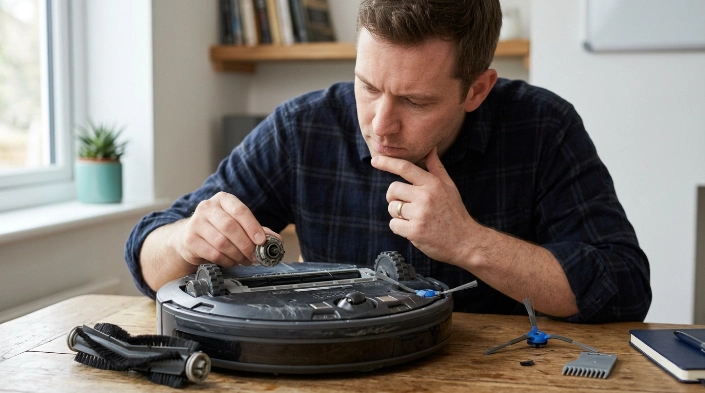
Normal hair wrapping should improve after cleaning. If the brush still binds, stops, or immediately triggers errors, inspect for wear or a mechanical problem.
The brush does not spin freely by hand
After removing obvious debris, gently test the roller according to your model’s design. Resistance may indicate hair hidden under an end cap or a damaged bearing.
Do not force the roller. Excessive resistance needs a closer inspection.
The roller or end cap looks damaged
Brush components gradually wear. Cracked rubber, distorted bristles, damaged end caps, or a roller that no longer sits correctly can affect rotation.
Replace worn components with parts intended for your specific model. Similar-looking brushes are not always interchangeable.
The brush stops even when it is clean
A clean roller that repeatedly stops may have a problem beyond hair buildup. Possible areas include the drive mechanism, brush motor, bearing, sensor, or brush installation.
- Repeated brush-error messages
- Grinding after debris removal
- Brush refusing to rotate
- Burning smell
- Unusual heat near the brush-drive area
- Visible damage to electrical components
At that stage, repeated disassembly may cause more harm than good. Check the manufacturer’s troubleshooting instructions for your exact model.
Expert Alert: Stop using the appliance if you notice burning odors, melted parts, damaged wiring, or persistent motor-related noises. Contact the manufacturer or a qualified appliance technician.
Frequently Asked Questions
Why does my robot vacuum get tangled in hair every day?
Your home may have a high hair load from long-haired residents or shedding pets. Check the main roller, end caps, and side brush frequently until you learn how quickly your specific household creates buildup.
Can tangled hair damage a robot vacuum?
Severe tangling can restrict brush movement and increase stress on rotating components. Removing buildup early is safer than allowing the brush to continue operating while heavily jammed.
Why is my robot vacuum brush not spinning after I cleaned it?
The roller may be installed incorrectly, an end cap may still contain debris, or the brush mechanism may have another fault. Remove and reseat the brush according to the manufacturer’s instructions before assuming the motor has failed.
Do rubber robot vacuum brushes still get tangled?
Yes. Rubber rollers can still collect human hair, pet fur, thread, and fibers, especially around their ends. Their design may make hair easier to remove, but maintenance is still necessary.
Should I cut hair off the robot vacuum brush?
Cutting tightly wrapped hair can make removal much easier. Use the supplied cleaning tool when available, protect the brush material, and never cut near moving parts while the robot is powered on.
Why does hair collect around the ends of the brush?
Rotating hair can move sideways along the roller and accumulate near end caps or bearings. Those areas are easy to miss, which is why a brush can appear clean while still rotating poorly.
Will an anti-tangle robot vacuum eliminate brush cleaning?
Not necessarily. Anti-tangle systems can reduce wrapping, but hair, string, rug fibers, and debris can still collect around brushes, wheels, and bearings. Occasional inspection remains part of normal robot-vacuum ownership.
A robot vacuum should reduce cleaning work, not create another complicated chore. When mine starts sounding different or leaving hair behind, the brush and its end caps are the first areas I would inspect.
Keep loose cords and threads off the floor, clear small tangles early, and replace damaged brush parts when needed. Those simple habits solve most recurring robot vacuum brush tangles before they become serious jams.
