How Do You Unclog a Vacuum Hose? A Step-by-Step Home Hygiene Guide

Quick Answer
Unclogging a vacuum hose requires disconnecting the tube, locating the blockage visually, and gently dislodging trapped debris using a long, blunt tool like a broom handle. For optimal home performance, regular maintenance prevents foul musty odors and protects your vacuum cleaner from burning out.
Immediate Unclogging Steps
- Power off safety: Unplug the machine completely before touching any internal components or hoses.
- Detach the hose: Remove both ends of the flexible hose from the vacuum body and the cleaning wand.
- Inspect internal light: Shine a flashlight down the tube to spot stubborn hairballs, coins, or paper debris.
- Push debris out: Insert a flexible broom handle or plumbing snake carefully from the narrow end.
- Flush with water: Rinse plastic-only hoses with warm water if sticky residue remains, and dry completely.
Prevention and Safety Tips
- Never force sharp objects like screwdrivers into flexible plastic tubing to prevent accidental punctures.
- Always check canisters and dust bags regularly to stop debris from backing up into the main hose.
Dealing with a sudden loss of suction can turn a quick weekend cleaning session into a frustrating chore. A blocked vacuum hose is one of the most common reasons your cleaning appliance stops picking up dirt effectively, leaving behind pet hair, dust mites, and everyday debris.
When you ignore a minor blockage, the restricted airflow forces the motor to work much harder. This extra strain often leads to overheating, unpleasant burning smells, and premature motor failure.
In This Guide
What Are the Signs of a Clogged Vacuum Hose?
How do you know the restriction is actually inside the hose and not just a full dust bag or a dirty filter? Spotting the early warning indicators saves you time and prevents unnecessary teardowns.
Sudden pitch changes in the motor sound are often the very first indicator. When airflow gets trapped or blocked, the motor takes on a high-pitched, strained whine that feels completely different from its normal operational hum.
Another classic sign is zero suction at the cleaning tip despite the spinning brush roll working normally. You might also notice a musty or burning odor as trapped dust particles bake against a restricted motor.
A blocked vacuum hose reduces cleaning efficiency instantly and puts dangerous thermal strain on your appliance motor.
How to Safely Remove a Stubborn Blockage
Clearing a blockage requires a methodical, safe approach to avoid damaging your machine’s plastic components or electrical wiring. Here is the exact workflow I use in my own home when my upright or canister unit loses power.
First, always unplug the appliance from the electrical wall outlet. Never attempt any troubleshooting or maintenance while the machine remains energized.
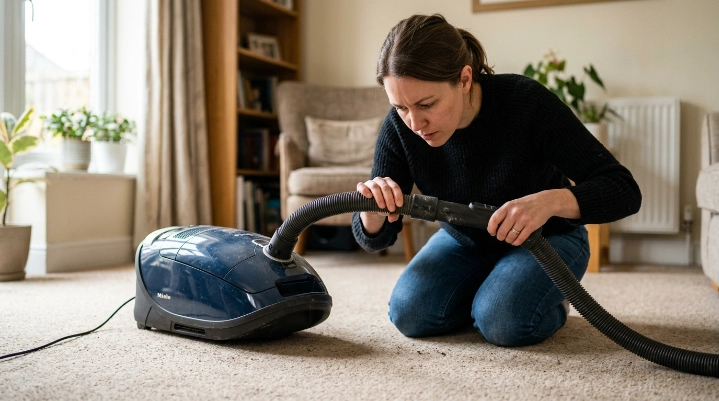
Next, detach the flexible hose completely from both the main canister or upright body and the handheld cleaning wand. Isolating the tube lets you test airflow and examine both ends for tangled hair or lint buildups.
Shine a bright flashlight down the length of the tube while holding it up to a light source. If you cannot see light through to the other side, you have located your obstruction.
Carefully insert a long, blunt tool into the wider end of the tube to push the obstruction toward the opening. Avoid pushing from the narrow end, as this can compact fibrous debris even tighter into the middle curves.
Best Tools and Methods to Clear Debris
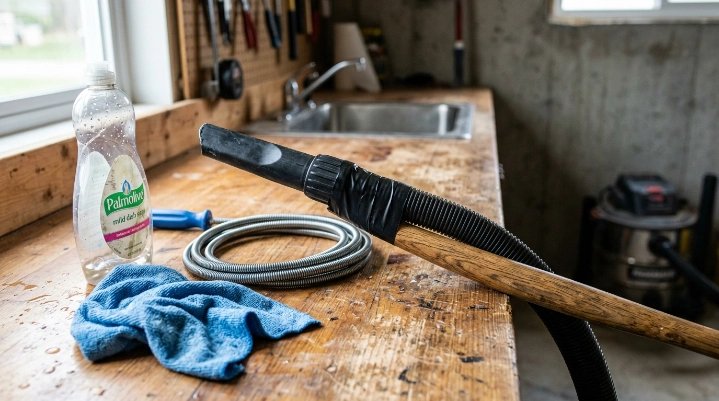
Choosing the right tool ensures you remove the blockage without puncturing the flexible plastic or wire reinforcement coils inside your vacuum hose.
A wooden broom handle or a clean, flexible plumber snake works best for standard residential hoses. The smooth surface glides safely along the interior ridges without catching on plastic seams.
Avoid using wire coat hangers unless you wrap the sharp hooked end thoroughly in electrical tape. Exposed metal hooks easily pierce thin plastic tubing, ruining an expensive replacement part instantly.
If sticky residue or organic matter caused the buildup, flush the interior with warm water and mild dish soap. Ensure the hose dries completely for at least twenty-four hours before reconnecting it to your vacuum to protect the HEPA filtration system from moisture damage.
Using blunt, flexible implements prevents accidental punctures while successfully clearing compacted dust and pet hair.
Comparison of Vacuum Unclogging Techniques
Different types of clogs require different removal strategies. The table below compares the most common methods for clearing residential vacuum hoses based on safety, speed, and equipment needed.
| Unclogging Method | Best Used For | Required Tools | Risk Level |
|---|---|---|---|
| Broom Handle Push | Compacted pet hair and lint balls | Long wooden or plastic pole | Low if edges are smooth |
| Plumbing Snake | Deep, stubborn clogs near bends | Flexible drain snake | Low-Medium (don’t force hard) |
| Warm Water Rinse | Sticky residue and dust paste | Sink, mild dish soap | Medium (requires 24h drying) |
| Reversed Airflow | Loose blockages near ends | Leaf blower or secondary vac | Low |
How to Prevent Future Hose Blockages
Maintaining a smooth-running vacuum saves money and keeps your indoor air quality high. Simple prevention habits stop debris from accumulating inside narrow pathways.
Always pick up large or hard objects like coins, paperclips, and small plastic toys before running your floor nozzle over a carpeted area. These items wedge sideways inside curves instantly.
Empty your dust canister or replace disposable bags before they reach the maximum fill line. When bags or bins overflow, fine dust and debris spill directly into the intake port and pack into the hose.
Inspect your brush roll regularly for tangled threads and long human hair that can pull free and form a net inside the hose opening. Clean your filters according to manufacturer guidelines to maintain steady, powerful airflow.
Regular preventative checks on your dust bin and floor nozzle eliminate the primary triggers for unexpected hose clogs.
Frequently Asked Questions
Can I use a metal coat hanger to clear a vacuum hose?
You can use a wire coat hanger only if you pad the sharp tip with heavy tape. Exposed wire edges easily puncture flexible vacuum tubing, so blunt wooden handles are much safer.
Why does my vacuum smell bad after I clear a clog?
Trapped organic debris, pet dander, and damp dust often rot inside a blocked tube. Washing the hose with mild soapy water and drying it completely eliminates residual odors.
Is it safe to wash my vacuum hose with water?
You can wash plastic hoses with water as long as they contain no integrated electrical wires for power nozzles. Always let non-electric hoses dry completely for 24 hours.
How do I know if the clog is in the hose or the filter?
Detach the hose from the vacuum body and feel the suction directly at the intake port. If suction is strong at the port but weak at the wand, the clog is inside the hose.
What causes a vacuum hose to clog repeatedly?
Frequent clogs usually stem from picking up large debris items, running with an overfull dust bag, or leaving tangled hair wrapped around the cleaning floor brush.
Closing Takeaway
Unclogging a vacuum hose is a straightforward DIY maintenance task that restores your cleaning appliance’s suction power instantly. By working carefully with blunt tools, avoiding sharp wire punctures, and keeping up with regular dust bin emptying, you ensure your machine runs cleanly and efficiently for years to come.