How Do You Clean a Vacuum Dustbin?

Quick Answer
To clean a vacuum dustbin, empty loose debris first, remove stuck hair, and wipe the inside with a slightly damp microfiber cloth. Wash the removable bin with mild soap and water only if your vacuum’s manual says it is washable, then let it dry completely before reinstalling it. The EPA’s indoor particulate matter guidance also recommends damp dusting to help keep settled dust from becoming airborne.
Quick dustbin cleaning steps
- Unplug or power off: Disconnect the vacuum or remove its battery before maintenance.
- Empty the debris: Release the dustbin over an outdoor trash container when practical.
- Remove stuck dirt: Pull out hair and fibers with your fingers or a soft brush.
- Wipe the bin: Use a slightly damp microfiber cloth for fine dust.
- Wash if allowed: Rinse only removable parts that the manufacturer identifies as washable.
- Dry completely: Never reinstall a damp bin, filter, or washable component.
One rule matters most
- Check your owner’s manual before putting water on the dustbin, cyclone assembly, or filter because washability varies by model.
A vacuum dustbin collects far more than visible crumbs. Fine household dust, hair, pet dander, pollen, and fibers can coat its walls and collect around seals.
I’ve cleaned dustbins on stick, upright, handheld, and robot vacuums, and the same mistake appears often: people empty the bin but never clean the fine dust stuck inside. This guide shows how to clean it safely without damaging the vacuum.
In This Guide
- What is a vacuum dustbin, and why should you clean it?
- How do you clean a vacuum dustbin step by step?
- Can you wash a vacuum dustbin with water?
- How often should you clean a vacuum dustbin?
- What vacuum dustbin cleaning mistakes should you avoid?
- Does the cleaning method change by vacuum type?
- Frequently asked questions
What Is a Vacuum Dustbin, and Why Should You Clean It?
A vacuum dustbin is the removable container in a bagless vacuum that stores dirt and debris collected during cleaning. You may also hear it called a dust cup, dirt bin, dirt tank, or canister.
Emptying removes most debris, but it usually leaves fine dust around the walls, hinges, screens, seals, and cyclone openings. That buildup can become harder to remove when ignored.
- Hair and fibers can wrap around internal screens or openings.
- Fine dust can cling to plastic through static electricity.
- Crumbs and organic debris can create unpleasant odors when left inside.
- Dust near seals can interfere with a clean fit when the bin is reinstalled.
Indoor dust can contain pollen, pet dander, mold spores, dust-mite material, hair, and other particles. Cleaning activities can also stir settled particles back into the room.
That is why I prefer controlled emptying and damp wiping instead of blowing dust from the bin. It creates much less mess around the trash can.
The Asthma and Allergy Foundation of America recommends regular vacuuming and measures that reduce the amount of dust and allergens released back into indoor air.
Section Takeaway: Emptying removes the bulk debris, while cleaning removes the fine residue that emptying leaves behind.
How Do You Clean a Vacuum Dustbin Step by Step?
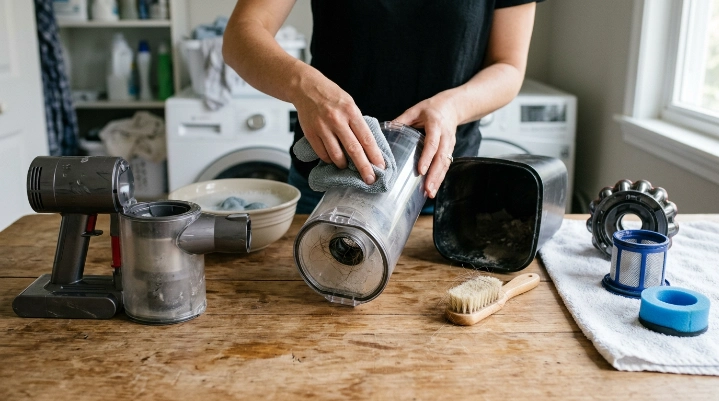
The safest general method is to start dry and add water only when the manufacturer allows it. This keeps moisture away from parts that may contain seals, filters, electrical contacts, or cyclone components.
1. Turn off and disconnect the vacuum
Unplug a corded vacuum before removing or cleaning parts. For a cordless vacuum with a removable battery, take the battery out when the manufacturer’s instructions recommend doing so.
Never clean the dustbin while the vacuum could start accidentally.
2. Remove the dustbin carefully
Use the normal release button or latch rather than forcing the container. Hold the bin upright so loose debris does not spill through an opening.
- Take the bin outdoors if it contains lots of fine dust.
- Keep the bin low inside the trash container.
- Open the release door slowly.
- Allow the debris to fall instead of shaking the container aggressively.
3. Remove trapped hair and compacted debris
Check around the bottom door, mesh screen, inlet, and corners. Hair often catches where the airflow enters the bin.
Use your fingers, a dry microfiber cloth, or a soft cleaning brush. Avoid knives, screwdrivers, and sharp tools that could scratch plastic or damage seals.
4. Wipe away fine dust
A slightly damp microfiber cloth works well for dust stuck to smooth plastic. Wipe from the top downward so loosened material moves toward the open end.
Use a cotton swab or small soft brush for narrow grooves if needed.
- Wipe the inner walls.
- Clean the rim around the bin door.
- Remove debris from rubber seals without stretching them.
- Wipe the outside of the container.
- Check the inlet and release mechanism for obstruction.
5. Wash the removable bin only if approved
If your manual says the dust cup is washable, use lukewarm water and a small amount of mild dish soap. Rinse away all soap and loosened residue.
Do not automatically wash cyclone assemblies or filter housings just because they detach from the vacuum. Some removable components are still designed for dry cleaning only.
6. Let every washable part dry completely
Shake off excess water and place the parts in a well-ventilated location. Do not reinstall anything while moisture remains in corners, seams, or channels.
A clean-looking bin can still hold water around hinges and seals. I usually turn the container several times during drying so hidden droplets can escape.
7. Reassemble and check the fit
Return each component to its original position once everything is dry. The dustbin should click or lock into place without excessive force.
- Check that seals sit flat.
- Confirm the bin door closes fully.
- Make sure the filter is installed correctly.
- Confirm no cloth fibers or hair remain around the latch.
If the bin will not lock into place, remove it and inspect the alignment. Forcing it can damage a plastic tab or seal.
Section Takeaway: Empty first, clean fine dust second, wash only approved parts, and reinstall everything only after it is completely dry.
Can You Wash a Vacuum Dustbin With Water?
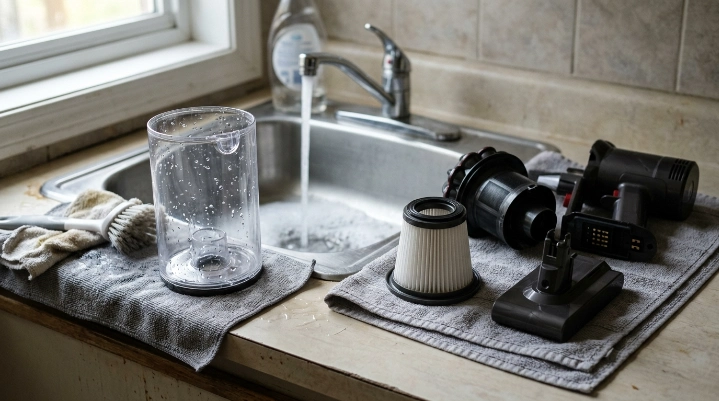
Some vacuum dustbins can be washed with water, but not every dustbin or attached component is washable. Your owner’s manual should make the decision.
The transparent plastic container may be washable while the attached cyclone, filter, sensor, or electrical contact is not. Treat each component separately.
| Cleaning method | Best for | Water needed? | Main precaution |
|---|---|---|---|
| Dry microfiber cloth | Loose dust and everyday maintenance | No | Avoid pushing debris into small openings |
| Slightly damp microfiber cloth | Fine dust stuck to plastic walls | Minimal | Keep moisture away from nonwashable components |
| Soap-and-water rinse | Washable removable dust cups | Yes | Use only when the manufacturer approves washing |
| Soft brush | Screens, grooves, corners, and dry debris | No | Do not damage mesh, seals, or delicate fins |
What about the vacuum filter?
Do not assume a filter is washable because the dustbin is washable. Vacuum filters may use foam, fabric, pleated paper-like material, HEPA media, or another construction.
Follow the filter instructions printed in the manual or on the part itself. Consumer Reports also advises checking model-specific instructions because cleaning and replacement requirements vary among vacuums.
You can review its broader vacuum maintenance guidance for advice on avoiding overfilled bins and maintaining filters.
What happens if water reaches the motor?
Do not operate the vacuum if liquid entered the motor housing, battery area, charging contacts, or electrical components. Disconnect it from power and follow the manufacturer’s service instructions.
Expert Alert: If water has entered electrical parts or the motor housing, do not dismantle or energize the vacuum to test it. Contact the manufacturer or a qualified appliance repair professional.
Section Takeaway: A removable part is not automatically a washable part. Manufacturer instructions always take priority.
How Often Should You Clean a Vacuum Dustbin?
Empty the bin before debris reaches the manufacturer’s maximum-fill line. Many households find it easiest to check the bin after every cleaning session.
A deeper wipe-down does not always need to happen after each use. The right schedule depends on what you vacuum and how quickly residue builds up.
- After most cleaning sessions: Empty visible debris and inspect the inlet.
- When fine dust coats the walls: Wipe the inside with a dry or slightly damp microfiber cloth.
- After heavy pet-hair pickup: Check screens, seals, and openings for wrapped hair.
- After vacuuming crumbs: Remove food debris rather than leaving it stored in the bin.
- When odors appear: Empty and clean the bin, then inspect approved filters and attachments.
- Before storage: Leave the dustbin empty, clean, and dry.
Should you wait until the bin is completely full?
No. A maximum-fill line is a limit, not a target you should intentionally exceed.
Overfilling can crowd airflow paths and leave compacted debris around the cyclone or inlet. Emptying earlier is usually simpler and less messy.
What if you have pets?
Pet hair can fill a dustbin surprisingly quickly without making it look densely packed. Long hair can also bridge across the bin and prevent dirt from falling freely.
Check the container more often during shedding periods. Pull trapped hair away from screens and seals before it becomes tightly wound.
Section Takeaway: Empty based on the fill line and debris level, then deep-clean when residue, hair, or odors start accumulating.
What Vacuum Dustbin Cleaning Mistakes Should You Avoid?
Most dustbin damage happens because a simple cleaning job becomes too aggressive. Water, sharp tools, strong chemicals, and rushed reassembly cause more trouble than ordinary dust.
- Blowing dust out: Compressed air or forceful blowing can scatter fine particles around you.
- Washing every removable part: Detachable does not mean waterproof.
- Using strong chemicals: Harsh cleaners may affect plastic, seals, coatings, or printed markings.
- Scraping with metal tools: Scratches and damaged mesh can create new places for debris to collect.
- Reinstalling wet parts: Moisture should never be trapped inside the assembled vacuum.
- Ignoring the filter: A clean dustbin cannot compensate for a severely clogged filter.
- Forcing the bin into place: Misaligned tabs and seals should be corrected before closing.
Can you use disinfectant inside a vacuum dustbin?
Routine dustbin cleaning usually needs debris removal, wiping, and manufacturer-approved washing rather than heavy disinfection. If you want to use a cleaner, confirm that the product and vacuum manufacturer consider it safe for the bin material.
Never spray liquid toward the motor, air channels containing electronics, sensors, or charging contacts.
Can you clean the bin in a dishwasher?
Do not put a dustbin in a dishwasher unless the manufacturer explicitly states that it is dishwasher-safe. Dishwasher heat and detergents may damage plastic, seals, or fitted components.
Hand cleaning gives you much better control over water exposure.
Section Takeaway: Gentle cleaning is usually enough. Avoid shortcuts that expose the vacuum to unnecessary water, heat, chemicals, or mechanical damage.
Does the Cleaning Method Change by Vacuum Type?
The basic process stays similar, but access points and washable parts vary. As of 2026, modern stick, upright, handheld, and robot vacuums use many different dustbin and filter layouts.
Stick vacuum dustbins
Stick vacuums often use compact dust cups with cyclone chambers above them. Fine dust commonly gathers around internal screens and narrow channels.
- Empty before debris packs tightly.
- Check hair around the screen or shroud.
- Do not rinse the cyclone assembly unless approved.
- Keep battery and charging contacts dry.
Bagless upright and canister vacuums
These models may have larger dirt containers with multiple filters or a separate cyclone assembly. Their larger bins are easy to overlook because they take longer to fill.
Check the lid gasket, bottom release door, and inlet when cleaning. Dust around these areas can remain even after the container looks empty.
Robot vacuum dustbins
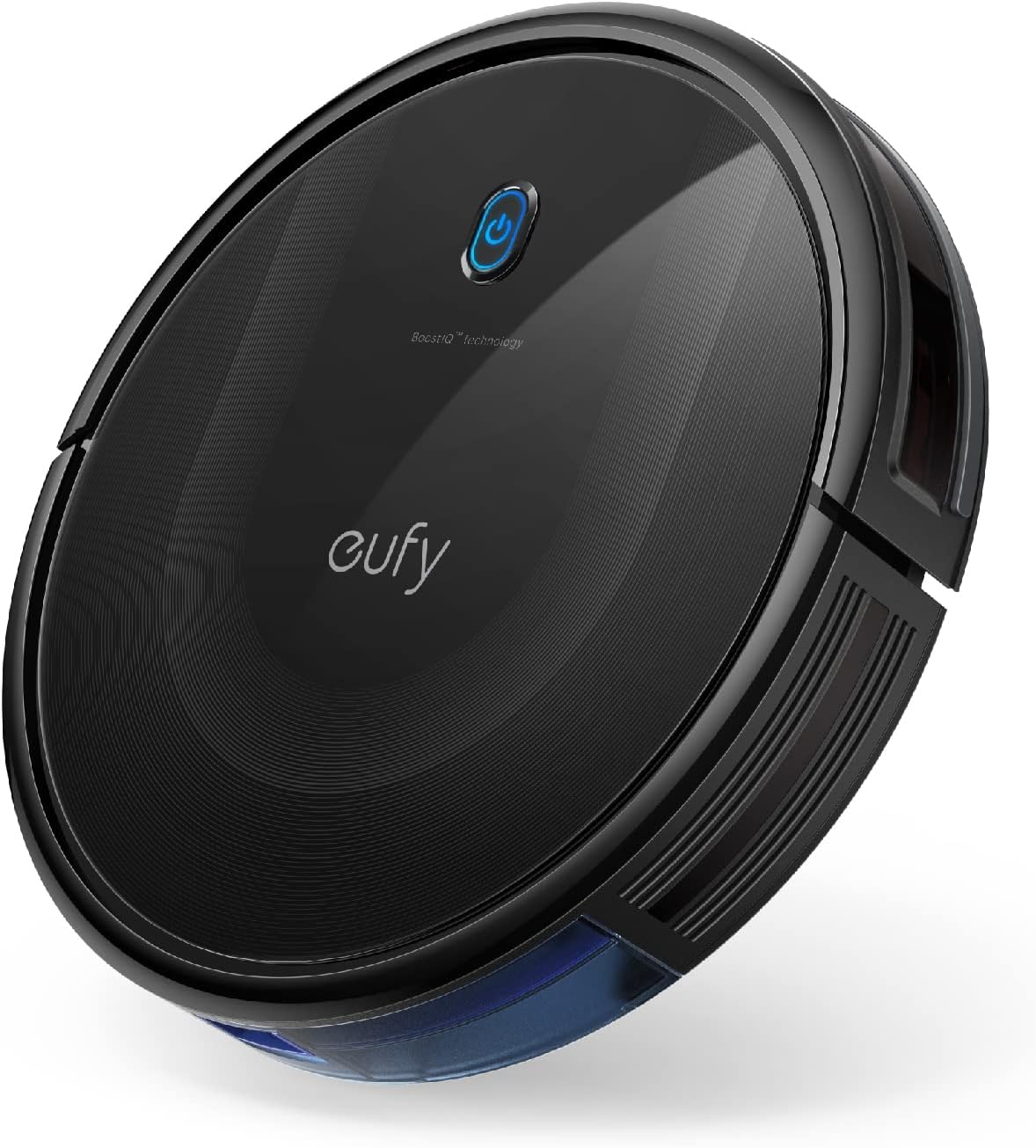
Robot vacuum bins are small and often sit close to filters, sensors, or air channels. Remove the filter before washing a bin unless the manufacturer’s directions specify another procedure.
- Empty the bin frequently.
- Brush dust from filter compartments carefully.
- Keep electrical contacts dry.
- Let washable bins dry completely before returning them to the robot.
Self-emptying robot vacuums
A self-emptying dock reduces how often you manually empty the robot, but the robot’s onboard bin still needs inspection. Hair or compacted debris can remain behind after an automatic emptying cycle.
Check the evacuation opening and dustbin periodically using the maintenance schedule in your manual.
Handheld vacuums
Small handheld units often collect concentrated amounts of crumbs, hair, and fine dust. Their filters may sit directly against the dust cup, so separating washable and nonwashable pieces matters.
Empty food debris promptly and make sure all parts are dry before reassembly.
Section Takeaway: The cleaning principles stay consistent, but the exact parts you can wash depend on the vacuum’s design.
Frequently Asked Questions
Can I wash my vacuum dustbin with soap and water?
Yes, if the manufacturer says the removable dustbin is washable. Use mild soap, rinse thoroughly, and let it dry completely before reinstalling it. Do not wash attached filters, cyclone parts, sensors, or electrical components unless their instructions specifically allow it.
Why does my vacuum dustbin smell bad?
Odors can come from old food crumbs, pet hair, damp debris, dirty filters, or residue inside the container. Empty and clean the bin first, then inspect the filter and brush roll according to your vacuum’s maintenance instructions.
Should I clean the dustbin after every use?
You do not usually need to wash it after every use. Empty it when debris approaches the fill line and wipe it when fine dust becomes visible. Homes with pets, heavy shedding, or frequent vacuuming may need more frequent maintenance.
Can I use a wet cloth inside my vacuum dustbin?
A slightly damp microfiber cloth is useful for removable plastic surfaces. Keep excess water away from filters, cyclone sections, electrical contacts, and the main vacuum body unless the manufacturer states those areas are washable.
How do I get fine dust out of a vacuum container?
Empty the loose debris first, then use a microfiber cloth or soft brush for remaining dust. A slightly damp cloth can capture stubborn fine particles on washable plastic surfaces more effectively than blowing the dust into the air.
Can I put the vacuum dustbin back while it is damp?
No. Let washable components dry completely before reassembly. Moisture trapped inside the vacuum can reach filters or areas that are designed to stay dry, so check seams and corners before reinstalling the container.
What should I do if the dustbin still looks dirty after washing?
Use a soft cloth or nonabrasive brush on approved washable surfaces. Avoid scraping cloudy or stained plastic with sharp tools, because cosmetic discoloration is usually better than damaging the container or its seals.
A clean vacuum dustbin takes only a few extra minutes to maintain, but it makes routine vacuum care easier. Empty it before it overfills, remove trapped hair, wipe away fine dust, and wash only the parts your manual identifies as washable.
If you remember one rule, make it this: clean gently and keep moisture away from anything that is not specifically designed to get wet. That approach works for most bagless vacuum designs without turning simple maintenance into a repair problem.
“`