
How Often Should You Vacuum Carpet? Complete Guide

Quick Answer
For most homes, vacuum carpet at least once a week. Vacuum high-traffic areas and pet zones daily, and clean moderately used areas about twice a week. Adjust the schedule for visible dirt, household activity, carpet type, and the manufacturer’s care instructions.
The right vacuuming schedule depends less on how clean your carpet looks and more on how much dirt it collects. Fine grit, dust, crumbs, and pet hair can settle between carpet fibers before the surface looks noticeably dirty.
A practical routine focuses on busy areas more frequently while giving quiet rooms less attention. This helps you manage everyday dirt without spending unnecessary time vacuuming rooms that rarely get used.
How Often Should You Vacuum Different Areas of Your Home?
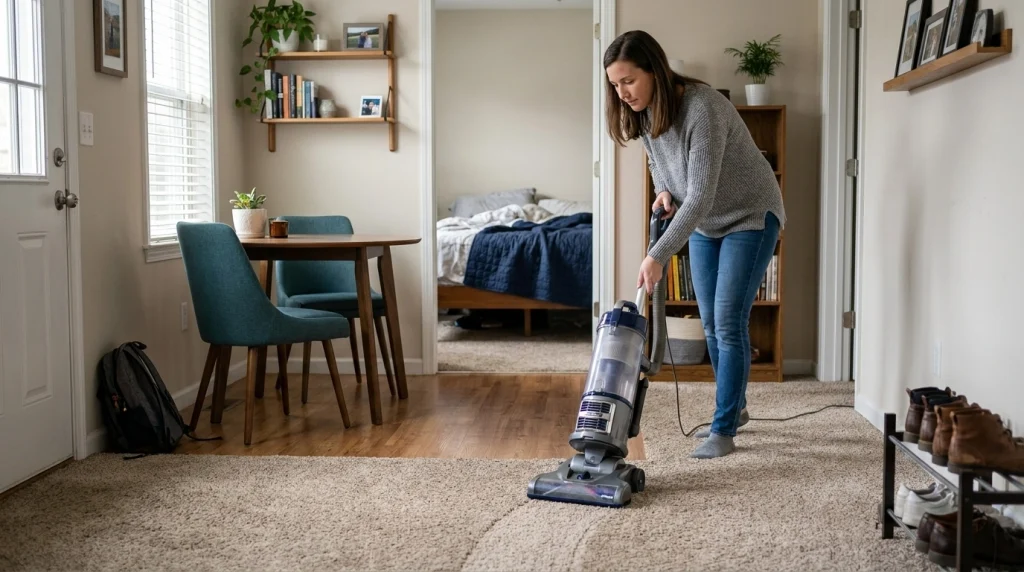
Use the amount of foot traffic as your starting point. The Carpet and Rug Institute recommends daily vacuuming in high-traffic or pet areas, approximately twice-weekly cleaning in medium-traffic areas, and weekly vacuuming in lightly used spaces.
The following schedule translates that guidance into a practical residential routine.
| Carpeted area | Starting frequency | When to increase it |
|---|---|---|
| Entryways and hallways | Daily if busy | Outdoor dirt, sand, or heavy foot traffic |
| Living and family rooms | 1–2 times weekly | Children, pets, or frequent visitors |
| Bedrooms | Once weekly | Pets, heavy use, or dust buildup |
| Stairs | Once weekly | Frequent use or visible debris |
| Dining areas | 2–3 times weekly or as needed | Daily meals, crumbs, and spills |
| Guest rooms and quiet spaces | Once weekly as a baseline | More frequent use or noticeable dust |
These are starting points, not rigid rules. A hallway in a busy household may need daily attention, while a rarely used bedroom may remain relatively clean between weekly sessions.
Why Does Regular Vacuuming Matter Even When Carpet Looks Clean?
Regular vacuuming removes loose soil before repeated footsteps press it farther into the carpet pile. Some particles are gritty enough to contribute to fiber abrasion, gradually affecting the carpet’s appearance and texture.
It also collects crumbs, lint, hair, and other debris that can make a room look untidy or create an unpleasant feeling underfoot.
Vacuuming can help reduce the amount of settled dust and some allergen-containing particles in carpet. However, it does not eliminate every indoor allergen, sanitize the carpet, or replace appropriate stain treatment and periodic deep cleaning.
Waiting until carpet looks dirty is therefore not the best maintenance strategy. A consistent schedule removes loose debris before visible buildup becomes the only signal that cleaning is needed.
What Factors Mean You Should Vacuum More Often?
Two carpets can need very different schedules even if they are the same size. Household activity, the type of debris entering the home, and the carpet’s construction all affect how frequently you should clean.
Pets and shedding
Dogs and cats can leave hair, dander, tracked-in dirt, and bits of outdoor debris on carpet. Vacuum pet sleeping areas and favorite resting spots more frequently, especially during heavy shedding.
Daily vacuuming may be useful in heavily used pet zones, but you do not necessarily need to vacuum every carpeted room daily. Concentrate your effort where hair and debris accumulate.
Children and frequent visitors
Playrooms, family rooms, and areas used for indoor activities often collect crumbs and loose dirt faster than quieter rooms. Add quick vacuuming sessions to those spaces when needed rather than automatically repeating a whole-house clean.
Dust, outdoor dirt, and seasonal conditions
Homes near dusty roads, construction, gardens, or frequently used outdoor entrances may accumulate more soil. Rainy weather can also increase the amount of dirt tracked inside on footwear.
Use entrance mats, remove shoes indoors when practical, and clean the mats regularly. These steps reduce the debris reaching carpet and can make your vacuuming routine more manageable.
Carpet pile and manufacturer instructions
Low-pile and dense carpets may be straightforward to maintain with a suitable vacuum. Plush, shag, delicate, or specialty carpets may require lower suction, a different floor head, or a brush-roll setting specified by the manufacturer.
Check the carpet care instructions before increasing brush agitation or vacuuming frequency with an aggressive machine. Frequent cleaning should remove soil without pulling fibers, fraying edges, or flattening a delicate pile.
How Can You Tell When Carpet Needs Vacuuming Ahead of Schedule?
Your cleaning calendar should respond to actual conditions. Vacuum sooner if you notice any of these signs:
- Visible debris: Crumbs, dust, hair, lint, or tracked-in dirt have accumulated.
- Busy traffic lanes: The carpet near doors, sofas, or stairs receives much more use than surrounding areas.
- Pet hair buildup: Hair gathers around furniture, pet beds, or favorite resting places.
- Recent activity: Guests, indoor play, a home project, or outdoor work has introduced extra debris.
- Recurring dust: Particles return quickly in an area that sees frequent use.
Remember that appearance alone is an imperfect guide. Carpet can hold loose soil below its visible surface, so a room that looks tidy may still benefit from its scheduled vacuuming session.
If carpet has a liquid spill, address it promptly using a suitable carpet-safe method. Vacuuming is intended for dry debris; a standard dry vacuum should not be used to collect wet spills or saturated carpet.
What Is the Best Way to Vacuum Without Wasting Time?
Good technique helps you remove debris effectively without making every cleaning session longer than necessary. You do not need to make repeated passes over every part of the room.
- Clear loose objects. Pick up toys, cords, coins, and other items that could block or damage the vacuum.
- Check the machine. Empty an overfilled dust bin or replace a full bag, and inspect the filters and brush roll according to the manual.
- Choose the correct setting. Adjust the floor-head height and brush action for the carpet type.
- Move slowly in overlapping rows. Cover the full area instead of rushing through the center and missing narrow strips.
- Focus on edges and traffic lanes. Use a suitable attachment around baseboards, furniture, and corners where debris collects.
- Change direction occasionally. A second direction can help reach debris oriented differently within the pile.
For lightly soiled carpet, a few controlled passes may be sufficient. Heavily soiled areas can require more attention, but the correct number of passes depends on the carpet, the debris, and the vacuum.
For more detailed technique advice, follow this guide on how to vacuum carpet properly. If you have a deep, plush surface, the instructions for vacuuming high-pile carpet safely explain why the correct settings matter.
Can You Vacuum Carpet Too Often?
Frequent vacuuming is generally a normal part of carpet maintenance when the equipment and settings are suitable for the flooring. The main concern is not a particular number of sessions but whether the vacuum’s brush action, suction, or floor-head design damages the carpet.
Stop and reassess the settings if the machine repeatedly pulls fibers, catches loops, makes the carpet difficult to move across, or causes unusual wear. Check the care label and vacuum manual before continuing.
Loop-pile carpet, shag, wool, antique rugs, and other specialty surfaces may need gentler equipment or a suction-only attachment. Do not assume that the strongest setting is the most effective or safest.
Likewise, vacuuming the same already-clean room several times a day usually offers little practical benefit in an ordinary household. Direct extra effort toward areas that actually collect debris.
How Often Should You Vacuum If Someone Has Allergies?
If someone in your home is sensitive to dust or other airborne particles, start with at least weekly carpet vacuuming and clean high-use areas more frequently as needed. The appropriate routine depends on the specific trigger, household conditions, and how well the vacuum contains the particles it collects.
Choose a vacuum with effective filtration and sealed dust containment when possible. Maintain its filters and dust container as directed, and avoid shaking a full bag or bin in a way that releases collected dust indoors.
Vacuuming is only one part of managing indoor allergens. Washing bedding as appropriate, controlling moisture, and addressing other sources of dust or allergens may also matter. If cleaning appears to worsen symptoms, consider the cleaning method and seek individualized advice when needed.
The Carpet and Rug Institute’s carpet maintenance guidance provides additional advice on routine vacuuming, spot removal, and periodic deep cleaning.
Does Vacuuming Replace Deep Carpet Cleaning?
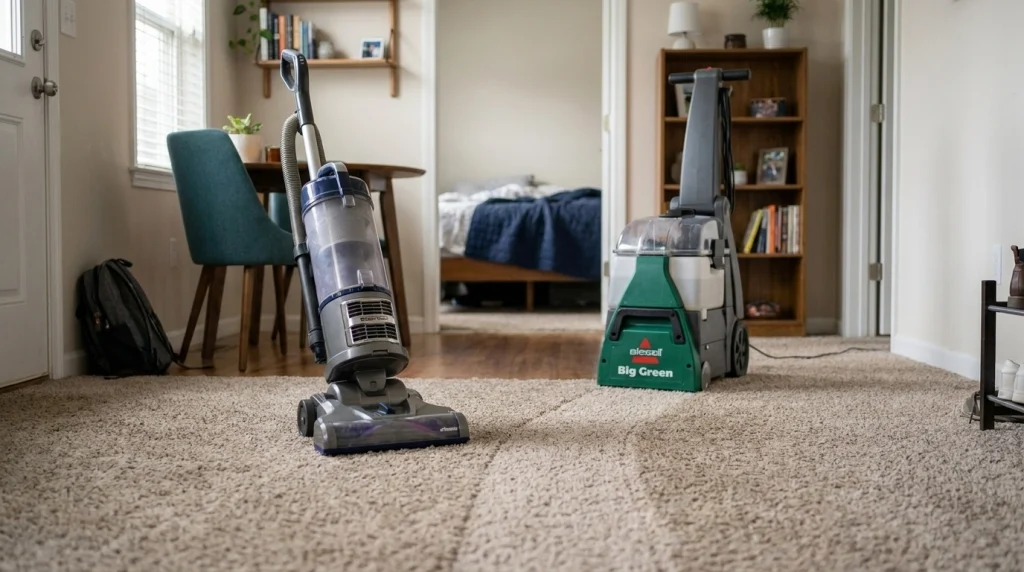
No. Vacuuming removes loose dry soil, hair, crumbs, and similar debris, but it cannot remove every oily residue or set-in stain. Periodic deep cleaning addresses a different part of carpet maintenance.
The Carpet and Rug Institute recommends deep cleaning approximately every 12–18 months, subject to the carpet manufacturer’s instructions and the needs of the household. Busy homes may require a different maintenance plan, and some warranties specify particular cleaning methods or intervals.
Do not confuse deep cleaning with routine vacuuming. Wet extraction or another approved deep-cleaning method introduces a different process, and the carpet must be dried appropriately afterward.
For more guidance on the difference between the methods, see this explanation of carpet cleaners versus vacuum cleaners.
Related Product
Vacuum Cleaner Suitable for Carpet
A vacuum with appropriate carpet settings and effective dust containment can make routine cleaning easier. Check compatibility with your carpet before choosing a model.
As an Amazon Associate, we earn from qualifying purchases.
Frequently Asked Questions
Is vacuuming carpet once a week enough?
Weekly vacuuming is a sensible starting point for many bedrooms and lightly used carpeted rooms. Busy hallways, pet areas, and other high-traffic spaces usually need more frequent attention.
Should I vacuum before or after dusting?
Dust shelves and other higher surfaces first, then vacuum the carpet. This lets you collect dust and debris that settle on the floor during cleaning.
Should I vacuum a new carpet every day?
Follow the carpet manufacturer’s initial-care instructions. Routine vacuuming is generally part of carpet maintenance, but the suitable equipment and settings depend on the carpet’s construction.
Does vacuuming help remove pet hair?
Yes. A suitable vacuum can collect loose pet hair from carpet. Clean heavily used pet areas more frequently, and use a compatible attachment if hair collects around edges or furniture.
Should I vacuum carpet when it is wet?
Do not use a standard dry vacuum on wet carpet. Follow the appropriate spill-cleanup or water-damage procedure, and use only equipment specifically designed and approved for wet pickup when applicable.
How often should carpet be professionally deep cleaned?
The Carpet and Rug Institute recommends approximately every 12–18 months as a general guide. Follow your carpet manufacturer’s requirements and adjust the plan to actual soil levels and household use.
Conclusion
For most homes, vacuuming carpet at least once a week is a practical starting point. Increase the frequency in hallways, entryways, pet zones, and other areas that collect dirt quickly, while adjusting quieter rooms to their actual needs.
Use suitable equipment, move slowly enough to collect debris, and follow the carpet manufacturer’s care instructions. Vacuuming regularly helps control loose soil and maintain carpet appearance, but it does not replace prompt stain treatment or periodic deep cleaning. A flexible routine based on foot traffic and visible buildup is more useful than a rigid schedule that treats every room alike.