
How Often Should You Vacuum Rugs? A Practical Guide

Quick Answer
Vacuum most household rugs at least once a week. Vacuum busy entryways, hallways, and rugs in homes with pets several times a week, or daily when dirt and hair accumulate quickly. Rugs in rarely used rooms may need vacuuming every one to two weeks, while delicate, shaggy, or fringed rugs require gentler equipment and care.
The right vacuuming schedule depends on how much dirt reaches your rug, how often people walk across it, and how easily its fibers can be damaged. A rug near the front door may collect grit every day, while one beneath a bedroom chair may remain relatively clean for longer.
The goal is to remove loose dirt before it settles deep into the pile. Regular vacuuming helps prevent gritty particles from wearing against rug fibers, but excessive suction or an aggressive rotating brush can damage certain materials. Use the following schedule as a starting point, then adjust it to your household and the rug manufacturer’s instructions.
How Often Should You Vacuum Rugs in Different Rooms?
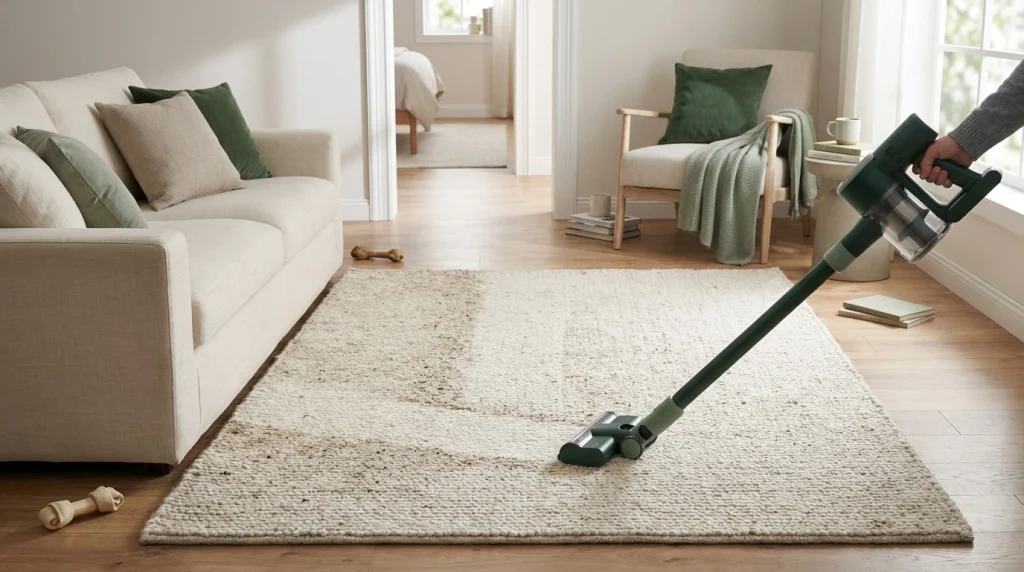
For most homes, weekly vacuuming is a sensible baseline. Increase the frequency in rooms that receive more foot traffic, outdoor dirt, food crumbs, or pet hair.
| Rug location or use | Suggested frequency | Why |
|---|---|---|
| Entryway and busy hallway | Daily or several times weekly | Outdoor grit and frequent footsteps |
| Living room | One to three times weekly | Foot traffic, crumbs, and everyday dust |
| Dining area | Two or more times weekly as needed | Food particles and chair movement |
| Bedroom rug | Weekly or every one to two weeks if lightly used | Lint, dust, and ordinary foot traffic |
| Guest room or rarely used space | Every one to two weeks | Lower traffic and less tracked-in soil |
| Homes with shedding pets | Several times weekly; daily in busy areas if needed | Hair, dander, and tracked-in debris |
These are practical starting points, not rigid rules for every rug. The Carpet and Rug Institute’s vacuuming guidance recommends increasing frequency according to how heavily an area is used, with daily vacuuming for high-traffic or pet areas and less frequent cleaning for lighter-use spaces.
What Factors Change Your Vacuuming Schedule?
Two rugs in the same room can need different care. Consider these four factors before deciding how often to clean.
1. Foot traffic and outdoor dirt
Foot traffic is one of the strongest indicators of how frequently a rug needs vacuuming. Shoes carry small particles indoors, and repeated footsteps press them into the pile.
Vacuum entry rugs more frequently during rainy weather, dusty conditions, or periods when people regularly walk in from outdoors. If you use a rug to catch dirt near a doorway, clean it before visible grit spreads into adjoining rooms.
2. Pets and children
Pets can add fur, dander, litter, and outdoor debris to rugs. Children may introduce food crumbs and other small particles. In these households, weekly vacuuming may not be enough for the main living areas.
Clean the affected rugs several times a week, increasing to daily maintenance where necessary. For pet hair, use an attachment or brush setting that is compatible with the rug’s construction rather than repeatedly forcing a powered head through delicate fibers.
3. Rug material and pile height
Durable, low-pile synthetic rugs generally tolerate routine vacuuming more easily than delicate handmade rugs or long-pile designs. Wool, silk, viscose, jute, and sisal rugs can have specific care requirements depending on their construction and finish.
Check the care label before increasing suction or using a rotating brush. A rug that needs gentle suction should not be cleaned aggressively simply because it sits in a busy room. Use a suitable attachment more frequently if necessary, but keep the technique gentle.
4. Household dust and allergies
If family members are sensitive to dust or airborne allergens, regular vacuuming can help remove loose particles and pet debris from rugs. Focus on the surfaces used most often, and choose a vacuum that captures dust effectively rather than allowing it to escape around the machine.
Vacuuming is only one part of dust management. Clean other surfaces regularly and follow the vacuum manufacturer’s instructions for filter maintenance. Do not assume that vacuuming alone will eliminate every allergen or resolve allergy symptoms.
How Often Should You Vacuum Wool, Shag, and Other Delicate Rugs?
The schedule should reflect both the amount of dirt and the rug’s tolerance for cleaning. A delicate rug in a busy room may need more frequent light maintenance rather than fewer, aggressive cleaning sessions.
- Wool rugs: Weekly vacuuming is a useful starting point, with more frequent cleaning in busy areas. Use suction-only or a gentle setting if recommended by the manufacturer. Some shedding, especially from a new wool rug, can be normal.
- Shag rugs: Remove loose debris regularly, but avoid forcing a conventional beater bar into long fibers. Use an appropriate high-pile setting or suction-only attachment.
- Jute and sisal rugs: Use gentle suction without an aggressive rotating brush unless the care instructions explicitly permit it. These natural fibers can be sensitive to moisture, so avoid wet-cleaning methods that are not approved for the rug.
- Silk, antique, and valuable handmade rugs: Follow specialist care instructions. If the construction or condition is uncertain, ask a rug-care professional to recommend a safe method.
- Low-pile synthetic rugs: These often tolerate more routine vacuuming, but check the label and avoid catching loose edges or backing.
For more detailed technique guidance, see our guide on how to vacuum area rugs without damaging them. If you own a long-pile rug, our instructions for vacuuming shag rugs safely explain why brush-roll control matters.
What Is the Best Way to Vacuum a Rug Without Wearing It Out?
Good technique matters as much as frequency. A suitable vacuum used slowly and gently can remove loose soil without placing unnecessary stress on the rug.
- Check the rug first. Read its care label and inspect the edges, backing, and fringe for loose threads or damage.
- Prepare the vacuum. Empty an overly full dust bin, check the hose and filter as directed, and remove hair tangled around the brush roll.
- Choose the right setting. Start with gentle suction and disable the rotating brush when the rug’s material or instructions require it.
- Move slowly in overlapping passes. Allow the vacuum to collect loose dirt rather than rushing over the surface. Follow the pile direction when appropriate.
- Protect the edges and fringe. Do not run a powered brush over loose fringe or let the nozzle catch a curling corner. Use a suitable hand attachment where necessary.
- Check underneath periodically. When practical, lift or roll back the rug and clean the floor and rug pad. Follow care instructions before vacuuming the rug’s reverse side.
Stop if the vacuum pulls up fibers, catches the backing, lifts the rug excessively, or causes visible distortion. Lower the suction, change the attachment, or seek material-specific advice before continuing.
Tip
Use a small, consistent routine: vacuum high-use rugs on scheduled days, clean visible crumbs promptly, and inspect delicate rugs before each session. This is easier to maintain than waiting until dirt is obvious.
How Can You Tell If a Rug Needs Vacuuming More Often?
You do not need to wait for a rug to look visibly dirty. Several everyday signs suggest that your schedule needs adjusting.
- Visible crumbs, fur, or lint: Remove them before they become embedded or spread into nearby areas.
- Grit underfoot: Fine particles can settle between fibers even when the rug’s surface looks reasonably clean.
- Debris returning quickly: If a rug collects hair and dirt soon after cleaning, increase the frequency in that particular area.
- Darkened traffic paths: These can indicate accumulated soil, although fading and fiber wear can also change a rug’s appearance.
- Dust around the edges: Pay attention to corners, furniture edges, and places the main vacuum head cannot reach easily.
Do not respond to every mark with stronger suction. Stains, odors, discoloration, and flattened pile may require different care. Vacuuming removes loose dry debris; it does not replace appropriate stain treatment or deep cleaning.
Can You Vacuum a Rug Too Often?
Routine vacuuming is generally useful when the equipment and technique suit the rug. However, excessive brushing, strong suction, or repeated rough passes can cause fuzzing, pulled loops, fringe damage, or additional shedding on vulnerable rugs.
The distinction is between frequent gentle maintenance and aggressive cleaning. If a rug needs daily attention because of pets or heavy traffic, use a safe setting rather than skipping necessary cleaning or repeatedly attacking the fibers with a powerful brush.
Also, do not use a standard dry household vacuum on a wet rug unless the machine is specifically designed for that task. Address the moisture according to the rug’s care instructions, and make sure the rug dries appropriately.
Does Vacuuming Replace Deep Cleaning?
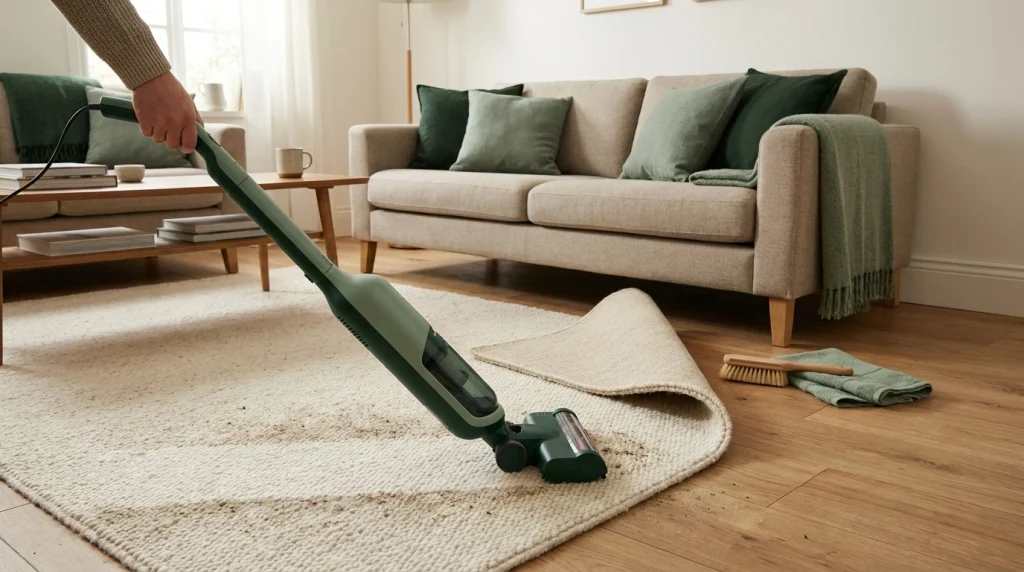
No. Vacuuming removes loose dry soil and debris, while deeper cleaning addresses some embedded dirt, residue, and stains that routine vacuuming cannot remove.
How often a rug needs deeper cleaning depends on its material, use, condition, and care instructions. A rug that is lightly used and regularly vacuumed may need less intensive cleaning than one exposed to pets, spills, or heavy traffic. Avoid applying water or cleaning chemicals unless they are suitable for the rug.
For washable or compatible synthetic rugs, follow the manufacturer’s cleaning directions. Delicate, antique, or valuable rugs may need a specialist. Our guide to using a carpet cleaner on a rug explains why checking material compatibility matters before using a wet-cleaning machine.
Related Product
Vacuum Cleaner With Adjustable Suction and Brush Settings
A vacuum with suitable suction control and a brush-roll shutoff can make it easier to maintain different rug types without using an unnecessarily aggressive setting.
As an Amazon Associate, we earn from qualifying purchases.
Frequently Asked Questions
Should you vacuum rugs every day?
Daily vacuuming is useful for busy entryways, heavily used rugs, and areas that collect substantial pet hair or dirt. Rugs in lightly used rooms usually do not need daily vacuuming.
Is vacuuming once a week enough for most rugs?
Weekly vacuuming is a good starting point for many household rugs. Increase the frequency when you notice more traffic, visible debris, or faster dirt accumulation.
Should you vacuum a rug before or after sweeping the floor?
Remove loose debris from nearby hard floors first when practical, then vacuum the rug. This helps prevent swept-up dirt from being tracked back onto the rug during cleaning.
How often should you vacuum a rug if you have a dog or cat?
Vacuum pet-used rugs several times a week, or daily when hair, dander, and tracked-in dirt accumulate quickly. Use a setting suitable for the rug’s material and construction.
Should you vacuum both sides of an area rug?
Not every rug needs frequent vacuuming on both sides. Periodically clean underneath and vacuum the reverse side only when the rug’s construction and care instructions permit it.
Can vacuuming damage a new rug?
It can if the vacuum setting is too aggressive for the fibers or construction. Some rugs also shed loose fibers when new, so follow the manufacturer’s guidance and use gentle suction when appropriate.
Conclusion
For most household rugs, start with weekly vacuuming and adjust the schedule to match foot traffic, pets, and the amount of dirt your home brings indoors. Busy entryways and pet-frequented areas may need attention several times a week or daily, while rugs in quiet rooms can often be cleaned less frequently.
Just as important, match the vacuum setting to the rug. Gentle suction, slow overlapping passes, and care around fringe and edges help remove debris without unnecessary wear. Check the manufacturer’s instructions for delicate materials, and remember that vacuuming is routine maintenance rather than a substitute for stain treatment or deeper cleaning. A consistent, material-appropriate schedule is the simplest way to keep rugs looking clean while protecting their fibers.