
How to Vacuum High-Pile Carpet Without Damaging It

Quick Answer
To vacuum high-pile carpet, raise the vacuum head, reduce suction, and turn off the brush roll if it pulls the fibers. Work slowly in overlapping passes, then vacuum from a second direction. A sealed vacuum with suitable filtration can also support better indoor air quality while you clean.
Quick steps
- Check the label: Follow the carpet maker’s cleaning instructions first.
- Remove loose objects: Pick up coins, clips, cords, and small toys.
- Raise the head: Start at the vacuum’s highest carpet setting.
- Lower the suction: Open the airflow control if the head sticks.
- Move slowly: Make overlapping forward-and-back passes.
- Change direction: Make a second pass across the carpet grain.
Stop if you notice a problem
- Turn off the machine if you smell hot rubber, hear the motor strain, or see fibers wrapping around the brush.
High-pile carpet hides dust well, but it can be awkward to vacuum. I learned this after watching a powerful upright grab a shag rug so firmly that I could barely push it.
The solution wasn’t more force. It was better height, airflow, brush control, and technique.
In This Guide
What Is High-Pile Carpet?
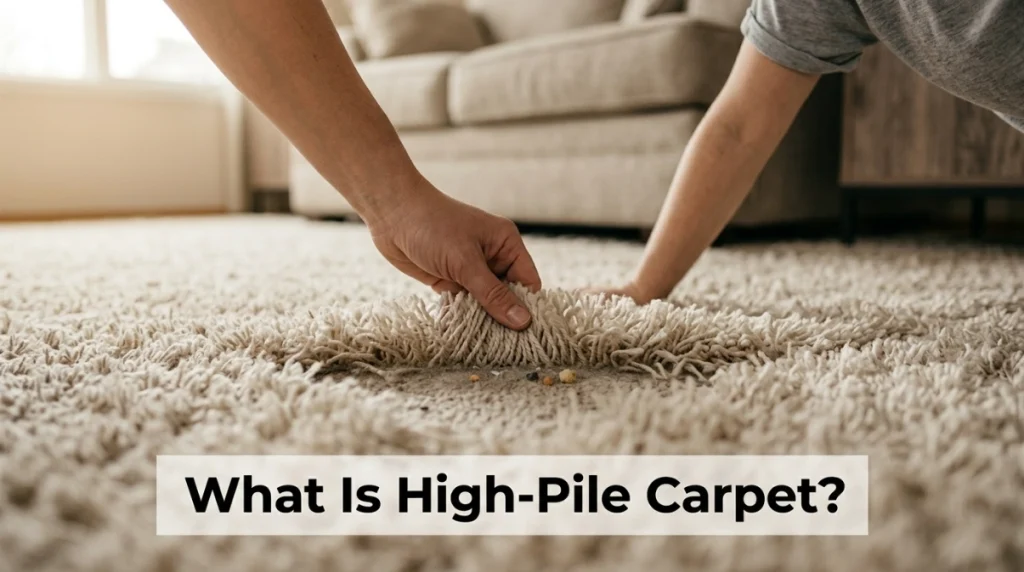
A high-pile carpet is a carpet with long, loose fibers that rise farther above its backing. Shag and some plush carpets are common examples.
The extra fiber length gives the floor a soft feel. It also creates deeper spaces where crumbs, hair, grit, and dust can settle.
Why does it need a different vacuuming method?
A low vacuum head can press against the carpet and seal off airflow. Strong suction then makes the machine hard to move.
An aggressive rotating brush can also twist long strands around its roller. This may pull, fray, or distort delicate fibers.
- Dense fibers: They can block airflow around the cleaning head.
- Long strands: They may wrap around a powered brush roll.
- Deep debris: Dirt can settle below the visible carpet surface.
- Hidden objects: Small items can disappear between the fibers.
Always check the care label or warranty before cleaning. Some handmade, wool, looped, or specialty carpets need gentler treatment.
How Should You Prepare High-Pile Carpet?
Clear the area and inspect the carpet before switching on the vacuum. This simple check can prevent jams and fiber damage.
Pick up objects by hand
Walk across the room and look through the pile. Remove anything the vacuum could swallow or catch.
- Coins and paper clips
- Hairpins and jewelry
- Small toys and building pieces
- Charging cables and curtain cords
- Loose carpet threads
Don’t pull a loose thread. Trim only if the carpet manufacturer permits it, or ask a carpet professional for help.
Remove hair before deep vacuuming
Long human hair and pet hair can cling below the surface. A carpet rake made for the fiber type can loosen it first.
I use light strokes instead of digging into the carpet. Hard raking can stretch fibers or disturb the carpet’s finish.
Check the vacuum
A full bin or clogged filter cuts airflow. That can reduce pickup while making the motor work harder.
- Empty the dust bin or replace the bag.
- Check the hose for blockages.
- Remove wrapped hair from the brush roll.
- Inspect the belt for visible wear.
- Clean or replace filters as directed.
Never wash a filter unless its manual calls it washable. A damp filter can restrict airflow and may damage the machine.
How Do You Vacuum High-Pile Carpet Step by Step?
Start with the gentlest practical setup. Increase cleaning action only when the machine moves freely and the carpet remains stable.
- Test a hidden area. Choose a corner or space behind furniture. Check for pulling, fuzzing, or color changes.
- Set the head high. Use the highest carpet-height position before lowering it one step at a time.
- Reduce suction if possible. Open the airflow vent or choose a lower power mode.
- Test the brush roll. Switch it off if long fibers wrap around it or the carpet maker advises suction-only cleaning.
- Start at the room’s far edge. Work toward the exit so you don’t walk over cleaned areas.
- Push and pull slowly. Let airflow collect debris instead of forcing the head through the pile.
- Overlap each path. Cover part of the previous pass so you don’t leave narrow dirty strips.
- Vacuum in a second direction. Turn about 90 degrees and repeat where practical.
- Clean the edges. Use a crevice tool with light suction along walls and furniture.
How slow should each pass be?
A controlled walking pace works better than rapid strokes. Pause slightly at the end of each pull so airflow can lift loosened debris.
High suction doesn’t always mean better cleaning. If the head seals against the carpet, airflow and movement can both suffer.
Use attachments carefully
A wide suction-only floor tool often works well on delicate shag. It avoids the pulling action of a powered roller.
Keep narrow nozzles moving. Strong suction through a small opening can grab individual strands.
Section Takeaway: Begin high and gentle. Slow, overlapping passes usually clean more safely than low height, maximum suction, and force.
Which Vacuum Settings Work Best?
The best setup keeps air moving without dragging the carpet into the cleaning head. Your carpet label and vacuum manual take priority.
| Setting or feature | Good starting point | Change it when |
|---|---|---|
| Head height | Highest carpet setting | Lower it only if the vacuum moves freely but leaves debris. |
| Suction | Low or medium | Reduce it if the head sticks or lifts the carpet. |
| Brush roll | Off for long or delicate pile | Use it only when the carpet maker permits it and fibers don’t wrap. |
| Pass direction | Two directions | Use one gentle direction on fragile carpet. |
| Cleaning speed | Slow and steady | Slow further over busy paths and visible debris. |
Which vacuum type is suitable?
A canister vacuum with adjustable suction and a suction-only floor tool offers strong control. An upright can work if it has enough height adjustment.
Some stick vacuums provide multiple power levels and removable rollers. Check whether the floor head has clearance for thick carpet.
Robot vacuums can struggle with tall fibers or rug edges. Watch the first full cycle before leaving a robot unattended.
For allergen control, consider a well-sealed model with appropriate filtration. The Asthma and Allergy Foundation of America provides general information about indoor allergens.
High-efficiency particulate air, or HEPA, describes a filter standard. It doesn’t guarantee that the entire vacuum is sealed against leaks.
Section Takeaway: Adjustability matters more than raw power. Look for controllable suction, suitable head clearance, and a brush-roll switch.
Why Is the Vacuum Hard to Push?
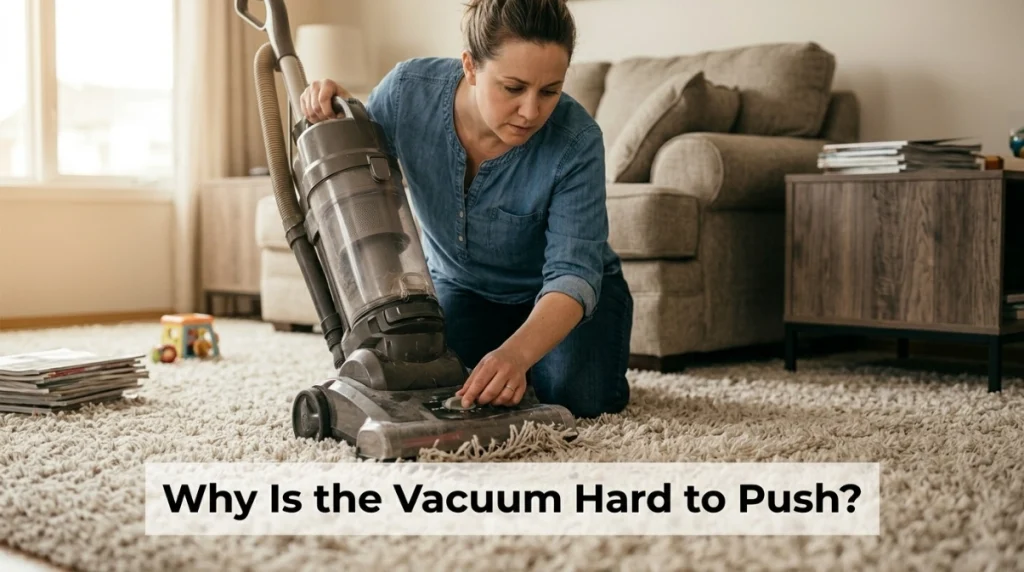
The cleaning head is probably sitting too low or forming a suction seal. Raise the head and reduce suction before trying again.
Use this troubleshooting order
- Switch off and unplug the vacuum.
- Check the head and brush roll for tangled fibers.
- Raise the carpet-height setting.
- Open the suction-release vent.
- Choose a lower power mode.
- Turn off the powered brush.
- Try a suction-only attachment.
Don’t lean your full body weight into the handle. Excess force can strain the handle, belt, floor head, and your back.
Stop for warning signs
- A hot or burning-rubber smell
- A squealing or clicking sound
- A brush roll that stops turning
- Visible carpet strands wrapping around the roller
- Sudden loss of suction
- A motor that sounds strained
Turn off and unplug the machine before inspecting it. Follow the manual before opening a cover or removing a belt.
Expert Alert: Stop using a vacuum with a damaged cord, exposed wire, smoke, sparks, or a persistent burning smell. Ask a qualified appliance technician to inspect it.
How Often Should You Vacuum High-Pile Carpet?
Vacuum at least once a week in a typical low-traffic home. Busy rooms, pets, children, or outdoor shoes may require two or three sessions.
| Household situation | Practical starting schedule |
|---|---|
| Low-traffic room | Once each week |
| Busy living area | Twice each week |
| Home with shedding pets | Two or three times each week |
| Entry exposed to outdoor grit | Light cleaning every few days |
These are starting points, not fixed rules. Inspect the bin and carpet to learn how quickly your household produces debris.
Deal with dampness first
Never vacuum wet carpet with a standard dry vacuum. Moisture can damage the machine and create an electrical hazard.
Dry wet carpet promptly and address the water source. The CDC’s mold guidance explains why damp materials need timely attention.
Expert Alert: Call a qualified water-restoration professional after sewage exposure, major flooding, or widespread contamination. Don’t treat those situations as routine carpet cleaning.
Frequently Asked Questions
Should I use a brush roll on high-pile carpet?
Use it only when the carpet manufacturer allows it. Turn it off if fibers wrap around the roller, the carpet lifts, or the vacuum becomes difficult to move.
Can strong suction damage shag carpet?
Strong suction can pull long strands into a narrow nozzle or floor head. Start with low suction and increase it only if the carpet stays flat and the vacuum moves freely.
Can I vacuum high-pile carpet with a Dyson or Shark?
You can use a compatible model if its floor head handles thick carpet. Follow the machine and carpet instructions, reduce suction when possible, and stop if the head grabs the fibers.
Can a robot vacuum clean high-pile carpet?
Some robot vacuums can cross medium-thick carpet, while others become stuck on long pile. Check the model’s stated limits and supervise its first cleaning cycle.
Why does my high-pile carpet still look dirty?
Debris may remain deep in the pile, or the vacuum may have restricted airflow. Empty the bin, check the filters, raise the head, and make slow passes from two directions.
Should I vacuum against the carpet grain?
Changing direction can lift hidden debris, but delicate fibers may need one-direction cleaning. Test a small hidden area and follow the carpet maker’s instructions.
How do I remove pet hair from thick carpet?
Loosen hair with a carpet-safe rake or rubber tool before vacuuming. Use light pressure, gather large clumps by hand, and finish with slow overlapping passes.
Clean Deeply Without Fighting the Carpet
Good high-pile carpet cleaning depends on control, not maximum power. Raise the head, lower the suction, and protect long fibers from an aggressive brush roll.
Start in a hidden area and let the vacuum move at a steady pace. If it sticks, strains, or pulls fibers, stop and adjust the setup before continuing.