
How to Vacuum Carpet Properly: A Step-by-Step Guide

Quick Answer
To vacuum carpet properly, clear the floor, adjust the vacuum height, and work in slow, overlapping rows. Vacuum in two directions, clean the edges, and maintain the machine after each session. If your current machine struggles, compare models designed for deep carpet cleaning.
Quick vacuuming steps
- Prepare the room: Pick up small objects and move light furniture.
- Check the vacuum: Empty the bin or replace an overfilled bag.
- Set the height: Adjust the cleaner head for the carpet pile.
- Vacuum slowly: Push forward and pull back without rushing.
- Overlap each row: Cover part of the previous path with every pass.
- Change direction: Make a second pass across the first pattern.
I used to race across my carpet until the visible crumbs disappeared. The room looked better, but fine dust and pet hair often stayed inside the fibers.
After testing different vacuums and cleaning patterns, I found that technique matters as much as suction. This guide explains how to vacuum carpet properly without wasting time or damaging the pile.
In This Guide
What Does Proper Carpet Vacuuming Mean?
Proper carpet vacuuming is a slow, planned cleaning method that removes surface debris and embedded dry soil. It covers the entire carpet with overlapping passes and suitable machine settings.
A fast once-over may collect visible crumbs. It often misses grit near walls, beneath furniture, and deep between carpet fibers.
Why slow passes work better
A vacuum needs time to move air through the carpet. That airflow carries loosened dirt into the bag or dustbin.
I noticed this when cleaning a busy hallway. One slow backward pass collected more dirt than several quick sweeps over the same strip.
- Forward movement: The brush roll loosens hair and dry soil.
- Backward movement: The cleaner head often maintains stronger contact with the carpet.
- Overlapping rows: These prevent narrow, uncleaned strips between passes.
- A second direction: This reaches dirt trapped against different sides of the fibers.
What a vacuum can and cannot remove
Routine vacuuming handles dust, crumbs, hair, lint, and loose soil. It cannot wash away oily residue or most set-in stains.
Vacuuming also doesn’t kill mold or repair water-damaged carpet. Wet carpet needs a different response.
Expert Alert: If carpet has widespread mold, sewage contamination, or persistent water damage, stop using the room and contact a qualified remediation professional.
The EPA’s indoor particulate matter guidance recommends regular carpet and furniture vacuuming. It also notes that cleaning can disturb settled dust.
Section Takeaway: Proper vacuuming depends on slow movement, full coverage, and the right settings. It is dry maintenance, not a replacement for stain treatment or wet extraction.
How Should You Prepare Carpet for Vacuuming?
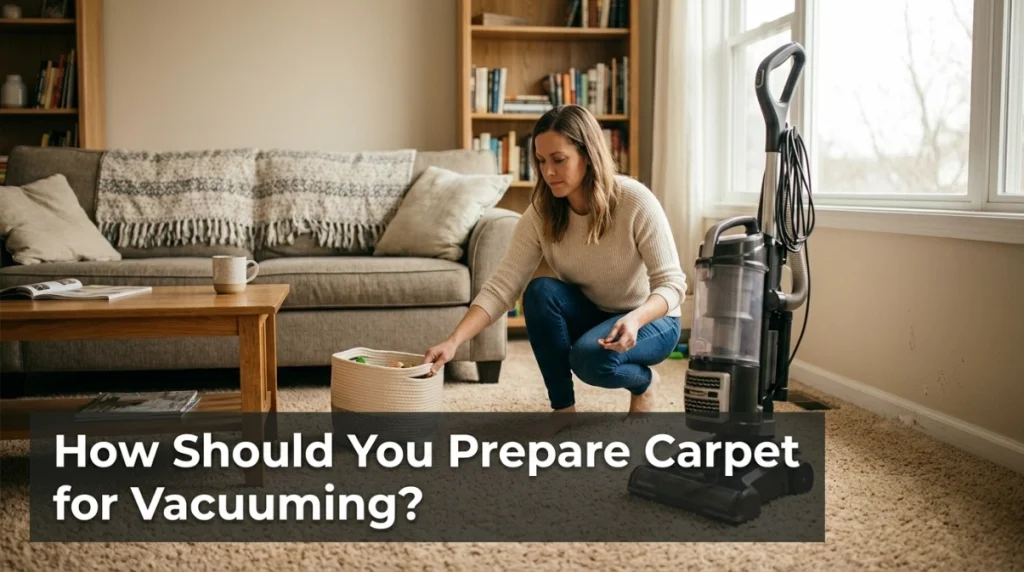
Prepare the floor and vacuum before switching the machine on. A few minutes of setup improves coverage and helps prevent clogs.
Clear and inspect the room
Pick up toys, coins, cords, socks, and other small objects. Hard items can damage a brush roll or block the airflow path.
Move light chairs and baskets when practical. Do not strain yourself by lifting heavy furniture alone.
- Look for damp spots, loose carpet edges, and pulled threads.
- Pick up objects that could enter the cleaner head.
- Move small furniture and secure electrical cords.
- Use a crevice tool behind doors and around fixed furniture.
- Vacuum the open floor last.
Do not vacuum wet carpet with a standard dry vacuum. Use a machine approved for wet pickup or call a carpet-cleaning professional.
Check the vacuum cleaner
Inspect the bin, bag, filters, hose, and brush roll. Restricted airflow reduces pickup and may make the motor run hotter.
- Dustbin: Empty it before dirt reaches the marked maximum line.
- Bag: Replace it according to the manufacturer’s instructions.
- Filter: Clean or replace it only as the manual directs.
- Hose: Check for paper, hair clumps, or other blockages.
- Brush roll: Remove wrapped hair after unplugging the machine.
- Belt: Inspect it if the brush roll stops or sounds unusual.
I once blamed weak suction on an aging vacuum. The real problem was a dense hair clog where the hose met the floor head.
Choose the correct height setting
The cleaner head should contact the carpet without clamping itself to the floor. A setting that is too low can restrict airflow.
Start at the highest setting if you are unsure. Lower it one step at a time until you hear and feel consistent carpet contact.
The handle should still move without force. Thick carpet may need a higher setting than low-pile carpet.
Section Takeaway: Clear the floor, check airflow, and set the head correctly before cleaning. Good preparation protects both the carpet and the vacuum.
How Do You Vacuum Carpet Step by Step?
Start at the far side of the room and work toward the exit. Use slow, straight, overlapping passes across small sections.
1. Clean the edges first
Attach the crevice tool and follow walls, baseboards, door tracks, and furniture edges. Full-size cleaner heads often leave a narrow dusty strip there.
I normally clean these areas before the open floor. Any dust pushed onto the carpet gets collected during the main passes.
2. Divide the carpet into sections
Mentally divide a large room into manageable areas. Sections around 3 to 4 feet wide are easy to track.
This simple method prevents random movement. It also shows which parts still need attention.
3. Make slow forward and backward passes
Push the vacuum forward at a controlled pace. Pull it back along the same line before moving sideways.
A useful starting pace is about one deliberate step per second. Slow down over visibly dirty traffic lanes.
- Place the cleaner head at the beginning of a row.
- Push it forward in a straight line.
- Pull it back over the same path.
- Move sideways by about half the head’s width.
- Repeat until the section is complete.
4. Vacuum across the first pattern
Turn approximately 90 degrees and make a second set of passes. This crosshatch pattern lifts fibers from another angle.
You may not need two directions during every light cleanup. Use it for weekly cleaning, pet hair, and busy areas.
5. Finish stairs and furniture safely
Use a compact attachment on stairs when possible. Begin at the top so loosened debris falls onto areas you have not finished.
Keep a corded canister below you and avoid pulling it by the hose. With an upright, never balance the full machine on a stair tread.
A lightweight model may make this job easier. See these vacuum cleaner options for stairs if your current machine feels unsafe.
Section Takeaway: Work from edges to open areas, overlap each row, and change direction for deeper pickup. A repeatable pattern gives better coverage than random strokes.
Should You Vacuum Every Carpet the Same Way?
No. Carpet pile, construction, and condition determine which settings and attachments are safe.
Always check the carpet and vacuum manuals first. Manufacturer instructions take priority over general advice.
| Carpet type | Suggested approach | Main caution |
|---|---|---|
| Low-pile carpet | Use a lower suitable height and steady overlapping passes. | Avoid setting the head so low that airflow drops. |
| Medium-pile carpet | Use the normal carpet setting and an active brush roll if approved. | Check the brush regularly for wrapped hair. |
| Thick or plush carpet | Raise the head until it moves freely while maintaining contact. | Strong suction may make the head hard to push. |
| Loop-pile carpet | Use suction-only cleaning if the maker recommends it. | An aggressive brush may catch or fuzz loops. |
| Shag carpet | Use a high setting or approved suction attachment. | Long fibers can wrap around a brush roll. |
| Area rug with fringe | Vacuum from the center toward the edge with gentle suction. | Keep fringe away from the powered brush. |
How to handle thick and shag carpet
Thick fibers can seal around a low cleaner head. Raise the setting if pushing becomes difficult or the motor pitch changes.
Long shag needs extra care because strands can wrap around moving parts. A suitable model for vacuuming shag carpet should offer adjustable height or controllable suction.
How to vacuum an area rug
Test a hidden corner before using a powered brush. Lightweight rugs may shift or lift under strong suction.
- Reduce suction when your machine allows it.
- Hold down the rug edge with your foot, away from the cleaning path.
- Vacuum toward fringe instead of across it.
- Clean beneath the rug after checking that both surfaces are dry.
- Follow professional care instructions for delicate or antique rugs.
The Carpet and Rug Institute’s maintenance guidance also recommends gentle handling around fringe and slow, steady vacuuming.
Section Takeaway: Match the vacuum setting to the carpet construction. Use less aggressive cleaning on loops, long fibers, fringe, and delicate rugs.
How Often Should You Vacuum Carpet?
Vacuum most carpet at least weekly, then increase the schedule for pets, children, allergies, or heavy foot traffic. Visible dirt should not be your only signal.
| Area or household | Practical starting schedule |
|---|---|
| Low-use bedroom | Once each week |
| Living room or hallway | Two or three times each week |
| Home with shedding pets | High-use areas daily or every other day |
| Entry carpet | Several times each week |
| Rarely used room | Every one or two weeks |
These are starting points, not fixed rules. Increase the frequency when the bin fills quickly or tracked soil appears between sessions.
What if someone has asthma or allergies?
Consider a well-sealed vacuum with a high-efficiency filter. A HEPA filter is a pleated filter designed to capture fine airborne particles.
The EPA’s HEPA filter explanation describes the standard and its particle-capture rating. However, a HEPA label alone doesn’t guarantee that the whole vacuum is sealed.
The EPA advises people with asthma or allergies to leave the area during vacuuming when possible. This reduces exposure to dust disturbed by the cleaning process.
Allow airborne dust to settle before that person returns. Empty the bin outdoors when practical and avoid shaking dirty filters indoors.
If allergens are a major concern, compare vacuums intended for households affected by allergies.
Section Takeaway: Weekly cleaning suits many quiet rooms, while busy or pet-filled areas need more attention. Adjust the schedule based on actual soil, not appearance alone.
What Carpet Vacuuming Mistakes Should You Avoid?
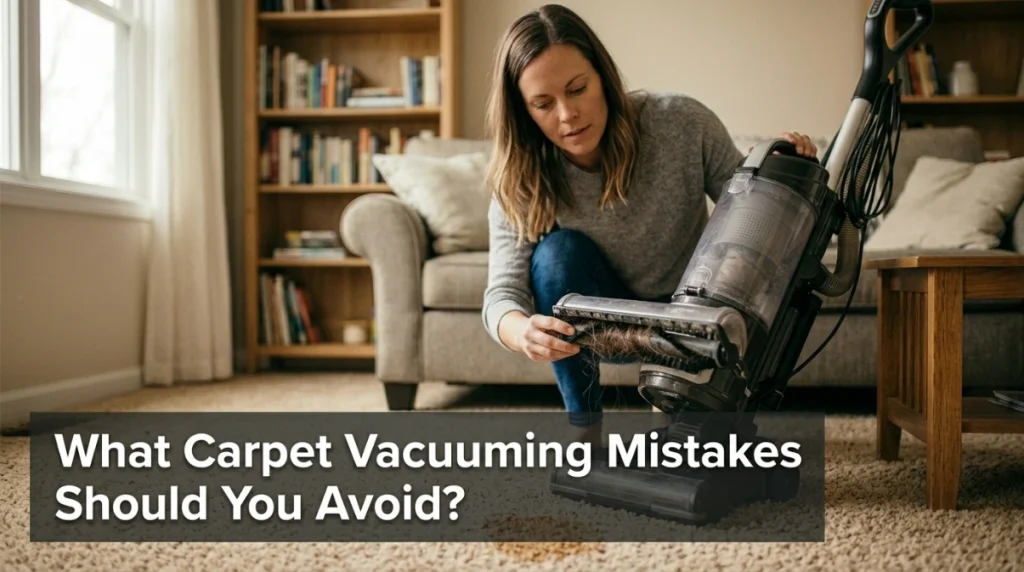
The most common mistake is moving too quickly. Other problems involve poor maintenance, wrong settings, and incomplete coverage.
- Waiting for visible dirt: Fine grit can settle below the surface before the carpet looks dirty.
- Using rapid strokes: The machine gets less time to loosen and collect embedded debris.
- Skipping overlapping rows: Narrow strips of carpet remain untouched.
- Ignoring edges: Dust builds along walls and fixed furniture.
- Overfilling the bin: Restricted airflow can weaken pickup.
- Using the wrong height: A low head may clamp down, while a high head may miss debris.
- Vacuuming wet material: A dry vacuum can be damaged and may create an electrical hazard.
- Forgetting under furniture: Hidden dust can return to open areas through normal movement.
Should you use carpet powder before vacuuming?
I avoid routine deodorizing powder because fine residue can remain in carpet or collect inside filters. It may also hide an odor without fixing its source.
Check both the carpet warranty and vacuum instructions before using any powder. Address moisture, pet accidents, or spills directly.
When should you stop using the vacuum?
Switch off and unplug the machine if it smells hot, loses suction suddenly, or makes a new grinding sound. Check the manual before removing blockages.
- Stop if the cord or plug is damaged.
- Stop if the vacuum collected liquid accidentally.
- Stop if smoke, sparks, or a burning smell appears.
- Stop if the brush roll catches carpet fibers or fringe.
Expert Alert: Do not open the motor housing or repair damaged wiring unless you are qualified. Contact the manufacturer or an appliance repair technician.
Section Takeaway: Slow down, maintain airflow, and never use a dry vacuum on wet material. Stop immediately when you notice electrical or mechanical warning signs.
Frequently Asked Questions
Is it better to vacuum carpet fast or slow?
Slow vacuuming is usually more effective. It gives the brush and airflow time to loosen and collect dirt. Use controlled forward and backward passes, then slow down further over entrances and traffic lanes.
How many times should you pass a vacuum over carpet?
One forward and backward cycle may handle light soil. Use several overlapping passes for busy areas or pet hair. Change direction during a deeper weekly cleaning to reach debris from another angle.
Should I dust before or after vacuuming?
Dust shelves and other raised surfaces first with a damp cloth. Any particles that fall can then be collected from the carpet. Vacuuming should usually be one of the final room-cleaning steps.
Why does my carpet still look dirty after vacuuming?
The bin may be full, the hose may be clogged, or the cleaner head may have the wrong height. The carpet could also contain stains or oily residue that dry vacuuming cannot remove.
Should the vacuum brush touch the carpet?
A powered brush should make suitable contact when the carpet maker allows it. It should not dig in, stall, or pull fibers. Delicate loops, shag, and fringe may require suction-only cleaning.
Can vacuuming too much damage carpet?
Normal cleaning with suitable equipment should not harm sound carpet. Damage is more likely from an aggressive brush, incorrect height, trapped objects, or using a powered roll on delicate fibers.
Does a HEPA vacuum remove all allergens?
No vacuum removes every allergen. A HEPA filter can capture fine particles passing through it, but whole-machine sealing and proper maintenance also matter. Vacuuming should form one part of a broader dust-control routine.
Final Takeaway
To vacuum carpet properly, prepare the room, maintain the machine, and use slow overlapping rows. Clean the edges, match the setting to the carpet, and make a second directional pass when deeper pickup is needed.
Start with one room and observe what enters the bin. That simple test will show why careful technique works better than a rushed once-over.