
Can You Run a Fan and Air Purifier Together? Essential Guide

Can You Run a Fan and Air Purifier Together? Essential Guide
Yes, you can absolutely run a fan and air purifier together, and it’s often a smart way to improve air circulation and purification efficiency. This guide will walk you through the benefits, optimal setups, and potential considerations to maximize your home’s air quality.
Living in a world where clean air is a priority, many of us wonder about the best ways to achieve it. You might have a trusty fan for circulation and a new air purifier for filtering. The question naturally arises: can you run a fan and air purifier together? It’s a common query for anyone looking to enhance their indoor environment. Rest assured, combining these two devices can lead to significantly better air quality. This guide will break down everything you need to know, from the science behind it to practical tips for setup. Let’s explore how to get the most out of your fan and air purifier for a healthier home.
The Synergy: How Fans and Air Purifiers Work Together
Combining a fan and an air purifier can significantly boost the effectiveness of both devices. Fans excel at moving air, while purifiers filter it. When used together, they create a more dynamic and efficient air purification system for your home.
A fan’s primary role is to circulate air within a room. This continuous movement ensures that stale or polluted air reaches the air purifier more frequently. Without a fan, an air purifier might only clean the air immediately surrounding it, leaving pockets of stagnant, impure air elsewhere.
Air purifiers, on the other hand, are designed to capture airborne particles like dust, pollen, pet dander, mold spores, and even some volatile organic compounds (VOCs). They achieve this through various filtration stages, often including pre-filters, HEPA filters, and activated carbon filters.
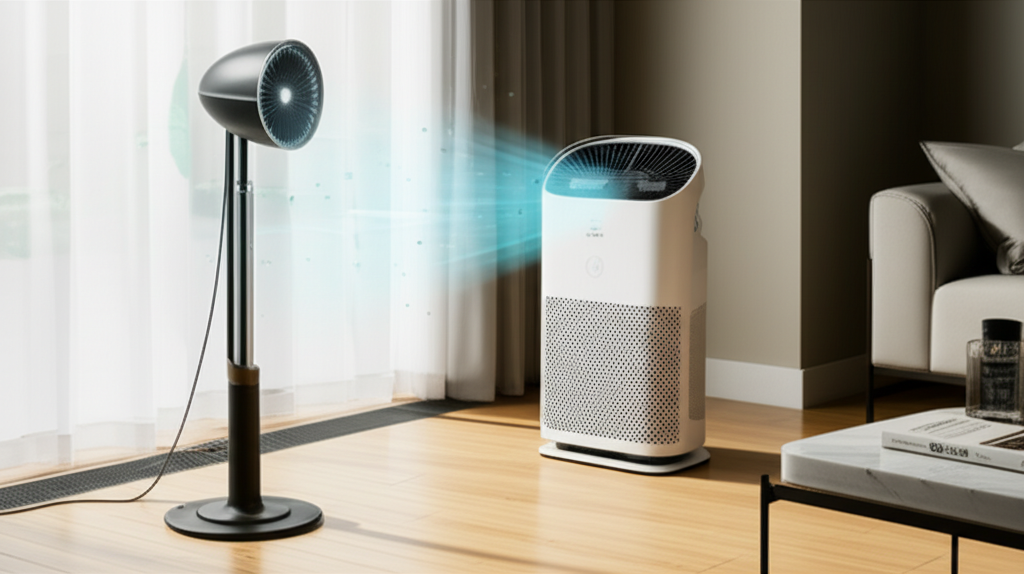
When you run a fan and an air purifier together, the fan actively pushes the air towards the purifier’s intake. This constant airflow means the purifier can process a larger volume of air over time, leading to a more thorough and rapid improvement in overall air quality. This is especially beneficial in larger rooms or spaces where air circulation might be naturally poor.
This collaborative approach ensures that cleaner, filtered air is then distributed throughout the room, creating a fresher and healthier living environment. It’s a simple yet powerful strategy to combat indoor air pollution effectively.
Benefits of Running a Fan and Air Purifier Simultaneously
Running your fan and air purifier together offers a host of advantages, primarily centered around enhanced air quality and improved comfort. This combination is more than just convenient; it’s a strategic move for a healthier home.
One of the most significant benefits is improved air circulation. Fans are excellent at moving air, preventing stagnant zones where pollutants can accumulate. When a fan circulates air towards an air purifier, it ensures that more of the room’s air passes through the purifier’s filters. This leads to faster and more comprehensive removal of airborne contaminants like dust, allergens, and odors.
Furthermore, this pairing can help distribute the purified air more effectively throughout the space. Instead of the purified air remaining concentrated around the purifier, the fan helps spread it, creating a more uniform level of clean air. This is particularly useful in larger rooms or open-plan living areas.
The combined effect can also lead to a more comfortable environment. By circulating air, fans can create a cooling sensation, which can be particularly welcome during warmer months. When this is paired with the allergen and pollutant removal of an air purifier, you get both comfort and health benefits.
Finally, using both devices together can maximize the lifespan and efficiency of your air purifier. By ensuring consistent airflow, the purifier doesn’t have to work as hard to draw in air, potentially reducing strain on its motor. This synergy makes it a win-win for your home’s air quality and your devices.
Understanding Airflow: The Key to Optimal Performance
The effectiveness of running a fan and air purifier together hinges on understanding and optimizing their airflow dynamics. Proper placement and fan speed are crucial for maximizing the benefits of this combined approach.
Airflow refers to the movement of air within a space. Fans create airflow by pushing air, while air purifiers draw air in through their filters. When placed strategically, a fan can direct air towards the air purifier’s intake, ensuring that the maximum amount of room air is processed.
Consider the intake and output of both devices. Most air purifiers have intakes on the sides or back and an outlet on the top or front. Fans typically blow air forward. Positioning the fan so it blows air towards the purifier’s intake will be most effective.
Fan speed also plays a role. A low to medium speed is often sufficient to create a gentle, consistent flow of air towards the purifier without overwhelming it or creating excessive noise. Too high a speed might push air past the purifier too quickly for effective filtration, or conversely, create too much turbulence that hinders optimal intake.
The goal is to create a continuous loop: the fan moves air, the purifier filters it, and the fan then helps distribute the cleaner air back into the room. This creates a dynamic environment where air is constantly being cleaned and circulated.
Experimenting with placement and fan speed is key. You want to feel a gentle breeze from the fan moving towards the purifier, and you should notice the air around the purifier feeling cleaner and fresher as it cycles through. This mindful approach to airflow ensures you’re getting the most out of both your fan and your air purifier.
Optimal Placement Strategies for Combined Use
Strategic placement is paramount when running a fan and air purifier together. The right positioning ensures maximum efficiency and benefits for your indoor air quality. Let’s explore how to set them up for success.
Ideally, place the air purifier in a central location within the room you want to purify. This allows for better overall air circulation and filtration. Avoid placing it directly against walls or furniture, as this can obstruct its intake and reduce its effectiveness.
Next, position the fan so that it directs airflow towards the air purifier. This means the fan should be behind or beside the purifier, blowing air in its direction. This setup effectively guides the room’s air into the purifier’s filtration system.
Consider the room’s layout and your typical activity zones. Placing the combined setup near where you spend the most time, like a living room or bedroom, will yield the most immediate benefits for your personal comfort and health. If you’re targeting specific pollutant sources, like a pet’s sleeping area, position them accordingly.
For example, in a bedroom, you might place the air purifier near your bed and the fan on a nearby dresser, angled to push air towards the purifier. In a living room, you could place the purifier in a corner and the fan on a side table, directing air towards it.
It’s also beneficial to ensure both devices are on a stable surface and have adequate space around them for optimal operation. Think of it as creating a gentle, continuous air current that feeds the purifier and then distributes the clean air. This thoughtful placement ensures you’re maximizing the synergy between your fan and air purifier.
Fan Types and Their Role in Air Purification
Different types of fans can be used alongside an air purifier, each offering unique advantages in air circulation. Understanding these can help you choose the best fan to complement your purification efforts.
Box Fans: These are versatile and affordable. When placed strategically, a box fan can push a large volume of air, making it effective for directing air towards an air purifier, especially in larger spaces. Their simple design allows for easy placement and adjustment.
Pedestal Fans: Adjustable in height and oscillation, pedestal fans offer flexibility. You can easily angle them to direct air towards your air purifier. Their oscillating feature can also help distribute purified air more broadly once it leaves the purifier.
Tower Fans: Known for their slim profile and often quiet operation, tower fans can be a good choice for smaller spaces. Many have oscillating functions that aid in circulating air throughout the room, complementing the purifier’s work.
Desk Fans: While smaller, desk fans can be useful for targeted air circulation in smaller areas, such as a home office. They can be positioned to ensure the air around your immediate workspace is constantly being moved towards the air purifier.
Regardless of the type, the fan’s primary role is to enhance the air purifier’s performance by ensuring a constant supply of room air. It acts as an air mover, facilitating the purification process.
Choosing the right fan depends on your room size, noise tolerance, and aesthetic preferences. However, the fundamental principle remains: use the fan to guide air into the purifier and then help distribute the cleaner air.
Air Purifier Considerations When Using with a Fan
While running a fan and air purifier together is generally beneficial, there are a few considerations specific to your air purifier that can optimize this combined setup. Understanding these nuances ensures you’re getting the best results.
Airflow Direction: Pay attention to your air purifier’s design. Most have intake vents on the sides or back and an outlet on the top or front. The fan should be positioned to direct air towards the intake, not the outlet. Blowing into the outlet could potentially disrupt the purification process or push unfiltered air back into the room.
Filter Efficiency: Ensure your air purifier’s filters are clean and well-maintained. A clogged filter will restrict airflow, making both the fan and purifier less effective. Regularly check and replace your filters according to the manufacturer’s recommendations to maintain optimal performance.
CADR Rating: The Clean Air Delivery Rate (CADR) indicates how quickly an air purifier can filter specific pollutants. When using a fan, you are essentially increasing the volume of air the purifier processes. Ensure your purifier’s CADR is appropriate for your room size to handle the increased airflow effectively.
Noise Levels: While fans can add to the ambient noise, many modern air purifiers also have fan components. Consider the combined noise output when setting fan speeds. You might opt for a lower fan speed or a quieter fan model to maintain a comfortable sound environment.
Device Placement: As mentioned, avoid placing the air purifier too close to walls or furniture. This is even more critical when a fan is directing air towards it, as it needs space to draw air in effectively.
By keeping these points in mind, you can ensure your air purifier works harmoniously with your fan, maximizing its ability to clean your indoor air.
Potential Downsides and How to Mitigate Them
While the benefits of running a fan and air purifier together are numerous, it’s wise to be aware of potential downsides and how to address them. Proactive mitigation ensures a smooth and effective operation.
Increased Noise: Combining two motorized devices can increase the overall noise level in a room. This can be mitigated by using lower fan speeds on your fan, choosing quieter fan models, or opting for an air purifier with a quieter fan. Many air purifiers have a “sleep mode” which can be beneficial.
Higher Energy Consumption: Running two devices simultaneously will naturally use more electricity than running just one. To manage this, consider using energy-efficient models for both your fan and air purifier. Utilizing timers or smart plugs can also help ensure they are only running when needed.
Dust Distribution: In some cases, a fan might stir up settled dust, which the air purifier then captures. However, if not positioned optimally, a fan could potentially blow dust around before it reaches the purifier. Ensuring the fan directs air towards the purifier’s intake helps minimize this. Regular dusting of surfaces is also recommended.
Overworking Devices: While generally complementary, ensure that the fan isn’t creating so much turbulence that it hinders the air purifier’s ability to draw air in properly, or vice versa. This is typically managed by using moderate fan speeds and proper placement.
By being mindful of these potential issues and implementing the suggested solutions, you can enjoy the amplified benefits of clean air without significant drawbacks. The key is thoughtful setup and operation.
Maximizing Air Quality: Advanced Tips
Beyond basic placement, several advanced tips can help you maximize the air quality benefits of running your fan and air purifier together. These strategies refine the process for even better results.
Smart Integration: If your air purifier and fan have smart capabilities, integrate them with smart home systems. You can create routines that turn on both devices at specific times or when air quality sensors detect a decline. This automation ensures optimal performance without constant manual adjustment.
Layered Filtration: For the ultimate in air purification, consider using a fan that has a rudimentary filter itself (like a box fan with a furnace filter attached, though this requires careful setup to avoid motor strain) or a powerful air purifier with multiple filtration stages. This creates a layered approach to cleaning the air.
Humidity Control: While not directly related to fans and purifiers, maintaining optimal humidity levels (between 30-50%) can significantly impact indoor air quality. High humidity can promote mold growth, while very low humidity can irritate airways. Consider a humidifier or dehumidifier as part of your overall air quality strategy.
Regular Maintenance Schedule: Establish a strict maintenance schedule for both devices. This includes cleaning or replacing air purifier filters, dusting fan blades, and checking for any signs of wear. Proactive maintenance ensures consistent performance.
Airflow Mapping: In larger or complex spaces, consider “mapping” your airflow. Observe how the fan’s movement interacts with the purifier’s intake and output. You might find that slightly adjusting the angle or speed of the fan can create a more effective circulation pattern.
By implementing these advanced techniques, you can elevate your home’s air quality to a new level, ensuring a healthier and more comfortable living environment.
The Science Behind Air Circulation and Purification
Understanding the science behind how fans and air purifiers work together provides a deeper appreciation for their combined effectiveness. It’s a simple physics principle applied to improving your living space.
Air purification relies on the principle of filtration: removing unwanted particles from the air. However, for filtration to be effective, the air must reach the filter. This is where air circulation, driven by a fan, becomes critical.
Fans create a pressure difference that moves air molecules. In doing so, they disrupt stagnant air pockets and encourage a continuous flow. This continuous flow ensures that air containing pollutants is consistently drawn towards the air purifier’s intake.
The air purifier then employs various technologies, such as HEPA (High-Efficiency Particulate Air) filters, to physically trap these airborne particles. Activated carbon filters absorb gases and odors. The efficiency of these filters depends on the air being consistently passed through them.
By working together, the fan acts as an accelerator for the purification process. It increases the volume of air that the purifier can process over a given period, leading to a more rapid and thorough reduction of airborne contaminants. This synergy amplifies the results beyond what either device could achieve alone.
Essentially, the fan prepares the air by moving it, and the air purifier cleans it. This dynamic interplay is fundamental to achieving superior indoor air quality.
Can You Run a Fan and Air Purifier 24/7?
Running both a fan and an air purifier 24/7 is generally safe and can be highly beneficial for maintaining consistent, high-quality indoor air. However, there are a few practical considerations to keep in mind.
Modern fans and air purifiers are designed for continuous operation. They are built with durable components and safety features to prevent overheating. Running them constantly ensures that your air is always being circulated and filtered, which is ideal for allergy sufferers or those concerned about airborne pollutants.
Energy consumption is the primary factor to consider. Running two devices continuously will increase your electricity bill. If energy efficiency is a major concern, consider using timers or smart plugs to schedule operation during peak hours or when you are most likely to be home.
Maintenance is also crucial for 24/7 operation. Ensure that your air purifier’s filters are checked and replaced regularly, as they will accumulate pollutants faster with continuous use. Similarly, keep fan blades clean to maintain optimal airflow and prevent dust buildup.
Many air purifiers have different fan speeds. Using a lower speed setting overnight or when you are away can significantly reduce energy usage while still providing continuous air cleaning. This balanced approach allows for constant purification without excessive cost.
Ultimately, for the best possible indoor air quality, continuous operation is recommended. Just be mindful of energy use and maintenance requirements.
FAQ: Your Questions About Running Fans and Air Purifiers Together Answered
Will running a fan and air purifier together make my room too cold?
A fan can create a cooling sensation by increasing airflow over your skin, but it doesn’t actually lower the room’s temperature. An air purifier also doesn’t significantly affect room temperature. You can manage any perceived coolness by adjusting fan speed or using the fan only when needed.
Can I place the fan directly in front of the air purifier?
It’s generally better to place the fan slightly behind or to the side of the air purifier, directing air towards its intake. Placing it directly in front might create too much turbulence or blow air past the intake, potentially reducing efficiency. Experiment with slight adjustments for optimal airflow.
Is it okay to run a fan on high speed with an air purifier?
While you can, running a fan on high speed might not always be the most efficient setup. It can create excessive turbulence, potentially hindering the air purifier’s ability to draw air in smoothly, or it might simply push air past the purifier too quickly for optimal filtration. A medium or low speed is often more effective for consistent circulation.
How do I know if my fan and air purifier are working well together?
You should notice a consistent circulation of air and a general improvement in air freshness. If you have allergies, you might experience fewer symptoms. You can also feel the airflow from the fan moving towards the purifier and notice the clean air being distributed back into the room.
Can a fan damage my air purifier?
In most cases, no. As long as the fan is not placed directly blowing into the air outlet of the purifier and is used at reasonable speeds, it should not cause damage. The goal is to assist, not to force air in a way that strains the purifier’s motor or filters.
Should I use a smart fan or a regular fan with my air purifier?
A smart fan can offer more control, allowing you to set schedules or adjust speeds remotely, which can enhance the synergy with your air purifier, especially if it’s also smart-enabled. However, a regular fan, when placed strategically, can be just as effective in improving air circulation.
Conclusion: A Breath of Fresh Air
In conclusion, the answer to “can you run a fan and air purifier together?” is a resounding yes, and it’s often the most effective way to maximize your home’s air quality. By understanding the synergy between air circulation and filtration, you can create a powerful system that removes pollutants, allergens, and odors more efficiently. Strategic placement, mindful fan speed selection, and regular maintenance are key to unlocking the full potential of this combination. Embrace this simple yet effective strategy to enjoy cleaner, fresher air and a healthier living environment for you and your loved ones. Your home deserves to breathe easy.
