
Can Air Purifier Lower Humidity? Essential Guide

Yes, some air purifiers can help lower humidity, but it’s not their primary function. Dedicated dehumidifiers are far more effective. This guide explains how certain air purifiers might impact humidity levels and when you should opt for a dehumidifier instead.
Living in a home with comfortable humidity levels is key to a healthy and pleasant environment. High humidity can lead to mold growth, musty odors, and general discomfort, while very low humidity can cause dry skin and irritated airways. Many people turn to air purifiers to improve their indoor air quality, but a common question arises: can air purifiers also tackle humidity issues? I understand this concern, as managing both air purity and humidity can feel like a balancing act. This guide will demystify how air purifiers interact with humidity and provide clear answers to help you make informed decisions for your home.
Understanding Air Purifiers and Their Function
Air purifiers are designed to remove airborne contaminants like dust, pollen, pet dander, smoke, and volatile organic compounds (VOCs) from the air. They typically employ filters, such as HEPA filters, activated carbon filters, and sometimes UV-C light, to trap or neutralize these particles. Their primary goal is to clean the air you breathe, making it healthier and reducing allergens.
While their main focus is particle removal, the internal mechanisms of some air purifiers can indirectly influence humidity. This effect, however, is often minimal and not their intended purpose.
How Air Purifiers Work: A Closer Look
Most air purifiers use a fan to draw air into the unit. This air then passes through a series of filters. For instance, a HEPA filter captures fine particles, while an activated carbon filter absorbs gases and odors.
After the air is filtered, it’s released back into the room. The process of air circulation and filtration itself can slightly alter the air’s moisture content, but this is a secondary effect.
Can Air Purifiers Lower Humidity? The Direct Answer
To directly answer the question: can air purifier lower humidity? Generally, no, not significantly. Standard air purifiers are not designed to remove moisture from the air. Their core function is to filter out particulate matter and gases, not to condense water vapor.
However, some advanced air purifiers might have features or operate in a way that has a minor impact on humidity. It’s crucial to distinguish these from dedicated dehumidifiers.
The Role of Specific Air Purifier Technologies
Certain types of air purifiers might have a slight effect on humidity. For example, some units with very powerful fans and cooling mechanisms might condense a tiny amount of moisture on their internal components, similar to how an air conditioner works. This is not a primary function, though.
Another aspect is that by removing mold spores and other allergens that thrive in damp conditions, an air purifier can help mitigate the effects of high humidity. This is an indirect benefit, not a direct reduction in moisture.
Air Purifiers vs. Dehumidifiers: What’s the Difference?
The fundamental difference lies in their purpose and mechanism. A dehumidifier is specifically engineered to remove excess moisture from the air. It does this by drawing in moist air, cooling it over coils to condense the water vapor into liquid water, which is collected in a tank or drained away.
An air purifier, as discussed, focuses on filtering out airborne particles and gases. While some may have minimal indirect effects, they do not actively extract water from the air.
Here’s a table highlighting the key distinctions:
| Feature | Air Purifier | Dehumidifier |
| :—————- | :—————————————– | :—————————————- |
| Primary Goal | Remove airborne particles and gases | Remove excess moisture from the air |
| Mechanism | Filtration (HEPA, Carbon), UV-C, Ionizers | Condensation, Desiccant absorption |
| Humidity Impact | Minimal, indirect (if any) | Significant, direct reduction |
| Water Removal | Does not remove water | Actively removes water |
| Best For | Allergies, dust, smoke, odors | High humidity, mold prevention, musty smells |
When an Air Purifier Might Seem to Lower Humidity
You might notice a slight drop in humidity when using an air purifier under specific conditions. This is often due to:
Air Circulation: Increased air movement can help distribute moisture more evenly, making humid air feel less stagnant.
Cooling Effect: Some units with powerful fans can create a slight cooling sensation, which can sometimes be mistaken for reduced humidity.
Efficient Filtration: By removing mold spores, an air purifier can prevent mold from growing, which is often associated with high humidity.
These effects are subtle and not a substitute for a dedicated dehumidifier.
Signs You Need a Dehumidifier, Not Just an Air Purifier
If you’re experiencing persistent issues related to high humidity, an air purifier alone won’t solve the problem. Look out for these signs:
Condensation: Water droplets forming on windows, mirrors, or pipes.
Musty Odors: A persistent damp or mildew smell in your home.
Mold or Mildew Growth: Visible signs of mold on walls, ceilings, or fabrics.
Peeling Paint or Wallpaper: Moisture can cause these materials to detach.
Warping Wood: High humidity can cause wooden furniture or structures to swell and warp.
Allergies Worsening: While air purifiers help with allergens, if the root cause is mold from humidity, the problem will persist.
If these symptoms are present, your priority should be reducing the humidity itself.
Choosing the Right Device for Your Needs
Deciding between an air purifier and a dehumidifier depends entirely on your primary concern. If your main goal is to breathe cleaner air free from allergens, dust, and pollutants, an air purifier from a reputable brand like HomeHygia is an excellent choice.
However, if your home feels clammy, you see condensation, or you’re worried about mold growth, a dehumidifier is the more appropriate solution. Many households benefit from using both devices in tandem for optimal indoor air quality and comfort.
How Dehumidifiers Effectively Lower Humidity
Dehumidifiers work by pulling air into the unit and passing it over cold coils. This process causes the water vapor in the air to condense into liquid water. The collected water is stored in a reservoir within the dehumidifier or can be continuously drained using a hose.
This direct removal of moisture is what effectively lowers the relative humidity in a room or your entire home, preventing the issues associated with damp conditions. For detailed information on selecting the best dehumidifier, resources like Energy Star provide valuable insights.
Can Certain Air Purifiers Also* Dehumidify?
While not their primary function, some “all-in-one” or multi-functional devices are marketed as air purifiers with added dehumidifying capabilities. These are essentially integrated units that combine an air purification system with a small dehumidifier.
However, it’s important to manage expectations. The dehumidifying capacity of such units is typically much lower than that of a standalone dehumidifier. They might be suitable for small spaces or very minor humidity issues, but for significant problems, a dedicated unit is usually more effective.
Frequently Asked Questions (FAQ)
Can a standard HEPA air purifier lower humidity?
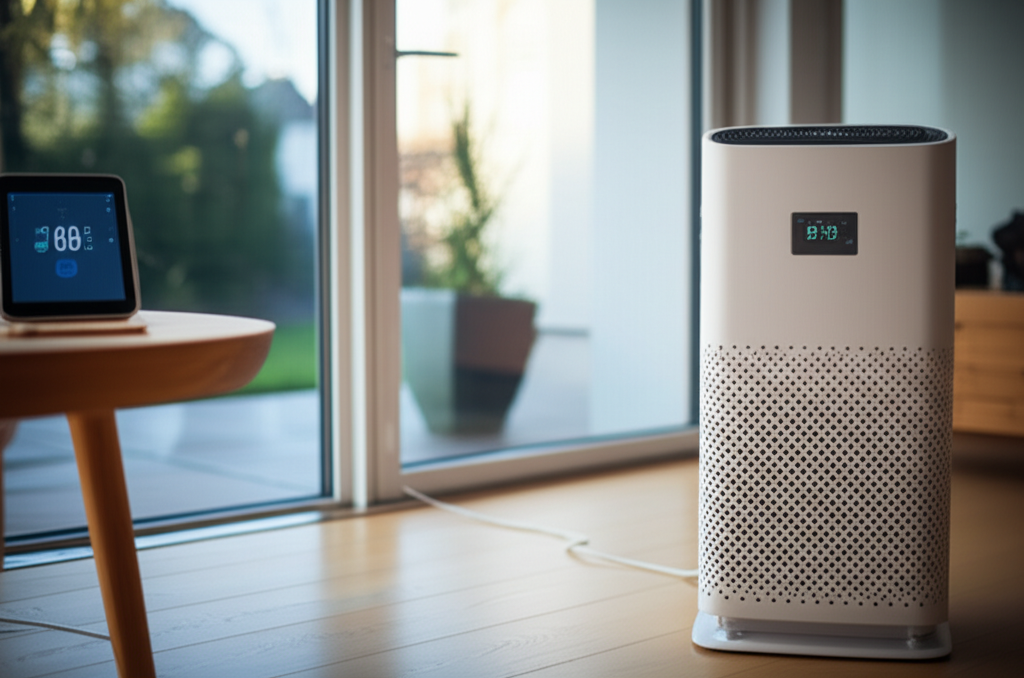
No, a standard HEPA air purifier is designed to filter particles from the air and does not actively remove moisture. It cannot significantly lower humidity levels.
Will running an air purifier make my air drier?
While some air purifiers might have a very minor indirect effect due to air circulation or slight cooling, they are not designed to dry out the air. If your air feels dry, it’s likely due to other factors or a lack of humidity.
What is the best way to lower humidity in my home?
The most effective way to lower humidity is by using a dedicated dehumidifier. Ensuring proper ventilation and fixing any leaks are also crucial steps.
Can an air purifier help with mold caused by humidity?
An air purifier can help by removing mold spores from the air, which can alleviate allergy symptoms associated with mold. However, it does not address the underlying cause of mold growth, which is excess humidity. You still need to reduce the humidity to prevent further mold.
Are there air purifiers that also function as dehumidifiers?
Yes, some multi-functional devices combine air purification with dehumidification. However, their dehumidifying capacity is usually limited compared to standalone dehumidifiers.
How do I know if I need an air purifier or a dehumidifier?
If your main concern is airborne particles like dust, pollen, or smoke, an air purifier is best. If you are dealing with dampness, condensation, musty odors, or mold growth, a dehumidifier is the solution.
Conclusion: Prioritizing Your Home’s Air Quality and Comfort
In summary, while the question “can air purifier lower humidity?” is understandable, the answer is generally no for standard models. Air purifiers excel at cleaning the air of pollutants, allergens, and odors, significantly improving your indoor air quality. However, they do not possess the mechanisms to effectively remove moisture from the air.
For managing high humidity, condensation, and preventing mold, a dedicated dehumidifier is the essential tool. Understanding the distinct roles of these appliances allows you to make the best choice for a healthy, comfortable, and dry home environment. Consider your specific needs and choose the right device, or combination of devices, to achieve optimal indoor conditions.
