
Can Air Purifier Cause Dry Skin? Proven Relief

Sure, here’s the article formatted in clean HTML as requested.
“`html
Can Air Purifier Cause Dry Skin? Proven Relief for a Comfortable Home
Yes, air purifiers can contribute to dry skin by reducing humidity. This article explores the science behind it and offers proven relief strategies, ensuring you enjoy cleaner air without compromising your skin’s health. We’ll cover how to identify the issue and implement practical solutions for comfortable living.
Discovering that your quest for cleaner air might be leading to dry, uncomfortable skin can be disheartening. You invested in an air purifier to breathe easier and improve your home environment, only to face a new irritation. This common concern often arises from a misunderstanding of how air purifiers interact with your indoor atmosphere. I’m here to demystify this connection and provide you with actionable steps for relief, so you can enjoy the benefits of purified air without the side effects.
Understanding the Link: Air Purifiers and Humidity Levels
Air purifiers work by circulating air and filtering out pollutants, which is excellent for respiratory health. However, the very process of removing particles can also inadvertently lower the humidity in your home. This reduction in moisture is the primary culprit behind that tight, dry skin sensation.
The filtration systems, especially those using HEPA filters, are designed to capture even microscopic particles. As air passes through these dense filters, some of the water vapor present in the air can also be trapped or condensed, leading to a less humid environment. This is particularly noticeable in already dry climates or during winter months when indoor heating further reduces humidity.
How Air Purifiers Affect Indoor Humidity
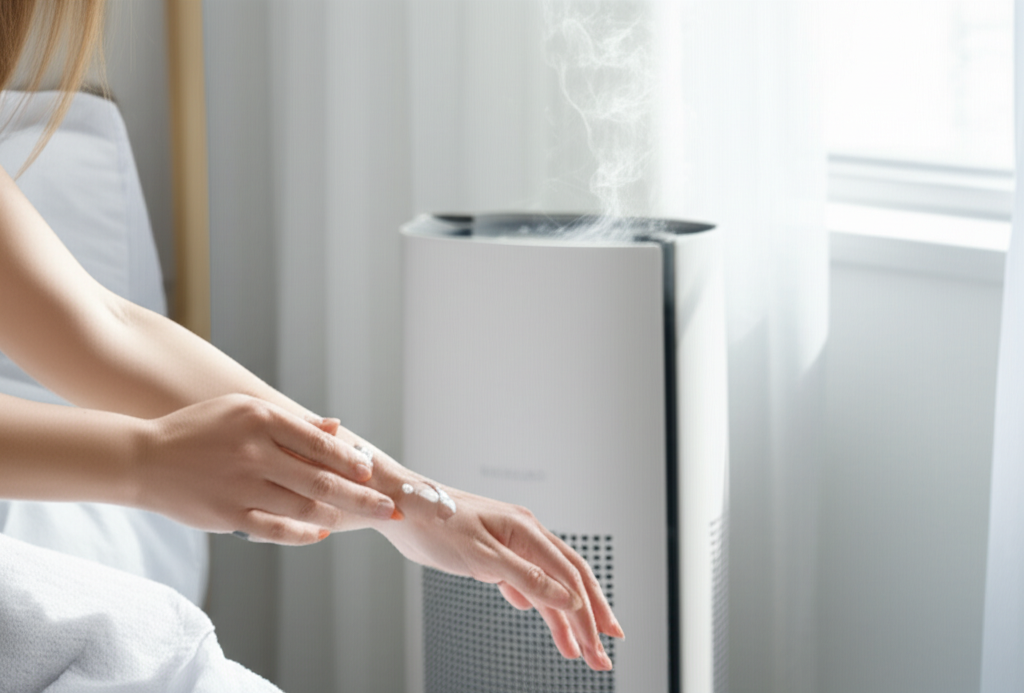
Air purifiers themselves don’t actively “dry” the air in the way a dehumidifier does. Instead, their operation can create conditions that lead to lower relative humidity. The circulating air, coupled with the filtration process, can encourage moisture to dissipate or condense within the unit. This effect is more pronounced in smaller, well-sealed rooms where the air is constantly being processed.
The science behind this is subtle; it’s not about the purifier removing water molecules directly, but rather about the physical processes occurring as air passes through the machine. Think of it like a very efficient fan that also happens to have a fine mesh, which can slightly alter the air’s moisture content over time.
The Science Behind Dry Skin and Air Purifiers
Dry skin, medically known as xerosis, occurs when the skin loses too much water. This can be caused by environmental factors, genetics, or underlying health conditions. When your indoor air has lower humidity due to an air purifier’s operation, your skin has less moisture available to absorb and retain.
The stratum corneum, the outermost layer of your skin, acts as a barrier. It needs a certain level of hydration to remain supple and functional. When the surrounding air is dry, this barrier can be compromised, leading to moisture loss from the skin’s deeper layers. This results in the familiar feelings of tightness, itching, and flakiness.
How Low Humidity Worsens Skin Dryness
Low humidity creates an environment where moisture is drawn from any available source, including your skin. When the air around you contains less water vapor, the natural process of trans-epidermal water loss (TEWL) from your skin accelerates. This means your skin loses its moisture faster than it can replenish it from the environment.
This accelerated moisture loss can strip your skin of its natural oils and lipids, which are crucial for maintaining a healthy skin barrier. Without these protective elements, your skin becomes more vulnerable to irritants and environmental stressors, further exacerbating dryness and discomfort.
Identifying if Your Air Purifier is Causing Dry Skin
The most straightforward way to tell if your air purifier is contributing to dry skin is to observe changes in your skin’s condition after you start using it. If your skin was fine before, and then dryness, itching, or flakiness appears shortly after turning on the purifier, it’s a strong indicator.
Consider other environmental factors as well. Are you also running a heater or air conditioner, which are known to dry out the air? Is the season typically dry? By isolating the air purifier as a variable, you can better pinpoint the cause of your skin issues.
Symptoms of Air Purifier-Induced Dry Skin
Common symptoms include a feeling of tightness, especially after washing your face, increased itchiness, rough patches, flaky or peeling skin, and a dull complexion. You might also notice that your usual moisturizers aren’t as effective as they used to be.
These symptoms can manifest on your face, hands, and any other exposed skin. If these issues persist or worsen, it’s a clear sign that the ambient humidity might be too low for your skin’s comfort. Pay attention to how your skin feels throughout the day and after prolonged exposure to the purified air.
Proven Relief Strategies for Dry Skin
The good news is that you don’t have to choose between clean air and healthy skin. Several effective strategies can combat dry skin caused by air purifiers, focusing on reintroducing moisture into your environment and your skin’s routine.
By implementing a combination of these methods, you can create a balanced indoor environment that supports both your respiratory and skin health. It’s about finding that sweet spot where air purification benefits are maximized without the unwanted side effects.
1. Monitor and Adjust Humidity Levels
The most direct solution is to manage your indoor humidity. Aim for a relative humidity level between 40% and 60%. You can use a hygrometer, a small device that measures humidity, to keep track. If your levels are consistently below 40%, it’s time to take action.
A simple hygrometer can be purchased online or at hardware stores. These are inexpensive tools that provide valuable insight into your home’s environment. Monitoring will help you understand the extent of the humidity drop and guide your relief efforts.
Using a Humidifier Alongside Your Air Purifier
Pairing your air purifier with a humidifier is often the most effective solution. A humidifier adds moisture back into the air, counteracting the drying effects of the purifier and heating systems. Choose a humidifier that suits your room size and needs, whether it’s a cool-mist or warm-mist model.
There are various types of humidifiers available, including ultrasonic, evaporative, and impeller models. For a balanced approach, consider a humidifier with a built-in hygrometer or one that can be controlled by an external one to maintain your target humidity range.
| Humidifier Type | Pros | Cons |
|---|---|---|
| Cool-Mist Ultrasonic | Quiet, energy-efficient, safe for children/pets | Can disperse minerals into the air (white dust) if using hard water |
| Warm-Mist Evaporative | Boils water, reducing bacteria/mold; humidifies effectively | Uses more energy, potential burn risk with hot steam |
| Whole-House Humidifier | Integrates with HVAC for consistent humidity throughout the home | Higher initial cost, requires professional installation |
Choosing the right humidifier depends on your specific needs and preferences. Each type offers unique advantages for maintaining optimal indoor air quality and moisture balance.
2. Optimize Air Purifier Placement and Usage
Where you place your air purifier can influence its impact on humidity. Avoid placing it in very small, enclosed spaces where it might excessively dry out the air. Consider using it in larger living areas or bedrooms where the effect is more distributed.
You might also adjust the fan speed. Running the purifier on a lower setting can reduce the rate at which air is circulated and filtered, potentially lessening the drying effect. Experiment with different settings to find a balance that provides clean air without noticeable dryness.
When to Run Your Air Purifier
Consider running your air purifier during times when you’re most exposed to indoor air or when pollutant levels are typically higher. This might be during the day while you’re home or overnight for cleaner sleeping air. However, if dryness becomes an issue, you might reduce the duration of use or use it in conjunction with a humidifier.
For instance, you could run the air purifier on high for a few hours during the day to clear the air, then switch to a lower setting or turn it off for periods to allow humidity levels to stabilize. This cyclical approach can help manage both air quality and skin comfort.
3. Enhance Your Skincare Routine
While managing your environment is crucial, bolstering your skincare routine is equally important. Use gentle, hydrating cleansers and rich moisturizers to replenish your skin’s lost moisture and strengthen its natural barrier.
Look for skincare products containing ingredients like hyaluronic acid, ceramides, glycerin, and shea butter, which are known for their hydrating and barrier-repairing properties. Consistent application is key to combating dryness.
Hydrating Ingredients to Look For
Hyaluronic acid is a humectant that draws moisture from the air into your skin. Ceramides help to restore the skin’s natural barrier, preventing water loss. Glycerin is another effective humectant, while shea butter and natural oils provide emollient properties to soften and smooth the skin.
Incorporating a hydrating serum followed by a thicker cream can provide a double layer of moisture. Don’t forget to apply moisturizers immediately after washing your face or showering to lock in hydration.
4. Stay Hydrated from Within
Drinking plenty of water throughout the day is fundamental for overall health, including skin hydration. When you’re well-hydrated internally, your skin is better equipped to maintain its moisture balance and resist dryness.
Aim for at least eight glasses of water daily, or more if you’re active or in a dry climate. Herbal teas and water-rich fruits and vegetables also contribute to your daily fluid intake.
5. Consider Air Purifier Maintenance
Proper maintenance of your air purifier is essential for its performance and can indirectly affect air quality and humidity. Ensure you clean or replace filters as recommended by the manufacturer. Clogged filters can reduce efficiency and may alter airflow patterns.
A well-maintained unit operates as intended, providing optimal air purification without unexpected side effects. Follow the manufacturer’s guidelines for filter replacement and general cleaning to ensure your device functions correctly.
6. Alternative Air Purification Methods
If you find that traditional air purifiers consistently cause dryness, you might explore alternative methods for improving indoor air quality. Some plants are known for their air-purifying qualities and can also add a touch of humidity to the air.
Certain houseplants, like spider plants or peace lilies, can help filter indoor air pollutants naturally. While their purifying capacity may not match that of a high-efficiency air purifier, they can contribute to a healthier indoor environment without the drying effect.
Can Air Purifier Cause Dry Skin? The Verdict
In conclusion, while air purifiers are beneficial for air quality, they can indeed contribute to dry skin by lowering indoor humidity levels. The science behind this is rooted in how air circulation and filtration can reduce the moisture content in the air you breathe.
However, this is a manageable issue. By understanding the connection and implementing strategies like using a humidifier, optimizing purifier placement, and adopting a robust skincare routine, you can enjoy the advantages of cleaner air without suffering from dry, uncomfortable skin. Your home environment should support your well-being, and with these tips, you can achieve that balance.
Frequently Asked Questions
Q1: Will running my air purifier 24/7 make my skin drier?
Yes, running your air purifier continuously, especially in a smaller or well-sealed room, can lead to a gradual decrease in humidity, potentially causing or worsening dry skin. It’s advisable to monitor humidity levels and consider intermittent use or pairing with a humidifier.
Q2: Are some types of air purifiers worse for dry skin than others?
Generally, air purifiers that rely heavily on fan circulation and dense filtration, like HEPA filters, are more likely to contribute to a slight reduction in humidity. However, the effect is usually mild and depends more on your home’s existing humidity and room size.
Q3: How do I know if it’s my air purifier and not something else causing my dry skin?
Observe your skin’s condition. If dryness, itching, or flakiness appears or worsens specifically when the air purifier is on and improves when it’s off, it’s a strong indicator. Also, consider other environmental factors like heating, cooling, and seasonal dryness.
Q4: Can I use a humidifier and air purifier in the same room?
Absolutely. Using a humidifier alongside an air purifier is a common and effective strategy to maintain optimal indoor humidity levels (40-60%) while enjoying purified air. This combination helps prevent the drying effects of air purifiers and heating systems.
Q5: What is the ideal humidity level for my skin?
The ideal indoor relative humidity level for skin comfort and health is generally considered to be between 40% and 60%. Levels below 40% can start to dry out your skin and respiratory passages.
Q6: Do air purifiers with ionizers or UV lights affect skin dryness?
While ionizers and UV lights are primarily for pollutant removal, the primary driver of dry skin from air purifiers is the physical process of air circulation and filtration reducing humidity. The ionization or UV process itself doesn’t directly dry skin, but the overall operation might contribute to a drier environment.
“`
