
How to Get Rid of a Musty Smell in Your House (Find the Source First)

Quick answer
A musty smell almost always means mold or mildew growing on something damp. To get rid of it for good: find the source (basements, under sinks, bathrooms, closets, the AC drip pan, damp fabrics), fix the moisture and dry the area within 24 to 48 hours, clean or throw out what’s growing mold, then keep indoor humidity below 50%. Air fresheners and candles only cover it up.
That earthy, stale “old basement” smell is the odor of chemicals released by mold and mildew as they grow. It’s a warning sign, not just an annoyance: wherever it comes from, something is staying wet. Here’s how to track it down and get rid of it.
Why your house smells musty
Mold needs three things: moisture, something to feed on (wood, drywall paper, fabric, dust) and time. The EPA notes that the key to mold control is moisture control: mold won’t grow without water (EPA: A Brief Guide to Mold, Moisture and Your Home). Common triggers are high humidity, slow plumbing leaks, condensation, poor ventilation and water that got in during a storm or flood.
Step 1: Find the source
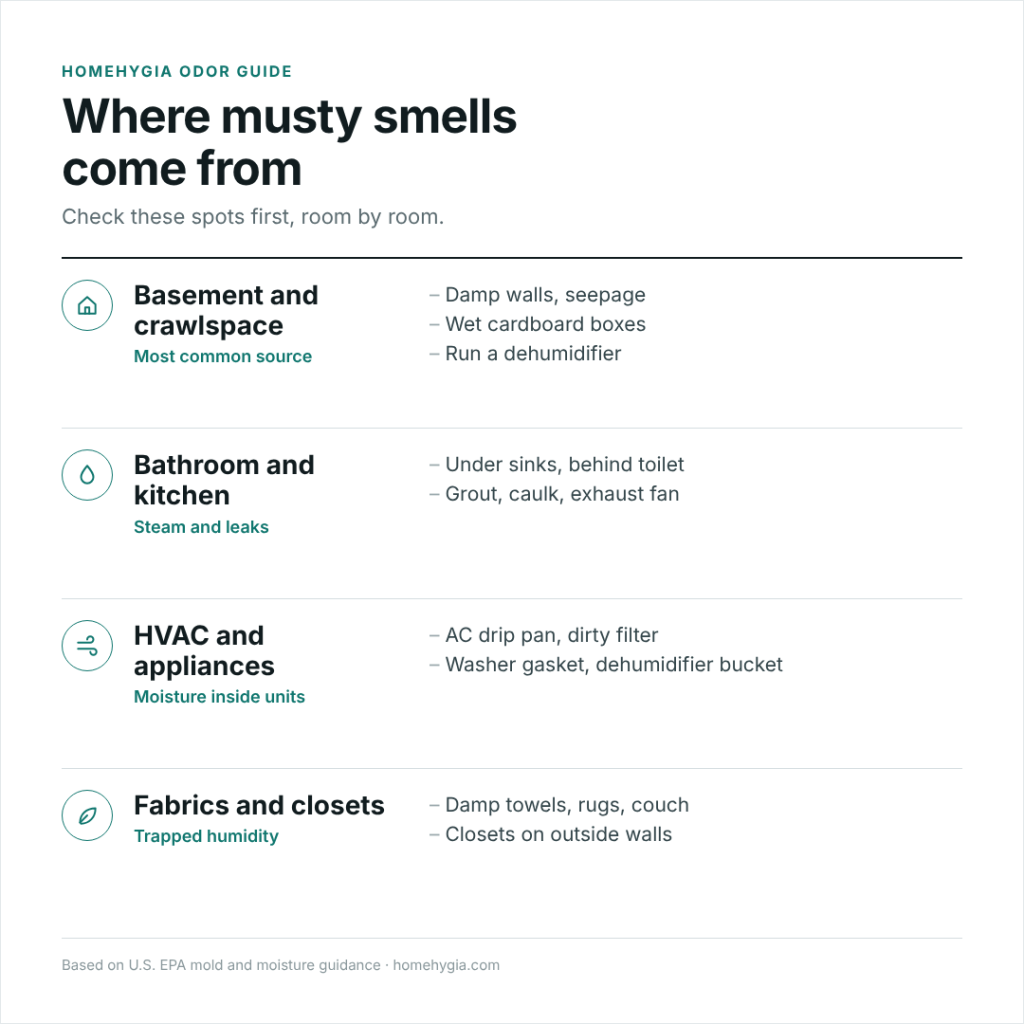
Follow your nose: the smell is strongest close to the source. Check these places:
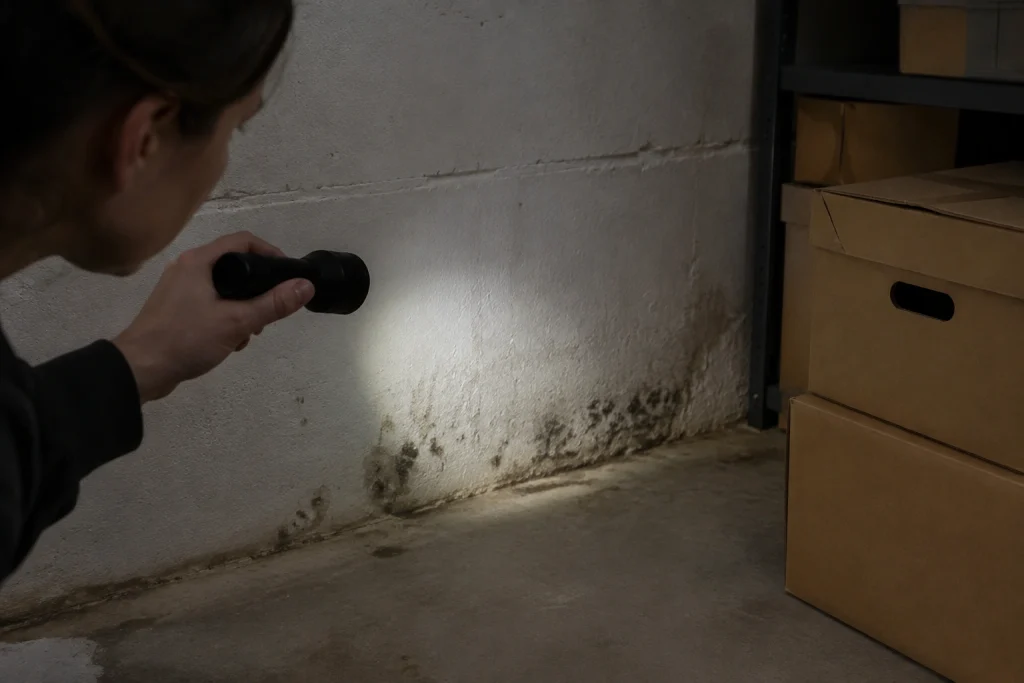
- Basement and crawlspace: damp walls, efflorescence (white crust), stored cardboard boxes, carpet on concrete.
- Bathrooms: behind the toilet, under the sink, around the tub, grout and silicone, the exhaust fan.
- Kitchen: under the sink, behind the fridge and dishwasher, the drip tray under the fridge.
- Laundry: the front-load washer door gasket and detergent drawer, damp clothes left in the machine.
- HVAC: a dirty filter, the AC condensate drip pan, and any standing water near the indoor unit.
- Closets on outside walls: cold walls plus trapped air can cause mildew on clothes and shoes.
- Soft furnishings: rugs, sofas, mattresses and towels that got wet and never dried.
- Windows: sills and frames that stay wet from condensation.
A hygrometer helps: rooms reading above 60% humidity are the most likely culprits.
Step 2: Fix the moisture
- Repair leaks in plumbing, the roof or around windows.
- Dry wet areas fast. The EPA advises drying water-damaged materials within 24 to 48 hours to prevent mold.
- Lower humidity to 30–50% with air conditioning or a dehumidifier. See what size dehumidifier you need.
- Ventilate bathrooms, kitchens and laundry rooms with exhaust fans vented outdoors.
- Direct water away from the foundation with gutters, downspout extensions and grading.
Step 3: Clean or remove the source
- Hard surfaces (tile, sealed concrete, plastic, glass): scrub with detergent and water, then dry completely (EPA: Mold Cleanup in Your Home).
- Porous materials that are moldy (ceiling tiles, carpet padding, cardboard, some drywall) often can’t be fully cleaned and should be thrown away.
- Fabrics: wash in the hottest water the label allows and dry fully, or dry in the sun. Our guide to baking soda for upholstery cleaning helps with sofas and chairs.
- Large areas: if mold covers more than about 10 square feet, the EPA recommends following its professional remediation guidance or hiring an experienced contractor.
Wear gloves and an N95 mask while cleaning, and never mix bleach with ammonia or vinegar.
Step 4: Deodorize what’s left
Once the source is gone, the remaining smell fades fast. Speed it up by airing the room, running fans, sprinkling baking soda on carpets and mattresses before vacuuming, and leaving open bowls of baking soda or activated charcoal in closets. An air purifier with a carbon filter can help with lingering odors (see does an air purifier help with musty smell), but it won’t fix the cause.
Keep the musty smell from coming back
- Keep humidity at 30–50% year-round (ideal indoor humidity level).
- Run the bathroom fan during and after showers.
- Store items in plastic bins, not cardboard, in basements.
- Leave the washer door open between loads.
- Change your HVAC filter on time and keep the drip pan draining.
Frequently asked questions
Is a musty smell dangerous?
The smell itself isn’t toxic, but it means mold is growing. Mold can trigger allergy and asthma symptoms, so find and fix the source.
Can I have a musty smell without visible mold?
Yes. Mold may be hidden behind walls, under flooring or inside the HVAC. If you can’t find it and the smell persists, consider a professional inspection.
Why does my house smell musty only when it rains?
Rain raises humidity and can let water into the basement or crawlspace. Check gutters, grading and foundation cracks.
Will a dehumidifier get rid of a musty smell?
It removes the moisture that keeps mold growing, so the smell usually fades over a few days to weeks. Clean any visible mold too.