
How to Clean a Humidifier with Vinegar (and Disinfect It Safely)

Quick answer
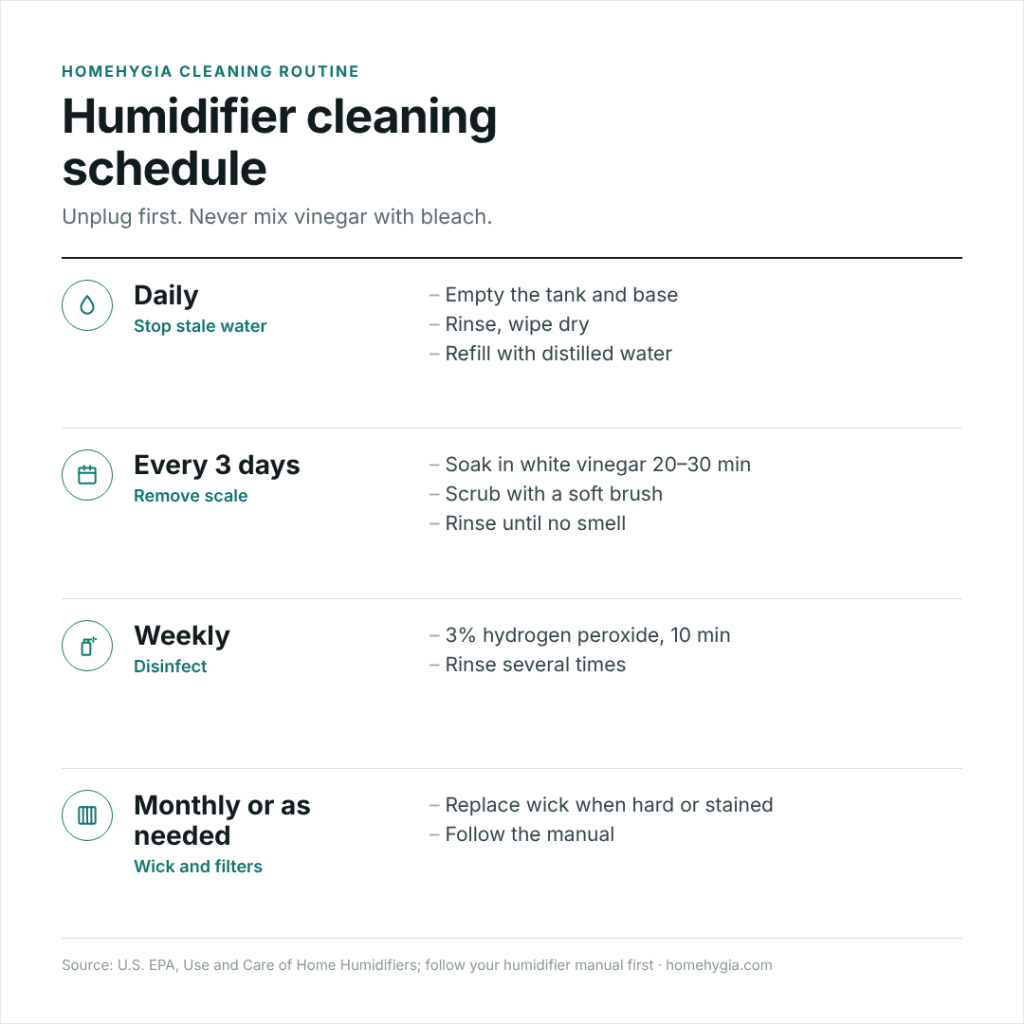
Unplug the humidifier, empty it, and soak the tank and base in undiluted white vinegar for 20 to 30 minutes to dissolve scale. Scrub with a soft brush, rinse until the vinegar smell is gone, then disinfect with 3% hydrogen peroxide and rinse again. The EPA recommends emptying and drying the tank daily and cleaning portable humidifiers every third day. Always check your manual first.
A humidifier is a tank of standing water, which makes it a perfect place for scale, mold and bacteria, and whatever grows inside gets sprayed into the room. Regular cleaning takes about 15 minutes and keeps the mist clean. Here is the routine that works for most cool mist, ultrasonic and evaporative models.
How often to clean a humidifier
- Daily: empty the tank, rinse, wipe dry and refill with fresh water. Don’t top up old water.
- Every 3 days: descale with vinegar and scrub (the EPA’s recommended interval).
- Weekly, or if anyone in the home is sick or has asthma: disinfect.
- Before storage: clean, disinfect and dry completely.
What you need
- Undiluted white vinegar (5% acidity)
- 3% hydrogen peroxide (the standard pharmacy bottle)
- A soft bottle brush and an old toothbrush
- A microfiber cloth
- Distilled water for refilling
How to clean a humidifier with vinegar, step by step
- Unplug and take it apart. Remove the tank, cap, any filter or wick and the mist nozzle. Never put the base with the motor or electronics under running water.
- Empty and rinse. Pour out all water and give the tank a quick rinse.
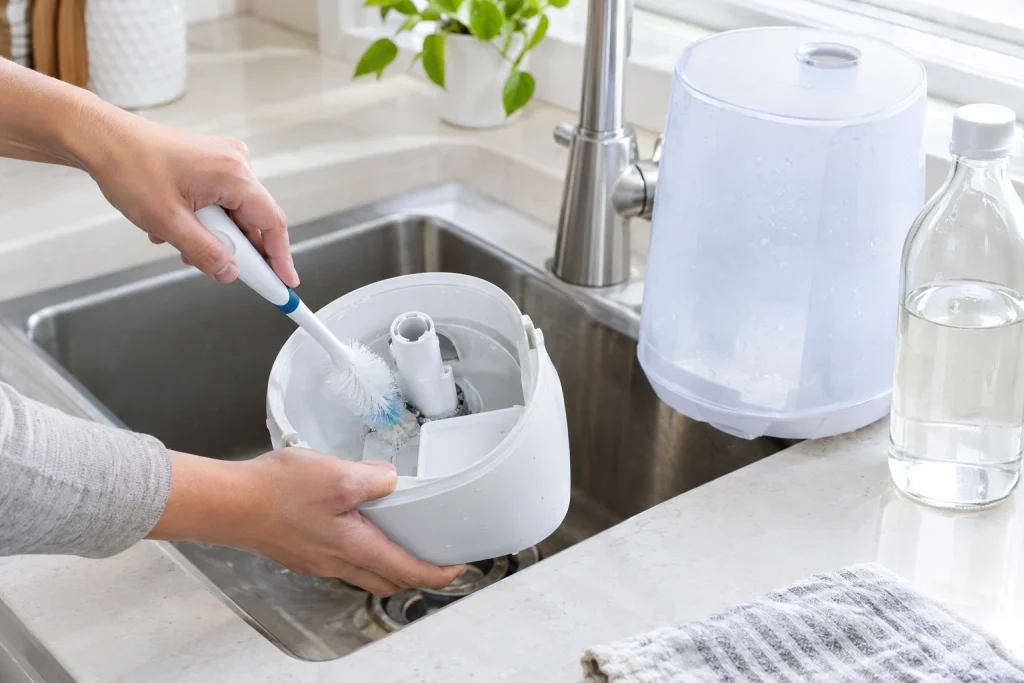
- Soak in vinegar. Fill the tank about a quarter full of white vinegar, close it and swirl to coat the inside, then let it sit 20 to 30 minutes. Pour a little vinegar into the water reservoir in the base, covering the scale and the ultrasonic disc, and let it sit too.
- Scrub. Use the bottle brush inside the tank and the toothbrush around the cap, seals and reservoir. On ultrasonic models, wipe the small metal transducer disc gently with a soft brush or cloth only: it scratches easily.
- Rinse well. Rinse the tank several times and wipe the base until the vinegar smell is gone.
- Disinfect. In the absence of manufacturer instructions, the EPA suggests cleaning all water-contact surfaces with a 3% hydrogen peroxide solution (EPA: Use and Care of Home Humidifiers). Swirl it in the tank and reservoir, leave about 10 minutes, then pour it out.
- Rinse again, several times. The EPA stresses rinsing thoroughly after any cleaner so no chemicals are released into the air.
- Air dry and reassemble. Let parts dry fully before refilling with distilled water.
Cleaning the wick or filter
Evaporative humidifiers have a paper or foam wick that absorbs minerals. Most can’t be washed with vinegar without damage. Rinse it with plain water if the manual allows, and replace it when it turns hard, crusty or discolored, typically every one to two months during heavy use. A clogged wick reduces output and can start to smell.
Can you clean a humidifier with bleach?
Only if the manufacturer allows it. Some manuals recommend a weak bleach solution (often about 1 teaspoon per gallon of water) for disinfecting. Two rules matter:
- Never mix bleach with vinegar, or with any acid, ammonia or other cleaner. The combination releases toxic chlorine gas. Rinse out vinegar completely before using bleach, or do them on different days.
- Rinse many times afterward and run the humidifier with plain water first in an empty, ventilated room if any smell remains.
Hydrogen peroxide is the safer default. For other household bleach questions, see can I mop with bleach.
Tips to keep it cleaner for longer
- Use distilled water. It slows scale build-up and prevents white dust; see humidifier white dust.
- Don’t add essential oils unless the unit has a separate aroma tray. Oils can damage plastic and the ultrasonic disc.
- Keep humidity at 30–50%. Over-humidifying makes the room damp and grows mold; see the ideal indoor humidity level.
- Store it dry. Leftover water in a stored unit grows mold within days.
Not sure whether you need a humidifier or something else? Our air purifier vs dehumidifier vs humidifier guide compares them, and can air purifiers cause mold covers moisture and mold risks.
Frequently asked questions
How do I get pink or black mold out of a humidifier?
Soak in vinegar, scrub every surface, then disinfect with 3% hydrogen peroxide and rinse well. If the mold returns quickly or is inside parts you can’t reach, replace the unit.
Can I run vinegar through my humidifier to clean it?
No. Never run the humidifier with vinegar or any cleaner in it, because it will be sprayed into the air. Soak and scrub, then rinse.
How long should vinegar sit in a humidifier?
20 to 30 minutes for routine cleaning. Heavy scale may need up to an hour.
Is it safe to sleep next to a dirty humidifier?
It isn’t a good idea. The EPA warns that dirty humidifiers can release microorganisms into the air, which can irritate the lungs, especially for people with asthma or allergies.