
Can You Vacuum Baking Soda? Safety Tips

Quick Answer
Yes, you can vacuum up a small amount of dry baking soda with some vacuum cleaners, but it is not safe for every model. Fine powder can clog filters, reduce airflow, and potentially damage internal components. Check your manufacturer’s instructions first, avoid heavy applications, and inspect the vacuum after any significant exposure.
Whether you can vacuum baking soda depends on your vacuum cleaner’s filtration system, the amount of powder, and the manufacturer’s instructions. Although baking soda is a popular household deodorizer, its fine particles can create maintenance problems that ordinary crumbs and dust may not.
The safest approach is to prevent excessive powder from entering the machine rather than assuming that a powerful motor or HEPA filter makes every vacuum suitable for it.
Why Can Baking Soda Cause Problems for a Vacuum?
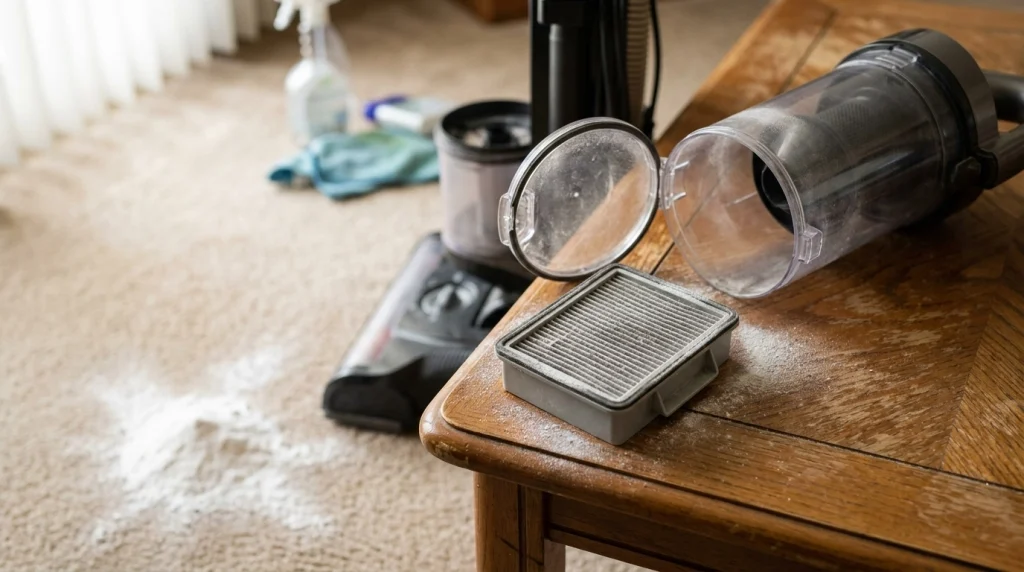
Baking soda, also called sodium bicarbonate, is a fine, dry powder. When a vacuum draws it through the floorhead, some particles collect in the dust container or bag, while others reach the filters and internal airflow passages.
The concern is not that baking soda instantly destroys every vacuum. The risk is that enough fine material can accumulate to interfere with how the machine separates dust and moves air.
- Clogged filters: Fine particles can coat filter media and restrict the passage of air.
- Reduced suction: Restricted airflow can make the vacuum less effective at picking up dirt.
- Powder buildup: Residue can collect around the dust container, cyclone assembly, hose, and other airflow passages.
- Overheating: On machines affected by restricted airflow, continued operation may cause excessive heat or trigger thermal protection.
- Maintenance problems: Powder lodged in components may be difficult to remove without following the manufacturer’s cleaning instructions.
These risks vary by machine design and the amount collected. A small accidental spill is different from repeatedly vacuuming a thick layer of powder spread over an entire room.
Is Baking Soda Safe for Bagless, Bagged, and HEPA Vacuums?
No single vacuum type is automatically safe for baking soda. The important questions are whether the manufacturer permits fine-powder pickup and how the machine handles particles before they reach its motor and filters.
| Vacuum type | Main concern | Best approach |
|---|---|---|
| Bagless vacuum | Fine powder can load filters and internal separators. | Check the manual and inspect the filter after exposure. |
| Bagged vacuum | Powder may restrict airflow through the bag before it appears full. | Follow the approved bag and fine-dust guidance. |
| HEPA-filter vacuum | The filter may capture particles but can still become loaded. | Verify the complete machine’s suitability, not just its filter rating. |
| Robot vacuum | Fine powder can load compact filters and clog narrow passages. | Avoid using it to collect a visible layer of baking soda. |
The key distinction is that HEPA filtration does not mean unlimited fine-powder capacity. A filter can capture very small particles and still become clogged when too much material accumulates on its surface.
For example, a vacuum may collect a little powder without showing an immediate problem, yet lose suction after repeated applications. The absence of an instant malfunction does not prove that the practice is safe for long-term use.
For model-specific guidance, consult the manufacturer’s manual. Dyson’s official support resources provide model-specific maintenance instructions, including filter care and removal of fine-dust buildup.
How Can You Remove Baking Soda From Carpet More Safely?
If your vacuum’s manual permits the intended use, keep the application light and make sure the powder is completely dry. If the manual prohibits fine powders or does not provide enough guidance, choose another removal method rather than taking a chance with the machine.
- Check the carpet and vacuum instructions. Confirm that the carpet treatment is appropriate for the material and that the vacuum can handle the powder. Be especially cautious with delicate rugs and natural fibers.
- Remove visible excess. If a thick pile of powder is present, gently lift the excess with a dry scoop or another suitable method before vacuuming. Avoid grinding it deeper into the carpet.
- Do not vacuum damp paste. If baking soda has mixed with water or another liquid, let the affected area dry when appropriate and remove the residue using a method compatible with the surface.
- Use a permitted vacuum setting. If the manufacturer allows pickup, move slowly and avoid repeatedly collecting large quantities at once.
- Inspect the cleaned area. Look for visible residue. If powder remains deep in the carpet, do not keep making unlimited passes if the machine begins losing suction or shows signs of strain.
- Check the vacuum afterward. Empty the collection container or check the bag and inspect accessible filters according to the owner’s manual.
There is no universal number of passes that guarantees complete powder removal. Carpet pile, the amount applied, the vacuum’s airflow, and the surface all affect the result.
Tip
For future deodorizing, use less powder rather than trying to remove a thick white layer afterward. If your vacuum manufacturer advises against fine-powder pickup, skip the baking-soda-and-vacuum method entirely.
What Should You Do If You Have Already Vacuumed Baking Soda?
If you have already vacuumed baking soda, do not panic. A single small exposure does not automatically mean your machine is damaged. Stop and inspect it, particularly if you collected a substantial amount or notice a change in performance.
- Switch off and disconnect the vacuum. Unplug a corded model or follow the manufacturer’s shutdown procedure for a cordless machine.
- Empty the bin or inspect the bag. Follow the normal disposal procedure and avoid creating a cloud of airborne powder.
- Inspect accessible filters. Look for a heavy coating of fine dust, packed pleats, or other visible buildup.
- Check the airflow path. Inspect accessible hoses, the wand, and floorhead for obvious obstructions, following the manual.
- Clean or replace components correctly. Wash a filter only if the manufacturer identifies that exact filter as washable. Replace disposable filters or bags when required.
- Reassemble only when ready. Ensure washable parts are completely dry and all components are properly installed before restarting the vacuum.
For a more detailed maintenance process, follow HomeHygia’s guide to deep cleaning a vacuum cleaner. If suction remains weak after the approved maintenance steps, the blockage may be deeper than the accessible filter or dust container.
Which Warning Signs Mean You Should Stop Using the Vacuum?
Stop the machine if its performance changes noticeably after collecting baking soda. Continuing to operate a vacuum with restricted airflow or a suspected internal blockage can make the problem worse.
- Sudden loss of suction: The machine no longer picks up ordinary debris effectively.
- Unusual heat: The vacuum becomes hotter than it normally does during routine cleaning.
- Burning or electrical smell: Turn the machine off immediately and do not restart it merely to test whether the smell disappears.
- Repeated shutdowns: A thermal protection system may be responding to overheating or restricted airflow.
- Visible powder escaping: Dust may be bypassing the intended collection or filtration system.
Allow the vacuum to cool before inspecting it, and disconnect power before checking accessible components. Do not open the motor housing or attempt electrical repairs unless the manufacturer explicitly provides a safe user-service procedure.
If the problem continues after cleaning the accessible parts, consult the manufacturer’s troubleshooting guidance or an authorized repair service. HomeHygia’s guide to recognizing signs of a clogged vacuum filter can help you identify common airflow symptoms.
Does Baking Soda Actually Clean and Deodorize Carpet?
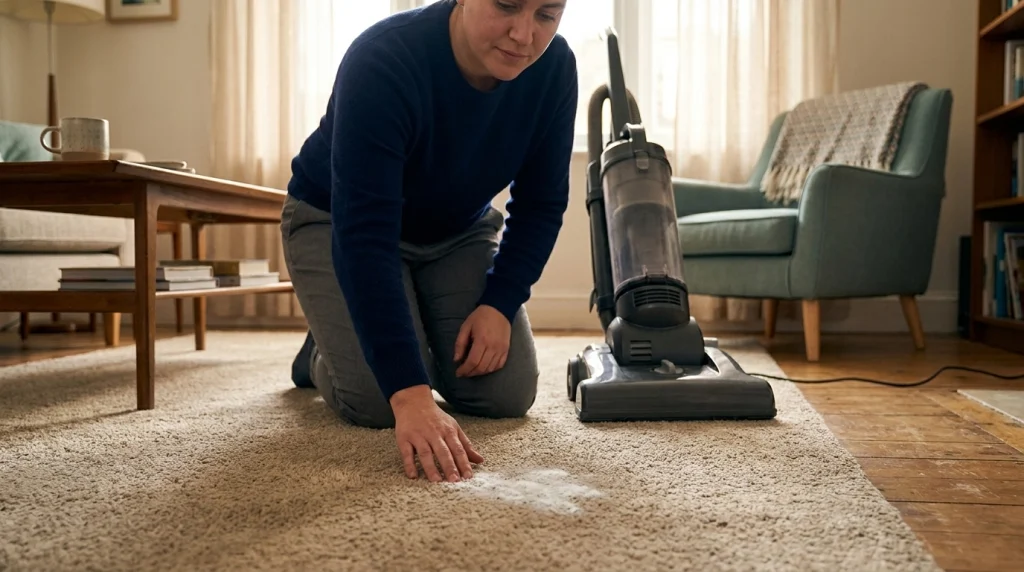
Baking soda can help with some light surface odors, but it should not be treated as a complete carpet cleaner. Its usefulness depends on the odor source, the carpet material, and whether the powder can be removed without leaving residue.
It does not replace a cleaning method designed to remove embedded soil, sticky residue, or the source of a persistent pet accident. Adding more powder may simply increase the amount your vacuum has to collect.
For a suitable carpet, first remove loose dirt with your normal approved cleaning method. If you choose to use baking soda, check the carpet manufacturer’s care advice and test an inconspicuous area when appropriate.
Avoid assuming that every rug can tolerate the same treatment. Wool, silk, and other delicate materials may require specialized care, and deeply embedded powder can be difficult to remove from dense or high-pile fibers.
For persistent urine smells, address the contamination itself rather than relying on a deodorizing powder. HomeHygia’s guide to choosing a carpet cleaner for urine odors discusses why targeted cleaning may be more appropriate for this problem.
Frequently Asked Questions
Can you vacuum a small amount of baking soda?
Sometimes. A small, dry amount may be manageable for a vacuum whose manufacturer permits fine-powder pickup. Check the manual and inspect the filter afterward rather than assuming every machine can handle it.
Can baking soda ruin a vacuum cleaner?
It can contribute to problems if fine powder clogs filters, restricts airflow, or enters internal components. Damage is not inevitable after every exposure, but repeated or heavy pickup increases the maintenance risk.
Is baking soda safe for a HEPA-filter vacuum?
Not automatically. A HEPA filter is designed to capture small particles, but the filter can still accumulate powder and restrict airflow. Follow the instructions for your specific vacuum model.
Can you vacuum baking soda with a robot vacuum?
It is best to avoid using a robot vacuum to collect a visible layer of baking soda unless its manufacturer explicitly permits this use. Compact filters, narrow airflow passages, and limited capacity make excess fine powder a concern.
Should you wash a vacuum filter after vacuuming baking soda?
Only if the manufacturer says the specific filter is washable. Some filters must be cleaned dry or replaced, and washable filters must dry completely before being reinstalled.
What is the safest alternative if my vacuum cannot handle baking soda?
Do not apply baking soda for later vacuum pickup. Use a carpet-compatible cleaning or deodorizing method approved for the surface, and follow its label instructions. For persistent odors, treat the underlying source instead of adding more powder.
Conclusion
You can vacuum baking soda with some machines, but the safest choice depends on the manufacturer’s guidance and the amount of fine powder involved. A HEPA filter or strong suction alone does not guarantee that a vacuum is suitable for this task.
If you have already collected baking soda, switch off the machine, inspect the collection container and accessible filters, and clean or replace components according to the manual. Stop using the vacuum if suction drops sharply, it overheats, or you notice a burning smell.
For future carpet care, use baking soda sparingly only when the surface and vacuum instructions allow it. When in doubt, choose a cleaning method that does not require sending fine powder through your vacuum.