
How Do You Know If a Vacuum Filter Is Clogged?

Quick Answer
You can usually tell a vacuum filter is clogged when suction becomes weaker, the vacuum runs hotter than normal, the motor sound changes, or the filter looks packed with dust. The best confirmation is to unplug the vacuum, empty the bin or check the bag, inspect the airflow path, and then examine the filter using the care instructions in your manual; Consumer Reports also recommends regular vacuum filter maintenance.
Common signs of a clogged vacuum filter
- Weak suction: Pickup stays poor even after you empty the dirt container.
- Visible dust buildup: Pleats, foam, or filter surfaces look heavily coated or packed.
- Extra heat: The vacuum body becomes unusually warm during normal cleaning.
- Changed motor sound: The motor sounds strained, higher-pitched, or different from normal.
- Frequent shutdowns: Some vacuums may stop when restricted airflow contributes to overheating.
- Dusty exhaust: A damaged, poorly seated, or overloaded filter may no longer control fine debris as intended.
Best confirmation
- Check the filter after ruling out a full bin, full bag, blocked hose, and tangled brush roll.
A clogged vacuum filter is easy to confuse with a blocked hose or full dust bin. I usually treat weak suction as an airflow problem first, rather than assuming the motor is failing.
This guide shows you how to identify a dirty or clogged filter, confirm the problem, and decide whether cleaning or replacement makes sense.
In This Guide
- What Are the Signs of a Clogged Vacuum Filter?
- How Can You Confirm a Vacuum Filter Is Clogged?
- Is It the Filter, a Full Bin, or a Hose Clog?
- What Happens When a Vacuum Filter Gets Clogged?
- Should You Clean or Replace a Clogged Vacuum Filter?
- How Do You Keep a Vacuum Filter From Clogging Quickly?
- Frequently Asked Questions
What Are the Signs of a Clogged Vacuum Filter?

A clogged filter restricts the air that must pass through your vacuum. The most obvious symptom is usually declining suction, but several clues can appear together.
Definition: A clogged vacuum filter is filter media loaded with enough dust, hair, fibers, or fine debris to restrict normal airflow through the vacuum.
1. Suction becomes noticeably weaker
Weak pickup is often the first clue. Crumbs may require several passes, while pet hair and dust remain behind even when the floorhead moves directly over them.
The important word is persistent. If suction returns after emptying the bin, the filter may not be your main problem.
2. The filter looks packed with dust
Remove the filter with the vacuum switched off and disconnected from power. A heavily loaded filter may have dust covering its pleats, foam pores, mesh, or other exposed surfaces.
Some discoloration is normal with use. What matters more is a dense coating that appears to block the filter material.
3. The vacuum feels hotter than usual
Vacuum motors depend on moving air as part of normal operation. Restricted airflow can therefore coincide with more noticeable heat around the machine.
Heat alone doesn’t prove the filter is clogged. A blocked hose, packed bag, brush problem, or motor fault can produce similar symptoms.
4. The motor sounds different
A change in pitch can signal airflow restriction. You may hear a sharper, strained, or unfamiliar sound as the vacuum tries to move air through the system.
I pay more attention when the sound change appears at the same time as weak suction. Multiple symptoms make an airflow problem more likely.
5. The vacuum shuts off during cleaning
Some models use thermal protection that can shut the machine down when it becomes too hot. A severely restricted airflow path can be one possible contributor.
Expert Alert: If the vacuum repeatedly overheats, smells burnt, sparks, trips a breaker, or requires access to electrical components, stop using it and contact a qualified appliance technician.
How Can You Confirm a Vacuum Filter Is Clogged?
The safest way to confirm a clogged filter is to troubleshoot the vacuum in order. Don’t replace a filter until you’ve ruled out easier airflow restrictions.
- Disconnect the power. Unplug a corded machine or switch off the cordless vacuum before opening compartments.
- Empty the bin. If you use a bagged vacuum, inspect the bag and replace it when required.
- Check the floorhead. Remove visible hair, string, and debris blocking the intake.
- Inspect the hose and wand. Look for objects or packed debris restricting the airway.
- Remove the filter. Check its surfaces, pleats, foam, seals, and housing for heavy contamination.
- Follow the manual. Clean or replace the filter using the method approved for your exact model.
Don’t assume every HEPA filter can be washed. HEPA describes a filtration performance category, not a universal cleaning method.
Some vacuum filters tolerate rinsing, while others can be damaged by water. The manufacturer’s instructions should make that decision.
The broader filtration principle is straightforward. The U.S. Environmental Protection Agency’s home filtration guidance notes that overloaded filters don’t perform well, although its guidance primarily addresses air cleaners and HVAC filtration rather than vacuum maintenance.
Is It the Filter, a Full Bin, or a Hose Clog?
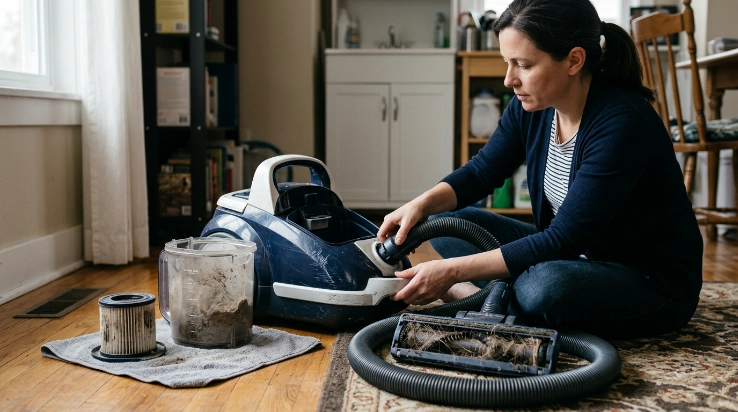
Several vacuum problems create nearly identical symptoms. I troubleshoot them from the easiest check to the more involved ones.
| Problem | Typical Clue | Where to Check | Best First Action |
|---|---|---|---|
| Clogged filter | Weak suction plus visibly loaded filter | Pre-motor and exhaust filter locations | Clean or replace as directed |
| Full bin or bag | Performance falls as debris accumulates | Bin fill line or bag compartment | Empty bin or replace bag |
| Hose clog | Sudden loss of suction | Hose, wand, bends, and connectors | Remove blockage safely |
| Brush-roll tangle | Poor carpet pickup or restricted roller movement | Floorhead and brush roll | Remove wrapped hair and thread |
| Air leak | Low suction despite clear airways | Bin seals, hose connections, cracked tubing | Reseat components and inspect seals |
If the filter is dirty but a large object is lodged inside the hose, cleaning the filter won’t restore normal suction. That’s why checking the entire airflow path matters.
Likewise, don’t operate a vacuum without its required filters just to see whether suction improves. Running it incorrectly may allow debris to reach areas the filter was designed to protect.
What Happens When a Vacuum Filter Gets Clogged?
A clogged filter creates resistance in the vacuum’s airflow system. Less air can move through the machine, so pickup performance can decline.
- Suction can fall: Less airflow reaches the cleaning head.
- Debris pickup suffers: Hair, crumbs, and heavier particles may remain on the floor.
- Heat may increase: Restricted airflow can coincide with higher operating temperatures.
- Cleaning takes longer: You may make repeated passes over the same area.
- Fine-particle control may suffer: Damaged, overloaded, or poorly seated filter components may not perform as intended.
This matters more in homes where dust and allergens are a concern. The CDC’s asthma guidance recommends regular vacuuming with a HEPA-filter-equipped vacuum as one measure for reducing exposure to certain household triggers.
The Asthma and Allergy Foundation of America also includes HEPA-filter vacuuming among its household allergen-control suggestions. Neither source means a vacuum alone can eliminate indoor allergens.
As of 2026, the practical lesson hasn’t changed: filtration works as part of a complete cleaning system. The filter needs to be correctly installed, maintained, and matched to the machine.
Should You Clean or Replace a Clogged Vacuum Filter?
Clean a clogged filter only when its manufacturer specifically says the filter is reusable or washable. Replace it when the instructions call for replacement or when the material is damaged.
Clean it when the filter is designed for cleaning
Some foam, fabric, and reusable filters can be cleaned. Follow the manual because allowable methods differ between brands and models.
- Remove loose surface dust using the approved method.
- Rinse only filters explicitly labeled as washable.
- Avoid detergents unless the manufacturer permits them.
- Let washable filters dry completely before reinstallation.
- Make sure the filter is seated correctly when reassembling the vacuum.
Replace it when cleaning won’t restore it
A disposable filter shouldn’t be washed simply because the material looks durable. Water can damage some pleated or paper-based filter media.
Replacement also makes more sense when you see physical deterioration.
- Torn material or visible holes
- Warped edges that prevent a proper fit
- Damaged seals around the filter frame
- Persistent heavy buildup after approved cleaning
- Replacement interval reached according to the manufacturer
There isn’t one correct replacement interval for every vacuum. Filter type, design, dust load, pets, floor type, and cleaning frequency all affect maintenance needs.
How Do You Keep a Vacuum Filter From Clogging Quickly?
The easiest way to protect a filter is to reduce the amount of unnecessary debris reaching it. A few small habits can make maintenance easier.
- Empty the bin early: Don’t continue cleaning after the manufacturer’s fill line is reached.
- Check the brush roll: Remove hair and thread before they build into thick mats.
- Inspect the hose: Clear partial obstructions before they become solid plugs.
- Avoid inappropriate debris: Don’t vacuum liquids, construction dust, ash, or other materials unless your machine is designed for them.
- Maintain every filter: Some vacuums have both pre-motor and post-motor filters.
- Follow the manual: Manufacturer instructions should determine cleaning methods and replacement timing.
Fine dust deserves extra attention because it can load filter surfaces quickly. A normal household vacuum may not be intended for large amounts of renovation debris or other unusually fine material.
I also like to inspect the filter when I empty the bin. It takes only a moment and makes it easier to notice a change before suction becomes obviously poor.
Frequently Asked Questions
Can a clogged vacuum filter cause loss of suction?
Yes. A heavily loaded filter can restrict airflow and contribute to weak suction. However, a full bin, blocked hose, tangled brush roll, damaged seal, or other airflow problem can create the same symptom, so inspect the entire suction path.
What does a dirty vacuum filter look like?
A dirty filter may have a visible coating of dust, hair, fibers, or fine particles across its pleats, foam, or mesh. Color alone isn’t always enough to judge it, so compare its condition with the cleaning or replacement guidance for your model.
Can I wash a clogged HEPA vacuum filter?
Only if the vacuum manufacturer explicitly identifies that exact filter as washable. Some HEPA filters can be rinsed, while others use materials that water may damage. Never decide based only on the HEPA label.
Can a clogged filter make a vacuum overheat?
A severe airflow restriction can contribute to excessive heat in some vacuums. If your machine repeatedly becomes unusually hot, shuts down, smells burnt, sparks, or shows electrical problems, disconnect it and have a qualified technician inspect it.
Why is my vacuum still losing suction after I cleaned the filter?
The restriction may be somewhere else. Check the dust bin or bag, hose, wand, floorhead, brush roll, intake passages, connections, and seals before assuming the motor has failed.
How often should I check my vacuum filter?
There is no universal schedule that works for every vacuum. Check it regularly and follow the manufacturer’s maintenance interval, especially if you clean frequently, have shedding pets, or notice declining suction sooner than expected.
Should I vacuum without the filter to test the suction?
Don’t run a vacuum without a required filter unless the manufacturer explicitly says that operating mode is safe. The filter may protect the motor, control exhaust particles, or perform both functions depending on the vacuum’s design.
Bottom line: Weak suction, visible dust buildup, unusual heat, changed motor noise, and repeated shutdowns can all point toward a clogged vacuum filter. Confirm the diagnosis by checking the complete airflow path, then clean or replace the filter exactly as your vacuum’s manufacturer directs.
If routine filter care doesn’t restore normal performance, stop guessing and inspect the hose, floorhead, seals, and other airflow components before considering a motor problem.