
What’s the Best Way to Vacuum Carpet? A Step-by-Step Guide

Quick Answer
The best way to vacuum carpet is to move slowly in straight, slightly overlapping rows, then repeat in a different direction when the carpet allows it. Prepare the floor, use the correct vacuum height and brush setting, clean edges with an attachment, and empty the dustbin when needed. For delicate loops, shag, wool, or specialty carpets, follow the manufacturer’s care instructions before using a rotating brush.
Effective carpet vacuuming is less about making repeated quick passes and more about removing loose dirt before it settles deeper into the pile. A consistent method helps collect dust, crumbs, hair, and grit while reducing unnecessary wear on carpet fibers.
The right technique depends on the carpet’s thickness, construction, and condition. Use the following steps for routine cleaning, adjusting the vacuum whenever the carpet pulls, the brush catches fibers, or the machine becomes difficult to move.
How Do You Vacuum Carpet Properly?
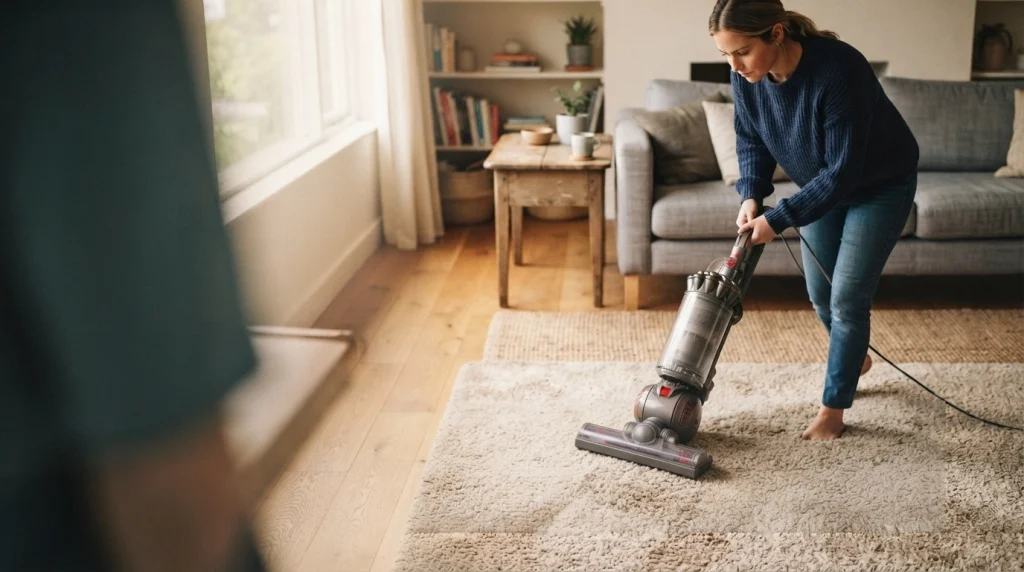
Start by preparing the room, checking the vacuum, and selecting a suitable floor-head setting. Then work across the carpet in slow, overlapping passes, paying extra attention to traffic lanes and edges.
- Clear the floor. Pick up toys, coins, cords, and other small objects that could block the nozzle or damage the brush roll. Move lightweight furniture when practical.
- Check the vacuum. Empty the dustbin or replace a full bag, inspect accessible filters according to the manual, and remove hair wrapped around the brush roll after switching off and unplugging the machine.
- Adjust the cleaning head. Choose a height that allows the vacuum to move freely while maintaining effective contact with the carpet. If the head sticks or the motor strains, raise it or reduce suction.
- Begin at the far side of the room. Work toward the doorway so you can finish without repeatedly walking across cleaned areas.
- Vacuum in straight, overlapping rows. Move forward and backward at a controlled pace. Overlap the previous row slightly to avoid leaving narrow strips untouched.
- Repeat in another direction. When the carpet permits, turn approximately 90 degrees and make another set of passes. Changing direction can help loosen debris that remains between fibers.
- Clean the edges and corners. Use a crevice tool or suitable attachment around baseboards, furniture legs, and other places the main floor head cannot reach.
- Inspect the result. Look for remaining hair, grit, or debris. Repeat only where needed rather than repeatedly vacuuming the entire room without a clear benefit.
The Carpet and Rug Institute’s vacuuming guidance supports slow, overlapping strokes and careful attention to carpet edges. Its guidance also emphasizes removing soil before it becomes embedded in the pile.
Which Vacuum Settings Work Best for Different Carpets?
The best settings allow effective pickup without pulling, fuzzing, or trapping carpet fibers. Start with the carpet manufacturer’s instructions and the vacuum’s manual rather than assuming every carpet can handle the same brush action.
| Carpet type | Practical starting point | What to watch for |
|---|---|---|
| Low-pile synthetic | Suitable carpet height and approved brush action | Loose edges or excessive agitation |
| Plush or medium-pile | Adjustable height; reduce suction if the head sticks | Restricted movement or flattened pile |
| Shag or high-pile | Higher head setting and gentle suction | Long fibers wrapping around the roller |
| Wool or loop pile | Use only brush action approved for that carpet | Fuzzing, pulled loops, or visible damage |
| Fringed or delicate rugs | Gentle suction with a suitable non-powered tool | Fringe or loose fibers entering the nozzle |
These are starting points, not universal prescriptions. For additional guidance, see this guide to vacuuming high-pile carpet safely. If you are cleaning a valuable, antique, handmade, or unusually delicate carpet, seek material-specific care instructions before experimenting with settings.
Should you use the rotating brush?
A rotating brush can help loosen debris in durable carpet, but it is not appropriate for every fiber or construction. Long pile, fragile loops, and fringe may catch on the roller and become damaged.
Switch off the brush or use a suitable suction-only attachment when the manufacturer recommends it. If you notice pulling, fuzzing, or threads winding around the roller, stop and reassess the setup.
How Often Should You Vacuum Carpet?
Vacuum most household carpet at least once a week, increasing the frequency in areas that collect more dirt. Busy hallways, entryways, and pet zones generally need more attention than rooms that are rarely used.
- Light-use rooms: Start with weekly vacuuming and adjust if dust or debris accumulates.
- Living rooms and frequently used spaces: Vacuum several times a week if regular foot traffic brings in dirt.
- Pet areas: Clean high-use sections daily or as needed when hair and debris build up quickly.
- Entryways and hallways: Vacuum frequently because shoes and outdoor grit concentrate dirt along these paths.
- Homes with allergy concerns: Maintain a consistent schedule and consider a well-sealed vacuum with suitable filtration.
These are practical starting points, not strict schedules. The Carpet and Rug Institute’s home carpet-care guidance recommends regular vacuuming, more frequent cleaning in high-traffic areas, prompt spot treatment, and periodic deep cleaning.
If the carpet looks clean but collects visible grit soon after vacuuming, the schedule may be too infrequent, the vacuum may need maintenance, or the cleaning head may not suit the carpet. Check those factors before simply increasing the number of passes.
How Can You Vacuum More Effectively Around Edges and Furniture?
The main floor head cannot reach every area where dust collects. Finish the open carpet first, then use suitable attachments to clean along walls, beneath accessible furniture, and in narrow corners.
- Along baseboards: Guide a crevice tool slowly along the edge without scraping painted surfaces.
- Under sofas and beds: Use a low-profile attachment if it fits safely. Move lightweight furniture when practical rather than forcing the nozzle into a tight space.
- Around furniture legs: Work from more than one angle to capture dirt hidden behind supports.
- On stairs: Use a stair or upholstery attachment designed for the machine, keeping the vacuum stable and the cord away from your feet.
- On area rugs: Secure loose edges and keep the brush away from fringe. Follow the rug’s care label, especially for wool, natural fibers, or handmade construction.
For more specific instructions, read this guide to vacuuming area rugs without damage. A rug may need gentler handling than fitted wall-to-wall carpet, even when both appear to have a similar pile.
What Should You Do If Vacuuming Does Not Remove the Dirt?
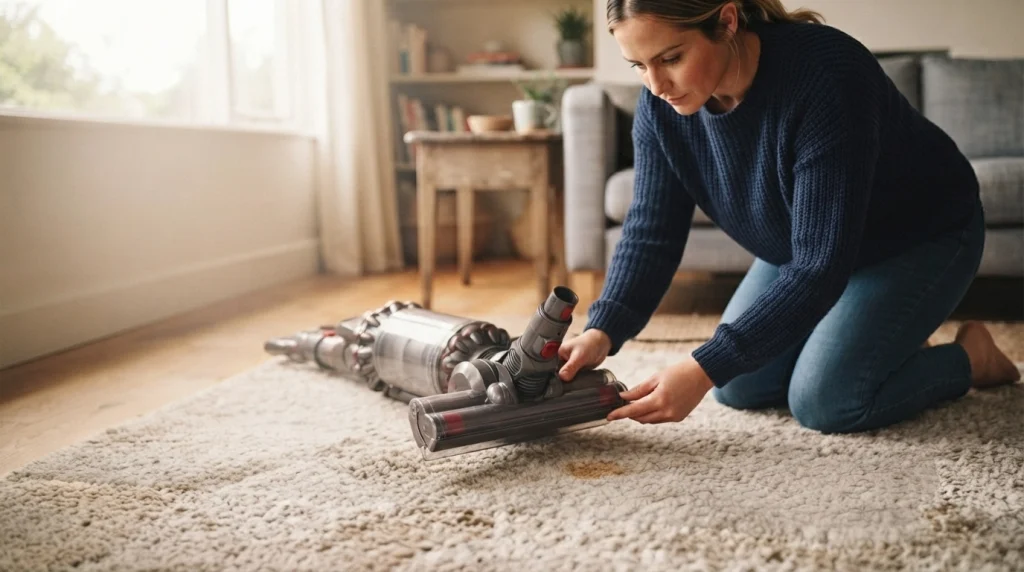
First, check whether the problem is loose debris, a machine issue, or a stain. Vacuuming is designed primarily to collect dry, loose material; it will not necessarily remove discoloration, oily residue, or deeply set stains.
- If suction is weak: Check the bin or bag, accessible filters, hose, and nozzle for blockages, following the manufacturer’s maintenance instructions.
- If pet hair remains: Try a carpet-safe attachment and slow passes from a different direction. Avoid aggressive brushing if the fibers catch or fuzz.
- If the carpet still looks stained: Use a cleaning method approved for the carpet material. Test any spot-treatment product in an inconspicuous area and follow its label.
- If the carpet smells musty or feels damp: Do not continue with a standard dry vacuum. Identify the moisture source and allow appropriate drying or arrange suitable cleaning.
- If the vacuum smells hot, sparks, or makes an unusual grinding noise: Turn it off, unplug it when safe, and check the manual. Do not continue operating a potentially damaged machine.
Never vacuum wet carpet with a standard dry vacuum. Use a machine specifically designed and approved for wet pickup, or obtain appropriate cleaning assistance.
Tip
Use a simple routine: clear the floor, check the vacuum, clean slowly in overlapping rows, change direction where appropriate, and finish the edges. This makes coverage more consistent without wasting time on unnecessary repeated passes.
Frequently Asked Questions
Is it better to vacuum carpet fast or slow?
Slow, controlled passes are generally more effective because they give the vacuum time to loosen and collect debris. Move steadily rather than rushing, and overlap each row slightly.
Should you vacuum carpet in more than one direction?
Yes, when the carpet’s construction and care instructions permit it. A second pass at roughly a right angle can help collect debris left behind by the first direction.
Should you dust before or after vacuuming?
Dust raised surfaces first, then vacuum the carpet. This lets you collect particles that fall from shelves, furniture, and other surfaces during dusting.
Can you vacuum carpet every day?
Yes, daily vacuuming can be appropriate in busy areas or places that collect pet hair and outdoor dirt, provided the equipment and technique suit the carpet. Less-used rooms may need cleaning much less often.
Should the vacuum brush touch the carpet?
A rotating brush should be used only when it is suitable for the carpet. Stop if it catches fibers, causes fuzzing, or strains the machine. Delicate loops, shag, and fringe may require suction-only cleaning.
Why does carpet still look dirty after vacuuming?
Possible causes include a clogged vacuum, an incorrect height setting, embedded hair, stains, or worn carpet fibers. Check the machine and cleaning technique first; stains and fiber damage may require a different solution.
Conclusion
The best way to vacuum carpet is to combine slow, overlapping passes with suitable vacuum settings and regular maintenance. Prepare the room, clean in more than one direction when appropriate, and use attachments to reach edges and corners.
Adjust your schedule to the amount of dirt your household produces, and be especially careful with wool, loop pile, shag, and delicate rugs. If vacuuming leaves stains or persistent odors, address the underlying problem instead of repeatedly passing the machine over the same area. A consistent, carpet-appropriate routine is the simplest way to keep floors looking clean and limit unnecessary wear.