
How to Vacuum Area Rugs Without Damaging Them

Quick Answer
To vacuum an area rug, check its care label, remove loose objects, and choose a safe suction setting. Vacuum slowly in overlapping passes, protect the fringe, and clean underneath the rug. These steps follow widely accepted rug-care guidance.
Quick vacuuming steps
- Check the label: Follow any limits on vacuum type, suction, or brush use.
- Prepare the rug: Pick up objects and shake out small washable rugs outdoors.
- Test the vacuum: Start with low suction and the rotating brush switched off.
- Vacuum slowly: Make overlapping passes in the direction of the rug pile.
- Protect the fringe: Clean it with gentle suction or a hand tool, never a beater bar.
- Clean underneath: Roll the rug back and vacuum the floor and rug pad.
I have damaged rug edges by treating every area rug like ordinary carpet. The problem was not the vacuum itself; it was the wrong brush setting and rushed technique.
This guide explains how to vacuum area rugs safely, including wool, shag, synthetic, delicate, and fringed rugs. It also covers pet hair, dust, allergens, and common vacuuming mistakes.
In This Guide
What Should You Do Before Vacuuming an Area Rug?
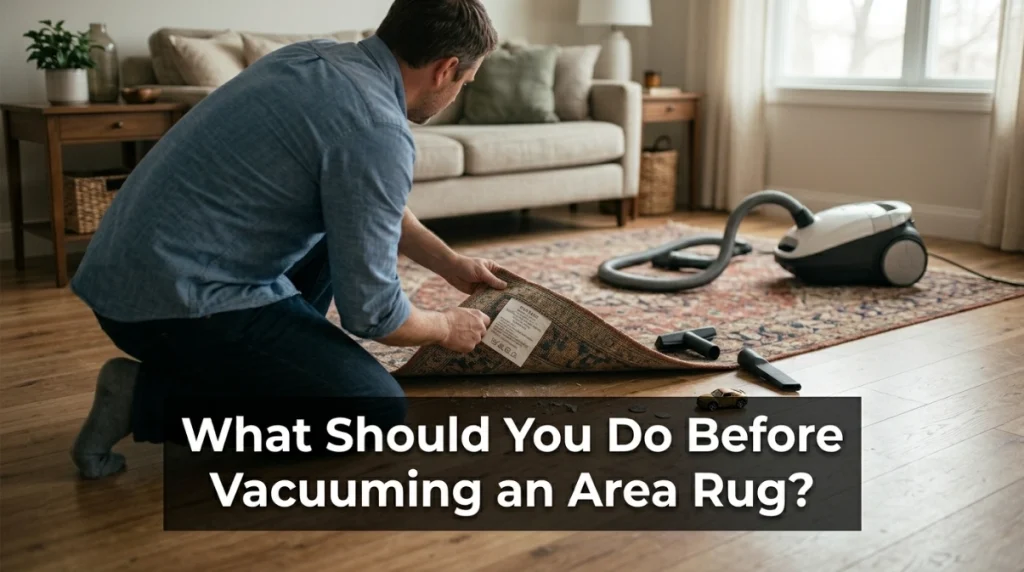
Start by identifying the rug material and reading its care label. Then inspect the rug for loose fibers, damaged edges, wet areas, and small objects.
Area rug vacuuming means removing loose soil with controlled suction while protecting the rug’s fibers, backing, edges, and fringe. It is routine maintenance, not deep cleaning.
Check the care label
The label may tell you whether a rotating brush is safe. It may also require low suction, dry cleaning, or professional care.
If the label is missing, use the gentlest setup first. Test a small corner that furniture normally hides.
- Look for fiber content: Wool, silk, cotton, jute, and synthetics need different handling.
- Check the backing: Cracked rubber or loose adhesive may break apart under strong suction.
- Inspect the edges: Stop if you find loose binding, unraveling, or damaged fringe.
- Check for moisture: Do not vacuum a wet rug with a standard household vacuum.
Prepare the room and rug
Pick up coins, clips, toys, and other hard objects. These items can block the hose or damage the vacuum fan.
Move light furniture when practical. Use a crevice tool around heavy furniture instead of striking its legs with the vacuum head.
- Open a window if outdoor conditions are clean and dry.
- Shake a small, sturdy rug outdoors if its label permits it.
- Secure curling corners so the vacuum head cannot catch them.
- Empty the dust bin or replace an overly full bag.
- Check the brush roll for wound hair and thread.
A full bin can restrict airflow. During my own tests, cleaning the bin and brush roll often restored suction without any repair.
Section Takeaway: Identify the rug first, begin gently, and never vacuum wet fibers with a normal dry vacuum.
How Do You Vacuum an Area Rug Step by Step?
Vacuum from the center toward the edges using slow, overlapping passes. Keep the vacuum away from fringe and adjust the power if the rug lifts or stretches.
1. Select a safe vacuum setting
Switch off the rotating brush when cleaning delicate or high-pile rugs. Use low or medium suction for the first test.
Raise the floor head if your vacuum offers height adjustment. A low head can grip thick pile too tightly.
2. Begin in the center
Place the floor head flat near the rug’s center. Push it forward slowly, then pull it back without twisting.
Work toward one edge in straight, overlapping rows. This pattern prevents missed strips and reduces repeated passes.
3. Follow the pile direction
Run your hand across the surface to find the pile direction. One direction feels smooth, while the opposite direction may feel rough.
Finish in the smooth direction for an even appearance. Avoid aggressive back-and-forth scrubbing on wool or handmade rugs.
4. Clean edges with an attachment
Use a soft upholstery tool around binding and corners. Hold loose edges down with one hand, keeping your fingers away from moving parts.
Never force the main vacuum head over a curled corner. The brush roll can catch the binding within seconds.
5. Vacuum under the rug
Roll one side back instead of folding it sharply. Vacuum the exposed floor and inspect the rug pad for dirt or moisture.
Repeat on the other side after returning the first half to the floor. Cleaning below the rug helps remove grit that can wear its backing.
6. Vacuum the back when appropriate
A sturdy synthetic or machine-made rug may benefit from occasional back vacuuming. Use suction only and support the rug as you turn it.
Skip this step for antique, handmade, brittle, or loosely woven rugs. Ask a rug specialist if you are unsure.
My practical test: If the vacuum pulls the rug upward, changes its shape, or produces a harsh rattling sound, I stop immediately. I then lower the suction or switch to a hand tool.
Section Takeaway: Slow passes remove more loose dirt than fast strokes, while controlled suction protects the rug.
Which Vacuum Setting Is Safe for Each Rug Type?
The safest setting depends on fiber strength, pile height, and construction. No single vacuum mode works for every area rug.
| Rug type | Recommended setting | Brush roll | Main risk |
|---|---|---|---|
| Low-pile synthetic | Medium suction | Usually safe if the label allows | Catching loose edges |
| Wool | Low to medium suction | Off or raised | Fuzzing and excess shedding |
| Shag or long pile | Low suction with hand tool | Off | Long fibers wrapping around the roll |
| Braided or flatweave | Low suction | Off | Pulled loops or stitching |
| Jute or sisal | Gentle suction only | Off | Fiber breakage and moisture damage |
| Silk, antique, or handmade | Specialist guidance | Off | Permanent fiber or structural damage |
Can you use an upright vacuum?
An upright vacuum can work on durable, low-pile synthetic rugs. Choose a model with adjustable height and a brush-roll shutoff.
Do not use strong brush action just because the rug looks dirty. Embedded grit needs slow airflow and repeated gentle passes.
Is a canister or stick vacuum better?
A canister vacuum often gives better suction control and attachment choices. Its lightweight floor head can also be easier to guide.
A stick vacuum works well for quick maintenance when it offers a gentle mode. Some powered heads remain too aggressive for fringe and shag.
Can a robot vacuum clean area rugs?
A robot can maintain sturdy, low-pile rugs if it crosses the edges safely. Watch its first full run.
Block access if the robot tangles fringe, pushes corners, or becomes trapped. Use boundary controls where the model supports them.
Section Takeaway: Match the vacuum to the rug, with suction-only cleaning as the safer starting point.
How Do You Handle Fringe, Pet Hair, and Allergens?
Clean fringe by hand, loosen pet hair before vacuuming, and use a well-sealed vacuum when dust control matters. Each problem needs a slightly different method.
How to vacuum a rug with fringe
Stop the main floor head before it reaches the fringe. A spinning brush can twist and tear the strands.
- Vacuum from the center toward the fringed end.
- Stop before the floor head touches the fringe.
- Lift the fringe gently to expose the floor underneath.
- Clean below it with a crevice or upholstery tool.
- Use low suction over the fringe only if the maker permits it.
How to remove pet hair
Pet hair sometimes clings to rug fibers through friction. Vacuuming harder may not solve the problem.
- Loosen the hair: Use a dry rubber squeegee or pet-hair tool with light strokes.
- Work in sections: Gather hair into small rows before vacuuming it.
- Clean the brush: Remove wrapped hair after unplugging the vacuum.
- Repeat gently: Two light passes are safer than grinding the head into the rug.
How to reduce airborne dust while vacuuming
Household dust can contain pollen, pet dander, mold spores, and other fine particles. Vacuuming can briefly stir some of that material into the air.
The EPA’s indoor particulate guidance recommends regular vacuuming and suggests considering a HEPA-filtered vacuum. HEPA means high-efficiency particulate air.
A filter alone does not guarantee low dust leakage. A sealed body, intact hose, fitted dust bin, and clean seals also matter.
- Empty a bagless bin outdoors when possible.
- Follow the maker’s filter-cleaning schedule.
- Do not run a vacuum with a missing or damaged filter.
- Let someone else vacuum if dust strongly triggers your asthma or allergies.
The EPA also advises that people with asthma or allergies leave the area during vacuuming. Its asthma-trigger guidance provides more household dust-control advice.
Expert Alert: A musty smell, visible growth, or a rug that stayed wet may indicate mold. Fix the moisture source and contact a qualified rug cleaner or remediation professional instead of dry-vacuuming suspected mold.
Section Takeaway: Protect fringe from moving brushes, loosen pet hair gently, and control dust with a maintained, well-sealed vacuum.
How Often Should You Vacuum an Area Rug?
Vacuum most area rugs about once a week. Increase the schedule for entryways, pets, children, visible soil, or heavy foot traffic.
| Rug location or condition | Practical starting schedule |
|---|---|
| Quiet guest room | Every one to two weeks |
| Living room | Once a week |
| Busy hallway or entry | Two or more times a week |
| Home with shedding pets | Two to three light sessions weekly |
| Delicate display rug | Follow its maker or specialist’s advice |
These are starting points, not fixed rules. Check the rug after each session for shedding, pulled loops, or distorted edges.
Common area-rug vacuuming mistakes
- Using maximum suction: Excess power may lift thin rugs and strain their edges.
- Vacuuming fringe: A rotating brush can wrap and tear fringe quickly.
- Moving too fast: Fast passes leave grit behind and create extra work.
- Ignoring the underside: Soil beneath the rug may scratch floors and wear the backing.
- Vacuuming wet material: Standard dry vacuums are not designed for liquids.
- Using a clogged machine: A full bin, blocked hose, or dirty filter reduces useful airflow.
- Assuming shedding means dirt: Some wool rugs naturally release loose fibers, especially when new.
When vacuuming is not enough
Vacuuming removes dry, loose debris. It will not safely remove every stain, odor, greasy deposit, or contamination problem.
Blot fresh liquid spills with a clean white cloth. Do not rub them deeper into the pile.
Use only a cleaner approved for the rug’s fiber and dye. Test it in a hidden area before treating the visible surface.
Call a professional for valuable handmade rugs, persistent odors, widespread stains, water damage, or colors that bleed. Professional cleaning is also safer when the backing is brittle.
Section Takeaway: Vacuum according to traffic and rug condition, then stop when the problem requires stain treatment or specialist care.
Frequently Asked Questions
Should you vacuum both sides of an area rug?
You can occasionally vacuum both sides of a sturdy machine-made rug. Use gentle suction on the back, and avoid this method on antique, silk, brittle, or loosely woven rugs.
Can you vacuum an area rug on a hardwood floor?
Yes. Turn off the brush roll if it could contact the exposed wood, and inspect the vacuum wheels for grit. Roll the rug back carefully when cleaning the floor underneath.
Should the brush roll be on or off?
Keep it off for shag, fringe, wool, braided, looped, or delicate rugs unless the manufacturer says otherwise. A powered brush may be suitable for a durable, low-pile synthetic rug.
Why does my vacuum suck up the rug?
The suction may be too high, the floor head may be too low, or the rug may be too light. Reduce suction, raise the head, open its airflow control, or use an upholstery attachment.
Can you vacuum a wet area rug?
Do not use a normal dry vacuum on a wet rug. Extract water only with equipment designed for wet pickup, and follow the rug maker’s care instructions.
How do you vacuum a shag rug?
Turn off the rotating brush and begin with low suction. Use a plain floor nozzle or upholstery tool, working in small sections without pulling long strands.
Does vacuuming remove dust mites?
Vacuuming can remove some dust and allergen material, but it does not guarantee complete dust-mite removal. Use it as one part of regular cleaning and moisture control.
Final Takeaway
The best way to vacuum an area rug is to start gently. Check the label, control the suction, move slowly, and keep powered brushes away from vulnerable fibers.
Pay special attention to edges, fringe, and the floor underneath. If the rug lifts, sheds heavily, unravels, smells musty, or shows water damage, stop and seek specialist advice.
Make this careful routine part of your weekly cleaning. Your rug will look cleaner without taking needless wear from the vacuum.