
How Often Should You Vacuum With Pets? Cleaning Guide

Quick Answer
If you have pets, vacuum high-traffic floors and pet-favorite areas several times a week, and clean carpets and upholstered furniture at least once or twice a week as a practical starting point. Vacuum daily where heavy shedding, visible fur, or frequent messes demand it. If someone in your home has pet allergies, regular vacuuming and effective filtration become especially important.
The right vacuuming schedule depends on how much your pet sheds, where it spends time, and which surfaces collect fur. A short-haired cat in a mostly hard-floor apartment may need less frequent vacuuming than two long-haired dogs sharing carpeted rooms and a sofa.
Instead of cleaning every room equally often, focus on the places where fur, tracked-in dirt, and debris accumulate fastest. This approach keeps the home manageable without turning vacuuming into an all-day chore.
How Often Should You Vacuum Different Areas of a Pet-Friendly Home?
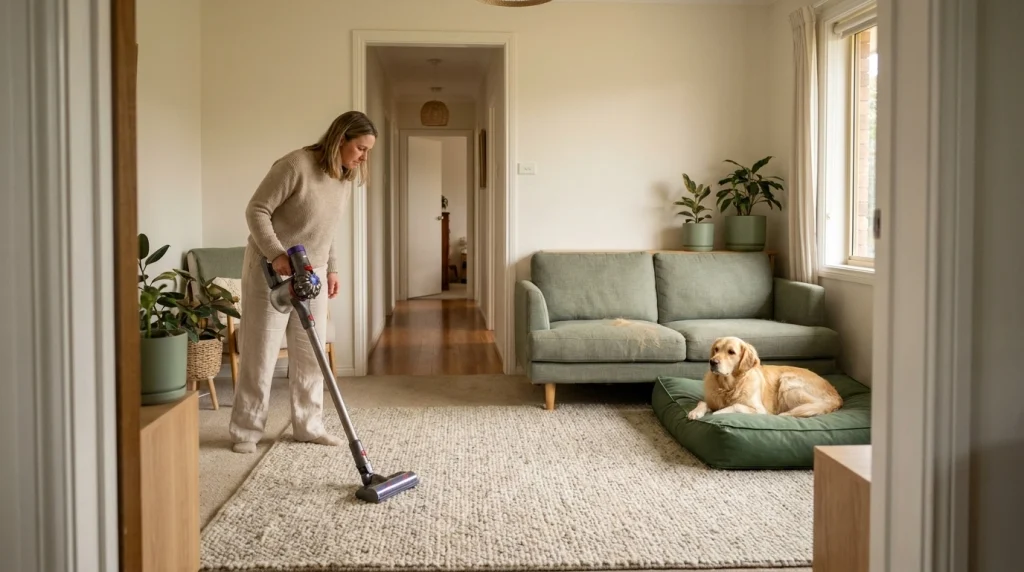
Use the following schedule as a starting point, then adjust it according to visible buildup and your household’s needs. These are practical housekeeping intervals, not fixed medical or industry standards.
| Area | Starting frequency | Why it matters |
|---|---|---|
| Busy hard floors | 2–4 times weekly; daily if needed | Collect loose hair, crumbs, and tracked-in dirt. |
| Carpets and rugs | 1–2 times weekly | Remove hair and debris trapped between fibers. |
| Sofas and fabric chairs | 1–2 times weekly | Collect fur transferred from resting pets. |
| Pet sleeping areas | Weekly, or more often if visibly dirty | Control loose hair around beds and blankets. |
| Stairs, corners, and edges | Weekly; spot-clean as needed | Reach fur missed by the main floor head. |
For general indoor allergen control, the U.S. Environmental Protection Agency’s indoor particulate matter guidance recommends regular vacuuming of carpets and furniture, with more frequent cleaning where needed.
The practical rule: clean according to buildup, not just the calendar. A hallway covered in fur after two days deserves attention before a guest bedroom that remains clean all week.
What Factors Mean You Should Vacuum More Often?
Some pet households need daily vacuuming in selected areas, while others can maintain a comfortable routine with a few sessions each week. Four factors make the biggest difference.
Your pet’s shedding level
Heavy-shedding dogs and cats leave more loose fur on floors, rugs, furniture, and bedding. During seasonal shedding periods, you may need to vacuum favorite resting places daily or every other day.
Pets with shorter coats can still leave plenty of hair, so coat length alone is not a reliable guide. Watch how quickly fur returns after cleaning.
Your flooring and furniture
Hard floors make loose fur easy to spot, but lightweight strands can drift under furniture and collect along walls. Carpet can hide hair and dirt below the surface, making routine cleaning important even when the room looks clean.
Fabric sofas, upholstered chairs, and pet beds also deserve attention because fur can cling to their surfaces. If your pet regularly sleeps on the couch, include that furniture in the weekly routine rather than vacuuming only the floor.
How many pets share the home
More pets generally mean more opportunities for hair, litter, outdoor debris, and food crumbs to accumulate. Two shedding pets may require more frequent cleaning than one pet, particularly in shared sleeping and play areas.
However, pet count is only a guide. A single dog that spends much of the day outdoors can bring in more dirt than several indoor cats.
Allergies or respiratory sensitivity
If someone in your household has a pet allergy or asthma triggered by indoor particles, regular vacuuming is one part of a broader cleaning strategy. Pet allergens are not limited to visible hair; they can also come from dander, saliva, and other animal materials.
The Asthma and Allergy Foundation of America recommends regularly vacuuming carpets and fabric furniture and using suitable filtration as part of pet-allergy management.
For a sensitive household, increase attention to bedrooms, upholstered furniture, and other places where people spend long periods. Vacuuming alone will not eliminate every allergen, so combine it with other appropriate exposure-reduction measures.
Should You Vacuum Every Day If You Have a Dog or Cat?
No, not necessarily. Daily whole-home vacuuming is not essential for every pet owner. It is more useful when shedding is heavy, fur becomes visible quickly, or a particular area gets dirty every day.
Use this simple decision guide:
- Vacuum daily: High-shedding pets, fur-covered favorite spots, busy entryways, or frequent tracked-in dirt.
- Vacuum every other day: Moderate shedding or areas that develop noticeable fur between weekly cleans.
- Vacuum two or three times a week: Lower-shedding pets, mostly hard flooring, and limited buildup.
- Vacuum at least weekly: Carpets and fabric furniture that stay relatively clean between sessions, with spot-cleaning as needed.
These categories overlap intentionally. A household may vacuum its kitchen and living-room floor daily but clean a spare room once a week.
Daily cleaning can also be brief. A quick pass around feeding stations, pet beds, and the main walking route may prevent fur from spreading without requiring a complete room-by-room session.
How Can You Build a Simple Weekly Vacuuming Routine?
A repeatable routine is easier to maintain than waiting until fur covers every surface. Divide tasks into quick pickups and deeper cleaning sessions.
- Spot-clean high-traffic areas. Pick up visible clumps of fur and vacuum around feeding stations, doorways, and pet beds whenever buildup appears.
- Clean the main floors two or three times a week. Adjust the frequency upward if hair returns quickly or several pets share the room.
- Vacuum carpets and rugs once or twice weekly. Make slow, overlapping passes, and change direction where hair remains embedded.
- Include furniture and stairs. Use suitable attachments on sofas, cushions, steps, and other places your pet regularly occupies.
- Finish with overlooked edges. Check under furniture, along baseboards, and around corners where fur collects.
Dust higher surfaces before vacuuming the floor so that fallen dust does not immediately undo your work. If you damp-dust shelves or tables, finish that task before the final floor pass.
Tip
Attach one small task to an existing habit. For example, vacuum around the pet’s feeding station after tidying the bowls, then schedule the larger carpet and upholstery session on a consistent day each week.
For more detailed cleaning techniques, see this guide to vacuuming safely and effectively around pets. It covers room preparation, attachments, and ways to keep animals comfortable during cleaning.
Does Vacuuming More Often Reduce Pet Allergens?
Frequent vacuuming can help remove accumulated pet hair, dust, and some allergen-containing particles from carpets and upholstered surfaces. However, it does not guarantee that symptoms will disappear or that airborne allergens will be eliminated.
Vacuuming can temporarily stir settled particles into the air. The EPA advises people with asthma or allergies to avoid the area while vacuuming when possible, and to consider a vacuum with HEPA filtration to help reduce particles escaping back into the room.
If someone is sensitive to pet allergens, make the routine more comprehensive:
- Use a vacuum with effective filtration and maintain it according to its instructions.
- Damp-dust hard surfaces instead of dry-dusting in a way that spreads dust.
- Wash pet bedding and other washable fabrics regularly, following their care labels.
- Keep pets out of bedrooms when feasible, especially where an allergic person sleeps.
- Have someone without the sensitivity vacuum when possible, and allow stirred-up dust to settle before returning.
Choose the frequency based on the household’s needs, but do not assume that vacuuming every day is automatically more effective than combining regular vacuuming with bedding care, filtration, and sensible limits on pet access.
What Mistakes Make Pet-Hair Cleaning Less Effective?
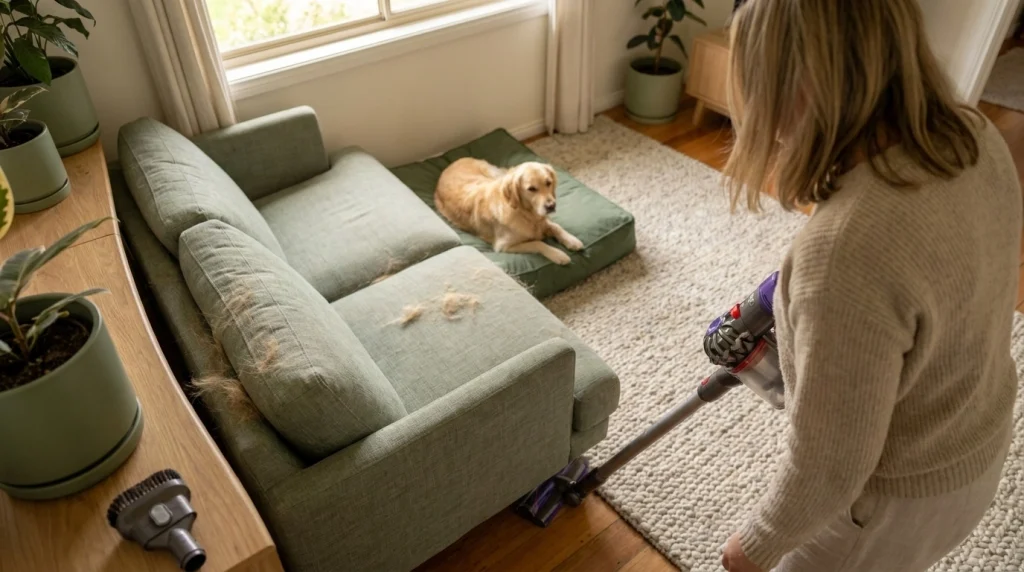
Vacuuming more often will not help much if the machine repeatedly leaves fur behind or sends dust back into the room. Avoid these common mistakes:
- Moving too quickly: Slow, overlapping passes can collect more embedded hair than a rushed sweep.
- Ignoring furniture: Fur left on sofas and cushions can fall back onto freshly cleaned floors.
- Using the wrong attachment: Match the floor head to the flooring and use an appropriate upholstery tool on fabric.
- Neglecting vacuum maintenance: A full dustbin, clogged filter, or tangled brush roll can reduce pickup. Follow the manufacturer’s maintenance schedule.
- Vacuuming wet messes with a dry-only machine: Urine, vomit, and spilled water require suitable cleanup rather than an ordinary dry vacuum.
- Cleaning only when fur is obvious: Carpets and fabric surfaces can hold debris that is difficult to see.
If your vacuum still leaves fur behind after you adjust the technique and clean the machine, follow this troubleshooting guide on why a vacuum may not pick up pet hair.
Frequently Asked Questions
Should I vacuum twice a day if I have pets?
Usually not throughout the entire home. Twice-daily spot-cleaning may be useful in a heavily shedding household or around a litter area, but most homes can adjust cleaning to where debris actually builds up.
Is vacuuming once a week enough for a home with pets?
It may be enough for a low-shedding pet in a tidy home with mostly hard floors. Homes with carpets, multiple pets, or visible daily shedding generally benefit from more frequent cleaning.
Should I vacuum before or after grooming my pet?
For a planned grooming session indoors, vacuum after grooming to collect loose hair that falls onto the floor. Clean the grooming area and washable tools as appropriate, too.
Does pet hair stay in carpet even after vacuuming?
Yes. Some strands can remain caught between carpet fibers, particularly in dense or deep-pile carpet. Slow overlapping passes, a suitable powered floor head, and occasional passes in another direction can help.
Should I vacuum the room where my allergic pet sleeps?
Regular cleaning can help reduce accumulated dust and allergens, but avoid vacuuming while the pet is present if cleaning stirs up triggers. For a pet with diagnosed environmental allergies, follow your veterinarian’s guidance on managing its surroundings.
Do robot vacuums replace regular vacuuming in a pet home?
A robot vacuum can collect loose hair between deeper cleaning sessions, but it may miss stairs, upholstery, tight corners, and embedded carpet debris. Treat it as a maintenance aid rather than a complete replacement for targeted cleaning.
Conclusion
For most pet households, vacuuming several times a week is a practical starting point, with carpets and upholstered furniture receiving at least weekly attention. Increase the frequency in areas where fur, dirt, and litter accumulate quickly, and clean daily when shedding or household needs justify it.
Consistency matters more than following a rigid schedule. Focus on your pet’s favorite resting places, maintain the vacuum, and combine floor cleaning with regular care for bedding and fabric surfaces. If allergies are a concern, effective filtration and reducing exposure to stirred-up dust are important parts of the routine. The goal is a cleaner, more comfortable home—not endless vacuuming.