
How Often Should You Vacuum Your House?

Quick Answer
For most homes, vacuum carpets and rugs at least once a week. Vacuum busy areas, entryways, and pet zones more frequently—sometimes daily. Hard floors generally need vacuuming or sweeping about once a week, with extra cleaning whenever crumbs, hair, or grit accumulate. Adjust the schedule for household traffic, pets, allergies, and visible dirt.
There is no need to vacuum every room equally often. A hallway that collects outdoor dirt every day needs more attention than a guest bedroom that remains unused for weeks.
The most practical approach is to set a weekly baseline, identify the areas that become dirty fastest, and increase cleaning only where necessary. This keeps floors manageable without turning vacuuming into an unnecessarily time-consuming chore.
How Often Should You Vacuum Each Room?
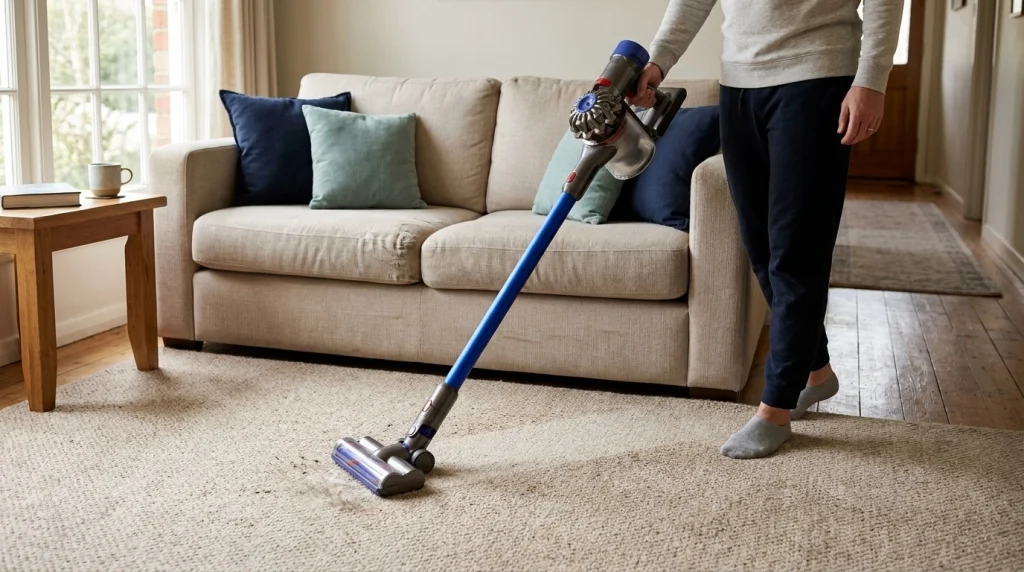
Start with the room’s foot traffic and flooring type. The Carpet and Rug Institute recommends daily vacuuming for high-traffic carpeted areas, approximately twice-weekly cleaning for medium-traffic areas, and weekly vacuuming for lightly used spaces.
Use the following schedule as a starting point, then adjust it to match your household.
| Room or area | Suggested frequency | Why |
|---|---|---|
| Entryway and hallway | Daily or several times weekly | Outdoor dirt and grit collect quickly. |
| Living room | Two or three times weekly, or weekly if lightly used | Foot traffic, crumbs, and upholstery debris. |
| Kitchen floor | Several times weekly or as needed | Food crumbs and tracked-in debris. |
| Main bedroom | Weekly | Dust, lint, and carpet debris. |
| Guest bedroom | Weekly or every one to two weeks | Usually less foot traffic. |
| Stairs | Weekly or more often when busy | Dust and dirt collect along edges. |
These frequencies are practical starting points, not universal rules. If a room looks clean and receives little use, you may not need to follow the same schedule as a busy entrance.
Does Your Flooring Type Change How Often You Should Vacuum?
Yes. Carpet traps loose soil between its fibers, while hard floors allow dust, crumbs, and hair to remain visible or move across the surface. Both need regular cleaning, but the method and frequency can differ.
Carpet and area rugs
Vacuum carpet at least weekly, increasing the frequency in busy rooms. Dirt particles can become embedded in carpet fibers as people walk over them, making later removal more difficult.
For area rugs, check the care label before using a rotating brush. Delicate wool, shag, looped, or fringed rugs may require lower suction or a suction-only attachment. Read our guide on how to vacuum area rugs without damaging them for surface-specific precautions.
Hardwood, tile, laminate, and vinyl
Vacuum or sweep hard floors approximately weekly, with additional cleaning when grit, crumbs, or pet hair appear. Kitchens and entrances often need attention more frequently than quiet rooms.
Choose a floor head suitable for the surface. An aggressive rotating brush can scatter debris or damage a sensitive finish if grit becomes trapped underneath it. Follow the flooring manufacturer’s care instructions, particularly for hardwood and laminate.
On floors that also need mopping, remove loose dry debris first. This prevents dirt and hair from spreading around when you use a damp mop.
How Do Pets, Children, and Allergies Affect Your Vacuuming Schedule?
Household activity can change how quickly floors become dirty. More frequent vacuuming is often useful when pets shed, children play on the floor, outdoor dirt gets tracked inside, or someone in the household has dust-related allergy symptoms.
- Homes with shedding pets: Vacuum frequently used rooms and pet resting areas several times a week. Daily cleaning may be appropriate for heavily shedding pets or busy carpeted spaces.
- Homes with young children: Clean play areas as needed, especially when crumbs, outdoor dirt, or small debris accumulate. Check the floor before children play on it.
- Allergy-sensitive households: Give bedrooms, carpets, rugs, and upholstered furniture regular attention. A vacuum with effective fine-particle filtration can help control settled dust and allergen material.
- Homes with frequent visitors: Increase cleaning around entrances and seating areas when additional foot traffic leaves visible dirt or hair.
The American Academy of Allergy, Asthma & Immunology’s cleaning guidance recommends weekly carpet vacuuming with a small-particle or HEPA-filter vacuum for allergy and asthma management.
Vacuuming is only one part of allergen control. It does not eliminate every dust mite, pollen particle, or pet allergen, so combine it with appropriate bedding care, damp dusting, and other measures suited to the household’s triggers.
Tip
If you cannot vacuum the entire house frequently, prioritize the rooms where people spend the most time, the main entrances, and areas where pets sleep or shed. A consistent targeted routine is more practical than an unrealistic whole-house schedule.
What Signs Tell You That You Should Vacuum More Often?
Your calendar is a useful guide, but the condition of your floors can tell you when to clean sooner. Increase the frequency if you repeatedly notice:
- Visible dust, crumbs, hair, or grit returning shortly after cleaning.
- Debris collecting around baseboards, furniture legs, and room corners.
- Pet hair building up on carpets, rugs, or fabric furniture.
- Outdoor dirt appearing near entrances after people come inside.
- Carpet that looks dull or feels gritty underfoot.
- More dust accumulating in areas where people regularly sit or play.
Do not wait until a carpet looks dirty. Much of the loose soil may be difficult to see, particularly on patterned or dark flooring.
On the other hand, you do not need to vacuum repeatedly just because a small amount of dust appears. If an area stays clean between weekly sessions, maintaining the existing schedule may be sufficient.
How Can You Vacuum Efficiently Without Wasting Time?
Good technique helps you cover the floor properly without repeating the same work. Prepare the room first, then vacuum in a consistent order.
- Clear the floor. Pick up toys, cords, clothing, and small objects that could obstruct the vacuum head.
- Dust higher surfaces first. Clean shelves and furniture tops before vacuuming so fallen debris can be collected afterward.
- Choose the correct setting. Match the floor head, suction, and brush-roll setting to the flooring or rug.
- Work in overlapping passes. Move slowly enough to collect debris instead of rushing across each strip.
- Clean edges and corners. Use a crevice tool where the main floor head cannot reach.
- Check the vacuum afterward. Empty the bin or check the bag as needed, and remove hair from the brush roll according to the manufacturer’s instructions.
For a more detailed routine, see our guide to vacuuming efficiently without unnecessary effort. If the vacuum suddenly loses suction, inspect its bin, filter, hose, and brush roll before assuming the machine needs replacing.
Should You Vacuum Every Day?
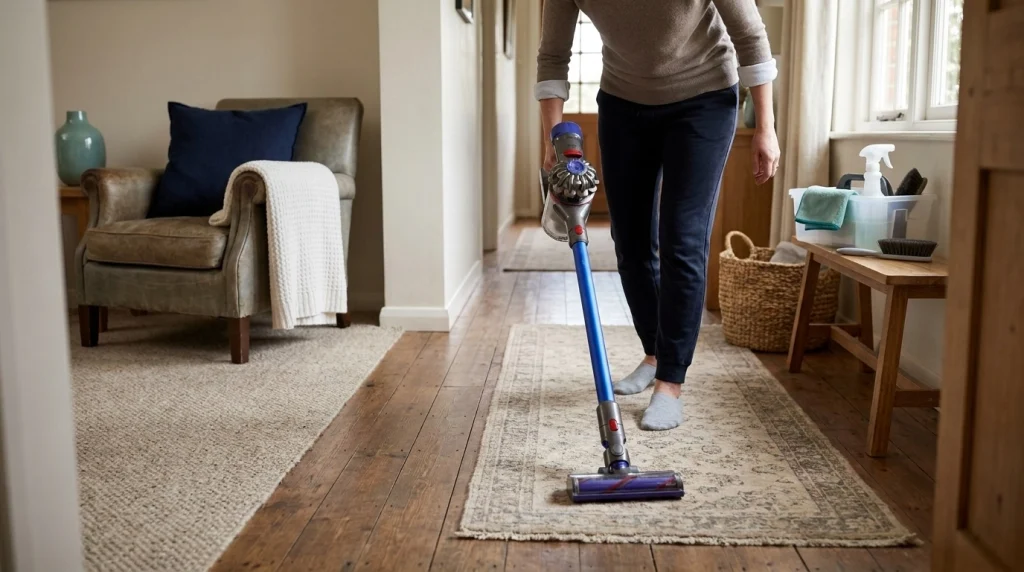
No. Daily vacuuming is not necessary for every room in every home. It is most useful in high-traffic zones, homes with substantial shedding, or areas where debris builds up quickly.
A household without pets may manage well with weekly vacuuming throughout most rooms and additional cleaning in the kitchen or entryway. A household with several shedding pets may need daily attention in shared spaces while bedrooms and less-used rooms follow a lighter schedule.
Choose the schedule that removes accumulating dirt without making cleaning unnecessarily burdensome. If you have limited time, divide the home into zones and clean different areas on different days.
Related Product
Related Product
Vacuum Cleaner with Effective Filtration
A vacuum with suitable floor settings and effective dust containment can help maintain carpets, rugs, and hard floors. Check compatibility with your flooring and household cleaning needs before choosing one.
As an Amazon Associate, we earn from qualifying purchases.
Frequently Asked Questions
Can you vacuum your house too often?
Routine vacuuming is generally fine when you use the correct settings and attachments. However, aggressive brush action or excessive suction can damage delicate rugs and some flooring, so follow the relevant care instructions.
Is vacuuming once a week enough?
Weekly vacuuming is a reasonable baseline for many homes. Busy entrances, heavily used carpets, and pet areas may need cleaning several times a week or daily.
Should you vacuum before or after dusting?
Dust higher surfaces first, then vacuum the floors. This allows you to collect dust and debris that fall during cleaning without having to vacuum the same area again.
How often should you vacuum under furniture?
Clean accessible areas under furniture during your normal weekly routine, or more frequently if dust and pet hair accumulate quickly. Move furniture only when it is safe and practical to do so.
Should you vacuum a bedroom every day?
Most bedrooms do not require daily vacuuming. Weekly cleaning is a useful starting point, but a bedroom used by shedding pets or someone with dust allergies may need more frequent attention.
Does vacuuming improve indoor air quality?
Vacuuming can remove settled dust, hair, and some allergen material from floors and upholstery. Its effectiveness depends partly on the vacuum’s filtration and dust containment, and it should complement other appropriate indoor cleaning measures.
Conclusion
For most households, weekly vacuuming provides a practical starting point. Clean entrances, busy living spaces, and pet areas more often when dirt accumulates, while lightly used rooms can follow a less demanding schedule.
Pay attention to your flooring, household activity, and any allergy-related cleaning needs. Use appropriate vacuum settings, work methodically, and maintain the machine so it can collect debris effectively. You do not need to vacuum every room daily to maintain a clean home; a consistent routine focused on the areas that need the most attention is usually the more sustainable approach.