How Do You Clean a Vacuum Brush Roll?

Quick Answer
Cleaning a vacuum brush roll requires unplugging the vacuum, removing the protective baseplate, cutting away wrapped hair with scissors, and wiping down the roller before reassembly. Routine appliance maintenance prevents motor strain and keeps your floors free of hidden debris.
Step-by-Step Brush Roll Cleaning Routine
- Unplug the appliance: Always disconnect power to prevent accidental activation before you touch moving parts.
- Remove the plate: Unscrew or unclip the plastic guard plate on the bottom of the vacuum head.
- Slice tangled hair: Slide a seam ripper or small scissors along the groove to sever tightly wrapped threads.
- Pull out debris: Unwrap the cut strands by hand and brush away fine dust using a damp cloth.
- Inspect the bearings: Check the side ends of the roller for trapped pet hairballs that block rotation.
Recommended Maintenance Schedule
- Inspect and clear the brush roll every two to four weeks depending on pet hair and carpet shedding levels.
Few things are more frustrating than pushing an expensive upright vacuum across your living room rug only to watch it plow right over a piece of lint. When your vacuum loses suction or starts leaving behind a trail of hidden dirt, the problem rarely lies in a failing motor. More often than not, the culprit is a choked, tangled brush roll that has stopped spinning entirely.
As a home-hygiene enthusiast who has tested dozens of upright, canister, and cordless vacuums across carpeted and hard floors, I have spent countless hours untangling hairballs from jammed rollers. Keeping this component clean restores powerful agitation, protects your indoor air quality by capturing fine allergens, and prevents your machine from overheating. Here is everything you need to know to safely service your vacuum’s agitator bar.
In This Guide
Why Do Vacuum Brush Rolls Get So Easily Clogged?
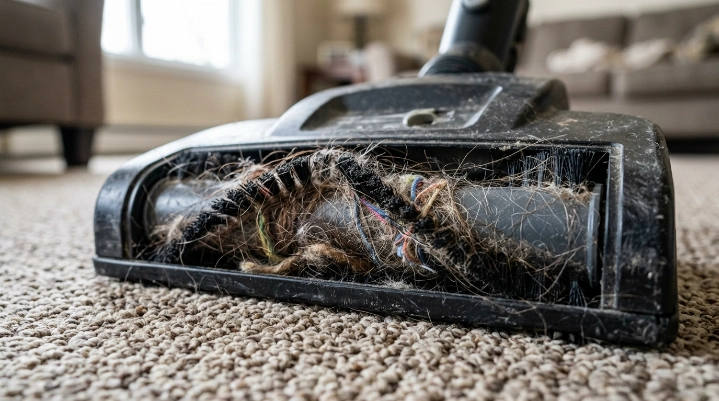
A vacuum brush roll, often called the agitator bar or beater bar, spins rapidly to beat carpet fibers and flick embedded dust upward into the suction stream. Because of this high-speed spinning motion, it acts like a magnet for long human hair, pet fur, sewing threads, and carpet fibers.
Over just a few weeks of normal cleaning, these flexible strands wrap tightly around the cylinder in overlapping layers. As the layers build up, they compress into a hard felt-like casing that binds the roller against its plastic housing. This friction slows down the motor, creates a burning rubber smell, and prevents the bristles from contacting your flooring.
Ignoring this buildup compromises your entire cleaning routine. When the roller stops turning, your vacuum relies entirely on passive suction rather than active agitation. Fine dust, pet dander, and microscopic allergens remain trapped deep within carpet tufts instead of reaching your filtration system.
Regular brush roll maintenance ensures your vacuum maintains maximum agitation power and protects your household indoor air quality from lingering allergens.
What Tools Do You Need to Clean a Vacuum Brush Roll?
You do not need an expensive toolkit to service a vacuum agitator. Gathering a few common household items beforehand makes the process quick, clean, and safe.
Having the right implements on hand prevents you from damaging delicate plastic components or slicing through internal drive belts. Here is what you should assemble before flipping your vacuum upside down.
- Seam ripper or small scissors: Essential for sliding underneath tightly wound hair to cut it away without nicking the bristles.
- Flathead screwdriver: Useful for releasing stubborn plastic clips, latch mechanisms, or turning securing screws.
- Microfiber cloth and mild soap: Perfect for wiping down the plastic housing and removing sticky grime residue.
- Old toothbrush: Great for scrubbing fine dust out of tight corners and bearing end caps.
- Disposable gloves: Recommended to keep your hands clean from old dust, pet dander, and oily grime.
Expert Alert: If your vacuum exhibits a smoking smell, loud grinding noises from the internal gearbox, or exposed electrical wiring near the brush motor housing, stop using it immediately and contact a certified appliance repair technician.
How Do You Clean a Vacuum Brush Roll Step-by-Step?
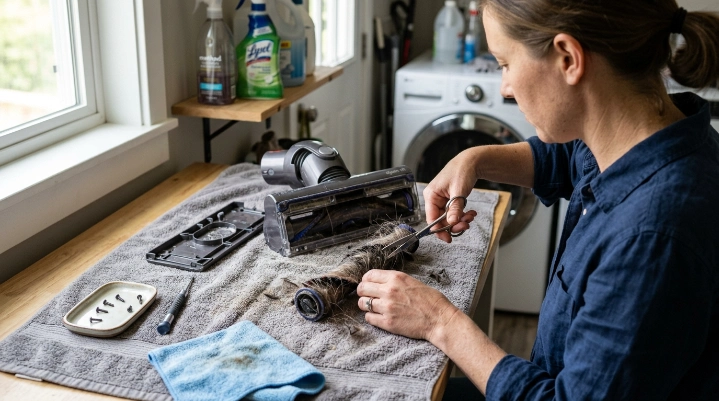
Approaching this task methodically ensures you do not lose small screws or misalign internal belts during reassembly. Follow this straightforward procedure to restore your vacuum to peak performance.
Start by clearing a flat workspace on a hard floor or table and laying down an old towel to catch falling debris. Safety always comes first when dealing with motorized cleaning appliances.
Unplug the power cord from the wall outlet or remove the battery pack if you are working on a cordless stick vacuum. This simple step eliminates any risk of the motor engaging while your fingers are near the spinning head.
Flip the vacuum over so the underside faces upward, exposing the baseplate and cleaning head. Locate the fastening screws or plastic latches holding the protective bottom plate in place.
Remove the plate carefully and set it aside alongside any screws in a small container so they do not roll away. You will now have clear, unobstructed access to the entire length of the brush roll.
Take your seam ripper or small scissors and insert the tip into the narrow groove or channel running along the length of the roller. Carefully slice upward away from the plastic core to cut through the compacted hair rings.
Unwind the severed strands with your fingers or pull them away gently in sections. Avoid pulling too hard on individual fibers embedded deep inside the bristle tufts to prevent pulling out the bristles themselves.
Check both ends of the roller cylinder where the metal shaft meets the plastic housing end caps. Pet hair frequently wraps around these end bearings, restricting free rotation and causing a squeaking noise.
Wipe down the entire roller and the interior floor nozzle housing with a slightly damp microfiber cloth to remove residual fine dust. Allow all parts to air dry completely before reassembling the vacuum to prevent moisture from reaching electrical components.
Snap or screw the bottom guard plate firmly back into its original position, ensuring all latches click securely into place. Test the roller by hand to confirm it spins freely before plugging the machine back in for a test run.
How Do Different Vacuum Brush Designs Affect Cleaning?
Not all vacuum cleaners feature the same brush roll construction. Understanding your specific appliance design dictates how you approach maintenance and hair removal.
Modern engineering has introduced specialized anti-tangle fins and soft roller heads designed to minimize manual upkeep. The table below compares the most common vacuum brush configurations found in modern households.
| Vacuum Brush Type | Primary Flooring Use | Tangle Tendency | Maintenance Frequency |
|---|---|---|---|
| Traditional Bristle Bar | Medium to high-pile carpets | High | Every 2 weeks |
| Anti-Tangle Fin Roller | Mixed carpets and hard floors | Low to Moderate | Every 4 to 6 weeks |
| Soft Fluffy Roller | Bare hardwood and tile floors | Very Low | Every 2 months |
| Rubber Paddle Agitator | Pet-heavy multi-surface homes | Low | Monthly |
Traditional bristle bars require the most frequent attention because individual nylon bristles catch stray hairs like tiny hooks. Newer rubberized paddles and silicone fins shed hair naturally toward the suction inlet, drastically reducing the time you spend cutting away tangled threads.
Preventative Maintenance Tips for Longer Appliance Life
Taking proactive steps between deep cleaning sessions keeps your vacuum operating at peak efficiency. Small daily habits save you from struggling with heavily matted rollers later.
Pick up large debris, coins, paper clips, and long stray cords from your floors before you begin vacuuming. Sucking up rigid objects can chip plastic bristles, dent the roller core, or puncture internal air ducts.
Inspect the underside of your vacuum head monthly even if the machine seems to be running fine. Catching a small hair wrap early prevents it from compounding into a dense mass that stalls the internal drive belt.
Pair your brush roll maintenance routine with regular cleaning of your vacuum filters and dust bin. Clean airflow paths reduce strain on the motor and ensure optimal suction power reaches the floor nozzle.
Frequently Asked Questions
How often should I clean my vacuum brush roll?
You should inspect and clean your vacuum brush roll every two to four weeks. If you live with long-haired pets or family members with long hair, you may need to check the roller every week to prevent severe tangling.
Can I wash my vacuum brush roll with water?
Most removable brush rolls can be wiped down with a damp cloth or washed briefly in lukewarm water if they do not contain integrated electronic connections or motor housings. Always ensure the roller is one hundred percent dry before reinstalling it.
Why does my vacuum brush roll stop spinning during use?
A brush roll typically stops spinning because too much hair and thread have wrapped around the end bearings, or because the internal drive belt has snapped or slipped off its track. Clear the debris and inspect the belt for wear.
Is it safe to use scissors on a vacuum brush roll?
Yes, using small scissors or a seam ripper is the safest way to slice through tangled hair. Take care to point the sharp edges away from the rubber belt and nylon bristles to avoid accidental damage.
Do robotic vacuums require brush roll cleaning?
Robot vacuums accumulate hair just like upright models and require regular maintenance. Most robotic units feature a quick-release brush guard that lets you lift out the roller and wipe away dust every few cleaning cycles.
Closing Takeaway
Maintaining a clean vacuum brush roll takes only a few minutes, but it pays dividends in suction power, floor cleanliness, and appliance longevity. By making regular roller inspections part of your home hygiene checklist, you ensure your vacuum captures dust and allergens effectively for years to come.
What is your biggest challenge when maintaining your home vacuum cleaners? Share your thoughts below!