When Should You Replace a Vacuum Brush Roll? A Complete Home Hygiene Guide

Quick Answer
You should typically replace your vacuum brush roll every 6 to 12 months, or sooner if you notice split bristles, persistent unusual noises, or a complete loss of carpet agitation. Regular floor care maintenance prevents deep-seated dust mites and pet hair from lingering in your home fibers.
Core Replacement Indicators
- Worn bristles: Bristles are frayed, flattened, or visibly shorter than the housing edge.
- Reduced agitation: The vacuum fails to pull up embedded dirt or fluff from carpet pile.
- Strange noises: High-pitched squealing or rattling sounds persist even after cleaning out tangled hair.
- Burning smells: Friction from a seized bearing creates a distinct electrical or burning odor during use.
- Visible warping: Plastic roller bars show cracks, bends, or melted sections from overheating.
Inspection Checklist
- Disconnect your vacuum from power before touching or inspecting the roller bar underneath.
Maintaining a clean home starts from the ground up, but many homeowners forget about the hardworking roller bar spinning beneath their upright or stick vacuums. When you push your cleaner across the living room carpet, you rely heavily on this spinning agitator to dislodge hidden allergens.
Over the years, testing various vacuum types from brands like Dyson, Shark, and Bissell has taught me that a failing brush roll destroys overall cleaning performance. Let’s look at exactly how to spot when yours needs a swap.
In This Guide
What are the warning signs that your vacuum brush roll is failing?
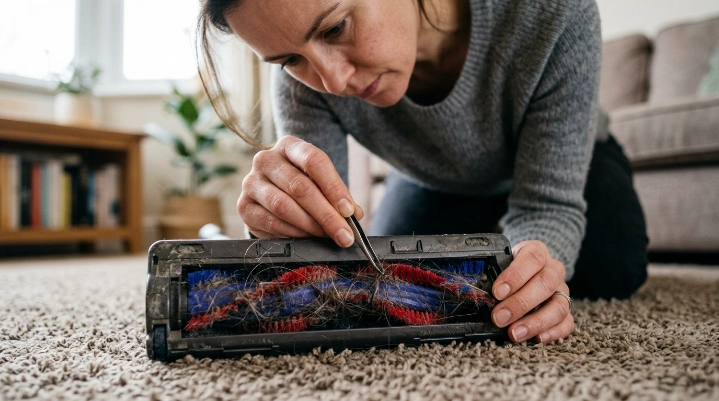
Recognizing the early warning signs of a broken or worn vacuum component saves your carpets from excessive wear. A degraded roller stops beating carpet fibers effectively, leaving behind heavy debris.
Visual inspections are your best first line of defense against appliance failure. Look closely at the tufts of bristles lining the plastic cylinder under your floor nozzle.
If those bristles look stubby, melted, or flattened down flat against the bar, they cannot flick up dirt. You will also notice your machine leaves behind visible particles on medium-pile carpets after multiple passes.
Another major warning sign involves strange mechanical noises during operation. A high-pitched squeal usually indicates that hair or string has wrapped around the end bearings, causing extreme friction.
If you ignore this noise, the friction creates intense heat that can melt the surrounding plastic housing. In severe cases, you might smell a faint burning odor shortly after turning on the motor.
Section Takeaway: Watch for flattened bristles, unusual high-pitched squeals, burning odors, and poor pickup performance to catch a failing brush roll early.
How often should you replace a vacuum brush roll?
Most manufacturers recommend inspecting your floor nozzle assembly monthly and replacing the brush roll every 6 to 12 months. Heavy-duty households with multiple shedding pets often require annual or biannual replacements.
The lifespan of this component depends heavily on your household traffic and floor types. Homes with dense carpeting and long human hair put significantly more strain on the spinning mechanism.
If you run a robot vacuum or a lightweight stick vacuum daily, the motor gears and end caps wear down faster. Upright vacuums typically feature sturdier wooden or thick plastic dowels that last closer to two years.
Consumer research organizations like Consumer Reports emphasize that routine maintenance extends appliance longevity significantly. Sticking to a strict inspection schedule prevents sudden motor strain and costly replacements.
Keep a spare roller bar in your utility closet if you notice your current model showing fatigue. Swapping it out proactively ensures your indoor air and floors stay consistently clean year-round.
| Vacuum Type | Typical Brush Lifespan | Key Wear Indicator |
|---|---|---|
| Upright Vacuum | 12 to 18 Months | Flattened bristles and worn belt grooves |
| Cordless Stick Vacuum | 6 to 12 Months | Frayed microfiber strips or seized end bearings |
| Robot Vacuum | 6 to 9 Months | Cracked rubber fins and worn rubber bearing caps |
Section Takeaway: Plan to swap your vacuum brush roll every 6 to 12 months, adjusting frequency based on pet ownership and daily floor traffic.
Should you clean or replace your vacuum roller bar?
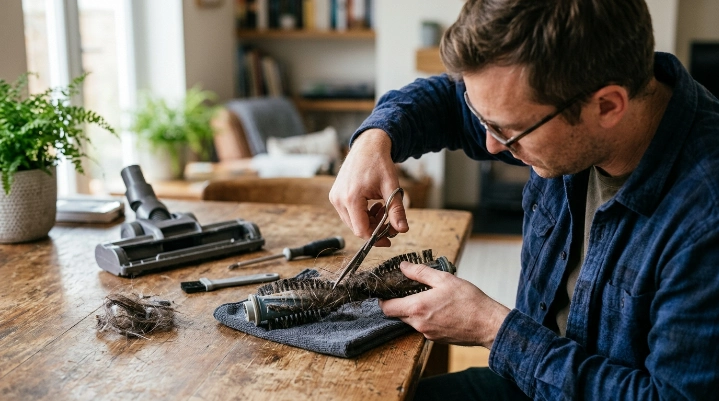
Many homeowners throw away a perfectly good roller bar when it simply needs a thorough detangling session. Knowing the difference between routine maintenance and structural failure saves you unnecessary purchase costs.
Hair wrap is the number one enemy of any modern vacuum cleaning appliance. When long strands wrap tightly around the center spindle, they restrict rotation and mimic a broken motor.
Take a pair of sharp scissors or a seam ripper and carefully slice through the wound hair parallel to the bristles. Pull the freed hair away gently without yanking on the individual bristle tufts.
If the underlying plastic cylinder remains straight, the end caps spin freely, and the bristles stand upright, cleaning is enough. You do not need a new component if the structural integrity is fully intact.
However, if the plastic is warped, cracked, or missing large chunks of bristles, cleaning will not fix the issue. Structural damage demands an immediate replacement part matched to your exact vacuum model.
Section Takeaway: Clean your roller bar regularly by cutting away tangled hair, but replace it immediately if the plastic housing is warped or cracked.
How does a worn brush roll impact indoor allergens and air quality?
Your vacuum cleaner does more than pick up visible dirt; it plays a critical role in controlling household allergens. A degraded brush roll directly undermines your home hygiene goals.
According to the Asthma and Allergy Foundation of America (AAFA), carpets harbor trapped dust mites, pet dander, and pollen grains. These microscopic particles trigger chronic allergy symptoms and respiratory irritation.
When your brush roll loses its stiffness, it skims over the top of the carpet instead of agitating the base layers. Deep-seated allergens stay locked tightly inside the carpet pile.
Even if your vacuum features a powerful True HEPA filtration system, it cannot capture dirt that never leaves the floor. The agitator must lift the debris so suction can pull it into the canister.
Maintaining a sharp, fully functional roller bar ensures your machine captures allergens effectively on every pass. This small maintenance task keeps your indoor air significantly cleaner and healthier.
Section Takeaway: A worn brush roll fails to agitate deep carpet allergens, rendering even advanced HEPA filtration systems far less effective.
How do you replace a vacuum brush roll step by step?
Replacing a vacuum brush roll is a straightforward DIY task that takes less than fifteen minutes with basic tools. Follow these simple steps to restore your machine’s cleaning power safely.
First, unplug your vacuum cleaner from the wall outlet or remove the battery pack completely. Safety comes first whenever you work around moving mechanical parts.
Turn the vacuum upside down on a flat, well-lit surface to access the floor nozzle plate. Locate the screws or release latches securing the bottom cover plate in place.
Remove the cover plate and set the screws aside in a small container so they do not roll away. Lift out the old brush roll carefully, paying attention to how the drive belt and end bearings sit.
Slide the new brush roll into the housing, ensuring the drive belt wraps correctly around the designated pulley groove. Spin the roller manually by hand to verify it rotates smoothly without catching.
Reattach the bottom cover plate, secure all screws tightly, and test the vacuum on a low-pile rug. Listen for smooth operation and check that the indicator lights show proper roller engagement.
Section Takeaway: Always unplug your vacuum, remove the base plate carefully, loop the new belt correctly, and test rotation by hand before powering on.
Frequently Asked Questions
Can a bad brush roll damage my carpets?
Yes, a warped roller bar, missing bristles, or exposed metal shafts can snag, fray, or tear delicate carpet fibers. Inspecting your floor nozzle regularly prevents accidental flooring damage.
How do I know if my vacuum belt is broken instead of the brush roll?
If the motor runs normally but the brush roll refuses to spin while resting on the floor, your drive belt is likely snapped or stretched. Check the belt first before purchasing a replacement roller.
Can I wash my vacuum brush roll with water?
Most plastic and nylon brush rolls can be rinsed with warm water after removing them from the vacuum housing. Always let the component air dry completely for at least 24 hours before reinstallation.
Does vacuuming hard floors ruin the brush roll?
Running a stiff carpet brush on bare hardwood floors can scratch delicate finishes and accelerate bristle wear. Switch your vacuum to hard floor mode or use a dedicated soft roller attachment.
Are generic replacement brush rolls safe to use?
Generic replacement parts can save money, but always verify exact model compatibility. Poorly fitting third-party rollers can strain your vacuum motor or void your manufacturer warranty.
Keep Your Floors and Air Clean
Inspect your vacuum’s brush roll today to ensure your home stays free of hidden dust and allergens.