
How Often Should You Replace a Vacuum Filter?

Quick Answer
There is no single replacement interval for every vacuum filter. Check your filters about once a month, then clean or replace them according to your vacuum’s manual; Consumer Reports also recommends following the manufacturer’s schedule because washable, disposable, pre-motor, and HEPA filters require different care.
Replace the filter sooner if you notice:
- Persistent low suction: Airflow stays weak after you empty the bin and clear obvious clogs.
- Visible damage: The filter has holes, torn material, warped edges, or a damaged seal.
- Heavy discoloration: Dirt remains deeply embedded after approved cleaning.
- Persistent odors: A musty or dusty smell returns quickly after normal maintenance.
- Manufacturer interval reached: A disposable filter has reached the replacement point stated for your exact model.
Best rule to remember
- Inspect monthly, maintain as directed, and replace based on condition plus the manufacturer’s schedule.
I’ve found that vacuum-filter maintenance gets confusing because people treat every filter the same. Some can be rinsed, others must stay completely dry, and some are designed to be replaced rather than restored.
This guide explains how often to replace vacuum filters, which warning signs matter, and how HEPA and washable filters differ.
In This Guide
- How often should you replace a vacuum filter?
- Does replacement frequency depend on the filter type?
- How can you tell when a vacuum filter needs replacing?
- Should you wash a vacuum filter or replace it?
- How can you make a vacuum filter last longer?
- How do you replace a vacuum filter safely?
- Frequently asked questions
How Often Should You Replace a Vacuum Filter?
Replace a vacuum filter according to the schedule for your exact machine, rather than using one universal number. As of 2026, manufacturer instructions still vary significantly by vacuum design and filter type.
A useful household habit is to inspect the filter monthly. That doesn’t mean every filter needs monthly replacement.
- Washable filters: Clean them at the interval specified by the manufacturer and replace them when damaged, permanently clogged, misshapen, or no longer performing well.
- Disposable filters: Replace them at the manufacturer’s specified interval or sooner when heavily soiled.
- HEPA exhaust filters: Follow model-specific instructions because some are washable while others must never be washed.
- Pre-motor filters: Check regularly because accumulated debris can restrict airflow before air reaches the motor.
There can be large differences even among ordinary household vacuums. For example, Hoover specifies a three-month replacement interval for the filter supplied with one WindTunnel All-Terrain model.
A Shark handheld-vacuum manual, by comparison, recommends replacing its filter every six to nine months. That difference is exactly why I don’t recommend putting one blanket replacement number on every vacuum.
Section Takeaway: Check your vacuum filter monthly, but use your exact model’s manual to decide when replacement is due.
Does Replacement Frequency Depend on the Filter Type?
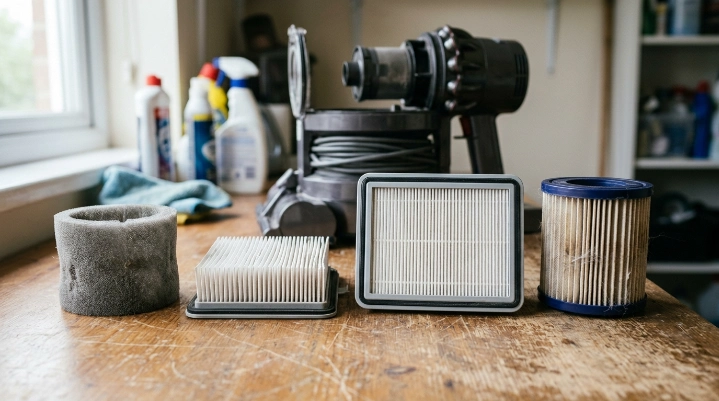
Yes. A vacuum can contain several filters, and each one performs a different job.
Some protect the motor from dirt. Others filter exhaust air before it returns to your room.
Definition: A HEPA, or high-efficiency particulate air, filter is a pleated mechanical filter. The EPA definition of HEPA filtration specifies at least 99.97% removal of particles measuring 0.3 microns under the defined test conditions.
| Filter type | Main purpose | Maintenance approach | Replace sooner if |
|---|---|---|---|
| Foam or felt pre-motor | Protects the motor from larger dust and debris | Often washable, but verify the manual first | Torn, misshapen, permanently dirty, or degraded |
| Pleated disposable filter | Captures finer particles | Usually replaced instead of rinsed | Deeply clogged, damaged, or due by schedule |
| HEPA exhaust filter | Reduces fine-particle exhaust from the machine | Wash or replace only as the manufacturer directs | Seal fails, media tears, odors persist, or service interval arrives |
| Washable cartridge | Reusable filtration on compatible vacuums | Rinse only using the approved method and dry fully | Cleaning no longer restores airflow or condition |
Don’t assume that the word HEPA automatically means washable. HEPA describes filtration performance, not the cleaning method for every vacuum-filter assembly.
How Can You Tell When a Vacuum Filter Needs Replacing?
A calendar is useful, but the condition of the filter matters too. Several warning signs can tell you that replacement may be needed early.
1. Suction stays weak after basic maintenance
First empty the dust bin or replace a full vacuum bag. Then inspect the hose, brush roll, wand, and intake for blockages.
If airflow remains weak and the filter is heavily loaded, the filter may be restricting airflow.
2. The filter is torn or warped
Replace filters with holes, torn pleats, damaged foam, cracked frames, or distorted sealing edges. Cleaning won’t restore damaged filter media.
3. Dust seems to escape from the exhaust
Dust escaping from a vacuum can indicate incorrect installation, damaged filtration, a poor seal, or another machine problem. Stop and inspect the filter assembly before continuing.
For households concerned about allergens, filtration condition deserves extra attention. The CDC recommends HEPA-filtered vacuuming as one measure for controlling dust-mite exposure in homes where asthma triggers are a concern.
4. Odors remain after cleaning
A musty filter can hold fine dust and odor-producing debris. Replace it if approved cleaning doesn’t remove the odor.
A persistent burnt smell is different. Turn the vacuum off and investigate the motor, belt, brush roll, or electrical components instead.
Expert Alert: If you notice burning, sparking, melted plastic, electrical odor, or repeated overheating, unplug the vacuum and have a qualified appliance technician inspect it.
Section Takeaway: Don’t wait for complete filter failure. Damage, persistent odors, escaping dust, and unresolved airflow problems are good reasons to replace a filter early.
Should You Wash a Vacuum Filter or Replace It?
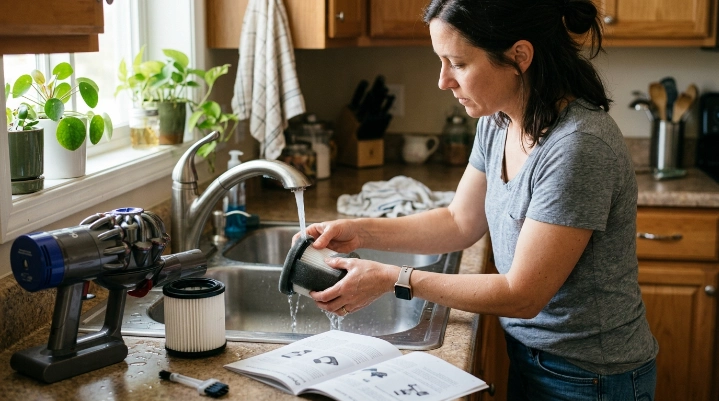
Wash a vacuum filter only when its manufacturer specifically identifies that filter as washable. Water can permanently damage filters designed for dry use.
I always check the filter label or manual before taking it to the sink. It’s one of the simplest ways to avoid ruining an otherwise usable filter.
If the filter is washable
- Turn off and unplug the vacuum, or remove the battery when appropriate.
- Remove loose surface dust without damaging the filter.
- Rinse using the manufacturer’s approved method.
- Avoid detergent unless the manual specifically permits it.
- Let the filter dry completely before reinstalling it.
Putting a damp filter into a vacuum can create performance problems and may damage components. Never rush the drying stage.
If the filter is disposable
Do not rinse it simply because it looks dirty. Replace it with the correct compatible filter.
Check the model number carefully because filters that look similar may have different dimensions, seals, or filtration specifications.
How Can You Make a Vacuum Filter Last Longer?
Good filter life starts with keeping excessive debris away from the filter. A few simple habits can reduce unnecessary loading.
- Empty the dust bin on time: Don’t keep vacuuming when the container is packed beyond its fill line.
- Replace bags when required: An overfilled bag can restrict airflow.
- Remove hair from the brush roll: Tangled hair can reduce cleaning performance and make the machine work harder.
- Check hoses and airways: Blockages can mimic symptoms caused by a dirty filter.
- Avoid inappropriate debris: Don’t vacuum liquids, wet material, fireplace ash, construction dust, or other unsuitable debris unless your machine is designed for it.
- Maintain washable filters: Follow the cleaning interval stated for your vacuum.
Fine dust deserves special attention because it can load filters quickly. Ordinary household vacuums aren’t automatically designed for every renovation or hazardous-dust cleanup job.
For routine indoor dust control, the EPA notes that regular cleaning can reduce accumulated dust and allergens. A properly maintained vacuum helps keep that routine working as intended.
How Do You Replace a Vacuum Filter Safely?
Replacing a filter is usually simple, but installing the correct part matters. A poorly seated filter can allow dust to bypass the intended airflow path.
- Turn the vacuum off. Unplug corded models or follow the battery-isolation instructions for cordless models.
- Find the filter compartment. Check the manual if your vacuum has several filters.
- Remove the old filter gently. Avoid shaking accumulated dust around the room.
- Check the compartment. Remove loose debris according to the manufacturer’s instructions.
- Match the replacement. Confirm the exact model or filter-part number.
- Install it in the correct orientation. Make sure seals, tabs, and covers sit properly.
- Test the vacuum. Listen for unusual sounds and check whether normal airflow has returned.
If you’re sensitive to dust, consider changing a dirty filter outdoors or in a well-ventilated area when practical. Handle the filter gently so you don’t release accumulated debris unnecessarily.
Section Takeaway: Use the correct filter, install it securely, and never run a vacuum without required filtration in place.
Frequently Asked Questions
Can I wash my vacuum’s HEPA filter?
Only if the manufacturer says that specific HEPA filter is washable. Some HEPA assemblies can be rinsed, while others use filter media that water can damage. Check the manual or filter label before washing it.
How often should I clean a washable vacuum filter?
Use the cleaning interval listed for your vacuum. A practical habit is to inspect the filter monthly, especially if you have pets, carpeting, heavy dust, or frequent cleaning sessions.
What happens if I never replace my vacuum filter?
A heavily loaded or damaged filter can restrict airflow and reduce cleaning performance. It may also allow more dust to escape if the filter media or sealing surfaces have deteriorated.
Can a dirty vacuum filter cause low suction?
Yes. A dirty filter can restrict airflow, although low suction can also come from a full bin, filled bag, clogged hose, blocked floor head, tangled brush roll, or poor filter installation.
Can I use my vacuum without a filter temporarily?
Don’t operate a vacuum without a filter when the machine is designed to use one. Filters can protect internal components and control exhaust particles, so removing one can affect both performance and the vacuum itself.
Do robot vacuum filters need replacement too?
Yes. Robot vacuums usually rely on compact filters that collect fine dust inside a small bin. Check them frequently and replace them according to the robot manufacturer’s instructions, particularly when cleaning no longer restores airflow.
Should I replace a filter if it still looks clean?
Follow the manufacturer’s interval even when the filter looks acceptable. Fine particles can load filter media without creating dramatic surface dirt, while age and repeated cleaning can also affect the condition of reusable filters.
The simplest rule is this: inspect your vacuum filter every month, but don’t replace it by calendar alone unless your manual gives a fixed interval.
Clean washable filters correctly, replace disposable filters when required, and act sooner when you see damage or persistent airflow problems. That small maintenance habit can keep your vacuum cleaning effectively for much longer.
“`
