
How to Clean a Vacuum Brush Roll (and Improve Your Home’s Air Quality)

If your vacuum cleaner is pushing dirt around instead of picking it up, a tangled brush roll is likely the culprit. But this isn’t just a flooring issue—it is a home air quality problem. When a vacuum roller is choked with hair, string, and carpet fibers, the machine’s suction drops significantly. Instead of trapping dust and pet dander inside the HEPA filter, a struggling vacuum kicks those allergens right back into the air you breathe.
Learning how to clean a vacuum brush roll is one of the simplest and most effective ways to maintain your appliance and protect your home’s indoor air quality. In this guide, we will walk you through the exact steps to safely untangle your vacuum roller, explain what tools you need, and share expert tips for keeping your home’s air fresh and allergen-free.
Quick Answer
To clean a vacuum brush roll, first unplug the vacuum and lay it flat. Use a pair of scissors or a seam ripper to carefully cut through tangled hair and string along the roller’s groove. Pull the debris free with your fingers, wipe the brush housing with a microfiber cloth, and reassemble. Perform this maintenance monthly to maintain optimal suction and protect your home’s air quality.
Why a Clean Brush Roll Matters for Indoor Air Quality
You might think of your vacuum as just a floor-cleaning tool, but it is actually the first line of defense for your home’s air. Carpets and rugs act like giant air filters, trapping airborne particles, dust mites, and pet dander as they settle.
When your vacuum brush roll is clogged, the bristles can no longer agitate the carpet fibers. Instead of lifting the trapped dust into the machine’s filtration system, the vacuum simply brushes over it. According to the Asthma and Allergy Foundation of America’s guide to controlling indoor allergens, using a vacuum with strong suction and a HEPA filter is crucial for reducing asthma triggers in the home. If your brush roll is jammed, your HEPA filter never gets the chance to do its job.
Furthermore, a strained vacuum motor runs hotter and less efficiently. This can cause the machine to expel a dusty, burning odor into your living space, adding harmful volatile organic compounds (VOCs) and fine particulate matter back into the air.
Tools You Need to Clean Your Vacuum Brush Roll
You do not need specialized equipment to clear a jammed vacuum roller. Gather these common household items before you start:
- Scissors or a seam ripper: Essential for cutting tightly wound hair and threads.
- A Phillips-head screwdriver: Needed if your vacuum model requires you to remove a base plate.
- An old toothbrush: Great for scrubbing away caked-on dust from the bristles.
- A microfiber cloth: Used to wipe down the plastic housing and trap leftover dust.
- A trash can: Keep it close by to immediately dispose of the dust and hair.
Step-by-Step Guide: How to Clean a Vacuum Brush Roll
Follow these practical steps to safely and effectively restore your vacuum’s cleaning power.
Step 1: Unplug the Vacuum and Expose the Roller
Safety first: Always ensure the vacuum is completely unplugged or the battery is removed before you begin. Lay the vacuum flat on the floor so the bottom is facing up.
If your vacuum has a removable base plate, use your screwdriver to take out the screws holding it in place. Keep the screws in a small bowl so they do not get lost in your carpet.
Step 2: Cut Away Tangled Hair and String
Once you can see the brush roll clearly, locate the horizontal groove that runs along the cylinder. This groove is designed specifically to give your scissors a safe path.
Slide the lower blade of your scissors or your seam ripper under the mat of hair and cut straight across. Do not pull the hair forcefully before cutting, as this can damage the bristles or snap the vacuum’s drive belt.
Step 3: Remove the Debris
After cutting the tangled mess, use your fingers to pull the clumps of hair, string, and carpet fibers away from the roller. Toss the debris directly into your trash can to prevent dust from going airborne.
If there is stubborn dust clinging to the base of the bristles, use your old toothbrush to gently comb it out.
Step 4: Remove the Brush Roll (If Possible)
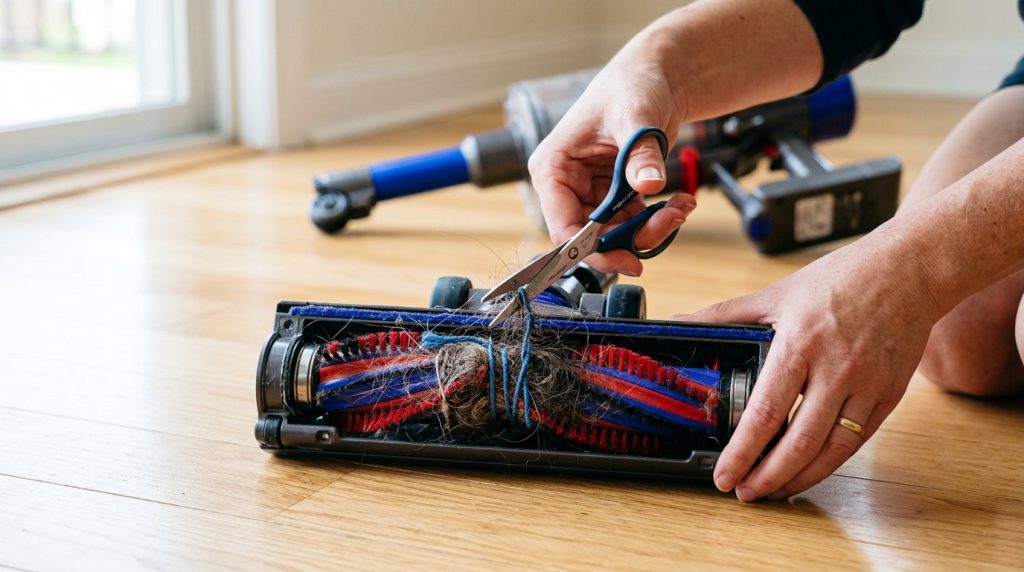
Many modern vacuums allow you to easily pop the entire brush roll out of the machine. Check your manufacturer’s manual to see if yours is removable.
If it comes out, take it to the sink and wash the plastic cylinder and bristles with warm water. Warning: Make sure the brush roll is 100% dry before reinstalling it, as moisture can breed mold inside the vacuum, which will ruin your indoor air quality.
Step 5: Clean the Housing and Drive Belt
While the roller is clear, take your microfiber cloth and wipe out the plastic cavity housing the brush. This area collects a massive amount of fine, powdery dust.
Inspect the rubber drive belt while you are in there. If the belt looks stretched, cracked, or loose, it is time to replace it. A loose belt prevents the brush roll from spinning at full speed.
Expert Tip: Whenever you perform maintenance on your brush roll, take an extra two minutes to check your vacuum’s HEPA filter. A clean roller with a clogged HEPA filter will still result in poor suction and dusty air. Tap the filter over a trash can outdoors to release trapped dust.
Helpful Table: Vacuum Maintenance Checklist
To keep your home’s air clean and your floors spotless, stick to this simple maintenance schedule.
| Maintenance Task | How Often to Do It | Why It Matters for Air Quality |
|---|---|---|
| Clean the brush roll | Once a month (or bi-weekly if you have pets) | Ensures allergens are agitated and sucked into the vacuum, not left in the carpet. |
| Empty the dust bin | After every use | Prevents dust from blowing back out of the exhaust. |
| Wash pre-motor filters | Every 1-2 months | Keeps the motor cool and prevents dusty, burning odors. |
| Replace the HEPA filter | Every 6-12 months | Guarantees that microscopic particles (like pollen and dander) are permanently trapped. |
| Check the drive belt | Every 6 months | Maintains the brush speed needed to lift deep-seated dirt out of rugs. |
Common Mistakes Homeowners Should Avoid
When learning how to clean a vacuum brush roll, avoid these frequent errors that can damage your machine or harm your home’s air quality:
- Using a knife instead of scissors: A sharp utility knife can easily slice into the plastic cylinder or cut the rubber drive belt by accident.
- Forgetting to clean the bearings: Hair often wraps tightly around the metal pins at the ends of the brush roll. If left unchecked, this friction can melt the plastic housing.
- Emptying the dust bin indoors: Always empty your vacuum bin and clean your filters in an outside trash can to keep a cloud of fine particulate matter from polluting your indoor air.
- Vacuuming over wet spots: Moisture in the brush roll and dust bin creates a perfect breeding ground for mold and mildew.
When to Consult an Air Quality or HVAC Professional
A high-quality, well-maintained vacuum is excellent for source control, but it cannot solve every indoor air quality issue. If you consistently maintain your vacuum and floors but still suffer from frequent sneezing, lingering pet odors, or excessive dust buildup on your furniture, you likely have a broader air quality problem.
According to the EPA’s guidelines on improving indoor air quality in homes, controlling the source of pollution (like vacuuming pet dander) must be combined with proper ventilation and dedicated air cleaning devices.
You should consult a professional if:
- Dust accumulates rapidly: If your home requires dusting every two days, your HVAC filter may be undersized, or your ductwork may be leaking.
- Allergy symptoms persist indoors: A professional can test your air for specific allergens, mold spores, or high VOC levels.
- Your home feels incredibly dry or humid: Improper humidity levels allow dust mites to thrive or cause dust to become highly airborne. An HVAC technician can recommend whole-home humidifiers or dehumidifiers to stabilize the environment.
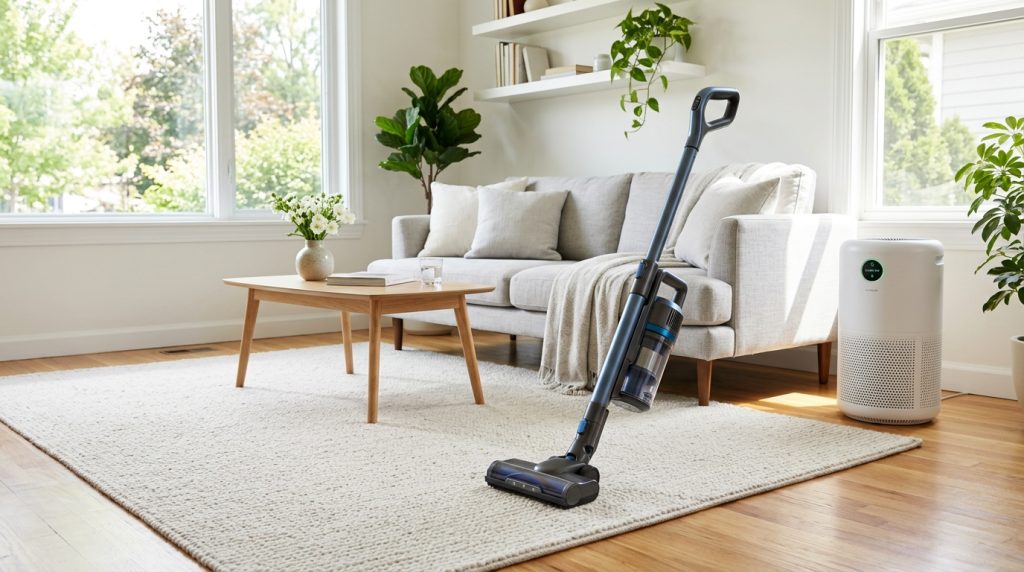
If your vacuum isn’t enough, consider adding a standalone HEPA air purifier to high-traffic rooms. Make sure to check the CADR (Clean Air Delivery Rate) to ensure the purifier is appropriately sized for the square footage of your space.
FAQs
How often should I clean my vacuum brush roll?
You should clean your vacuum brush roll at least once a month. If you have multiple pets with long hair, or family members with long hair, check and clean the roller every two weeks to maintain peak suction.
Can I wash my vacuum brush roll in the sink?
It depends on the model. If the brush roll is completely removable and does not contain electronic sensors or motors inside the cylinder, you can wash it with warm water. You must let it air dry completely for 24 to 48 hours before reinstalling it to prevent mold growth.
Why does my vacuum smell like burning rubber?
A burning rubber smell usually means the brush roll is jammed with hair, preventing it from spinning. The motor continues to turn the rubber drive belt against the stationary roller, creating intense friction. Turn off the vacuum immediately and clear the brush roll.
Does a dirty vacuum ruin indoor air quality?
Yes. A vacuum with a clogged brush roll, full dust bin, or dirty HEPA filter loses suction and blows fine dust, pet dander, and allergens directly out of the exhaust and back into your breathing space.
Will a better vacuum replace the need for an air purifier?
No. While a vacuum with a HEPA filter is crucial for removing heavy, settled allergens from carpets, it only cleans when it is running. An air purifier works continuously to scrub lightweight, airborne pollutants (like smoke, VOCs, and fine pollen) out of the air.
Conclusion
Knowing how to clean a vacuum brush roll is a fast, free, and highly effective way to keep your home’s floors spotless and your indoor air fresh. By taking ten minutes each month to snip away tangled hair and wipe down the housing, you allow your vacuum’s motor and HEPA filter to perform exactly as designed.
Remember, reducing indoor allergens requires a multi-step approach. A well-maintained vacuum removes the heavy particles from the ground, while a properly sized air purifier handles the airborne pollutants above. Take a few minutes today to flip your vacuum over, grab a pair of scissors, and give your brush roll the quick cleanup it desperately needs. Your carpets—and your lungs—will thank you.
