How to Improve Vacuum Suction: A Complete Guide for Cleaner Floors and Better Air

There is nothing more frustrating than pushing your vacuum cleaner over a dirty rug, only to see the dust, pet hair, and crumbs still sitting there. When your vacuum loses its pulling power, it is not just an annoyance—it is a hazard to your indoor air quality.
Vacuums play a crucial role in removing allergens, dust mites, and pet dander from your floors before they can become airborne. If your machine is struggling, those microscopic pollutants are simply being stirred up and released back into the air you breathe.
If you are wondering how to improve vacuum suction, you are in the right place. This guide will walk you through the simplest, most effective ways to restore your vacuum’s power, extend its lifespan, and keep your home’s air as clean as possible.
Quick Answer
Wondering how to improve vacuum suction? Start by emptying the dustbin or replacing the vacuum bag, as a full chamber drastically restricts airflow. Next, wash or replace your pre-motor and HEPA filters. Finally, clear clogs from the hose, untangle the brush roll, and check for air leaks around the seals.
Why Vacuum Suction Matters for Your Home’s Air Quality
Most homeowners view vacuuming simply as a way to keep floors looking tidy. However, your vacuum is actually one of the most important air quality tools in your home.
Carpets and rugs act like massive air filters. They trap settling dust, volatile organic compounds (VOCs), pollen, and pet dander. When you walk across a dirty carpet, you kick these particles back into the air. A vacuum with strong suction pulls these contaminants out of the fibers and traps them inside the machine.
According to the Asthma and Allergy Foundation of America, regular vacuuming is an essential strategy for reducing indoor allergens, but this is only effective if the vacuum maintains adequate suction and uses proper filtration. A weak vacuum merely scatters dust, making your allergies and indoor air quality worse.
Step-by-Step Guide: How to Improve Vacuum Suction
Restoring your vacuum’s suction is usually a simple DIY process. Follow these steps to get your machine running like new again.
1. Empty the Dustbin or Replace the Bag
The most common cause of poor suction is a full dirt chamber. Vacuums rely on uninterrupted airflow to generate suction.
- Bagless vacuums: Empty the canister after every use. Do not let the debris pass the “Max Fill” line, as this instantly drops the suction power.
- Bagged vacuums: Change the bag when it is 70% to 80% full. If you wait until it is completely packed, the air cannot pass through the bag’s pores, effectively choking the motor.
2. Clean and Replace Your Filters
Virtually all modern vacuums use filters to protect the motor and prevent fine dust from blowing back into your home. A clogged filter acts like a wall, blocking airflow and killing suction.
- Pre-motor filters: These are often washable foam or felt. Rinse them under cold water until the water runs clear, and let them dry for a full 24 hours before reinstalling.
- HEPA filters: High-Efficiency Particulate Air (HEPA) filters are critical for trapping microscopic allergens. Most HEPA filters are not washable and should be replaced every 6 to 12 months, depending on how often you vacuum.
3. Unclog the Hose and Attachments
If your dustbin is empty and your filters are clean, a clog is the next most likely culprit.
First, detach the hose from the main unit. Drop a coin or a small heavy object down the hose. If it does not fall straight through, you have a blockage. Use a long, flexible cleaning brush or a gently curved wire hanger to push the clog out. Do not use sharp objects that could puncture the plastic hose.
4. Untangle the Brush Roll (Agitator)
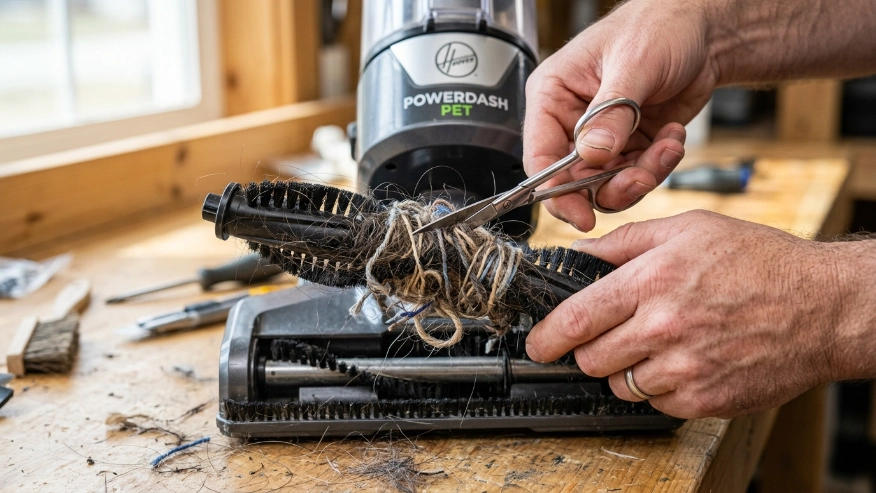
The brush roll spins rapidly to agitate carpet fibers and lift dirt to the surface. If the brush is tightly wrapped in human hair, pet fur, or string, it cannot spin freely.
- Flip your vacuum over and inspect the brush.
- Use a pair of scissors to carefully snip away tangled hair.
- Be careful not to cut the bristles themselves.
- Check the drive belt connected to the brush. If it is stretched out, cracked, or broken, replacing the belt will instantly restore the vacuum’s cleaning ability.
5. Check for Air Leaks in the Hose and Seals
Suction relies on an airtight system. If air is escaping before it reaches the floor head, suction will drop dramatically.
Inspect your hose for cracks, splits, or holes. Check the rubber gaskets around the dustbin and filter housing. If these seals are brittle or damaged, air will escape, and your vacuum will lose its pulling power. Minor hose cracks can temporarily be fixed with duct tape, but a replacement hose is the best long-term solution.
Troubleshooting Guide: Identifying the Cause of Weak Suction
Use this quick reference table to diagnose your vacuum’s specific symptoms and find the right fix.
| The Symptom | The Most Likely Cause | The Quick Solution |
|---|---|---|
| Suction is weak, but motor sounds normal | Full dustbin or clogged filters | Empty the bin and wash/replace pre-motor and HEPA filters. |
| High-pitched whining noise | Severe airflow blockage in the hose | Detach the hose and push out the clog with a broom handle. |
| Vacuum leaves hair on carpets | Tangled brush roll or broken belt | Cut hair off the brush roll; replace the rubber drive belt if stretched. |
| Dust blows out of the exhaust | Missing, misaligned, or torn HEPA filter | Re-seat the filter properly or replace it with a new one. |
| Suction drops only on bare floors | Air leaks in the hose or gaskets | Inspect the hose for holes and check the rubber seals around the bin. |
Expert Tip: Never install a washable foam filter back into your vacuum while it is still damp. Even a slightly damp filter will cause incoming dust to turn into mud, which will permanently cement the filter’s pores shut and rapidly burn out your vacuum’s motor. Always wait a full 24 to 48 hours for it to air dry.
Common Mistakes Homeowners Should Avoid
When trying to improve vacuum suction, many homeowners accidentally make the problem worse. Avoid these common pitfalls to protect your machine and your home’s air quality:
- Vacuuming up wet messes: Unless you have a dedicated wet/dry shop vacuum, never suck up water or damp debris. Moisture will ruin the paper HEPA filter and can cause dangerous electrical shorts in the motor.
- Ignoring the drive belt: A vacuum can have perfect suction, but if the belt is broken, the brush will not spin, leaving dirt trapped in your carpets. Belts should be replaced every 12 to 18 months.
- Reusing disposable bags: Trying to empty and reuse a disposable paper vacuum bag destroys its structural integrity and pushes dust straight into the motor.
- Using generic, cheap filters: Off-brand filters often do not seal correctly. This allows fine particulate matter to bypass the filter and blow back into your indoor air.
Proper maintenance not only improves performance but also saves energy. The U.S. Department of Energy emphasizes that maintaining your household appliances prevents them from drawing excess electricity and struggling to perform their basic functions.
When to Consult an Air Quality or HVAC Professional
While fixing vacuum suction is usually a DIY job, a struggling vacuum might be a symptom of a much larger indoor air quality issue.
If your vacuum keeps losing suction because your home is constantly overwhelmed by dust, pet dander, or construction debris, your vacuum alone cannot solve the problem. Relying solely on a vacuum cleaner to manage severe dust issues is an uphill battle.
You should consult a professional if:
- You notice a strong electrical burning smell coming from your vacuum (the motor is likely dying).
- Your home is excessively dusty just days after a deep cleaning.
- Family members are experiencing increased asthma or allergy symptoms despite frequent vacuuming.
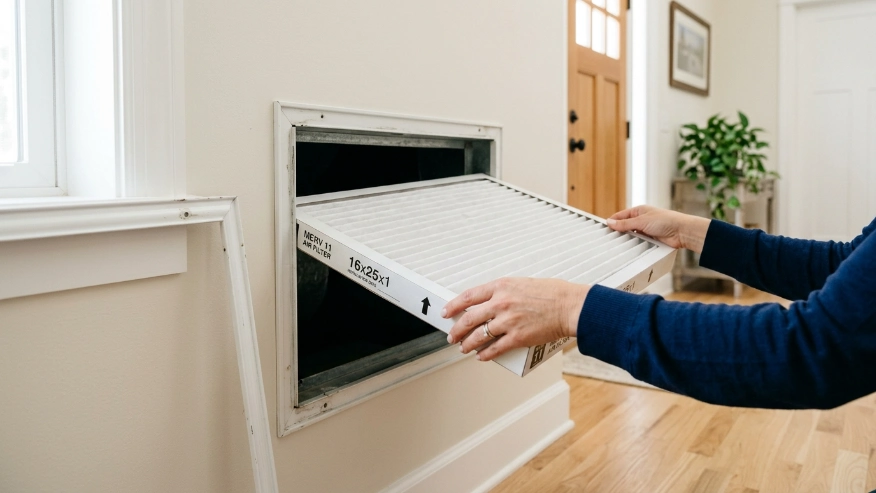
In these cases, an HVAC professional can assess your home’s ventilation. Upgrading your home’s main filtration system to higher-efficiency filters, in accordance with guidelines from the American Society of Heating, Refrigerating and Air-Conditioning Engineers (ASHRAE), can drastically reduce the dust burden placed on your vacuum and your lungs.
FAQs
Why did my vacuum suddenly lose suction?
A sudden loss of suction is almost always caused by a physical blockage. Check for a large clog in the hose, an overfilled dustbin, or a piece of debris jammed directly behind the brush roll.
Can I wash a HEPA filter to improve suction?
Most true HEPA filters are made of tightly woven fiberglass or paper and cannot be washed, as water destroys their micro-structure. Only wash a filter if the manufacturer explicitly labels it as washable. Otherwise, it must be replaced.
How often should I change my vacuum bag or empty the bin?
For optimal suction, empty bagless canisters after every single use. For bagged vacuums, replace the bag when it is about 75% full. Waiting until it is completely stuffed will restrict airflow and overheat the motor.
Will a higher wattage vacuum give me better suction?
Not necessarily. Wattage only measures how much electricity the motor consumes, not how much airflow (suction) it creates. Look for metrics like Air Watts (AW) or Cubic Feet per Minute (CFM) for a more accurate measure of a vacuum’s true pulling power.
Why does my vacuum smell bad when it runs?
A bad smell usually indicates that pet hair, food crumbs, or dander are trapped in the filters or the brush roll, where bacteria have begun to grow. Washing the removable bins, clearing the brush roll, and replacing the filters will eliminate the odor.
Can a clogged vacuum overheat?
Yes. Vacuums rely on the air they suck in to cool the motor. If the airflow is blocked by a full bin, clogged filter, or jammed hose, the motor will rapidly overheat. Most modern vacuums have a thermal shut-off switch that will turn the machine off automatically to prevent a fire.
Conclusion
Knowing how to improve vacuum suction is an essential skill for any homeowner looking to maintain clean floors and protect their indoor air quality. By keeping your dustbin empty, washing your pre-motor filters, replacing your HEPA filters regularly, and ensuring the hose and brush roll are free of debris, you can keep your machine running at peak performance.
Remember, a weak vacuum doesn’t just leave crumbs behind; it leaves microscopic allergens in your carpets that eventually end up in the air you breathe. Take 15 minutes today to inspect your vacuum’s filters, belts, and hoses. Maintaining your equipment now will save you money on a replacement and keep your home’s air fresh, clean, and healthy.