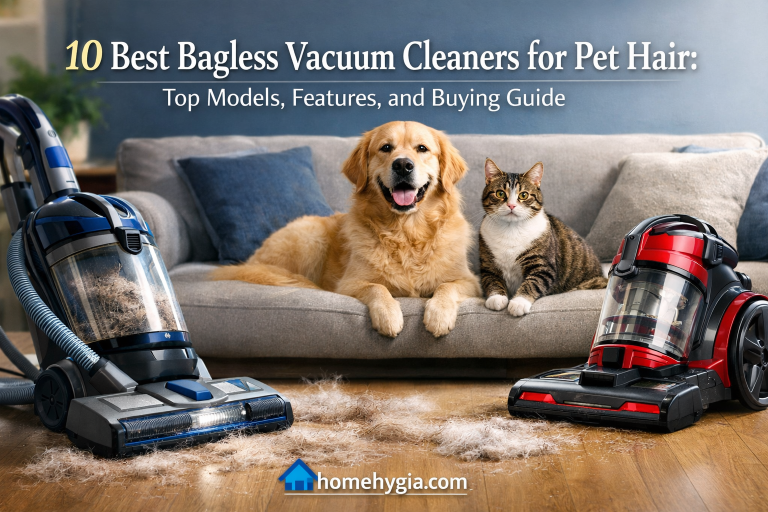
How to Use a Vacuum Cleaner to Improve Your Home’s Air Quality

If you have allergies, asthma, or pets, you likely spend a lot of time thinking about the air you breathe. You might even own a high-quality air purifier to capture floating dust and dander. But understanding how to use a vacuum cleaner correctly is just as important for protecting your home’s air quality.
When you vacuum the wrong way, or use a machine without proper filtration, you actually kick settled dust, pet dander, and allergens back into the air. This can trigger asthma attacks and leave your air purifiers working overtime.
In this guide, we will walk you through the proper techniques, the importance of HEPA filtration, and expert tips to ensure your vacuuming routine actually cleans your floors and protects your lungs.
Quick Answer
To properly use a vacuum cleaner for better air quality, always use a machine equipped with a true HEPA filter to trap microscopic allergens. Move the vacuum in slow, overlapping strokes to pull embedded dirt from carpets, and dust surfaces before you vacuum. Empty the canister outdoors or directly into the trash to prevent dust plumes from re-entering your home’s air.
Why Your Vacuuming Technique Impacts Indoor Air Quality
Many homeowners treat vacuuming simply as a way to make their carpets look clean. However, a vacuum is actually your home’s first line of defense against poor indoor air quality.
Every day, dust mites, pollen, pet dander, and volatile organic compounds (VOCs) settle into your carpets, rugs, and upholstery. According to the EPA’s guidelines on improving indoor air quality, controlling pollutants at their source is the most effective way to protect your indoor environment.
If you use a vacuum with a poor seal or a basic paper filter, the machine will suck up large crumbs but blow microscopic, lung-damaging particles right out the exhaust. Proper technique paired with the right equipment prevents this toxic “dust cloud” effect.
Step-by-Step Guide: How to Use a Vacuum Cleaner Effectively
Vacuuming shouldn’t be a rushed chore if you care about your air quality. Follow these steps to maximize allergen removal.
Step 1: Prep the Room and Dust First
Always clean your home from top to bottom. Dust your ceiling fans, bookshelves, and countertops first. Wait about 10 to 15 minutes for the airborne dust to settle onto the floor before you begin vacuuming. Pick up large debris, coins, or toys that could clog the vacuum hose or damage the motor.
Step 2: Choose the Right Attachment
Your vacuum likely came with several tools. Use them to target specific allergens:
- Crevice tool: Use this for baseboards, corners, and between couch cushions where pet hair and dust bunnies accumulate.
- Upholstery brush: Ideal for fabric sofas, curtains, and mattresses to extract embedded dust mites.
- Motorized brush roll: Essential for carpets and rugs to agitate fibers and lift dirt. Turn the brush roll off when vacuuming hard floors to prevent scattering dust into the air.
Step 3: Use the Proper Technique
Do not push the vacuum rapidly back and forth. Speed is the enemy of a clean carpet.
- Push the vacuum forward slowly to push the carpet fibers up.
- Pull the vacuum back slowly to extract the loosened dirt and dander.
- Overlap your strokes by about 50% to ensure no strips of flooring are missed.
- For high-traffic areas or homes with heavy pet shedding, vacuum the same area in a crisscross pattern (north to south, then east to west).
Step 4: Empty and Maintain the Vacuum Safely
A full vacuum loses suction power and becomes a breeding ground for bacteria and odors. Empty the dust canister when it is half to two-thirds full. If you suffer from severe allergies, ask a family member to empty the canister outdoors, or place the canister deep inside a trash bag before opening it to contain the dust plume.
Expert Tip:
Never vacuum up wet spills, damp soil, or plaster dust with a standard household vacuum. Moisture can cause mold to grow inside your HEPA filter, blowing musty odors into your air every time you use it. Fine drywall dust will instantly clog the filter and burn out the motor. Use a wet/dry shop vacuum for these messes instead.
The Role of HEPA Filtration
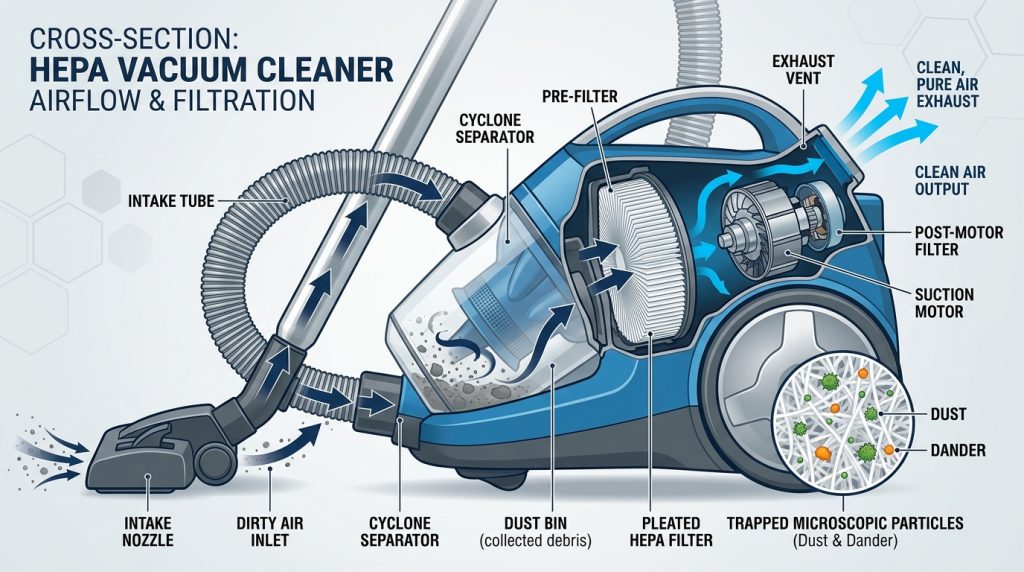
If you want to protect your respiratory health, a standard vacuum filter is not enough. You must use a vacuum equipped with a High-Efficiency Particulate Air (HEPA) filter.
According to Centers for Disease Control and Prevention (CDC) guidance on air filtration, a true HEPA filter is strictly tested to capture at least 99.97% of particles that are 0.3 microns in size. This includes pollen, mold spores, pet dander, and fine dust.
Additionally, look for vacuums labeled as having a “sealed system.” A sealed system ensures that air does not leak out of the plastic casing before passing through the HEPA filter.
Vacuum Filter Types and Air Quality Impact
| Filter Type | What it Captures | Impact on Indoor Air Quality | Recommendation |
|---|---|---|---|
| Paper/Standard | Large crumbs, visible dirt, hair. | Poor. Blows micro-dust and allergens back into the room. | Avoid if you have allergies, asthma, or pets. |
| HEPA-Type / HEPA-Like | Medium dust, some pet hair. | Fair. Not independently tested; leaks tiny particles. | Better than standard, but not medical-grade. |
| True HEPA | 99.97% of particles down to 0.3 microns (pollen, dander). | Excellent. Traps harmful microscopic allergens securely. | Highly Recommended for all homeowners. |
| Activated Carbon | Gases, VOCs, and household odors. | Excellent. Neutralizes pet odors and stale smells. | Best when paired with a True HEPA filter. |
Common Mistakes Homeowners Should Avoid
Even with the best vacuum, poor habits can ruin your home’s air quality. Avoid these common pitfalls:
- Vacuuming too fast: Rushing prevents the brush roll from agitating the carpet fibers enough to pull up embedded dust.
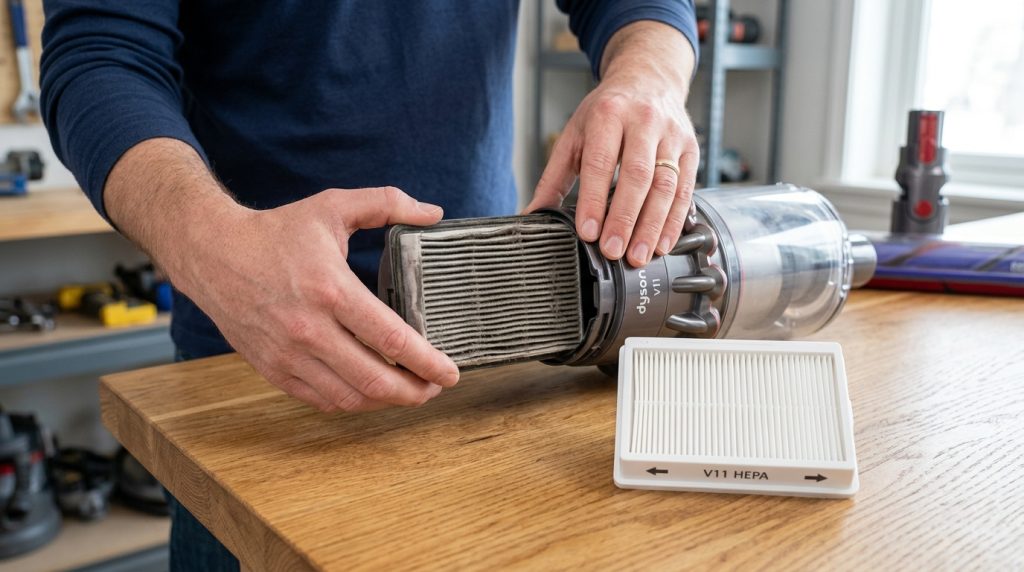
- Ignoring the filter: A clogged HEPA filter reduces suction and strains the motor. Wash or replace your filters according to the manufacturer’s schedule (usually every 3 to 6 months).
- Using a dirty brush roll: Hair and string wrapped around the brush roll prevent it from spinning effectively. Cut tangled hair free once a month.
- Vacuuming with the windows closed (if dusty): If you are doing a deep spring cleaning or vacuuming an extremely dusty room, open a window or run your room’s HEPA air purifier on its highest setting to catch stirred-up particles.
- Forgetting to vacuum mattresses and couches: Dust mites thrive in upholstery and bedding. Vacuum these surfaces monthly to significantly reduce indoor allergens.
When to Consult an Air Quality or HVAC Professional
While frequent, proper vacuuming and using portable air purifiers are great DIY steps for healthier air, they have limitations. A vacuum can only clean surfaces, and portable purifiers only clean specific rooms.
You should consider consulting a professional HVAC technician or indoor air quality expert if:
- You are vacuuming and dusting regularly, but thick dust continues to accumulate within 24–48 hours.
- Your home has persistent, unexplained musty odors that vacuuming and air purifiers cannot eliminate (which may indicate hidden mold).
- Family members are experiencing chronic allergy or asthma flare-ups despite a strict cleaning routine.
- You want to upgrade your home’s central HVAC system with whole-house HEPA filtration or a high-MERV media filter.
An expert can inspect your ductwork for leaks, which often pull dusty air from attics or crawlspaces, completely bypassing your surface-cleaning efforts.
FAQs
How often should I vacuum my home?
For optimal air quality, vacuum high-traffic areas and rooms with pets at least twice a week. Bedrooms and low-traffic areas can usually be vacuumed once a week.
Does vacuuming make the air quality worse?
It can, if you use a vacuum without a HEPA filter or a sealed system. Standard vacuums agitate dust and blow microscopic particles out the exhaust. Using a true HEPA vacuum prevents this and actually improves air quality.
Should I run my air purifier while vacuuming?
Yes. It is highly recommended to run your HEPA air purifier on a high fan speed while vacuuming. The purifier will quickly capture any stray dust or dander that gets stirred into the air before it can settle again.
Do bagless vacuums release more dust?
Bagless vacuums can release a plume of dust when you empty the canister. If you have severe allergies, a bagged HEPA vacuum is often safer, as the bag seals the dirt away. If you use a bagless model, always empty it outdoors.
How do I know if my vacuum has a true HEPA filter?
Check the manufacturer’s specifications on the machine or the manual. It should explicitly state “True HEPA” and claim to capture “99.97% of particles down to 0.3 microns.” Avoid vague terms like “HEPA-like” or “HEPA-style.”
Can a vacuum remove pet odors?
A standard vacuum will remove the dander that causes the smell, but vacuums equipped with activated carbon filters will actively absorb and neutralize gaseous pet odors as you clean.
Conclusion
Understanding how to use a vacuum cleaner properly is one of the easiest and most effective ways to protect your home’s indoor air quality. By investing in a sealed HEPA vacuum, vacuuming slowly in overlapping strokes, and keeping your filters clean, you stop allergens at the source before they ever reach your lungs.
If you are dealing with heavy pet dander, spring pollen, or dust mites, pair your upgraded vacuuming routine with a properly sized HEPA air purifier for complete protection. Take a few minutes today to check your current vacuum’s filter—if it isn’t True HEPA, it might be time for an upgrade to keep your family breathing easy.