
Philips Air Purifier vs Coway: Proven Best Choice

Choosing between a Philips air purifier and a Coway air purifier can be tough. Both offer excellent air cleaning, but this guide breaks down their features, performance, and value to help you find the proven best choice for your home.
It’s a common dilemma: you want cleaner air for your family, but which air purifier should you buy? Philips and Coway are top brands, and their models often look very similar. This can make picking the right one feel overwhelming. Don’t worry, I’m here to help you understand the differences. We’ll look at how they clean your air, how they look, and what they cost. By the end, you’ll know which Philips air purifier vs Coway is the best fit for you.
Why Clean Air Matters for Your Home
Breathing clean air at home is super important. Our homes can trap dust, pollen, pet dander, and even tiny particles from cooking or cleaning products. These things can make breathing harder, especially for people with allergies or asthma. They can also just make you feel tired or unwell. Getting a good air purifier can really make a difference. It helps remove these tiny bits from the air you breathe every day.
Understanding Air Purifier Technology
Air purifiers work by pulling air through a series of filters. These filters catch different types of particles. Most air purifiers use a HEPA filter. HEPA stands for High-Efficiency Particulate Air. A true HEPA filter can capture at least 99.97% of particles that are 0.3 microns in size. That’s really, really small! Some purifiers also have an activated carbon filter. This filter is great at removing odors and gases, like smoke or cooking smells.
Philips Air Purifiers: What They Offer
Philips is a well-known brand for home appliances. Their air purifiers often focus on advanced filtration and smart features. Many Philips models use a multi-layer filtration system. This typically includes a pre-filter, an activated carbon filter, and a HEPA filter. Some also have special sensors that can detect air quality. They then adjust their fan speed automatically to clean the air faster when needed.
Philips Filtration System Explained
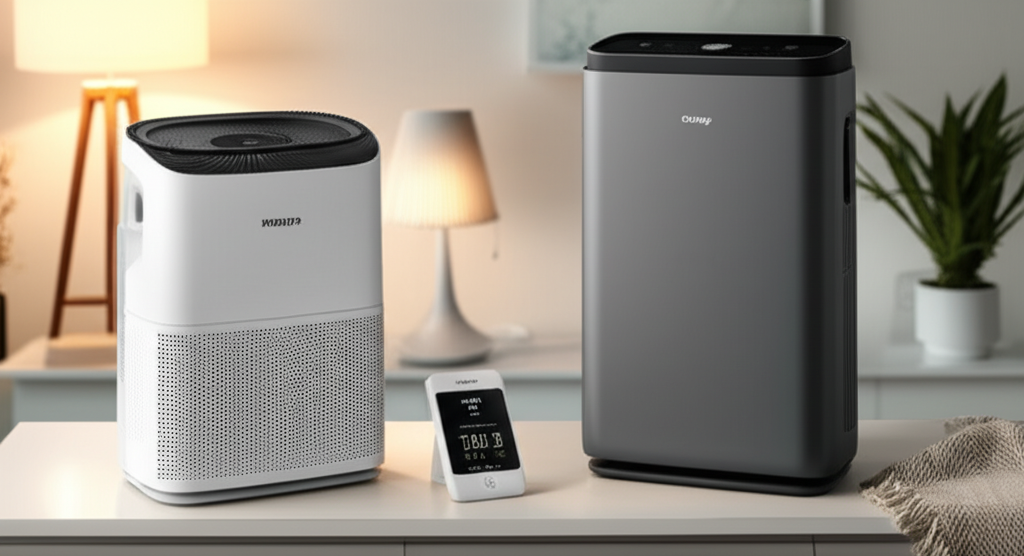
Philips air purifiers often use a NanoProtect HEPA filter. This filter is designed to capture very fine particles. They also include an Activated Carbon filter to tackle odors and gases. The pre-filter catches larger particles like dust and hair, which helps the other filters last longer. This layered approach ensures that a wide range of pollutants are removed from your air.
Philips Design and User Experience
Philips air purifiers usually have a sleek, modern design. They often come in white or gray, fitting well into most home decors. Many models feature a digital display that shows the current air quality. They are generally easy to operate with simple controls. Some advanced models can even be controlled via a smartphone app, allowing you to monitor and adjust settings remotely.
Coway Air Purifiers: What They Offer
Coway is another strong contender in the air purifier market. They are known for effective filtration and durable products. Coway air purifiers also use a multi-stage filtration system. This usually includes a washable pre-filter, an activated carbon filter, and a HEPA filter. They are often praised for their quiet operation, especially on lower fan speeds.
Coway Filtration System Explained
Coway purifiers typically feature a robust filtration process. They start with a washable mesh pre-filter to catch larger particles. Then, an Activated Carbon filter works to eliminate odors and volatile organic compounds (VOCs). Finally, their True HEPA filter traps 99.97% of airborne allergens and particles as small as 0.3 microns. This comprehensive system aims for thorough air purification.
Coway Design and User Experience
Coway air purifiers often have a compact and stylish design. Many models are designed to be relatively quiet, making them suitable for bedrooms or living areas. They typically have an easy-to-understand control panel. Some Coway units also include air quality sensors and an automatic mode. This allows the purifier to adapt its performance based on real-time air conditions.
Comparing Key Features: Philips Air Purifier vs Coway
When comparing Philips air purifier vs Coway, several features stand out. Both brands offer excellent HEPA filtration, which is crucial for removing allergens and fine particles. Philips often highlights its advanced sensor technology and app connectivity. Coway is frequently recognized for its quiet performance and durable build quality. Let’s look at a comparison table.
| Feature | Philips Air Purifier | Coway Air Purifier |
| :—————— | :————————————————— | :—————————————————- |
| Filtration | Multi-layer (Pre-filter, Carbon, NanoProtect HEPA) | Multi-stage (Washable Pre-filter, Carbon, True HEPA) |
| Sensors | Often advanced particle and gas sensors | Standard particle sensors, some gas sensors on higher models |
| Smart Features | App control, scheduling, voice assistant integration | App control on select models, auto mode |
| Noise Level | Generally quiet, but can be louder on high settings | Known for quiet operation, especially on low settings |
| Design | Modern, sleek, often larger footprint | Compact, stylish, fits well in various spaces |
| Filter Replacement | Indicator lights, specific filter models | Indicator lights, specific filter models |
Performance: Which Cleans Air Better?
Both Philips and Coway air purifiers perform very well in cleaning the air. They use similar HEPA filtration standards. Philips’ advanced sensors might offer more precise air quality monitoring. This can lead to quicker adjustments in fan speed. Coway models are often praised for their consistent performance and ability to handle larger rooms effectively.
CADR Ratings and Room Coverage
CADR stands for Clean Air Delivery Rate. It measures how quickly an air purifier can clean the air in a room. Both Philips and Coway offer models with various CADR ratings. It’s important to match the purifier’s CADR to the size of your room. A higher CADR means faster cleaning for a given room size. You can find CADR ratings on the product specifications.
Cost of Ownership: Initial Price and Filter Replacement
The initial price of Philips and Coway air purifiers can vary widely. Both brands have models in different price ranges, from budget-friendly to premium. A significant part of the cost of ownership is filter replacement. Philips and Coway filters need to be replaced periodically, usually every 6 to 12 months. It’s essential to factor in this ongoing cost when making your decision.
Filter Replacement Costs
Replacement filters are a recurring expense for any air purifier. Philips and Coway filters can range from $30 to $100 or more, depending on the model. It’s wise to check the price and availability of replacement filters before you buy the unit. Some brands offer filter subscription services, which can sometimes save you money and ensure you don’t forget to replace them.
Smart Features and App Control
Many modern air purifiers now come with smart features. Philips has been a leader in integrating app control. Their Philips Air+ app lets you monitor air quality, set schedules, and control your purifier from your phone. Coway also offers app control on some of its higher-end models. These smart features add convenience and allow for remote management of your home’s air quality.
Voice Control Integration
Some of the latest Philips and Coway models are compatible with voice assistants like Amazon Alexa or Google Assistant. This means you can control your air purifier with simple voice commands. For example, you could say, “Hey Google, turn on the air purifier.” This hands-free operation can be very convenient, especially when your hands are full.
Noise Levels: A Critical Factor for Sleep and Comfort
The noise level of an air purifier is crucial, especially if you plan to use it in a bedroom. Generally, air purifiers are quieter on their lowest fan settings and louder on their highest. Coway is often praised for its exceptionally quiet operation. Philips models are also relatively quiet, but some users find them to be slightly louder on higher settings compared to Coway.
Decibel Ratings Explained
Air purifier noise is measured in decibels (dB). A whisper is about 30 dB, and a normal conversation is around 60 dB. Most air purifiers operate between 25 dB and 55 dB. A purifier that runs at 30-40 dB on its lowest setting is usually considered quiet enough for sleeping. Always check the product specifications for decibel ratings at different fan speeds.
Design and Aesthetics: Fitting Your Home
Both Philips and Coway air purifiers come in designs that aim to blend into modern homes. Philips models often have a more substantial, sometimes larger, presence. They tend to feature clean lines and digital displays. Coway purifiers are frequently more compact and may have a sleeker, more minimalist look. Your personal preference for style and the available space in your room will influence this choice.
Which Brand is the Proven Best Choice for You?
Deciding between a Philips air purifier vs Coway depends on your priorities. If you value advanced smart features, detailed air quality sensing, and app control, a Philips model might be your best bet. If quiet operation, compact design, and proven durability are more important, a Coway unit could be the ideal choice. Both brands offer excellent air purification.
To make the proven best choice, consider these points:
Your Budget: How much are you willing to spend upfront and on replacement filters?
Room Size: Ensure the purifier’s CADR rating matches your room dimensions.
Key Concerns: Are you focused on allergies, odors, or general air freshness?
Noise Tolerance: How important is quiet operation for your living space?
* Smart Features: Do you want app control or voice commands?
Ultimately, both Philips and Coway are excellent brands. You can’t go wrong with either. It’s about finding the specific model that best meets your needs and preferences. For instance, if you’re highly sensitive to noise and need an air purifier for your bedroom, a quiet Coway model like the Coway Airmega 200M might be perfect. If you love having detailed air quality data on your phone and want a purifier that automatically adjusts, a Philips model with advanced sensors could be the winner.
Frequently Asked Questions (FAQ)
Q1: Are Philips or Coway air purifiers better for allergies?
Both brands use True HEPA filters, which are excellent for capturing allergens like pollen, dust mites, and pet dander. The effectiveness depends on the specific model and its filtration capabilities.
Q2: Which brand is more budget-friendly, Philips or Coway?
Prices vary greatly between models within each brand. Generally, both offer units at various price points. It’s important to compare specific models and consider the long-term cost of replacement filters.
Q3: Do Philips or Coway air purifiers require frequent filter changes?
Yes, like most air purifiers, their filters need replacement. Typically, HEPA filters should be replaced every 6-12 months, depending on usage and air quality. Always check the manufacturer’s recommendations for your specific model.
Q4: Which brand offers better smart features and app control?
Philips often leads in integrated smart features and user-friendly app control across a wider range of its models. Coway also offers smart features on select higher-end units.
Q5: Are Philips or Coway air purifiers noisy?
Coway is widely recognized for its quiet operation, especially on lower settings. Philips models are generally quiet, but some users report they can be slightly louder on higher fan speeds compared to Coway.
Q6: Can I wash the filters on Philips or Coway air purifiers?
Usually, only the pre-filter on both brands is washable. The HEPA and activated carbon filters are not meant to be washed and must be replaced when they reach the end of their lifespan.
Final Verdict
Choosing between a Philips air purifier vs Coway is about matching features to your life. Both are top-tier brands with excellent air cleaning capabilities. Philips often excels with its advanced sensor technology and seamless app integration, offering detailed insights into your air quality. Coway shines with its consistently quiet performance and often more compact designs, making it a great choice for bedrooms and smaller spaces. I recommend looking at specific models from each brand based on your room size, budget, and whether smart features or quiet operation are your top priorities. Both will significantly improve your home’s air quality.


