
Activated Carbon vs HEPA: Essential Choice

Choosing between activated carbon and HEPA filters is crucial for clean air. This guide clarifies activated carbon vs HEPA air purifier, detailing their unique strengths and ideal applications to help you make the best choice for your home’s air quality.
Breathing clean air at home is more important than ever. You’ve likely heard about different air purifier technologies, especially activated carbon vs HEPA air purifier. It can feel overwhelming trying to figure out which is best for your needs. Are you dealing with stubborn odors, microscopic allergens, or both? I understand this confusion, and I’m here to simplify it for you. We’ll break down exactly what each filter type does, how they work, and where they shine. By the end, you’ll have a clear understanding to make an informed decision for a healthier home environment.
What is a HEPA Filter and How Does it Work?
A HEPA filter is a mechanical air filter that traps tiny particles. HEPA stands for High-Efficiency Particulate Air. These filters are designed to capture at least 99.97% of airborne particles that are 0.3 microns in size. This includes common allergens like dust mites, pollen, pet dander, and mold spores.
HEPA filters work by forcing air through a fine mesh. This mesh physically traps particles as they try to pass through. The fibers within the filter create a complex maze that catches particles through impaction, interception, and diffusion. These filters are essential for individuals with allergies, asthma, or other respiratory sensitivities.
What is Activated Carbon and How Does it Work?
Activated carbon, also known as activated charcoal, is a highly porous material. It’s treated to be extremely absorbent, creating millions of tiny pores. These pores are where the magic happens, attracting and holding onto gas molecules.
Activated carbon filters work through a process called adsorption. Unlike HEPA filters that physically trap particles, activated carbon adsorbs gases, odors, and volatile organic compounds (VOCs). This makes them excellent for tackling smells from cooking, pets, smoke, and chemical fumes.
Activated Carbon vs HEPA Air Purifier: The Core Differences
The fundamental difference between activated carbon vs HEPA air purifier lies in what they target. HEPA filters are particle traps, excelling at removing physical contaminants from the air. Activated carbon filters are gas and odor absorbers, effectively neutralizing smells and chemicals.
While HEPA filters capture microscopic irritants that can trigger allergies, activated carbon filters remove the unseen gases that cause unpleasant odors and can be harmful. Understanding this distinction is key to choosing the right filtration technology for your specific air quality concerns.
HEPA Filters: The Allergy and Asthma Champions
HEPA filters are the gold standard for removing particulate matter from the air. Their ability to capture 99.97% of particles down to 0.3 microns makes them incredibly effective against common allergens. If you suffer from seasonal allergies or have pets, a HEPA filter is a non-negotiable component of your air purification strategy.
These filters are particularly beneficial for removing dust, pollen, mold spores, and pet dander. By trapping these tiny irritants, HEPA filters can significantly reduce airborne allergens, leading to easier breathing and fewer allergy symptoms. You can find reputable HEPA filters in many high-quality air purifiers designed for health-conscious homes.
Activated Carbon Filters: The Odor and VOC Eliminators
Activated carbon filters are your best bet for tackling odors and chemical pollutants. They are highly effective at adsorbing volatile organic compounds (VOCs) released from cleaning products, furniture, and paints. These VOCs can contribute to poor indoor air quality and health issues.
If your home experiences persistent smells from cooking, pets, or even smoke, activated carbon is the solution. Its porous structure provides a vast surface area to trap odor molecules, leaving your air smelling fresh and clean. Many advanced air purifiers combine activated carbon with other filters to offer comprehensive air cleaning.
Can Activated Carbon and HEPA Filters Work Together?
Absolutely! The most effective air purifiers often combine both activated carbon and HEPA filters. This dual-action approach provides comprehensive air purification by addressing both particulate matter and gaseous pollutants. This is often referred to as a “True HEPA and Activated Carbon” filter system.
A multi-stage filtration system, featuring both HEPA and activated carbon, offers the best of both worlds. The HEPA filter captures allergens and dust, while the activated carbon filter neutralizes odors and VOCs. This synergistic combination ensures you’re breathing the cleanest possible air.
Key Considerations When Choosing Your Air Purifier
When deciding between technologies or a combined unit, consider your primary air quality concerns. Are you mainly battling allergies and dust, or are odors and chemical smells the bigger issue? Your specific needs will guide you to the most suitable activated carbon vs HEPA air purifier setup.
Think about the size of the room where the purifier will be used. Higher CADR (Clean Air Delivery Rate) ratings indicate a more powerful unit capable of cleaning larger spaces more effectively. Also, consider the noise level and energy consumption, especially if the purifier will run continuously.
Comparing Activated Carbon and HEPA Filters: A Quick Overview
| Feature | HEPA Filter | Activated Carbon Filter |
| :—————- | :——————————————— | :————————————————- |
| Primary Function | Traps microscopic particles (allergens, dust) | Adsorbs odors, gases, and VOCs |
| Mechanism | Mechanical filtration | Adsorption |
| Targets | Pollen, dander, mold spores, dust mites | Smoke odors, cooking smells, chemical fumes |
| Best For | Allergy and asthma sufferers | Homes with pets, smokers, or strong odors |
| Limitations | Does not remove gases or odors | Does not effectively remove fine particulate matter |
This table highlights the distinct roles each filter plays in air purification. For comprehensive air cleaning, a combination is often the superior choice.
Maintaining Your Air Purifier Filters for Optimal Performance
Proper maintenance is crucial for ensuring your air purifier performs at its best. HEPA filters typically need to be replaced every 6-12 months, depending on usage and air quality. Activated carbon filters also have a lifespan and will require replacement, often with similar frequency to HEPA filters, as their adsorptive capacity becomes saturated.
Always follow the manufacturer’s recommendations for filter replacement. Some air purifiers also have pre-filters that can be washed and reused, extending the life of the main HEPA and carbon filters. Regularly cleaning these pre-filters can significantly improve your unit’s efficiency.
Activated Carbon vs HEPA Air Purifier: Which is Right for You?
The “essential choice” between activated carbon vs HEPA air purifier isn’t about one being definitively better than the other, but rather about understanding their specific strengths. If your primary concern is allergies, asthma, or airborne irritants, a HEPA filter is paramount. For tackling stubborn odors, smoke, or chemical smells, activated carbon is your go-to.
However, for most homes, a combination of both HEPA and activated carbon filtration offers the most comprehensive solution. This dual-action approach ensures you are addressing a wider range of air quality issues, leading to a healthier and more comfortable living environment. Investing in a unit with both technologies provides the best defense against indoor air pollutants.
Frequently Asked Questions (FAQ)
What is the difference between a HEPA filter and an activated carbon filter?
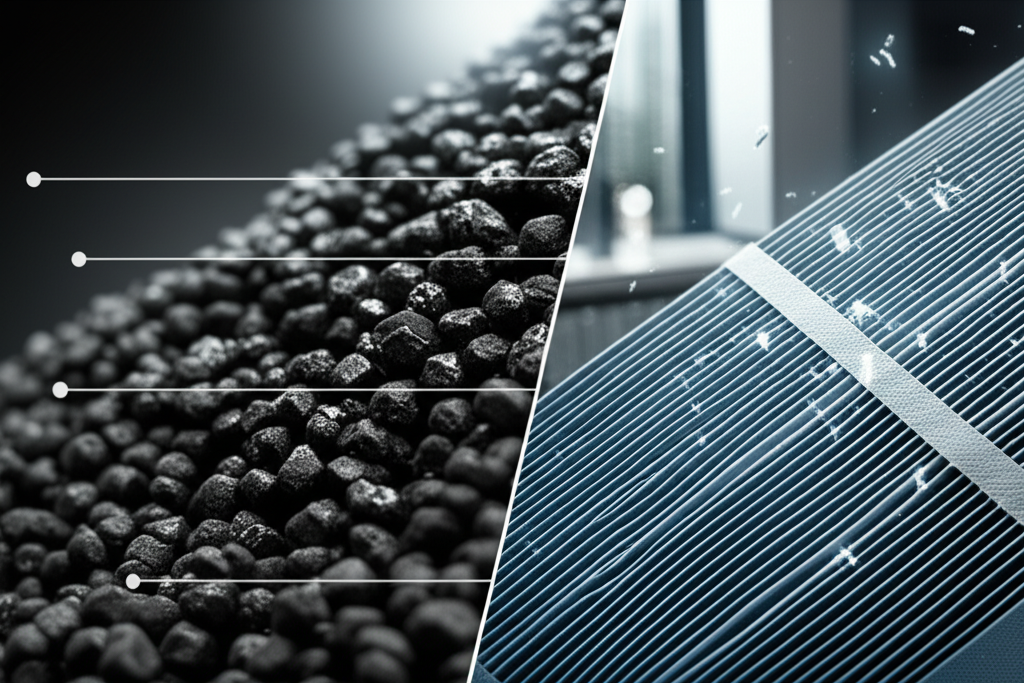
A HEPA filter physically traps tiny particles like dust, pollen, and dander. An activated carbon filter adsorbs gases and odors, such as cooking smells and smoke.
Can I use an activated carbon filter alone for allergies?
No, an activated carbon filter alone is not sufficient for allergies. While it helps with odors, it does not effectively remove the allergens themselves.
Do I need both a HEPA and an activated carbon filter?
For the most comprehensive air purification, yes. Combining both addresses both particles and gases/odors, creating cleaner air.
How often do I need to replace activated carbon filters?
Activated carbon filters typically need replacement every 6-12 months, depending on usage and the level of odors/VOCs in your environment.
Can activated carbon filters remove VOCs?
Yes, activated carbon is very effective at adsorbing VOCs (Volatile Organic Compounds) from the air, which are often responsible for chemical smells.
Which type of filter is better for pet owners?
For pet owners, a combination of HEPA and activated carbon filters is ideal. HEPA captures dander and dander-related allergens, while activated carbon tackles pet odors.
Conclusion
Navigating the world of air purification can seem complex, but understanding the core functions of activated carbon vs HEPA air purifier technologies simplifies the decision-making process. HEPA filters are your frontline defense against microscopic allergens and particles, crucial for respiratory health and allergy sufferers. Activated carbon filters, on the other hand, are masters at eliminating unwanted odors and harmful VOCs, ensuring a fresh-smelling home. For most households seeking optimal indoor air quality, a combined filtration system that incorporates both True HEPA and activated carbon is the most effective and recommended choice. By addressing both particulate and gaseous pollutants, you create a truly healthier and more comfortable living space.
