
Activated Carbon Passive Window Air Purifier: Essential Clean Air

Breathe easier with an activated carbon passive window air purifier, a simple yet effective solution for cleaner indoor air without electricity. This guide explores its benefits, how it works, and why it’s a smart choice for essential clean air in your home.
Activated Carbon Passive Window Air Purifier: Your Essential Clean Air Solution
Are you concerned about the air quality inside your home? Many of us are, especially with common indoor pollutants like dust, pet dander, and volatile organic compounds (VOCs) lurking in the air we breathe every day. Traditional air purifiers can be noisy and energy-intensive. Fortunately, there’s a simpler, more sustainable option: the activated carbon passive window air purifier. This innovative device offers a discreet and effective way to enhance your home’s air quality. Let’s explore how this essential clean air tool can benefit you.
What is an Activated Carbon Passive Window Air Purifier?
This unique air purification system utilizes the power of activated carbon to capture airborne contaminants directly from the air entering your home through windows. Unlike electric purifiers, it operates passively, meaning no electricity is required. It’s designed to fit seamlessly into your window frames, acting as a barrier against pollutants while allowing fresh air to circulate.
The Science Behind Activated Carbon Filtration
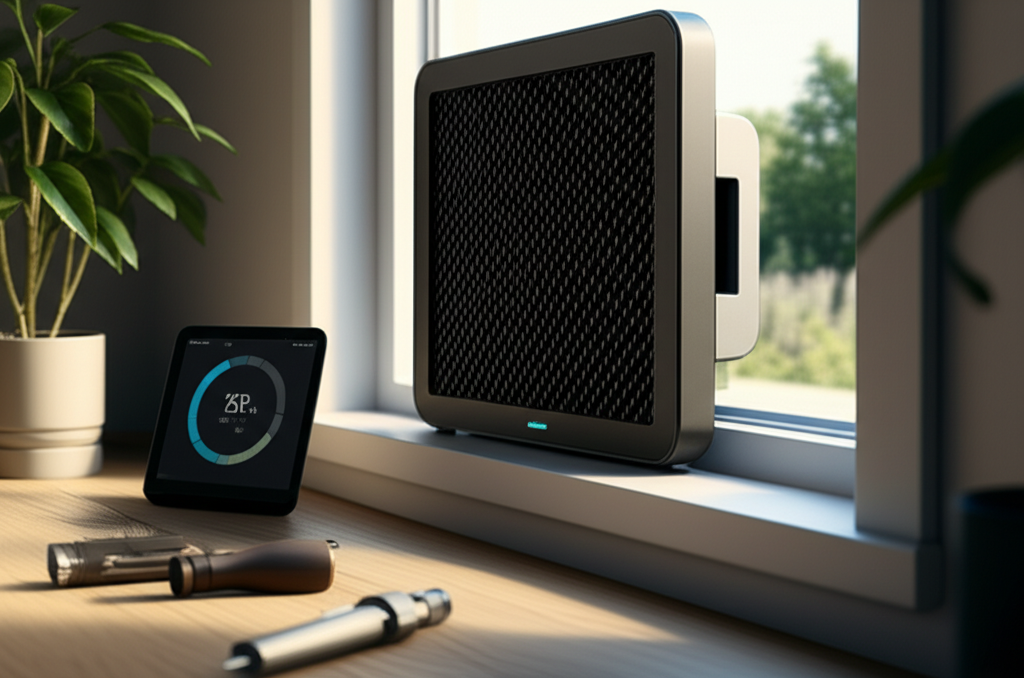
Activated carbon, also known as activated charcoal, is a highly porous material treated to increase its surface area. This extensive network of pores traps and adsorbs a wide range of gases, odors, and chemical pollutants. It’s this remarkable adsorption capability that makes activated carbon an essential component in effective air purification.
How Does a Passive Window Air Purifier Work?
The activated carbon passive window air purifier works by drawing air through a filter containing activated carbon. As air passes through the carbon’s microscopic pores, pollutants like VOCs, smoke, and odors adhere to its surface. This process effectively removes these undesirable elements before the air enters your living space, providing a continuous flow of cleaner air.
Benefits of Using an Activated Carbon Passive Window Air Purifier
Choosing this type of air purifier brings several advantages. It’s an eco-friendly choice, as it doesn’t consume electricity, leading to potential savings on your energy bills. Its silent operation ensures no disturbance, and its passive nature means minimal maintenance. It’s an ideal solution for those seeking simple, effective air quality improvement.
Energy Efficiency: No electricity required.
Silent Operation: Operates without any noise.
Eco-Friendly: Reduces your carbon footprint.
Cost-Effective: Lower running costs compared to electric models.
Easy Installation: Designed for simple window integration.
Key Pollutants Targeted by Activated Carbon Filters
Activated carbon is particularly effective at neutralizing common indoor air pollutants. It excels at removing odors from cooking, pets, and smoke. It also adsorbs harmful gases such as formaldehyde, benzene, and other VOCs often found in household products, paints, and furnishings.
Odors: Cooking smells, pet odors, smoke, musty smells.
Gases: Formaldehyde, benzene, ammonia, chlorine.
VOCs: Volatile Organic Compounds from cleaning supplies, aerosols, and building materials.
Comparing Passive Window Purifiers to Other Air Purification Methods
While HEPA filters excel at capturing particulate matter like dust and pollen, they are less effective against gases and odors. Electric air purifiers often combine HEPA with carbon filtration but require power and can generate ozone, which can be an irritant. The activated carbon passive window air purifier offers a complementary approach, focusing on gas and odor removal without electricity.
| Purification Method | Strengths | Weaknesses | Best For |
| :———————————- | :—————————————— | :—————————————- | :———————————————– |
| Activated Carbon Passive Window | Odor/gas removal, energy-free, silent | Less effective on fine particles | Odor control, VOC reduction, eco-conscious homes |
| HEPA Filter Air Purifier | Captures fine particles (dust, allergens) | Less effective on gases/odors, requires power | Allergy sufferers, dust control |
| Ionizer/Ozone Generator Air Purifier | Can neutralize some pollutants | Potential ozone production, particle charging | Limited, requires careful use |
Installation and Maintenance of Your Window Purifier
Setting up your activated carbon passive window air purifier is typically straightforward. Most models are designed to fit snugly within standard window frames. Maintenance usually involves occasional cleaning of the exterior and periodic replacement of the activated carbon filter, typically every 3-6 months depending on air quality and usage.
Where to Place Your Activated Carbon Passive Window Air Purifier
For optimal performance, position your activated carbon passive window air purifier in windows that receive the most air circulation or are closest to pollutant sources. Living areas, kitchens, and bedrooms are excellent locations. Ensure the unit is securely fitted to prevent air leaks and maximize its effectiveness in filtering incoming air.
Maximizing the Lifespan of Your Activated Carbon Filter
To extend the life of your activated carbon filter, try to minimize the introduction of heavy pollutants into your home. Regular dusting and vacuuming can reduce the particulate load on the filter. Avoid smoking indoors, and use natural cleaning products when possible. Checking the filter regularly for signs of saturation will help you determine the best time for replacement.
Choosing the Right Activated Carbon Passive Window Air Purifier for Your Home
When selecting an activated carbon passive window air purifier, consider the size of your windows, the specific pollutants you wish to target, and the replacement filter cost. Look for reputable brands that offer durable materials and effective activated carbon media. Reading reviews can also provide valuable insights into real-world performance and user satisfaction.
Frequently Asked Questions about Activated Carbon Passive Window Air Purifiers
Q1: Do activated carbon passive window air purifiers really work?
Yes, they are effective at adsorbing odors, gases, and VOCs from the air. While they don’t capture fine particles like HEPA filters, they play a crucial role in improving overall air freshness.
Q2: How often do I need to replace the activated carbon filter?
Typically, replacement is recommended every 3 to 6 months. This can vary based on your home’s air quality and how much air the purifier processes.
Q3: Are these window purifiers safe for people with allergies?
They are safe and beneficial for allergy sufferers, especially those sensitive to odors and gases. However, for fine particle allergies (like dust or pollen), a HEPA filter might be a more primary solution.
Q4: Can I wash and reuse the activated carbon filter?
No, activated carbon filters are designed for single use and cannot be washed. Once the carbon is saturated with pollutants, it loses its effectiveness and must be replaced.
Q5: Will this purifier block out all outside air?
No, these purifiers are designed to allow fresh air to pass through while filtering out pollutants. They do not create an airtight seal that would prevent air circulation.
Q6: Are there any noise concerns with passive window purifiers?
One of the biggest advantages is their silent operation, as they have no moving parts or fans. You won’t hear any noise from them.
Conclusion: Embrace Essential Clean Air with Your Window Purifier
The activated carbon passive window air purifier stands out as a smart, sustainable, and simple solution for enhancing your home’s air quality. By harnessing the adsorptive power of activated carbon, it effectively tackles odors, gases, and VOCs without relying on electricity. Its ease of use, silent operation, and eco-friendly design make it an essential addition for anyone seeking a healthier indoor environment. Integrating an activated carbon passive window air purifier into your home is a proactive step towards breathing cleaner, fresher air every day.
